Cruciate Injury in a Great Dane
Few things are as heartbreaking as seeing your magnificent Great Dane, usually a picture of grace and power, suddenly favoring a leg, limping, or even refusing to put weight on a paw. It’s a common, terrifying moment for us giant breed owners, instantly making us fear the worst for their huge, often delicate joints. This guide will walk you through everything you need to know about cruciate ligament injuries in Great Danes, from recognizing the subtle signs to understanding treatment options and recovery.
Understanding the Cruciate Ligament in a Giant Breed
When your Great Dane starts limping, especially in a back leg, one of the first things your vet might suspect is a problem with their cranial cruciate ligament (CCL). This isn't just a small sprain; it's a significant injury that's unfortunately quite common in larger, active breeds.
What is the Cranial Cruciate Ligament (CCL)?
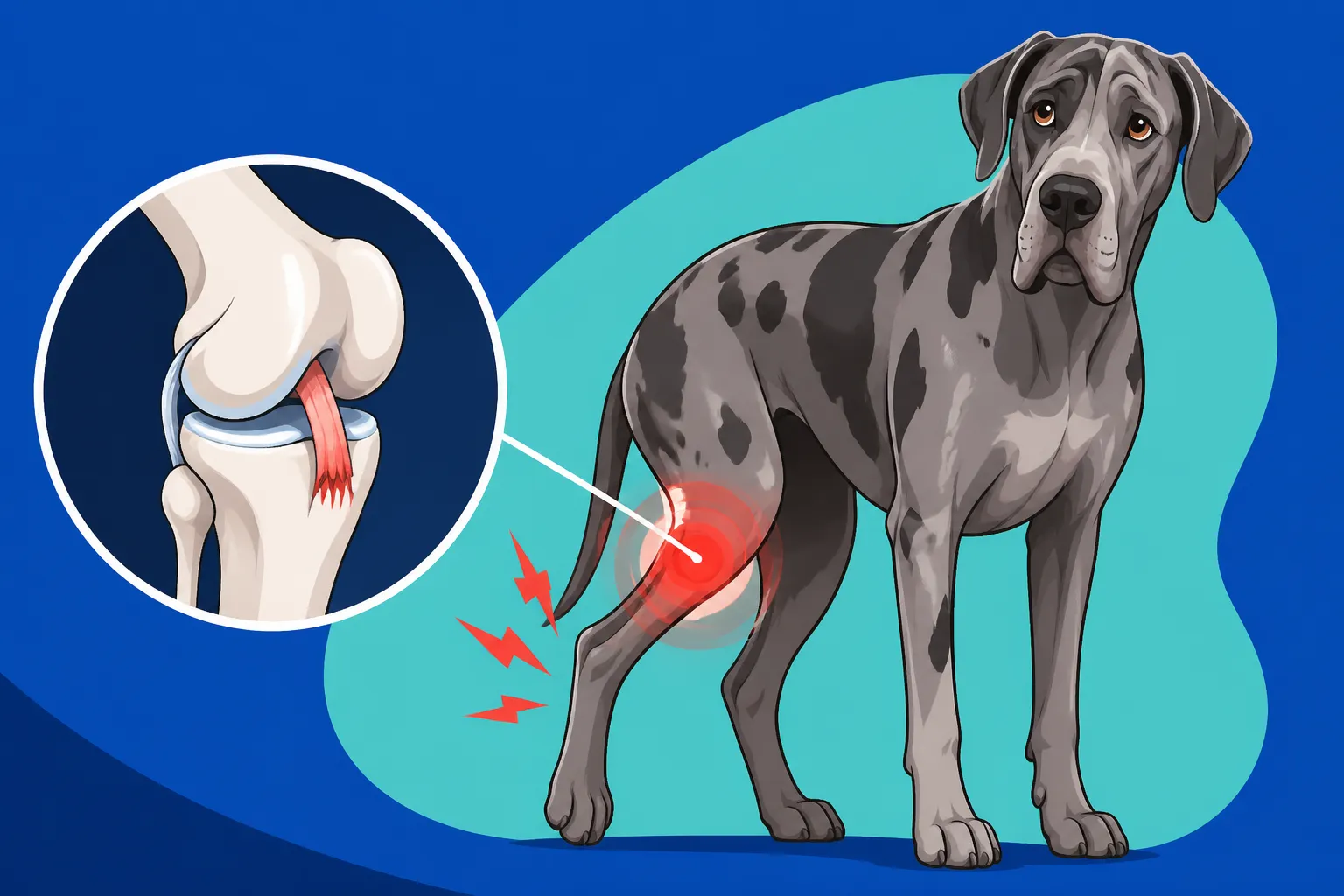
Imagine your knee, or rather, your dog's stifle joint (which is essentially their knee). Inside that joint, there are two strong bands of tissue that cross over each other, forming an "X." These are the cruciate ligaments. The one at the front is called the cranial cruciate ligament (CCL), and its job is absolutely crucial: it prevents the tibia (shin bone) from sliding forward excessively relative to the femur (thigh bone) and helps stabilize the joint, limiting internal rotation.
In a human, this is often called the ACL (anterior cruciate ligament). For Great Danes, and indeed most dogs, it’s not usually a sudden, dramatic injury from a single trauma, like a football player tearing an ACL. Instead, it's often a degenerative condition, a slow weakening and fraying of the ligament over time, which eventually leads to a partial tear and then, often, a complete rupture. Their immense size and powerful musculature put incredible stress on these ligaments, making them more susceptible to this kind of wear and tear.
Why Great Danes Are Prone to Cruciate Injuries
It feels unfair, doesn't it? Our gentle giants are prone to so many orthopedic issues, and cruciate tears are high on that list. Their sheer size and weight are primary contributors. Think about it: every step, every jump, every playful pivot puts hundreds of pounds of stress on those knee joints. It’s a monumental task for a single ligament.
Beyond just their weight, several factors make Great Danes particularly susceptible:
- Genetics: There's a strong genetic component to CCL disease. Some lines of Great Danes may be predisposed to weaker ligaments or abnormal joint conformation that increases strain on the CCL. This is why when you're looking for a puppy, it's so important to scrutinize the breeder's health testing records. Understanding the importance of The Health Testing a Great Dane Breeder Owes You can help you make an informed decision and potentially avoid some of these predispositions.
- Conformation: The way a Great Dane is built can also play a role. Certain angles in their hind limb conformation, particularly the slope of the tibial plateau, can naturally put more strain on the CCL. Dogs with a steeper tibial plateau angle might have a higher risk.
- Activity Levels: While Great Danes might seem like couch potatoes indoors, they are capable of bursts of powerful, athletic movement. Sudden stops, starts, jumps, and twists during play can put acute stress on an already compromised ligament, leading to a full tear. Even something as simple as running after a squirrel or slipping on hardwood floors can be enough to trigger a rupture.
- Obesity: Carrying extra weight is detrimental to all joints, and the CCL is no exception. An overweight Great Dane puts even more strain on their stifle joints, accelerating the degenerative process and increasing the risk of a tear. Keeping your Great Dane lean for its joints is absolutely critical. Even a few extra pounds on a dog this size can make a huge difference in joint health.
- Age: While it can happen at any age, cruciate injuries often manifest in middle-aged Great Danes, typically between 3 and 7 years old, as the degenerative changes accumulate. However, we do see them in younger, highly active Danes as well.
Recognizing the Signs of a Cruciate Injury in Your Great Dane
The signs of a cruciate injury can be tricky, ranging from a subtle, intermittent lameness that makes you second-guess yourself, to a dramatic, sudden inability to use a leg. Knowing what to look for can help you get your big pal the help they need sooner.
Subtle Limping vs. Sudden Non-Weight Bearing
Sometimes, it starts almost imperceptibly. You might notice your Great Dane takes a moment longer to get up, or has a slight stiffness in one of their back legs after a long nap. Perhaps they're a little hesitant to jump into the car, or they're not quite putting full weight on a leg during their walk. This often indicates a partial tear, where the ligament is damaged but not completely ruptured. The symptoms might even come and go, making you wonder if you imagined it. Your dog might be lame for a day or two, then seem perfectly fine, only for the limp to return a week later. This "waxing and waning" lameness is a classic sign of a partial tear progressing.
On the other hand, a complete tear often presents much more dramatically. One minute your Dane is playing, the next they let out a yelp and are holding their back leg completely off the ground. They might be unable to put any weight on it at all, or they might try to touch their toes down for balance but immediately pick it back up due to pain. This sudden, acute lameness is usually a clear indicator that something significant has happened inside the joint. It's often accompanied by swelling around the knee and an obvious reluctance to move or bear weight. You might also notice a clicking sound when they try to move the leg, which can indicate damage to the meniscus, a C-shaped cartilage in the knee, which often tears along with the CCL.
The "Sitting Test" and Other At-Home Observations
While a vet diagnosis is essential, there are a few things you can observe at home if you suspect a cruciate injury:
- The "Sitting Test": Watch how your Great Dane sits. Dogs with a healthy CCL will typically sit squarely, with both hind legs tucked neatly underneath them. A dog with a CCL injury will often sit with the affected leg extended out to the side, rather than tucked under. It's an awkward, almost lazy sit, and they do it to avoid bending the painful joint. This is a tell-tale sign that many owners overlook.
- Standing and Walking: Observe them walking away from you and towards you. Does one hip seem to drop more? Do they take shorter, quicker steps with one leg? When standing, do they shift their weight away from one leg? You might see them 'toe-touching' with the bad leg, just barely putting the paw down for balance.
- Stiffness After Rest: Note if the lameness is worse after they've been lying down for a while and improves slightly as they "warm up." This is common with joint issues.
- Muscle Atrophy: Over time, if they're consistently favoring one leg, you might notice the muscles in that thigh starting to thin compared to the other leg. Feel both thighs; if one feels significantly smaller or softer, it's a red flag.
- Swelling: Gently feel around the knee joint. Compared to the healthy leg, does the affected knee feel swollen, warmer to the touch, or does your Dane flinch when you touch it?
If you notice any of these signs, even if they're subtle, it's time to call your veterinarian. Early intervention can sometimes make a difference in managing the progression of the injury and planning for the best outcome.
Diagnosis and Treatment Options for Great Dane Cruciate Tears
Getting a definitive diagnosis for a cruciate injury in a Great Dane can sometimes be straightforward, but other times it requires a skilled hand and advanced imaging. The treatment approach will largely depend on the severity of the tear and your dog's overall health and lifestyle.
Veterinary Examination and Imaging
When you bring your Great Dane to the vet with suspected lameness, the first thing they'll do is a thorough physical examination. For cruciate injuries, the key diagnostic test is often the "cranial drawer test" and the "tibial compression test."
- Cranial Drawer Test: With your dog usually lying on their side, the vet will manipulate the stifle joint. By holding the femur steady with one hand and the tibia with the other, they will try to slide the tibia forward. If the CCL is torn, the tibia will move forward like a drawer opening, indicating instability. In a large, muscular Great Dane, especially if they are tense or in pain, this test can be challenging to perform accurately when they are awake. Sometimes, light sedation is needed to relax the muscles and get a clear result.
- Tibial Compression Test: This test involves bending the hock (ankle) joint and feeling for abnormal forward movement of the tibia relative to the femur.
- X-rays: Radiographs are almost always taken. While X-rays don't directly show the soft tissue of the CCL, they are crucial for several reasons. They can rule out other causes of lameness, such as Bone Cancer in a Great Dane or fractures. They can also reveal secondary signs of CCL injury, like joint effusion (fluid buildup in the joint), early arthritis, and changes in the position of the bones. These images help the vet assess the severity of the joint instability and the presence of any degenerative joint disease.
- Advanced Imaging (MRI/CT): In some cases, especially with partial tears or if the diagnosis is unclear, your vet might recommend an MRI or CT scan. These advanced imaging techniques provide much more detailed views of soft tissues, allowing for a precise assessment of the ligament and any meniscal damage. This can be particularly useful for complex cases or when planning intricate surgical procedures.
Surgical Interventions for Giant Breeds
For a large breed like a Great Dane, especially with a complete CCL tear, surgery is almost always the recommended treatment. This isn't just about pain relief; it's about stabilizing the joint to prevent the rapid progression of debilitating arthritis. Traditional repair methods (like extracapsular repairs) that work well for smaller dogs often fail under the immense weight and forces exerted by a Great Dane. Therefore, orthopedic surgeons typically recommend more robust, bone-altering procedures.
The most common and successful surgical techniques for giant breeds include:
- Tibial Plateau Leveling Osteotomy (TPLO): This is one of the gold standards for large dogs. The surgeon makes a curved cut in the top of the tibia (tibial plateau), rotates it, and then fixes it in a new position with a bone plate and screws. The goal isn't to repair the ligament itself, but to change the biomechanics of the knee joint so that the forward thrust of the femur on the tibia is neutralized. This stabilizes the joint without relying on the damaged CCL. TPLO has an excellent success rate for Great Danes, allowing many to return to full, active lives.
- Tibial Tuberosity Advancement (TTA): Similar to TPLO, TTA also aims to change the joint's biomechanics. In this procedure, the front part of the tibia (the tibial tuberosity) is cut and advanced forward, then secured with a plate, cage, and screws. This changes the angle of the patellar ligament, effectively neutralizing the forces that cause instability when the dog bears weight. TTA also has a good success rate in large breeds.
Both TPLO and TTA are major surgeries, and they come with significant recovery periods. They also come with a hefty price tag, which is why considering options like pet insurance, such as through providers like Healthy Paws, early on can be a literal lifesaver for Great Dane owners facing such unexpected and substantial vet bills.
Non-Surgical Management and When It's Appropriate
While surgery is usually the best long-term solution for Great Danes, non-surgical management might be considered in very specific circumstances:
- Partial Tears (Very Mild): If the tear is very minor, and the dog is older, less active, or has other health conditions that make surgery risky, a conservative approach might be tried. This typically involves strict rest, anti-inflammatory medications (NSAIDs), pain relievers, and sometimes a knee brace. However, for a Great Dane, even a partial tear often progresses to a full rupture due to their size and inherent joint instability.
- Financial Constraints: We all know how quickly vet bills can climb, especially for a giant breed. When facing procedures like a TPLO, which can easily cost several thousand dollars, some owners might explore non-surgical options due to financial limitations. This is a tough conversation to have with your vet, but it's important to be honest about your situation. Companies like Healthy Paws can truly alleviate some of this burden if you're proactive and have coverage before these issues arise.
- Physical Therapy & Rehabilitation: For both surgical and non-surgical cases, physical therapy is absolutely vital. This includes controlled leash walks, range-of-motion exercises, hydrotherapy (underwater treadmill), and strengthening exercises. It helps to rebuild muscle mass, improve flexibility, and reduce pain. Even without surgery, intense, long-term physical therapy, along with weight management and joint supplements, can sometimes offer a decent quality of life for Great Danes with minor tears, though it's important to have realistic expectations about their return to full function. For Great Danes dealing with Arthritis in a Six-Year-Old Great Dane, these non-surgical approaches are often the primary management strategy.
It's critical to understand that non-surgical management for a full CCL tear in a Great Dane rarely results in full recovery or stable joint function. The joint will remain unstable, leading to rapid and severe osteoarthritis over time, causing chronic pain and reduced mobility.
Recovery and Rehabilitation After a Cruciate Injury
Whether your Great Dane undergoes surgery or is managed non-surgically, the recovery and rehabilitation phase is paramount. It’s a long, dedicated journey, but it’s what truly determines the success of the treatment and your dog’s ability to regain their quality of life.
The Long Road to Recovery
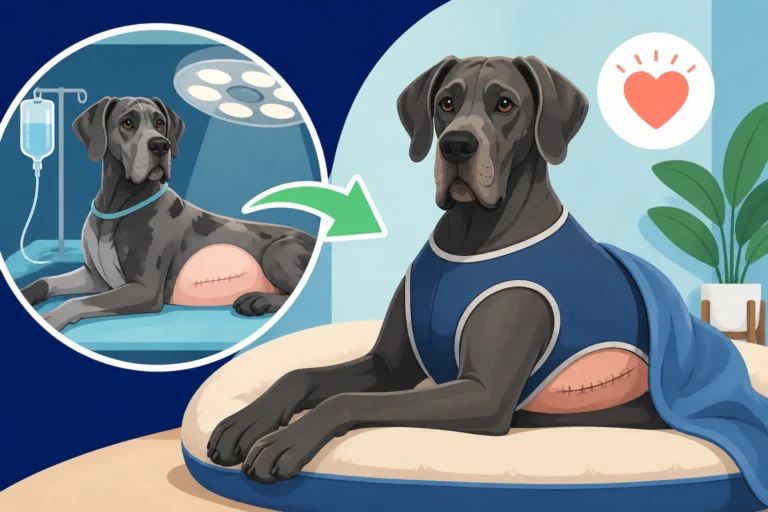
Let's be real: recovery from a major orthopedic surgery like a TPLO or TTA for a Great Dane is a marathon, not a sprint. We're talking about weeks and often months of strict adherence to vet instructions. The immediate post-operative period is particularly crucial.
- Strict Crate Rest/Confinement: This is non-negotiable. For the first 6-8 weeks, your Great Dane will need to be confined to a crate or a very small, secure room. This isn't about punishment; it's about protecting the healing bone and soft tissues. No jumping, running, playing, or going up or down stairs. This means you’ll be on constant "leash patrol" for bathroom breaks. Using a sling to support their hind end, especially in the first few weeks, is often essential, especially for bigger Danes who can easily put too much weight on the recovering leg.
- Pain Management: Your vet will prescribe a regimen of pain medications and anti-inflammatories. Administering these exactly as directed is critical to keeping your Dane comfortable and preventing them from trying to overuse the leg prematurely.
- Wound Care: You'll need to monitor the incision site for any signs of infection, swelling, or excessive discharge. Keep it clean and dry. An Elizabethan collar (cone) might be necessary to prevent licking or chewing at the stitches.
- Gradual Increase in Activity: After the initial strict confinement, your vet will guide you through a slow, controlled increase in activity. This usually starts with short, controlled leash walks, gradually increasing in duration over many weeks. We're talking about going from 5-minute potty breaks to maybe 20-30 minute walks over a period of months. It's frustratingly slow for a dog that loves to move, but patience is key. Ignoring these instructions can lead to setbacks, re-injury, or complications.
It’s an incredibly demanding time for owners, both emotionally and physically. Moving a giant, injured dog can be a challenge in itself, which is where Mobility Aids for a Failing Great Dane can become an invaluable part of your arsenal.
Physical Therapy and Long-Term Management
Once the initial healing phase is complete, typically around 8-12 weeks post-op (or for any non-surgical management), a structured physical therapy program becomes the cornerstone of full recovery. This isn't just "exercise"; it's targeted rehabilitation designed to restore strength, range of motion, and proper gait.
- Hydrotherapy (Underwater Treadmill): This is fantastic for Great Danes. The buoyancy of the water reduces weight-bearing stress on the joints while still allowing for muscle strengthening and improved range of motion. Many specialized rehab centers offer this, and it can make a huge difference in speeding up recovery and preventing muscle atrophy.
- Therapeutic Exercises: These include things like passive range of motion exercises (gently bending and extending the leg), controlled weight-shifting exercises, balance exercises, and eventually, specific strengthening activities. A certified canine rehabilitation therapist will design a program tailored to your Dane's needs.
- Home Exercise Program: You'll be given exercises to do at home daily. Consistency here is vital. It might feel like a second job, but these small, consistent efforts add up to big improvements.
- Joint Supplements: Many vets recommend joint supplements containing ingredients like glucosamine, chondroitin, and MSM for long-term joint health, especially for large breeds prone to arthritis. While they might not fix a torn ligament, they can help support the joint cartilage and reduce inflammation. For proper dosage, it’s worth understanding Whether Joint Supplements Reach a Great Dane's Dose.
- Weight Management: This cannot be stressed enough. Maintaining a lean body condition is critical for reducing stress on the repaired joint and preventing or slowing the progression of arthritis in both the affected and the healthy knee. Remember, dogs often tear the other CCL within a couple of years, largely due to increased strain from favoring the first injured leg.
Preventing Future Injuries
While you can't completely prevent all injuries, especially with genetic predispositions, you can take proactive steps to reduce the risk of a cruciate injury in your Great Dane, or at least minimize its severity.
- Maintain a Healthy Weight: This is the single most important factor. Keep your Great Dane lean. You should be able to easily feel their ribs without seeing them prominently, and they should have a discernible waist. Discuss your dog's ideal weight with your vet.
- Controlled Exercise: Avoid sudden, high-impact activities, especially on slippery surfaces or uneven terrain. Focus on consistent, moderate exercise like leash walks or swimming. For a growing Great Dane, understanding How Much a Growing Great Dane Should Walk is important to protect their developing joints.
- Good Traction Indoors: If you have hardwood floors or tile, consider runners or rugs in high-traffic areas to provide better grip and prevent slips and falls that can cause sudden twists and tears.
- Early Intervention: If you notice any subtle lameness, get it checked out by your vet promptly. Addressing a partial tear before it becomes a complete rupture can sometimes lead to less invasive treatment options or better long-term outcomes.
- Balanced Diet: Ensure your Great Dane is on a high-quality diet appropriate for large breeds. For puppies, this means a large breed growth formula that supports slow, steady bone development, rather than rapid growth which can exacerbate joint problems. Learning about Bone Development Problems in a Great Dane Puppy is crucial for young Danes.
Managing a cruciate injury in a Great Dane is a significant commitment of time, effort, and finances. Planning ahead with pet insurance like Healthy Paws can truly help ease the financial stress of these unexpected, costly health issues.
Understanding Cruciate Injury Treatment Options
Here's a quick look at the main treatment avenues for cruciate injuries in Great Danes:
| Treatment Type | Description | Pros | Cons | Ideal For |
|---|---|---|---|---|
| TPLO (Tibial Plateau Leveling Osteotomy) | Bone-cutting surgery that alters the angle of the tibial plateau, neutralizing forces that cause instability. | High success rate for large breeds, excellent long-term stability, often allows return to full function. | Invasive, longer recovery (weeks of strict confinement), higher cost, risk of complications (infection, plate issues), requires specialized surgeon. | Most complete CCL tears in active, large-breed dogs. |
| TTA (Tibial Tuberosity Advancement) | Bone-cutting surgery that advances the front part of the tibia, changing the angle of the patellar ligament to stabilize the joint. | Good success rate, potentially less invasive than TPLO (though still major), good stability. | Invasive, similar recovery time and costs to TPLO, risk of complications, requires specialized surgeon. | Complete CCL tears in large breeds, often chosen based on surgeon preference. |
| Extracapsular Repair (Lateral Suture) | A strong suture material is placed outside the joint capsule to mimic the function of the torn CCL. | Less invasive than TPLO/TTA, lower cost, quicker initial recovery. | High failure rate in giant breeds due to immense weight and forces, joint may remain unstable, often leads to more severe arthritis long-term. | Small dogs, sometimes in very old/sedentary large dogs where surgery risk is high. |
| Non-Surgical/Conservative Management | Strict rest, pain medication, anti-inflammatories, physical therapy, weight management, and sometimes a brace. | Avoids surgery risks and costs. | Very low success rate for full tears in Great Danes, leads to rapid arthritis, chronic pain, and limited function, requires immense owner dedication for limited return. | Very mild partial tears, dogs with severe co-morbidities making surgery impossible, or owners facing extreme financial constraints. |
No matter the path you choose, remember that your Great Dane relies on you for comfort, care, and unwavering support through their recovery.
Disclaimer
The information provided in this article is for educational purposes only and is not intended to be a substitute for professional veterinary advice, diagnosis, or treatment. Always seek the advice of your veterinarian or other qualified animal health provider with any questions you may have regarding a medical condition.