Whether a Female Great Dane Is Much Smaller
One of the most common questions I hear from folks considering bringing a majestic Great Dane into their lives is about size, specifically, "Is a female Great Dane much smaller than a male?" It's a completely fair question, because when you're talking about a breed that can easily reach your chest while standing on all fours, even a slight difference can feel pretty significant in your living room! This guide will delve deep into the nuances of size differences between male and female Great Danes, exploring not just the numbers, but what those variations actually mean for everyday life with one of these magnificent dogs.
The General Expectation of Great Dane Size
When you picture a Great Dane, you probably conjure an image of a colossal dog, often leaning into a person, dwarfing furniture. And you're not wrong! They are truly giant dogs. But even within this giant breed, there are distinct differences between the sexes. It’s not just a matter of males being "a bit bigger"; there's often a noticeable disparity in both height and overall substance. Understanding this from the outset can help you prepare for the reality of living with such a magnificent creature.
Understanding Breed Standards for Size
Every purebred dog has a breed standard, a blueprint of the ideal dog that breeders strive to achieve and judges evaluate in the show ring. For Great Danes, this standard clearly defines minimum and, in some cases, preferred sizes for both males and females. These aren't arbitrary numbers; they reflect the historical function of the breed and what is considered healthy and proportional. While individual dogs will vary, the standard provides a critical framework for what constitutes a "correct" Great Dane. Think of it as the ultimate goal for breeders, a guideline that shapes the very look and feel of the breed.
The standard doesn't just dictate height; it describes the dog's overall build, its musculature, bone structure, and even the way it carries itself. A female, while smaller, is still expected to be robust and powerful, embodying the same grace and strength as her male counterpart, just on a slightly reduced scale. It’s not about being delicate; it’s about being proportionate to her sex, still very much a Great Dane.
More Than Just Height: The Overall Build
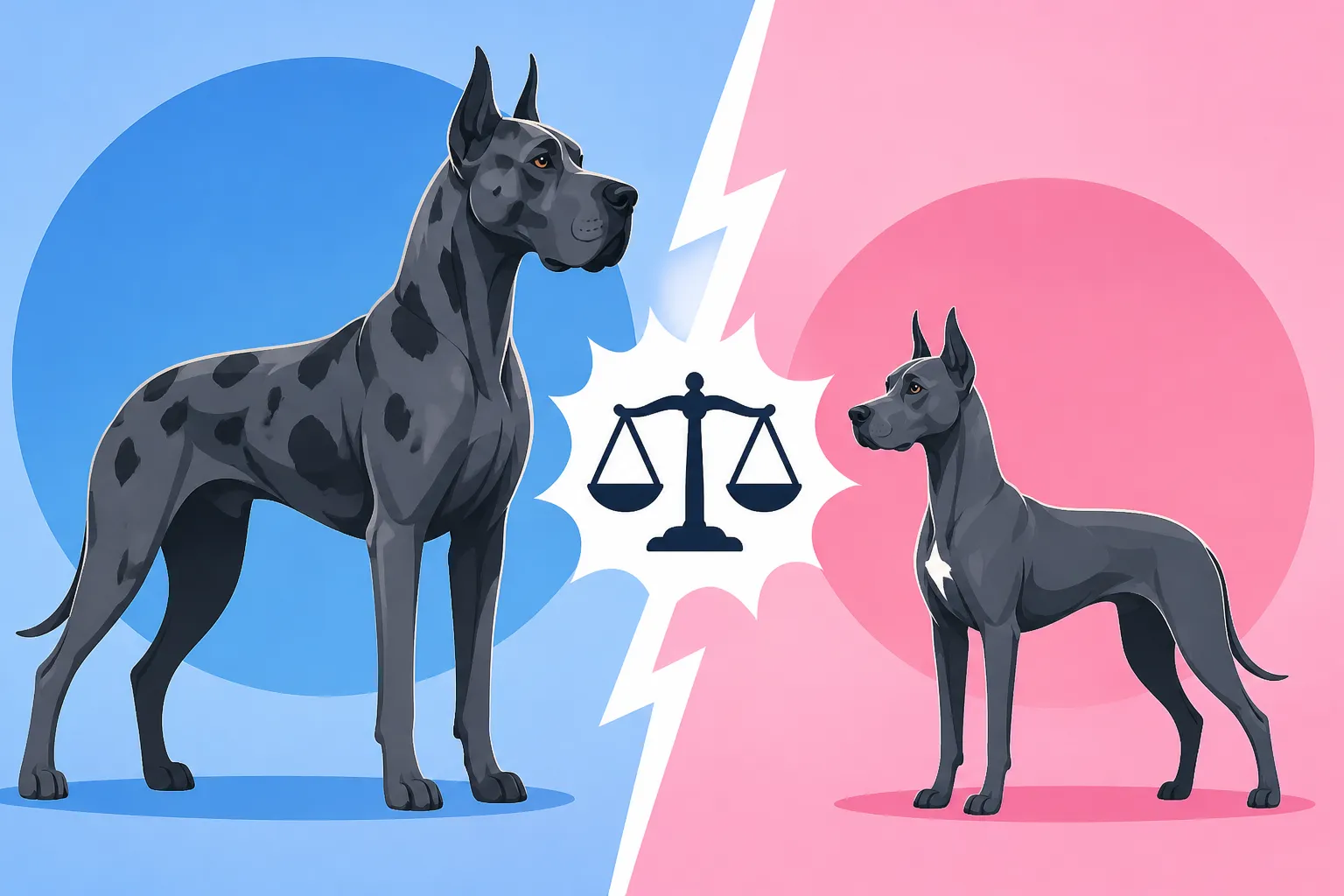
When we talk about size, it’s easy to focus solely on height. We imagine standing next to a Great Dane and where its head might reach. However, height is only one piece of the puzzle. Males typically possess a greater degree of "substance" or "bone" – meaning they have heavier bones, more developed musculature, and a broader chest and skull. This contributes significantly to their overall presence. A female, while tall, might appear more refined or elegant, with a slightly narrower frame and less pronounced musculature. It’s a bit like comparing a powerful male athlete to a strong female athlete; both are immensely capable, but their builds have distinct characteristics.
This difference in build also means they carry their weight differently. A male might be significantly heavier even if he's only an inch or two taller than a female. This added bulk translates into more physical presence, more power when they lean into you (which they will!), and a larger footprint in your home. It’s a subtle but important distinction that often surprises new owners.
Unpacking the Great Dane Standard: Males vs. Females
Let’s get into the nitty-gritty of what the breed standard actually says about the size of male and female Great Danes. This isn't just for show enthusiasts; it helps us understand the typical range you can expect in pet homes, too. Remember, these are minimums and ideals, and many Danes will fall within or slightly above these ranges. If you're looking for an excellent example of what judges look for, you might be interested in reading The Great Dane the Show Ring Is Looking For.
Height at the Withers: The Key Measurement
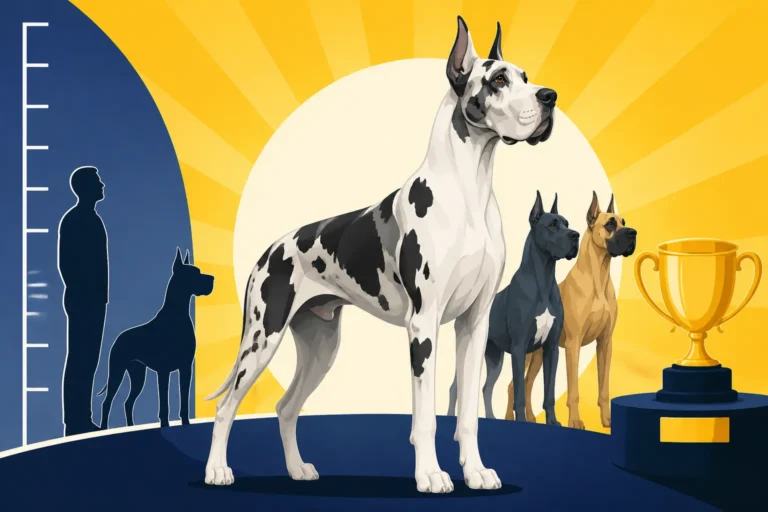
The "wither" is the highest point on a dog’s shoulder blades. This is where Great Danes are measured for height. The breed standard sets clear minimums:
- Males: Should stand at least 30 inches at the withers, with 32 inches or more being preferable. You can delve more deeply into what this means by checking out The Thirty-Two Inch Male Great Dane.
- Females: Should stand at least 28 inches at the withers, with 30 inches or more being preferable.
So, right off the bat, there’s a difference of at least two inches in the minimum height, and often more in the preferred height. This might sound like a small difference on paper, but when you're talking about dogs already topping out most measuring tapes, two to four inches can make a noticeable impact on how a dog feels in your space. Imagine a dog reaching your chin versus your forehead – it’s a tangible difference.
Weight and Substance: Beyond the Tape Measure
While the standard doesn't typically specify exact weight ranges, it emphasizes "substance" and "bone," which directly relate to weight. As mentioned earlier, males are expected to be more robust.
- Males: Can easily weigh anywhere from 120 pounds to 180 pounds, and sometimes even more, depending on their build and conditioning. A truly substantial male might weigh well over The Hundred and Forty Pound Great Dane Male. They are built like brick houses, with broad chests and powerful legs.
- Females: Will generally weigh between 100 pounds and 140 pounds. While still incredibly powerful and substantial, they tend to have a more feminine, less bulky build.
This weight difference, combined with the height, means that males often feel much larger than females. They take up more space on the couch, consume more food (check out Chewy for bulk food options!), and require more physical strength to handle on a leash, especially if they haven't had consistent training. Speaking of which, it's never too early to start training; read Why Great Dane Training Cannot Wait.
The Impact of Individual Genetics and Lines
It’s crucial to remember that these are general guidelines. Just like people, individual Great Danes come in all shapes and sizes. You might encounter a particularly tall female who stands shoulder-to-shoulder with an average-sized male, or a more compact male who fits within a female's typical weight range.
Several factors influence a dog’s eventual size:
- Genetics: The parents' size and the lineage they come from play a massive role. Some breeding lines consistently produce larger, more substantial dogs, while others might lean towards a more moderate size within the standard.
- Nutrition: Proper nutrition during puppyhood is vital for healthy growth. Overfeeding or underfeeding, or providing improper calcium/phosphorus ratios, can impact a Dane's final size and skeletal health. For more on this, check out Whether a Great Dane Puppy Should Be Kept Lean.
- Exercise: Appropriate exercise for a growing giant breed is also key. Too much strenuous activity too young can stress developing joints, while too little can lead to obesity.
So, while the breed standard gives us a strong expectation, it's not a rigid rule for every single dog. Always inquire about the size of the puppy's parents when looking at breeders to get a better idea of what to expect. This can offer a more realistic picture than just looking at a generic breed standard.
Growth and Development: When Differences Become Apparent
Great Danes grow at an astonishing rate, sometimes gaining several pounds and inches a week in their first year. Watching them sprout before your eyes is truly something else! But how do these growth patterns differ between males and females? And when do you really start to see those size disparities emerge?
Puppyhood and Adolescent Growth Curves
In puppyhood, the differences in size might be subtle at first. Both male and female Great Dane puppies are chunky, rapidly growing bundles of joy. However, as they move into their adolescent phase (typically from around 4-6 months onwards), the divergence becomes more noticeable.
Males tend to hit their growth spurts with greater intensity and duration. They'll often shoot up in height and start to fill out faster, developing that broader chest and heavier bone structure sooner than their female counterparts. By the time they are a year old, a male Great Dane will likely be noticeably taller and more substantial than a female of the same age. To understand typical growth, you might want to read How Tall a Great Dane Is at a Year.
Females, while still growing rapidly, often have a slightly more measured growth trajectory. They might reach their near-adult height a bit earlier than males, but then continue to fill out and gain substance more gradually. It’s not uncommon for a female to look "finished" in terms of height around 12-18 months, while a male might still be thickening and maturing for another six months or even a year beyond that.
Reaching Full Maturity: The Filling Out Phase
While a Great Dane might reach most of its adult height by 12-18 months, they aren't considered fully mature until much later, typically between 2 and 3 years of age. This "filling out" phase is particularly pronounced in males. Even after they stop gaining significant height, they will continue to broaden their chests, develop more muscle, and deepen their overall substance. For more insight into this, see Whether a Great Dane Keeps Filling Out to Two.
Females also continue to mature, but often their filling out is less dramatic. They maintain that slightly more refined look, even at full maturity. This prolonged development is one reason why it's so important to feed a Great Dane puppy a large-breed specific food that supports slow, steady growth rather than rapid gains, which can stress developing joints. A diet rich in appropriate nutrients helps ensure they reach their full, healthy potential, regardless of sex.
Here's a simplified look at typical size ranges:
| Feature | Male Great Dane (Typical) | Female Great Dane (Typical) |
|---|---|---|
| Height (Withers) | 30-34+ inches (76-86+ cm) | 28-32+ inches (71-81+ cm) |
| Weight | 120-180+ pounds (54-82+ kg) | 100-140+ pounds (45-64+ kg) |
| Build | More substantial, heavy bone, broad chest | More refined, lighter bone, feminine |
| Maturity | Full height ~18 months, full weight/substance ~2-3 years | Full height ~12-18 months, full weight/substance ~2 years |
(Note: These are general ranges and individual dogs will vary.)
Practical Implications of Size Differences for Owners
Understanding the size differences between male and female Great Danes isn't just about satisfying curiosity; it has very real, practical implications for daily life with your giant companion. From how you manage them to the equipment you buy, size matters.
Handling and Training Considerations
A male Great Dane, with his greater weight and substance, inherently possesses more physical power. This means that consistent, early training is absolutely non-negotiable, regardless of gender, but perhaps even more critical with a powerful male. A 160-pound male can pull a grown adult off their feet with surprising ease if he decides to chase a squirrel. Even a 120-pound female has considerable strength, but the sheer bulk of a male can add another layer of challenge.
- Leash Walking: Learning to walk politely on a leash is paramount. Devices like front-clip harnesses from brands like Chewy can be invaluable tools for teaching loose-leash walking, helping you manage a dog that could easily outweigh you.
- Jumping: Both males and females can jump up to greet, but a male's impact can be significantly greater, potentially knocking over children or even adults. Teaching a solid "off" or "four on the floor" command is vital.
- Car Travel: Getting a massive male into a vehicle can be a literal wrestle, whereas a slightly lighter female might be a tad easier, though still a challenge! Ramps can be a lifesaver for both.
Ultimately, proper training and socialization are the bedrock of living happily with any Great Dane. Their gentle giant nature is a gift, but it needs to be fostered with firm, consistent guidance from day one.
Equipment and Space Needs
The size of your Great Dane dictates the size of almost everything they own and use. While both sexes require extra-large everything, the maximum size of a male can push those requirements even further.
- Crates: If you choose to crate train, you'll need one of the largest crates on the market, often a "XXL" or "Giant" size. A large male might struggle to comfortably stand and turn in some crates advertised for "large" breeds. Make sure you pick wisely; consider Choosing a Crate a Great Dane Can Stand In.
- Beds: Orthopedic beds are a must for Great Danes to protect their joints, but a male might require an even denser or larger bed to provide adequate support and room to stretch out.
- Bowls: Expect large-capacity food and water bowls. A male consuming 8-10 cups of kibble a day from Chewy will need a serious bowl to hold it all.
- Harnesses and Collars: You'll be looking at the largest sizes available, often specialized "giant breed" options. For more on this, see Harnesses and Leads for a Great Dane.
- Space in the Home: While Great Danes are surprisingly calm indoors, they still occupy a lot of space. A large male might have a more imposing presence in a smaller living area than a female. Think about how much room they'll need to turn around without knocking over lamps, or how much space they'll take up when stretched out on the floor.
Health and Lifespan Factors
While size itself isn't a direct health condition, the sheer mass of a Great Dane contributes to unique health considerations, and these can be amplified in larger males.
- Joint Stress: The rapid growth and immense weight of Great Danes put significant stress on their joints. This is true for both sexes, but a heavier male may experience greater forces on his hips, elbows, and other joints, potentially exacerbating issues like hip or elbow dysplasia if present. Preventing excessive weight gain in growing puppies is critical.
- Bloat (GDV): Great Danes are notoriously prone to bloat, a life-threatening condition where the stomach twists. While both sexes are at risk, some anecdotal evidence suggests larger, deeper-chested males might be marginally more susceptible, though the risk is high across the entire breed. Understanding the lifetime risk of bloat is something every owner should do; you can read about The Lifetime Bloat Risk in a Great Dane.
- Anesthesia: Due to their size and unique physiology, Great Danes often require specialized anesthetic protocols, and the cost of medication (which is often weight-dosed) can be higher for a heavier dog.
In conclusion, yes, a female Great Dane is typically smaller than a male. This difference isn't just a matter of a few inches in height; it extends to overall weight, bone substance, and general bulk. While both are magnificent, powerful dogs that require dedicated care and training, a male will generally present a more imposing physical presence. Understanding these differences can help you better prepare for life with your chosen Great Dane, ensuring a harmonious and healthy life together. Don't forget, the absolute total size a Great Dane actually gets can be truly astounding! For a comprehensive overview, read How Big a Great Dane Actually Gets.
Disclaimer
This article is for general informational purposes only and does not constitute professional advice. Laws, prices and regulations vary by location and change over time. Consult a qualified professional for guidance on your specific situation.