Stopping a Great Dane Body Slamming
There's nothing quite like the feeling of being enthusiastically greeted by your beloved Great Dane, but when that enthusiasm translates into a full-body slam, it can be both startling and potentially dangerous, especially if you're caught off guard or have smaller family members around. This guide is here to walk you through understanding why your giant companion might be using their impressive weight in such an ungraceful way and, more importantly, how to redirect that boisterous energy into polite, manageable interactions that everyone can enjoy safely.
Understanding Why Your Great Dane Body Slams
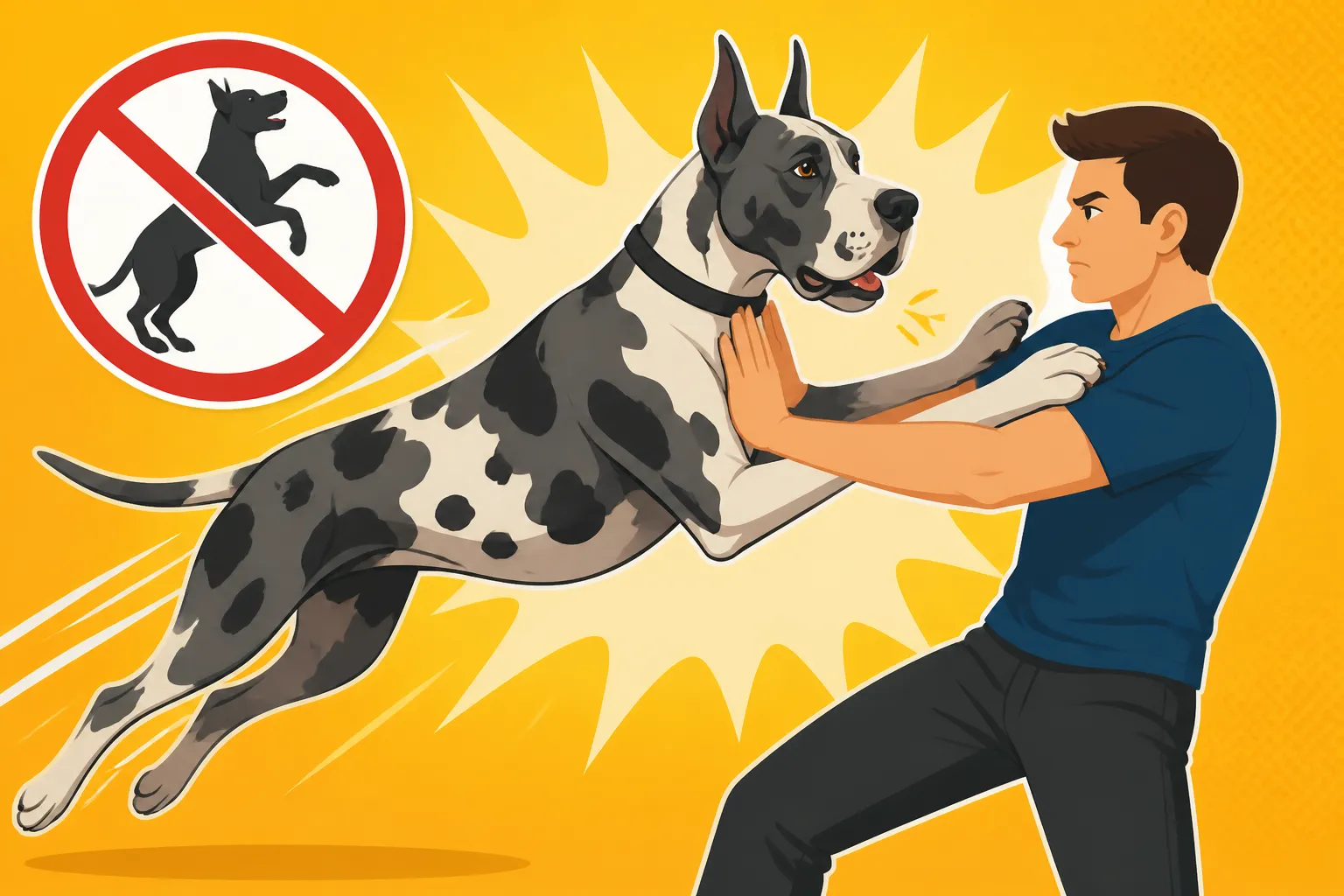
It’s easy to feel frustrated when your gentle giant barrels into you, knocking the wind out of you or sending you stumbling. It might even seem intentional, but for most Great Danes, body slamming is rarely malicious. It often stems from a combination of their sheer size, their natural exuberance, and sometimes, a simple lack of understanding about personal space.
The Playful, Yet Powerful, Nature of a Growing Dane
Think about it: your Great Dane puppy might have been a clumsy bundle of joy, tripping over its own feet. But as they grow at an astonishing rate, that clumsiness scales up dramatically. What was a gentle nudge from a 30-pound pup quickly becomes a full-on tackle from a 150-pound adolescent. They often haven't fully grasped their own size and power, especially during their most excited moments.
A young Great Dane, even one bred for its gentle temperament, is still a creature of immense energy and playfulness. They want to interact, to engage, and sometimes, their idea of an invitation to play involves leaning, pushing, or even outright body slamming. This behavior, while startling for us, might feel completely normal to them, especially if it gets a reaction – any reaction – from their favorite humans. It’s important to remember that they mature physically long before they mature mentally, so you often have a giant puppy in a full-grown dog's body.
Seeking Attention and Expressing Excitement
One of the most common reasons a Great Dane might body slam is simply to get your attention. Dogs are masters of cause and effect. If a gentle nudge doesn't get your eyes off your phone, but a big thump against your leg does, guess which behavior they're more likely to repeat? Even if your reaction is to say "ouch!" or push them away, in their mind, they achieved their goal: they got you to notice them. This can quickly become a self-reinforcing cycle.
Excitement is another huge factor. Imagine coming home after a long day. Your Great Dane, who has been eagerly awaiting your return, is overcome with joy. They might spin, bark, jump, and, yes, body slam into you as a pure expression of their happiness. They're not trying to hurt you; they're simply unable to contain their enthusiasm. This is where early training to manage greetings becomes absolutely crucial, as explored in articles like Getting a Great Dane to Greet Without Standing Up. Without clear guidance on appropriate ways to express that excitement, they’ll revert to what feels natural to them, which for a big, bouncy Dane, can often be a full-contact greeting.
Lack of Spatial Awareness and Impulse Control
It's a tough lesson for a Great Dane to learn: how much space they actually take up. When they're sprawling on the sofa, they probably don't realize their tail is knocking over a lamp. When they're walking beside you, they might not sense that their hip is bumping you off balance. This lack of inherent spatial awareness is compounded by a lack of impulse control. If they see something exciting – a person, a toy, a squirrel out the window – their instinct is to react now, often without considering the physical impact of their mass and momentum.
This is why foundational training is so vital. Teaching a Great Dane to "stay" or to go to their "place" isn't just about obedience; it's about building their capacity for self-control and helping them understand that there are times to hold back. Without these boundaries, a Great Dane might not understand why body slamming into you on the way to the door is problematic when they're simply trying to get to whatever is making them excited. It requires a lot of patience and consistent guidance to help them develop the self-regulation that smaller dogs might acquire more easily. Why Waiting Until a Great Dane Is Grown Is Too Late really emphasizes the need to start these lessons early.
Establishing Clear Boundaries and Consistent Training
The good news is that body slamming, like most undesirable behaviors, can be managed and corrected with clear boundaries and consistent training. It's all about teaching your Great Dane acceptable ways to interact and reinforcing those behaviors every single time.
The Importance of "Four on the Floor"
This is a golden rule for any large dog, but it's especially critical for Great Danes: all four paws must remain on the ground when interacting with people. This simple rule prevents jumping, leaning, and of course, body slamming. To teach this, you need to be incredibly consistent and enlist the help of everyone who interacts with your dog.
When your Great Dane approaches you, especially if they're excited, calmly ask for a "sit" or "down." If they remain calm and all four paws are on the floor, immediately reward them with praise and a treat. If they start to get bouncy or lean into you, turn your back, cross your arms, and completely ignore them. The moment they settle their paws, turn back and reward. This is a powerful technique because it teaches them that desirable interactions (attention, treats) only happen when they're calm and respectful of personal space. You might even consider having a designated "place" for them to go to, like a mat or a bed, when guests arrive, giving them a calm alternative to overwhelming people. Teaching a Great Dane a Place to Settle offers more strategies for this.
Teaching Impulse Control and Polite Greetings
Building strong impulse control is foundational to preventing body slamming. Commands like "sit," "stay," and "wait" are not just party tricks; they are essential life skills for a giant breed. Practice these commands frequently in various environments and with increasing distractions. For example, if your Dane tends to body slam when you come through the door, practice having them "sit" and "stay" as you enter. Start with a quick entry, reward, and gradually extend the time they need to hold the position before receiving their reward and greeting.
When guests arrive, manage the situation carefully. Keep your Dane on a leash initially, allowing them to greet calmly only when they can keep all four paws on the floor. Ask your guests to also ignore jumping or leaning and only interact when your dog is calm. Many online training programs, like those offered by BAXTER & Bella, provide structured, step-by-step guidance on how to teach these crucial manners from puppyhood through adulthood. Their focus on positive reinforcement and building a strong foundation can be incredibly beneficial for a breed as sensitive and intelligent as the Great Dane. Remember, a polite greeting isn't just about preventing physical impact; it's about fostering a respectful relationship between your dog and everyone they meet.
Managing Excitement Levels
Great Danes can go from zero to a hundred in a split second when something exciting happens. Learning to manage these bursts of energy before they result in a body slam is key. If you know a common trigger for excitement – like the doorbell, you coming home, or seeing another dog – try to preempt it.
Before you open the door, ask your Dane to "sit" or "down" a few feet away. Reward them for holding that position calmly. When you come home, instead of immediately engaging, put your keys down, take off your coat, and only then calmly acknowledge your dog once they are settled. For encounters on walks, work on teaching a solid "look at me" command to redirect their focus away from the exciting distraction and back to you. Engaging their brains with puzzle toys or a short training session before a potentially exciting event can also help burn off some of that pent-up energy and make them more receptive to calm behavior. The goal isn't to squash their joy, but to channel it into appropriate expressions.
Practical Tools and Techniques to Prevent Body Slamming
While consistent training is the bedrock, certain tools and techniques can significantly aid in managing your Great Dane's physical presence and preventing body slams. These aren't substitutes for training, but rather aids that empower you to be more effective.
Appropriate Leash and Harness Choices
For a dog as strong as a Great Dane, the right equipment isn't just a preference; it's a necessity for safety and control. A standard collar might work for a calm walk, but it offers little leverage when your Dane decides to lunge or body slam with 150 pounds of force. Look into harnesses that offer control points on the front of the chest. When your dog pulls or leans into this type of harness, it gently redirects their momentum to the side, making it much harder for them to maintain a forward charge or a body-slamming posture. Brands like Freedom No-Pull Harness are often recommended for their effectiveness.
Another excellent option, especially for Danes who need a lot of guidance, is a head halter (like a Gentle Leader or Halti). This wraps around their muzzle and behind their ears, giving you control over their head, and where the head goes, the body follows. Many find these incredibly effective for controlling pulling and redirecting unwanted lunging or jumping behaviors. When shopping for these tools, prioritize durability and proper fit for a giant breed. You can find a wide range of options, often with helpful reviews from other large dog owners, on platforms like Amazon. Remember to introduce any new harness or head halter gradually and positively, as some dogs can be resistant initially. Harnesses and Collars That Control a Great Dane delves deeper into these options.
Creating a Safe and Predictable Environment
Managing your home environment can play a huge role in preventing body slams. Think about where and when these incidents tend to occur. Do they happen when visitors arrive? When you're carrying groceries? Setting up physical barriers can be incredibly effective during these times.
Utilize baby gates (extra tall ones, of course!) to create clear zones in your home. For instance, keep your Dane behind a gate when you first come home or when guests arrive, allowing them to settle down before supervised interaction. Crates, when used properly, can also be invaluable. A large, comfortable crate can serve as a safe haven and a management tool. Teaching your Great Dane to enjoy their crate means you have a reliable place to put them when you need to prevent unwanted behaviors or when they simply need to decompress. Ensuring their crate is appropriately sized, allowing them to stand and turn around comfortably, is key. Choosing a Crate a Great Dane Can Stand In provides guidance on this. By proactively managing their access and interaction, you reduce opportunities for them to practice body slamming and reinforce calmer behaviors.
Positive Reinforcement and Reward Systems
This cannot be stressed enough: positive reinforcement is the most effective way to train a Great Dane. They are sensitive souls and respond far better to rewards for good behavior than to punishment for bad. When your Dane doesn't body slam, when they offer a polite sit, or when they calmly approach you, you need to mark that moment and reward it generously.
High-value treats are your best friend here – think small pieces of cooked chicken, cheese, or specialized training treats that they absolutely adore. The timing of the reward is critical; it needs to happen within a few seconds of the desired behavior so your Dane clearly understands what they are being rewarded for. Pairing the treat with enthusiastic verbal praise ("Yes! Good sit!") or a clicker can amplify the message. It's about building a positive association: "When I'm calm and polite, good things happen." Over time, they'll learn that calm, four-on-the-floor behavior gets them what they truly want – your attention and affection – far more effectively than a jarring body slam. If you're looking for ideas on what kind of treats resonate most with these gentle giants, Treats a Great Dane Will Work For offers some great suggestions.
What to Do When a Body Slam Happens (And How to Prevent Recurrence)
Even with the best intentions and consistent training, a body slam might still happen. It’s crucial to have a plan for how to react in the moment and, more importantly, how to learn from it to prevent future occurrences.
The Immediate Response
When your Great Dane body slams you, your immediate reaction might be to yell, push them away, or even gasp in pain. While these are natural human responses, they can inadvertently reinforce the behavior. To your Dane, any reaction is attention. If they slam into you and you yell "No!" or push them, they might interpret that as an interaction, even if it's negative.
Instead, the most effective immediate response is to calmly and silently disengage. Turn your back, walk away, and completely remove your attention. If you're holding a treat, put it away. If they follow you, continue to disengage until all four paws are on the floor and they are calm. Only then, once they are settled, should you turn back and, if they maintain calm behavior, reward them. The key is to make the body slam unproductive. It shouldn't get them attention, a toy, or a treat. It should result in you becoming utterly boring and inaccessible until they choose a more appropriate way to interact. This method takes immense self-control on your part, but it's incredibly powerful for teaching your Dane what doesn't work.
Consistency is Key
Training a Great Dane, especially on behaviors like body slamming, requires unwavering consistency from every single person in their life. If one person allows the body slamming, even occasionally, while others are trying to correct it, your Dane will become confused and the behavior will be much harder to extinguish. Imagine if sometimes you got a cookie for sitting quietly, but other times you got a cookie for jumping on the counter – you'd probably try jumping on the counter more often!
Hold a family meeting and ensure everyone understands the rules: "four on the floor" at all times, ignoring unwanted behavior, and rewarding calm interactions. This includes children, housemates, and even regular visitors. Explain why these rules are in place – not just for discipline, but for safety and for fostering a well-behaved companion. Consistency isn't just about repetition; it's about uniformity of response, making the desired behavior the only one that yields positive results. Expect setbacks; they are part of any training journey. Don't get discouraged if your Dane reverts to old habits occasionally. Simply go back to the basic steps, reinforce, and stay consistent.
Seeking Professional Help
Sometimes, despite your best efforts, you might find yourself struggling to curb body slamming or other challenging behaviors. This is absolutely nothing to be ashamed of; Great Danes are a unique breed with specific needs, and professional guidance can be invaluable. Don't hesitate to reach out to a certified professional dog trainer or a veterinary behaviorist who has experience with giant breeds.
A good trainer can observe your dog's behavior, identify underlying triggers you might be missing, and provide personalized strategies tailored to your Dane's individual personality and your household's dynamics. They can also teach you new handling techniques and deepen your understanding of canine communication. For instance, if your Dane is body slamming due to extreme anxiety or fear, a behaviorist can help address those root causes, something general obedience training might not cover. Investing in professional help can save you a lot of frustration and strengthen the bond with your beloved Great Dane, turning a boisterous giant into the well-mannered companion you know they can be.
| Do's for Stopping Body Slamming | Don'ts for Stopping Body Slamming |
|---|---|
| Do immediately disengage and ignore the behavior. | Don't yell, push, or give any attention to it. |
| Do consistently reward calm, "four on the floor" greetings. | Don't allow inconsistent rules from family or guests. |
| Do use front-clip harnesses or head halters for walks. | Don't rely solely on a flat collar for control. |
| Do teach impulse control commands like "sit" and "stay." | Don't expect your Dane to know implicitly how to behave. |
| Do manage the environment with gates or crates during high excitement. | Don't put your Dane in situations where they are set up to fail. |
| Do seek professional help if you're struggling. | Don't get discouraged by setbacks – consistency pays off. |
| Do pre-emptively manage excitement before triggers. | Don't wait until the body slam happens to react. |
Disclaimer
This article is for general informational purposes only and does not constitute professional advice. Laws, prices and regulations vary by location and change over time. Consult a qualified professional for guidance on your specific situation.