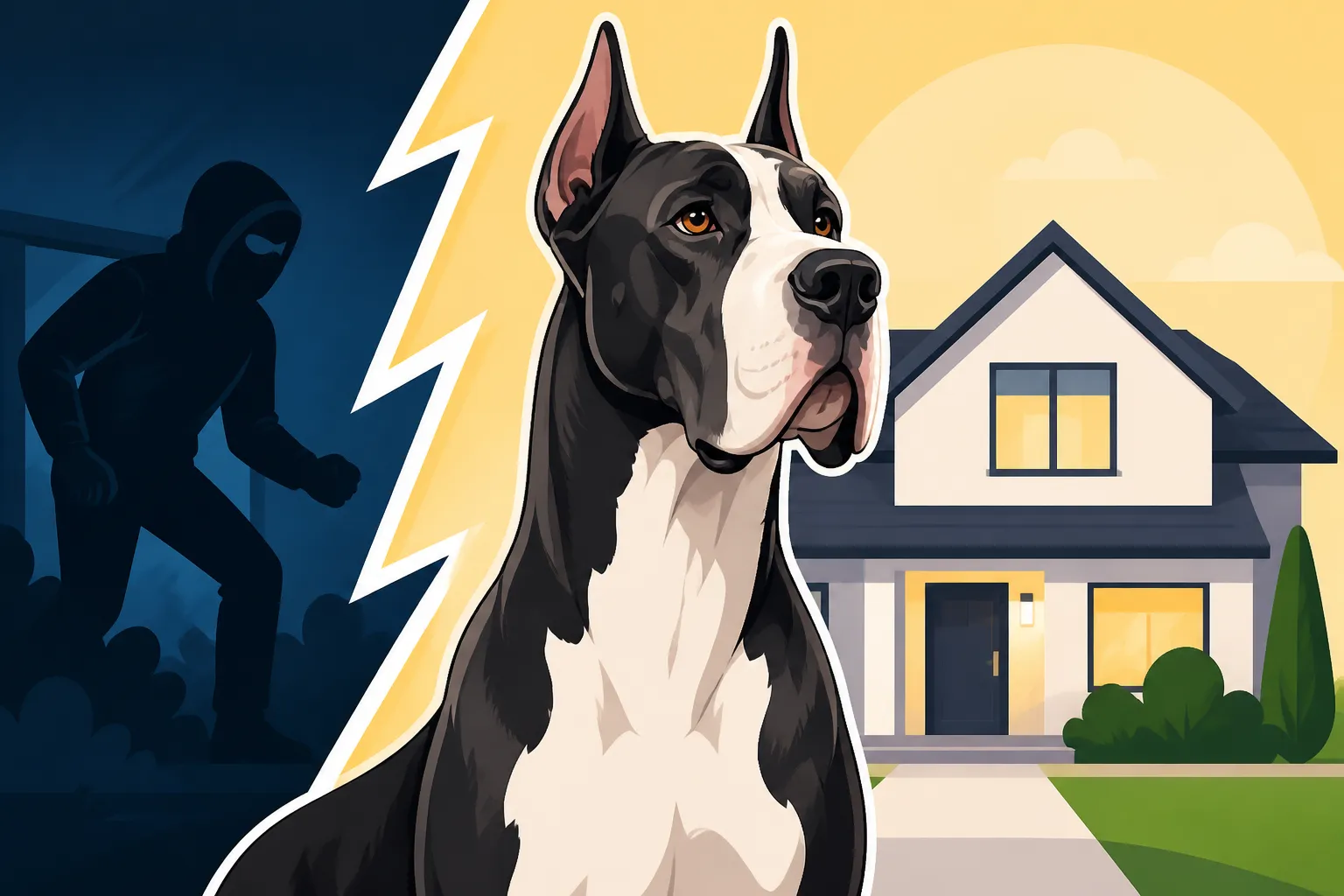
Whether a Great Dane Would Guard the House
One of the most common questions I hear from potential Great Dane owners is whether these majestic giants will protect their home and family. It’s a completely understandable concern, given their imposing size and historical lineage, but the reality of a Great Dane’s guarding capabilities isn't quite as straightforward as one might assume based on their appearance alone. This guide will delve into the true nature of Great Danes, separating fact from myth when it comes to their role as protectors of your household.
Understanding the Great Dane Temperament: Gentle Giant or Fierce Protector?
The Great Dane stands as a monument to canine grace and power, often dubbed the "Apollo of Dogs" for its noble bearing. Yet, beneath that impressive exterior lies a heart often described as gentle and loving. This dual perception is where much of the confusion about their guarding capabilities arises.
The "Gentle Giant" Stereotype and Reality
The moniker "gentle giant" isn't just a catchy phrase; it genuinely encapsulates the typical Great Dane temperament. These dogs are renowned for their affectionate, patient, and often goofy personalities, especially with their immediate families. They thrive on companionship and are incredibly sensitive to the moods of their human counterparts. This means that while they might be huge, they're often more inclined to lean against you for comfort than to aggressively confront a perceived threat.
However, "gentle" doesn't equate to "defenseless" or "oblivious." A Great Dane’s gentleness is often reserved for those they know and trust. With strangers, their initial reaction can range from wary observation to boisterous curiosity. They are, after all, large animals, and their sheer presence can be intimidating. But it’s crucial to understand that this natural wariness or imposing size doesn't automatically translate into a desire or instinct to attack or physically guard. Their true nature leans more towards being a loving family companion rather than a dedicated protection dog. It's about their inherent disposition, which prioritizes connection and harmony within their trusted circle.
A History Rooted in Hunting, Not Guarding
To truly understand a Great Dane’s protective instincts, we need to look back at their origins. Despite their name, Great Danes are not Danish; they hail from Germany, where they were known as "Deutsche Dogge" or German Mastiffs. Their primary role wasn't to guard castles or fend off human intruders, but rather to hunt wild boar and other large game. This required incredible strength, speed, and courage to hold prey until hunters arrived. Why the Great Dane Is Not Danish
While their ancestors were certainly formidable, the job of a boar hound is different from that of a modern guard dog. A boar hound needed to be brave, yes, but also intelligent enough to work with humans, agile enough to navigate dense forests, and possessing a powerful bite to subdue large animals without necessarily killing them. Modern breeding has refined these traits, emphasizing companionship and docility over raw aggression. The instinct to "guard" in the traditional sense, meaning to physically attack and deter human threats, was not the primary driver in their development. Instead, their historical role fostered a brave but controllable nature, one that partners with people rather than taking independent aggressive action against them.
The Difference Between a Watchdog and a Guard Dog
When people ask if a Great Dane will "guard the house," they're often envisioning a dog that will physically intervene or attack an intruder. It's important to differentiate between a "watchdog" and a "guard dog," because Great Danes generally excel at one, but rarely the other.
Great Danes as Alert Watchdogs
A watchdog's primary role is to alert its owners to the presence of strangers or unusual activity. This usually involves barking, growling, or other forms of vocalization. In this capacity, Great Danes are often excellent. Their size, combined with a surprisingly deep and resonant bark, can be incredibly effective at signaling an unexpected presence. When the mail carrier approaches, or a squirrel dares to scamper across the fence line, you'll likely hear about it. A Great Dane That Barks at the Door
Their acute hearing and imposing stature make them natural deterrents. Just the sight of a Great Dane through a window, or the sound of their booming bark echoing through a home, can be enough to make many unwanted visitors think twice. They are very observant of their surroundings and are quick to notice anything out of the ordinary. This alerting behavior is usually driven by their natural curiosity and their instinct to communicate with their family, rather than an aggressive territorial drive. They're telling you, "Hey, something's up!" and that alone adds a significant layer of security to your home.
Why They Aren't Traditional Guard Dogs
A true guard dog, in the traditional sense, is trained to physically confront and neutralize a threat, often with bites, and to protect property or individuals with force. This requires a very specific temperament: high prey drive, strong territorial instincts, and a willingness to engage in conflict. Most Great Danes simply don't possess these inherent traits to the degree necessary for this role. While they are large and powerful, their default reaction to a stranger on their property is usually suspicion, followed by a vocal alert, not immediate physical aggression.
If an intruder were to persist past the barking stage, a typical Great Dane is more likely to retreat to their owner for guidance, or perhaps even attempt to block an entry path, rather than launch an attack. They are highly attuned to their family's reactions, and if you are not acting aggressively, they are unlikely to either. Their "gentle giant" nature means they lack the sustained aggression and bite work drive found in breeds specifically bred for protection work. Attempting to train a naturally gentle Great Dane for aggressive guard work can be detrimental to their temperament, making them anxious, fearful, or unpredictably defensive, which can be dangerous given their size. Whether a Great Dane Ever Shows Aggression
Natural Protective Instincts Towards Family and Home
While Great Danes may not be traditional guard dogs, their deep loyalty and imposing presence translate into powerful protective instincts that manifest in unique ways around their cherished family and home.
Loyalty and Bond with Their People
The Great Dane forms incredibly strong bonds with its human family. They are often described as "velcro dogs," preferring to be close to their people at all times. This profound loyalty is the bedrock of their protective nature. They view their family as their "pack," and their instinct is to keep their pack safe. This isn't about aggression, but about their devotion. If a family member is perceived to be in danger, a Great Dane's natural instinct to intervene, often by placing themselves between their loved one and the perceived threat, is very strong.
Imagine a scenario where a child is playing in the yard and a strange, fast-moving dog enters without warning. A Great Dane, even one that typically loves other dogs, might instinctively place itself in front of the child, using its sheer size to deter the newcomer. This isn't a trained attack; it's a profound, innate desire to shield and safeguard those they love. Their immense size, even in a non-aggressive stance, is a powerful visual deterrent. It’s a quiet, steadfast protection, born from the heart of a truly devoted companion. The Gentle Great Dane Temperament and Its Limits
Reacting to Strangers and Unfamiliar Situations
How a Great Dane reacts to strangers can vary greatly depending on their individual personality, early socialization, and the specific situation. A well-socialized Great Dane, especially one that has had positive experiences with new people, might be aloof but generally accepting, or even overly friendly, trying to get pets from everyone. However, if they perceive a stranger as a threat, their demeanor will shift.
Their reactions might include a deep, rumbling growl, raised hackles, or intense staring. They might position themselves between you and the stranger. This is their way of saying, "I'm watching you, and I'm ready to act if necessary." It’s an assertion of presence rather than an immediate attack. For instance, if a repair person comes into your home and makes a sudden, loud noise, your Great Dane might let out a booming bark and stand their ground, looking to you for reassurance and direction. It’s their way of alerting you to potential danger, rather than taking matters entirely into their own paws. Proper Socializing a Great Dane Puppy Early is paramount to ensure these reactions are appropriate and measured, rather than born of fear or undersocialization.
Territoriality and Home Security
While not aggressively territorial like some true guard breeds, Great Danes certainly recognize their home as their territory and their family's safe haven. They are aware of who belongs and who doesn't. If someone unfamiliar approaches their perceived boundary—be it the front door, a fence line, or even their owner's personal space—they will almost always take notice and often vocalize their concern.
This territorial awareness contributes significantly to home security. The sight of a large Great Dane peering out the window or lounging prominently in the yard acts as a significant deterrent. Many burglars or trespassers will simply move on, unwilling to risk encountering such a large animal. Even if the Dane’s intent is simply to bark and investigate, their size alone implies a formidable challenge. Why a Great Dane's Size Alone Deters Anyone
Consider someone trying to climb over your fence at night. Your Great Dane, even if asleep, will likely be roused by the sound or shadow. Their low, resonant bark will carry, signaling to the intruder that they've been detected. This is a powerful, non-violent form of protection that most Great Danes offer naturally, just by being present in their home environment.
| Characteristic | Watchdog (Great Dane) | Guard Dog (e.g., German Shepherd, Rottweiler) |
|---|---|---|
| Primary Role | Alerts owner to presence of strangers/threats. | Physically confronts, deters, or neutralizes perceived threats. |
| Method | Barking, growling, standing ground, physical presence. | Biting, holding, attacking, trained aggression. |
| Temperament | Typically gentle, loyal, observant, sensitive. | Confident, strong prey drive, territorial, assertive, high pain tolerance. |
| Response to Threat | Alerts family, may position self between threat and family, seeks owner's guidance. | Takes independent aggressive action, trained to engage. |
| Bred For | Boar hunting (historical), companionship (modern). | Personal protection, property guarding, military/police work. |
| Risk if Untrained | Nuisance barking, shyness, accidental knocking over. | Dangerous aggression, unpredictable behavior, liability issues. |
Training and Socialization for a Balanced Great Dane
Regardless of whether your Great Dane naturally leans more towards watchdog behavior or just being a big, lovable goofball, proper training and socialization are non-negotiable. For a dog of this size, good manners and a stable temperament are crucial for a happy, safe home.
The Importance of Early Socialization
Early and consistent socialization is perhaps the most critical component in raising a well-adjusted Great Dane. A puppy that is exposed to a wide variety of sights, sounds, people, and other friendly dogs during its critical developmental period (roughly 3-16 weeks) is much more likely to grow into a confident, calm adult. This isn't just about preventing fear or aggression; it's about helping them understand what is normal and what is truly a cause for concern.
Imagine a Great Dane puppy that has only ever met your immediate family and maybe a couple of friends. When a new person, say a delivery driver, comes to the door, that dog might react with extreme fear or unwarranted suspicion because it's an entirely novel experience. Conversely, a puppy that has met dozens of different people—tall, short, loud, quiet, wearing hats, carrying packages—will approach that same delivery driver with curiosity rather than alarm. Resources like BAXTER & Bella offer excellent online programs that guide new puppy owners through crucial socialization steps, offering structured lessons that help you introduce your pup to new experiences safely and positively. This builds a foundation for a balanced temperament, ensuring your Dane isn't overly shy or defensively barking at every new stimulus. Getting a Great Dane Puppy Out Before It Is Huge
Managing Barking and Alert Behaviors
While a Great Dane's alert barking can be a helpful aspect of home security, excessive or inappropriate barking can quickly become a nuisance, both for you and your neighbors. It's essential to teach your Dane when it's appropriate to bark and when it's time to be quiet. This involves teaching a "speak" command, followed immediately by a "quiet" or "enough" command.
When your Great Dane barks at a genuine trigger (e.g., someone at the door), acknowledge the bark, investigate the cause, and then calmly tell them "quiet" or "thank you," rewarding them when they stop. This teaches them that you appreciate their alert but that you've got it under control. If they bark incessantly at non-threats, like squirrels or leaves blowing by, you need to actively redirect their attention and reward them for ignoring the trigger. Utilizing high-value treats and consistent practice will help solidify this understanding. Remember, your Great Dane wants to communicate with you, and teaching them appropriate boundaries for their vocalizations is part of building that effective communication.
Specific Training for Impulse Control
Given their immense size and strength, impulse control training is paramount for a Great Dane. This isn't just about preventing them from jumping on guests, but about ensuring they can remain calm and responsive even in exciting or novel situations. Commands like "stay," "leave it," and "wait" are invaluable. The Manners a Great Dane Needs Before It Grows
For instance, when a stranger comes to the door, instead of letting your Dane rush forward, use their "place" command or have them "wait" calmly at a distance. Reward heavily for compliance. This teaches them that the appropriate response to a new person isn't to barge in but to defer to your leadership. Training tools, like durable no-pull harnesses and strong leashes available on Amazon, can be incredibly helpful during walks and outings to manage their strength while practicing these commands in real-world scenarios. This controlled interaction helps prevent accidental knocking over of guests or lunging towards unfamiliar people or dogs, ensuring their protective instincts remain within appropriate boundaries. Stopping a Great Dane Jumping Up on People
Great Danes and Property Security: Practical Considerations
When considering a Great Dane as part of your home security strategy, it's about understanding their unique contributions and recognizing areas where other measures might be necessary to complement their natural abilities.
Their Imposing Presence as a Deterrent
There's no denying that a full-grown Great Dane is an imposing figure. Their sheer size, deep bark, and watchful demeanor are often enough to deter most opportunistic criminals. Many people, even those with malicious intent, would think twice before attempting to enter a property where such a large dog is clearly present. This "visual deterrent" effect is perhaps their most reliable contribution to home security. The Great Dane's Reputation as the Apollo of Dogs
Imagine a potential intruder casing your neighborhood. They see a "Beware of Dog" sign and, through the window, catch a glimpse of a Great Dane. Even if that Dane is a big softie, the perceived risk of engaging with an animal of that size is usually enough to send them elsewhere. It's a psychological advantage more than a physical one. This passive security measure means your Great Dane is "guarding" simply by existing within your home, without needing any special training or aggressive tendencies. Their noble presence alone communicates a clear boundary.
Potential Liabilities and Responsible Ownership
While their size is a deterrent, it also carries significant responsibility and potential liabilities. An unsocialized or poorly trained Great Dane can inadvertently cause harm due to their sheer bulk, even without aggressive intent. A playful leap can easily knock over a child or an elderly person. A strong lunge on a walk can pull an owner off their feet. This is why thorough training and ongoing socialization are absolutely essential.
Furthermore, if a Great Dane were to bite someone, even if provoked, the consequences could be severe due to the size of the dog. This makes understanding and managing their reactions to strangers, especially children, paramount. Responsible ownership means being proactive in training, ensuring they are well-socialized, and understanding their individual temperament. It also means having appropriate insurance coverage. Many insurance companies have specific policies regarding giant breeds, and it's always wise to check your homeowner's or renter's policy to ensure you have adequate coverage for a Great Dane. Always keep your Great Dane secured in your yard with appropriate fencing and always use a strong leash in public to prevent any unintended incidents.
Supplementing Your Dane's Natural Tendencies
While a Great Dane offers a fantastic layer of natural security through their watchdog abilities and imposing presence, they are not a substitute for a comprehensive home security system. For maximum peace of mind, consider supplementing your Dane's presence with other measures:
- Security Systems: A good alarm system, security cameras, and motion-activated lighting provide active deterrence and monitoring, even when your Great Dane is asleep or you're away from home.
- Secure Fencing: Ensure your yard is securely fenced. For a Great Dane, this means sturdy, tall fencing that they cannot easily jump or push through. Fence Height a Great Dane Can Step Over
- Window and Door Locks: Basic physical security like strong locks on all entry points remains fundamental.
- Training Reinforcement: Continue with consistent training, reinforcing good manners and appropriate reactions to strangers. Consider advanced obedience classes or even therapy dog training if your Dane shows a calm, friendly disposition; a stable, confident dog is always safer than an anxious one.
- Visible Deterrents: While your Great Dane is a visible deterrent, "Beware of Dog" signs or even specific breed signage can further emphasize their presence. Just remember, these signs should only be used if you actually have a dog that will alert.
By understanding your Great Dane’s true nature—a loyal, gentle, and observant companion who will alert you to unusual activity and whose size provides a strong visual deterrent—you can best integrate them into your family and home security plan. They bring peace of mind not through aggression, but through their devoted presence and impressive stature.
Disclaimer
This article is for general informational purposes only and does not constitute professional advice. Laws, prices and regulations vary by location and change over time. Consult a qualified professional for guidance on your specific situation.