Fence Height a Great Dane Can Step Over
It's a common misconception that because Great Danes are so large, they'll simply respect boundaries or be too clumsy to challenge them. But the truth is, these magnificent dogs, while often gentle giants, can be surprisingly agile, and underestimating their ability to clear a fence can lead to heartbreaking escapes. This guide is here to help you understand just how high your fence truly needs to be to keep your cherished Great Dane safely and securely in your yard, addressing not just height, but also the other sneaky ways they might try to get out.
Understanding Your Great Dane's Physical Capabilities
When you look at a full-grown Great Dane, especially a male, standing perhaps 32 inches at the shoulder or even taller, it's easy to assume their sheer bulk will deter any escape attempts. You might think, "They're too big to jump that high!" or "They wouldn't bother." But that's where many owners get caught off guard. While they might not be clearing Olympic hurdles, a motivated Great Dane can absolutely surprise you with their athleticism.
The Jump Factor: More Than Just Stepping Over
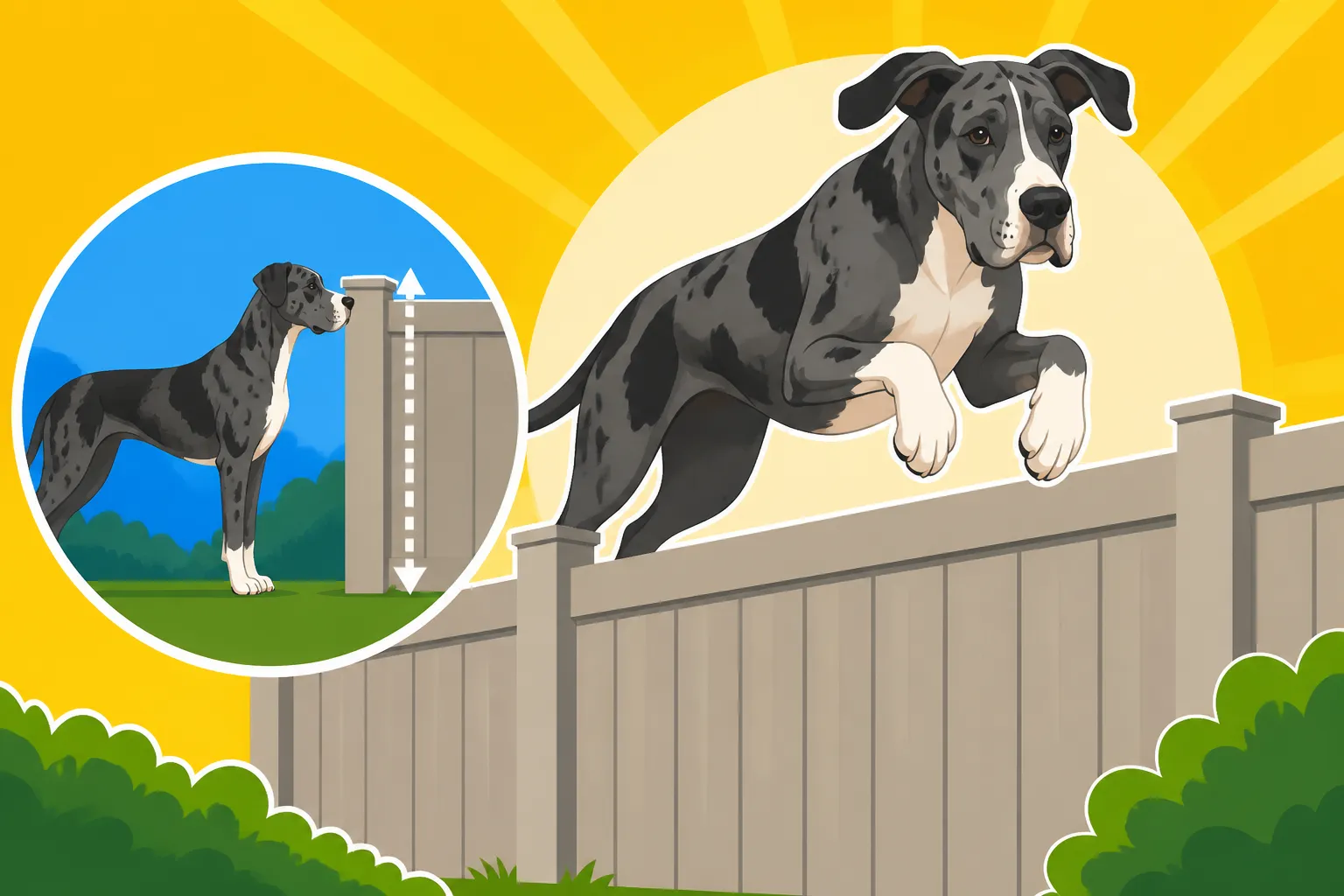
Think about it: a Great Dane can easily place their front paws on your kitchen counter to "counter surf" for a forgotten snack. That's already putting them at a significant height. When they put their mind to it, and especially if there's a strong incentive – like a squirrel on the other side, another dog, or the urge to "patrol" the neighborhood – they can often manage a much higher vertical leap than you'd expect. Their powerful hindquarters are designed for bursts of speed and impressive propulsion. It's not about them stepping over a low garden fence; it's about them launching themselves over it if they want to.
Moreover, a Great Dane in an excited or anxious state can clear obstacles with surprising grace. If your dog is prone to A Great Dane That Panics When Left or gets bored easily, that motivation to escape will be even stronger. They might not look like a high jumper, but don't underestimate their potential to get air.
The Climb and Dig Factor: Great Danes Are Clever
Beyond jumping, Great Danes are intelligent. They can figure things out. While they aren't typically known for being champion diggers like some terrier breeds, a persistent Dane, especially a bored or anxious one, can and will dig if they find a weak spot. This is particularly true if they smell something interesting on the other side of the fence, or if they're trying to create a cool spot to lie down.
Similarly, while they don't climb like cats, they can use their size and leverage. A chain-link fence, for instance, offers natural "footholds" that a determined Great Dane can use to scale it. Imagine them putting their front paws on the top, then using their back legs to push up and over. It's less a climb and more a powerful scramble, but the result is the same: they're out. You might be surprised at the agility shown by A Great Dane That Collapses and Recovers after an exertion, only to find they recovered after a short break.
Minimum Fence Height Recommendations for Great Danes
So, what's the magic number? There isn't one perfect answer, as every dog and situation is different. However, we can certainly establish some strong guidelines that prioritize your Great Dane's safety and your peace of mind.
The Absolute Bare Minimum
Many general dog guides suggest a 4-foot fence for medium-sized dogs. For a Great Dane, that's almost certainly not enough. A 4-foot fence is essentially waist-high for an adult Great Dane, and they could easily step or hop over it without much effort if they were motivated. I've heard countless stories of owners thinking a 4-foot fence would be fine, only to find their Dane casually greeting the mail carrier from the outside of the yard.
For a Great Dane, the absolute minimum you should consider is a 5-foot fence. This will deter many casual escape artists and make it harder for them to simply hop over. However, keep in mind that a truly determined or highly athletic Great Dane might still be able to clear a 5-foot fence, especially if it's a chain-link fence that offers purchase for their paws.
The Safest Bet: Six Feet and Beyond
To truly feel secure, a 6-foot fence is widely considered the gold standard for Great Danes. This height significantly reduces the likelihood of them jumping over. Most Great Danes won't even attempt to clear a 6-foot fence unless they have a very strong incentive or a defect in the fence itself. This height also makes it much harder for them to get leverage to scramble over, as their front paws would barely reach the top, if at all, when standing on their hind legs.
For added security, some owners even opt for fences slightly taller than 6 feet, or add extensions that make it difficult for dogs to get a grip or climb. If you have a Great Dane with a particularly high prey drive, or one that has already shown escape artist tendencies, investing in a taller fence is a non-negotiable part of their overall safety and Caring for a Great Dane Past Six.
Beyond Height: Other Factors for Secure Fencing
Just having a tall fence isn't always enough. A truly secure yard for a Great Dane involves considering several other critical factors that often get overlooked.
Preventing Digging Underneath
A fence that's tall but has a gap at the bottom is an open invitation for a curious Great Dane. To prevent digging, consider these strategies:
- Bury the fence: Extend the fence material a foot or two underground. This creates a barrier that's much harder for them to dig beneath.
- L-footer: Install an "L-footer" of hardware cloth or chicken wire along the bottom of the fence, extending outward into the yard and buried. When the dog tries to dig, they hit the horizontal barrier.
- Concrete or pavers: Lay a row of concrete pavers or pour a concrete footer directly under the fence line. This provides an impenetrable barrier.
Even if your Great Dane isn't a known digger, proactive measures are key. It's much easier to implement these during fence installation than to try and fix an escape route later.
Gate Security and Latches
Your gate is often the weakest point in your fence line. A Great Dane can be surprisingly adept at nudging, pushing, or even figuring out simple latches. You need to ensure your gates are:
- Self-closing and self-latching: This prevents them from being accidentally left open.
- Double-locked: Use a sturdy primary latch, and then add a secondary lock, like a carabiner clip or a padbolt, that requires human dexterity to open. Don't underestimate a Dane's ability to manipulate.
- Tall and sturdy: The gate itself should match the height and sturdiness of the rest of the fence.
- Without gaps: Ensure there are no large gaps between the gate and the posts where a determined Great Dane could try to squeeze through or get a pawhold.
It's astonishing how quickly a clever dog can learn to open a poorly secured gate. Think about the peace of mind knowing your dog is safe while you're accepting a delivery or bringing in groceries.
Supervision and Training: The Unseen Fence
Even with the most robust fence, no barrier is 100% foolproof against a truly determined or panicked dog. This is where supervision and training become your ultimate safety net.
- Active Supervision: Don't just let your Great Dane out and forget about them. Keep an eye on them, especially if they're new to the yard or you're testing a new fence. Look for signs of digging, fence-line pacing, or attempts to jump.
- Recall Training: A strong recall is invaluable. If, by some slim chance, your Great Dane does get out, knowing they will reliably come back to you can be a lifesaver. This takes consistent practice, starting with The Manners a Great Dane Needs Before It Grows.
- Boundary Training: Teach your Great Dane to respect the fence line, not to jump or dig at it. Positive reinforcement can go a long way in encouraging them to stay away from the edge.
- Environmental Enrichment: A bored Great Dane is a Great Dane looking for trouble. Provide plenty of toys, chew bones, and mental stimulation in the yard. Interactive toys from places like Chewy can keep them occupied and less inclined to eye the fence as an escape route. Ensuring your Dane is well-fed with quality food, perhaps even a fresh option like Ollie, can contribute to overall contentment, reducing anxiety-driven escape attempts.
Choosing the Right Fence Type for Your Great Dane
The type of fence you choose is just as important as its height. Different materials offer different levels of security and have their own pros and cons.
Wood Fences: Privacy and Security
A solid wood fence, typically 6 feet high, is an excellent choice for Great Danes.
- Pros:
- Solid Barrier: It prevents your Great Dane from seeing out, which can reduce barking at passersby and decrease the motivation to chase things they see outside the yard. It also prevents other dogs or people from easily seeing in, offering privacy.
- No Footholds: The solid surface means there are no gaps or footholds for them to climb.
- Sturdy: When properly installed with strong posts and concrete footings, a wood fence is very robust.
- Cons:
- Maintenance: Wood requires regular staining or painting to prevent rot and weather damage.
- Cost: Can be more expensive to install than some other options.
- Blind Spots: The lack of visibility can create blind spots in your yard, meaning you might not see what your dog is doing behind the fence.
Vinyl Fences: Low Maintenance and Durable
Vinyl fencing offers a similar solid barrier to wood but with significantly less maintenance.
- Pros:
- Low Maintenance: No painting or staining required; just occasional cleaning.
- Durable: Resistant to rot, insects, and weather.
- Solid Barrier: Like wood, it blocks visibility and prevents climbing.
- Cons:
- Initial Cost: Often the most expensive option upfront.
- Repair: If a panel is damaged, it might be harder and more costly to repair than wood.
- Temperature: Can become brittle in extreme cold over many years, though modern vinyl is very resilient.
Chain-Link Fences: Visibility and Cost-Effectiveness
While often more affordable, chain-link fences present specific challenges for Great Danes.
- Pros:
- Visibility: You can see your dog, and your dog can see out (though this can be a con too, for some dogs).
- Cost-Effective: Generally less expensive to purchase and install.
- Durable: Galvanized chain-link is very tough and long-lasting.
- Cons:
- Climbing Potential: The mesh structure provides easy footholds for a Great Dane to climb or scramble. If you choose chain-link, ensure it's at least 6 feet high, and consider adding a "lean-in" top or electric wire (safely installed) to deter climbing.
- Aesthetics: Some find it less visually appealing than wood or vinyl.
- Less Privacy: Offers no privacy for you or your dog.
Wrought Iron or Ornamental Aluminum Fences: Aesthetics and Security
These fences can be beautiful but require careful consideration for a Great Dane.
- Pros:
- Aesthetics: Very attractive and can enhance property value.
- Durable: Extremely strong and long-lasting.
- Visibility: Allows for an open feel and clear views.
- Cons:
- Gaps: The crucial concern is the spacing between pickets. They must be narrow enough (typically no more than 3-4 inches) to prevent your Great Dane from squeezing through, getting stuck, or pushing their head through. This is particularly important for Great Dane Hips, Elbows and Growing Joints as getting stuck could cause injury.
- Climbing: While vertical bars offer fewer climbing opportunities than chain link, a motivated Dane might still try to jump over.
- Cost: Can be very expensive.
Here's a quick comparison of common fence types for Great Danes:
| Fence Type | Recommended Height for Great Danes | Climbing Risk | Digging Prevention (Added Measures) | Visibility Out | Aesthetics | Maintenance Level |
|---|---|---|---|---|---|---|
| Wood Privacy | 6 feet | Low | Good (with buried footer) | None | High | Medium |
| Vinyl Privacy | 6 feet | Low | Good (with buried footer) | None | High | Low |
| Chain-Link | 6 feet (or higher with deterrents) | Medium-High | Medium (needs buried footer/L-foot) | Full | Medium | Low |
| Wrought Iron/Aluminum | 6 feet (ensure narrow picket spacing) | Medium | Good (with buried footer) | Full | High | Low |
Remember, any fence is only as strong as its weakest point. Regularly inspect your fence for loose boards, damaged sections, or signs of digging. If you notice any issues, address them immediately. The safety and security of your Great Dane depend on your vigilance and commitment to providing a truly escape-proof environment. And while a good fence is an investment, it pales in comparison to the vet bills from an injury sustained while roaming, or the heartache of a lost pet – something a good pet insurance like Healthy Paws can help with, but prevention is always best.
Disclaimer
This article is for general informational purposes only and does not constitute professional advice. Laws, prices and regulations vary by location and change over time. Consult a qualified professional for guidance on your specific situation.