The Words the Standard Uses for a Great Dane
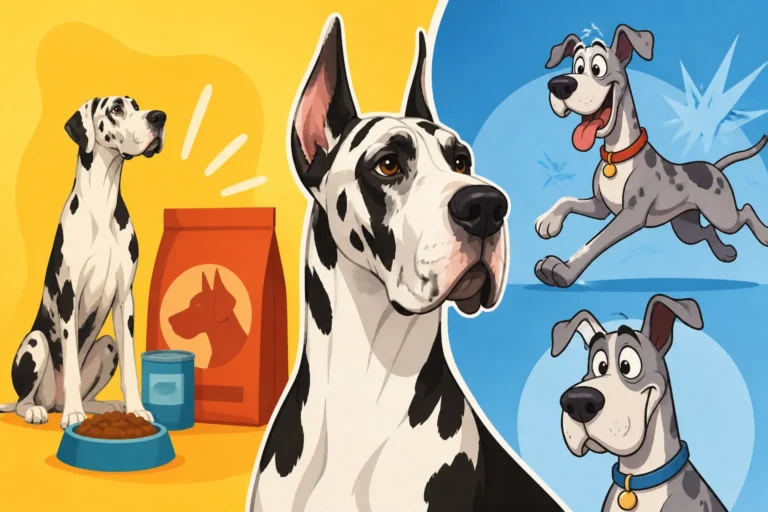
Bringing a Great Dane into your life is an incredible journey, but sometimes, when you start looking at official breed information or talking to experienced breeders, you might feel like they're speaking a different language. The breed standard for the Great Dane is full of specific terminology that can be a bit intimidating, leaving new owners wondering what those fancy words actually mean for their big, goofy companion. This guide is here to demystify that language, helping you understand the precise words the official standard uses to describe the ideal Great Dane, from its physical form to its personality.
Why Does a Breed Standard Even Matter for a Great Dane?
When you’re just looking for a loyal, loving family member, the idea of a “breed standard” might seem overly formal or only for show dog enthusiasts. But trust me, understanding it goes far beyond the show ring and offers crucial insight into why Great Danes are the way they are, and what makes a truly healthy, well-tempered example of the breed. It’s like having the architect's blueprint for your dream home; it outlines every important detail that ensures structural integrity and functionality.
More Than Just a Beauty Contest
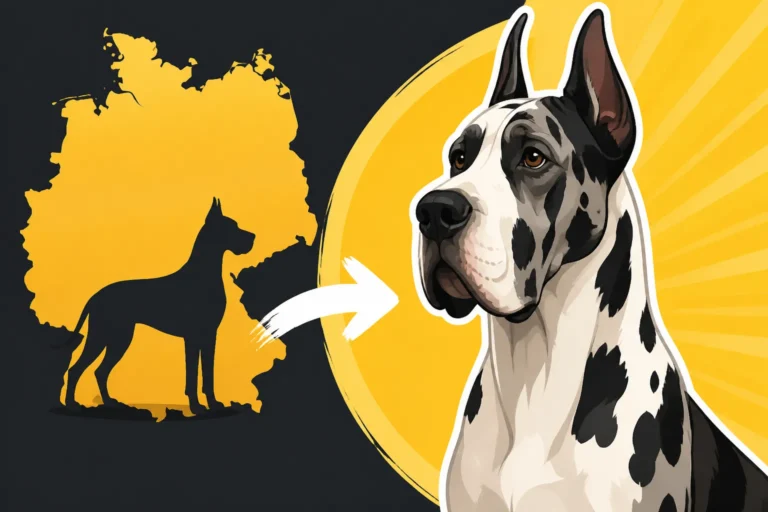
The breed standard isn't just about what looks pretty; it’s a living document that describes the ideal physical and temperamental characteristics for a purebred Great Dane. This ideal is rooted in the breed's historical purpose, which, for Great Danes, involved tracking and holding wild boars – a task requiring immense strength, courage, and agility, balanced with a calm demeanor. Breeders use the standard as their guiding light to produce dogs that not only look like Great Danes but also possess the inherent health, structure, and temperament that allow them to thrive. Without this roadmap, the breed could drift, losing its unique traits, becoming fragile, or even developing unpredictable temperaments. For you, the owner, it’s a way to appreciate the careful breeding that goes into a truly magnificent dog and to understand the specific traits that make your Great Dane unique.
The Blueprints for the "Apollo of Dogs"
The Great Dane has earned the majestic nickname "Apollo of Dogs" – a title that evokes grandeur, nobility, and striking physical perfection. The breed standard is the very document that dictates how a Great Dane embodies this reputation. It outlines everything from the correct proportions of their head to the spring in their step, ensuring that each feature contributes to an overall picture of balanced power and elegance. For instance, the standard might describe the desired arch of the neck, the depth of the chest, or the angle of the shoulders, not just for aesthetics, but because these structural elements are vital for the breed's unique gait and endurance. When you read about the ideal Great Dane, you're reading about a dog that possesses the physical attributes to perform its historical function and the dignified presence implied by its "Apollo" moniker. Understanding these details helps you appreciate why certain features are desirable and how they contribute to the dog's overall well-being and longevity. You can read more about what makes them so revered in The Great Dane's Reputation as the Apollo of Dogs.
Decoding the Key Terms in the Great Dane Standard
Now, let's dive into some of those specific terms you’ll encounter in the Great Dane breed standard. These aren't just flowery words; they're precise descriptors that paint a picture of the ideal dog, and understanding them helps you see your own Great Dane, or any Great Dane, with new eyes.
Size and Substance: "Imposing" and "Powerful"
When the standard talks about a Great Dane's size and substance, it consistently uses words like "imposing," "powerful," "massive," and "well-muscled." This isn't just about being big; it's about being big in a specific way. An ideal Great Dane should convey an impression of great size and strength, but without being clumsy or coarse. Think of a finely tuned athlete, rather than a bulky weightlifter. They need to be substantial, with good bone structure, but still exhibit an aristocratic grace.
For instance, a male Great Dane should stand at least 30 inches tall at the shoulder, with 32 inches or more being preferred, and a female should be at least 28 inches, with 30 inches or more preferred. These are not just arbitrary numbers; they reflect the breed's heritage and the desired commanding presence. A dog that is too slight or spindly, even if tall, wouldn't meet the "powerful" description. Conversely, one that is overly heavy or squat would lack the "aristocratic" quality. This balance is key. It’s about having a significant presence that demands attention, but moves with surprising lightness for its size. You can see how these measurements apply specifically in The Thirty-Two Inch Male Great Dane and also understand the baseline in The Minimum Size a Great Dane Must Reach.
Head and Expression: "Noble" and "Intelligent"
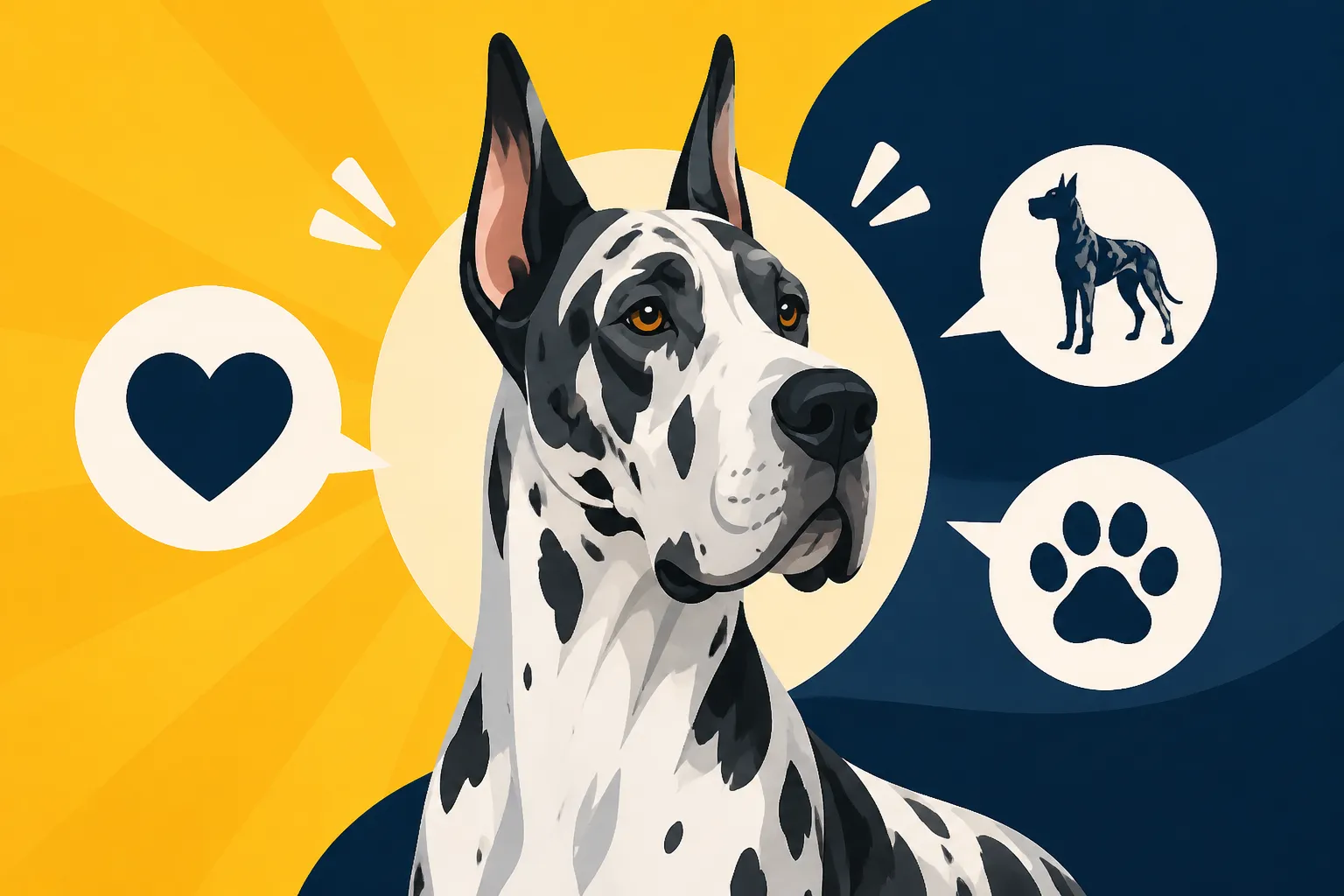
The Great Dane's head is often described as "noble," "intelligent," and "expressive." This section of the standard is incredibly detailed because the head, and particularly the eyes, are where much of the breed's characteristic expression lies. The skull should be long, narrow, and distinctly chiseled, not round or blocky. The stop (the indentation between the eyes) should be well-defined but not overly abrupt. The muzzle should be deep and rectangular, never snipey or pointed.
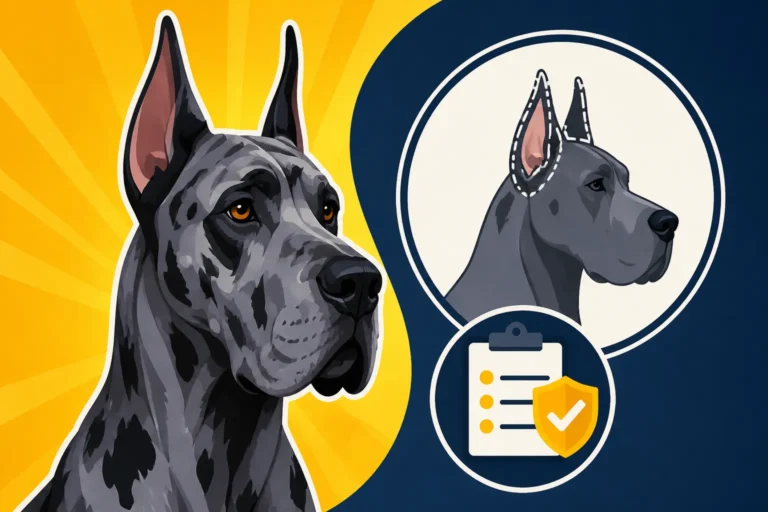
The eyes are typically medium-sized, deep-set, and dark, with a lively and intelligent expression. They shouldn't be round or bulging, nor should they be too small or deeply sunken, as these can detract from the desired noble look. The combination of these features creates that distinctive Great Dane gaze – alert, thoughtful, and often incredibly endearing. It’s an expression that conveys both dignity and a hint of gentle curiosity. The ears, whether cropped or natural, are also described in relation to how they frame the head and contribute to the overall impression. Understanding the specifics here really helps you appreciate what breeders aim for and what sets a truly classic Great Dane head apart, as detailed further in The Great Dane Head the Standard Wants.
Movement and Gait: "Effortless" and "Long-Reaching"
One of the most impressive aspects of a well-bred Great Dane is its movement. The standard uses terms like "effortless," "powerful," "free and easy," and "long-reaching stride" to describe their gait. This means the dog should move with grace and fluidity, covering ground with minimal apparent effort. They shouldn't appear clumsy, stiff, or short-stepping. Their front legs should reach out smoothly, and their powerful hindquarters should drive them forward.
When you watch an ideal Great Dane move, their body should appear level, with no excessive bounce or roll. The legs should move parallel to each other, neither crossing over nor winging out. This efficient, ground-covering stride isn't just for show; it's a testament to sound structure. Correct angulation of the shoulders and hips, proper bone length, and strong musculature all contribute to this "effortless" movement, which is crucial for a giant breed's long-term joint health and comfort. A dog that struggles to move, or moves with an awkward gait, indicates structural issues that can lead to pain and premature arthritis. It’s truly a beautiful sight to behold a Great Dane flowing across the ground, embodying the words of the standard. If you're interested in more specifics, check out The Long Reaching Stride a Great Dane Shows.
| Standard Term | What it Means (Simply) | Importance to the Breed |
|---|---|---|
| Imposing/Powerful | Very large and strong, but not bulky or clumsy. | Ensures breed has stature and strength for its historical role. |
| Noble Expression | Dignified, intelligent look, often from head shape and eyes. | Defines the classic, recognizable Great Dane appearance. |
| Long-Reaching Stride | Smooth, efficient, wide-stepping movement. | Crucial for joint health, stamina, and overall functionality. |
| Gentle Giant | Calm, friendly, affectionate temperament, despite size. | Makes them wonderful family companions and trustworthy. |
| Substance | Good bone and muscle, solid build. | Contributes to strength, health, and a balanced physique. |
| Chiseled Head | Clearly defined features, not round or blocky. | Enhances noble expression and breed type. |
Temperament and Character: "Courageous" and "Gentle"
Beyond their striking physicality, the Great Dane breed standard places immense importance on temperament. This is where the true "Gentle Giant" comes to life. The standard describes them with a fascinating blend of characteristics that, when balanced correctly, create one of the most beloved and unique canine personalities.
The "Gentle Giant" Paradox
The standard frequently uses phrases like "courageous," "loyal," and "dependable," alongside "gentle," "friendly," and "affectionate." This might seem like a paradox, but it perfectly encapsulates the Great Dane. They are expected to be brave and protective when necessary, possessing a deep loyalty to their family, but at the same time, they are famously gentle, especially with children and other animals. They shouldn't be timid or fearful, which can sometimes lead to reactive behaviors in a large dog, nor should they be overtly aggressive.
An ideal Great Dane is calm and confident, often preferring to lean on you or sit by your feet rather than demanding constant attention. They are observant and aware of their surroundings, but not prone to excessive barking or nervous energy. This balance is what makes them such incredible family dogs, capable of being majestic protectors one moment and cuddly lapdogs the next. It’s this unique combination that has earned them the nickname What Gentle Giant Means for a Great Dane. It’s a huge part of their appeal, and truly, Whether Great Danes Are Actually Gentle is a question answered beautifully by the standard itself.
Watchfulness Without Aggression
Another critical aspect of the Great Dane's temperament outlined in the standard is their watchfulness. They are described as being alert and possessing a natural wariness towards strangers, without being overly suspicious or aggressive. This means they are aware of new people or situations, and might give a deep, resonant bark to announce an arrival, but they should never exhibit unprovoked aggression or extreme shyness. A Great Dane that is fearful or timid can be just as problematic as one that is aggressive, especially given their imposing size.
The standard emphasizes that any aggression or undue shyness is a serious fault. A properly bred and socialized Great Dane should be confident and well-mannered, able to discern a genuine threat from a friendly visitor. They might choose to lean on your leg or stand close by when someone new comes in, but they should generally accept people once they've been introduced and you've given the "all clear." This calm, discerning watchfulness is a testament to their stable temperament and is a trait that breeders work hard to maintain. Maintaining this balance is crucial, as exploring The Gentle Great Dane Temperament and Its Limits will reveal.
Understanding Faults and Disqualifications
While the breed standard paints a picture of perfection, it also serves a vital role in identifying what isn't ideal in a Great Dane. This section is just as important, if not more so, for understanding the breed's health and integrity. It helps both breeders and prospective owners recognize deviations that could impact a dog's well-being or ability to live up to the "Apollo of Dogs" reputation.
Deviations from the Ideal
The standard lists various "faults" – characteristics that detract from the ideal but don't necessarily disqualify a dog from being a purebred Great Dane. These can range from minor cosmetic issues to structural weaknesses. For example, a Great Dane might have a slightly shorter muzzle than ideal, or eyes that are a bit too light. While these might not be "disqualifying," they are still considered faults because they move the dog away from the perfect representation of the breed.
More serious faults might include poor angulation in the legs, which impacts movement and could lead to orthopedic problems later in life, or a weak jawline, which doesn't reflect the powerful head desired by the standard. Even a temperament that is too nervous or too boisterous, though not necessarily aggressive, would be considered a fault. These deviations are often important indicators of a dog's overall health potential and suitability for tasks or activities, including simply being a healthy, active companion. Understanding The Great Dane Faults a Judge Cannot Ignore can help you recognize quality in breeding.
Serious Health Implications
Beyond simple faults, the standard also defines "disqualifications." These are traits so undesirable that a dog exhibiting them cannot be considered a true representative of the breed and should not be bred. Disqualifying faults often have significant health or temperament implications. For instance, an aggressive or overtly fearful temperament is a disqualification because it goes against the core nature of the Great Dane and could make a giant dog dangerous or miserable.
Certain physical abnormalities, like a severe overbite or underbite that hinders chewing, or significant structural defects, can also be disqualifying. Color can also be a disqualifying factor; for example, a completely white Great Dane, often referred to as a "double merle," is typically associated with severe health issues like deafness and blindness. This is why it's so critical for breeders to understand genetics and the standard, and why potential owners should inquire about a puppy's lineage and health clearances. If you're looking for products for a Great Dane with specific health needs, perhaps due to a hereditary issue, resources like Chewy can be invaluable for finding specialized diets or mobility aids. For example, a dog with structural faults that cause joint pain might benefit from high-quality joint supplements or a specially formulated large-breed dog food, which are readily available through large online retailers like Chewy.
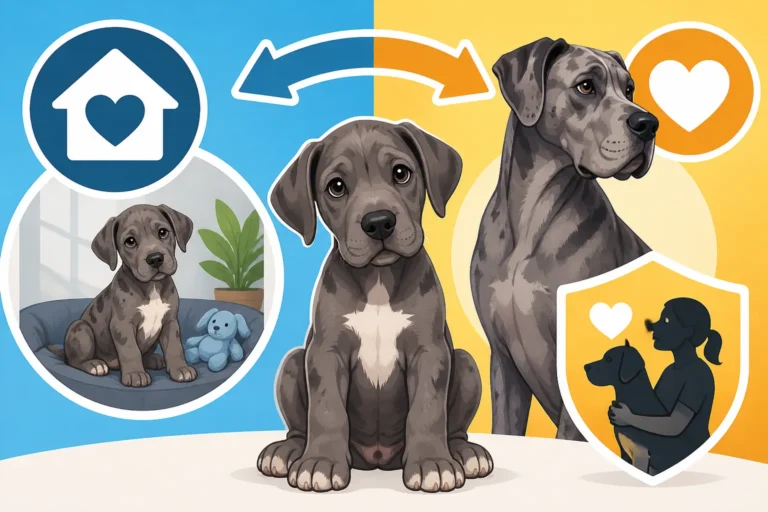
It's paramount for responsible breeders to screen for hereditary conditions and understand how certain traits, described in the standard, directly impact a Great Dane's long-term health. This emphasis on health is why checking a puppy's paperwork is so important, as detailed in Reading a Great Dane Puppy's Health Papers, and why ethical breeders will always provide The Health Testing a Great Dane Breeder Owes You. Understanding these health risks, especially conditions like Why a White Great Dane Is Often Deaf, is crucial when evaluating a Great Dane according to the breed standard.
In conclusion, the words in the Great Dane breed standard aren't just for show enthusiasts; they are a vital guide for anyone who loves or plans to own one of these magnificent dogs. They articulate the balance of strength, grace, and gentle temperament that defines the breed. By understanding this language, you gain a deeper appreciation for your Great Dane and the dedicated efforts of breeders who strive to preserve its unique qualities.
Disclaimer
This article is for general informational purposes only and does not constitute professional advice. Laws, prices and regulations vary by location and change over time. Consult a qualified professional for guidance on your specific situation.