Whether a Harlequin Great Dane’s Patches Shift
Oh, the magnificent Harlequin Great Dane! There’s something truly mesmerizing about those striking black patches splashed across a brilliant white coat. But if you're a new Harlequin owner, or even just admiring one, you might find yourself wondering: do those beautiful, intricate patches actually shift or change as your Great Dane grows? It's a question many people ponder, often because what looked like a small patch on a tiny puppy can seem to have moved or morphed on a gangly adolescent. This guide is here to clear up that mystery and explain what truly happens (and what doesn't!) with your Harlequin's stunning coat over time.
Understanding Harlequin Great Dane Genetics and What Forms the Patches
Before we dive into whether those patches are playing a game of musical chairs, it's crucial to understand what makes a Harlequin Great Dane look the way it does. It's not just a random splash of color; it's a carefully orchestrated genetic dance, and knowing a little about it helps us appreciate their unique beauty even more.
The Merle Gene and its Role in Patch Creation
The foundation of a Harlequin coat lies with the merle gene, a fascinating and sometimes complex genetic modifier. In its most basic form, the merle gene dilutes random sections of a dog's base coat color, creating lighter areas with darker patches of the original color. Think of it like a painter splattering diluted paint onto a canvas; the result is a mottled or "merled" pattern. For Great Danes, the merle gene acts on a black base coat, leading to shades of grey, black, and white. This is why you see a wide range of merle patterns, from light silver with black spots to more muted, blended tones. Harlequin and Merle Great Dane Genetics explores this in more detail.
However, a Great Dane isn't truly a Harlequin without an additional genetic component. A dog that just carries the merle gene alone will often present as a regular merle, with irregular patches of solid color on a lighter, often grey or silver, background. While beautiful in their own right, these merle patterns are distinct from the classic Harlequin. The merle gene is also why you'll often hear discussions around ethical breeding, specifically about avoiding breeding two merles together, as Why Two Merle Great Danes Are Never Bred explains, due to the potential for severe health issues in double merles.
The Harlequin Modifier: Refining the Pattern
This is where the magic truly happens for our Harlequins! To get that crisp, clean white background with distinct black patches, the merle gene needs a "harlequin modifier" gene. This modifier essentially takes the merle pattern and acts like a genetic eraser, turning all the diluted grey areas into pure white. What's left are the undiluted, solid black patches, starkly contrasted against the pristine white. It's a breathtaking transformation, producing the elegant, almost porcelain-like appearance that Harlequins are so prized for.
Without this specific modifier, you simply get a merle. With it, you get the Harlequin. This modifier is dominant, meaning only one copy is needed for the effect to be visible. The placement and size of the original merle patches dictate the final appearance of the Harlequin's black patches, which is why no two Harlequins are ever exactly alike. It's like having an infinite number of unique works of art. The distribution of these patches contributes to What a Correct Harlequin Great Dane Looks Like, adhering to the breed standard's ideals for balance and clarity.
Do the Patches Themselves Actually Shift or Change?
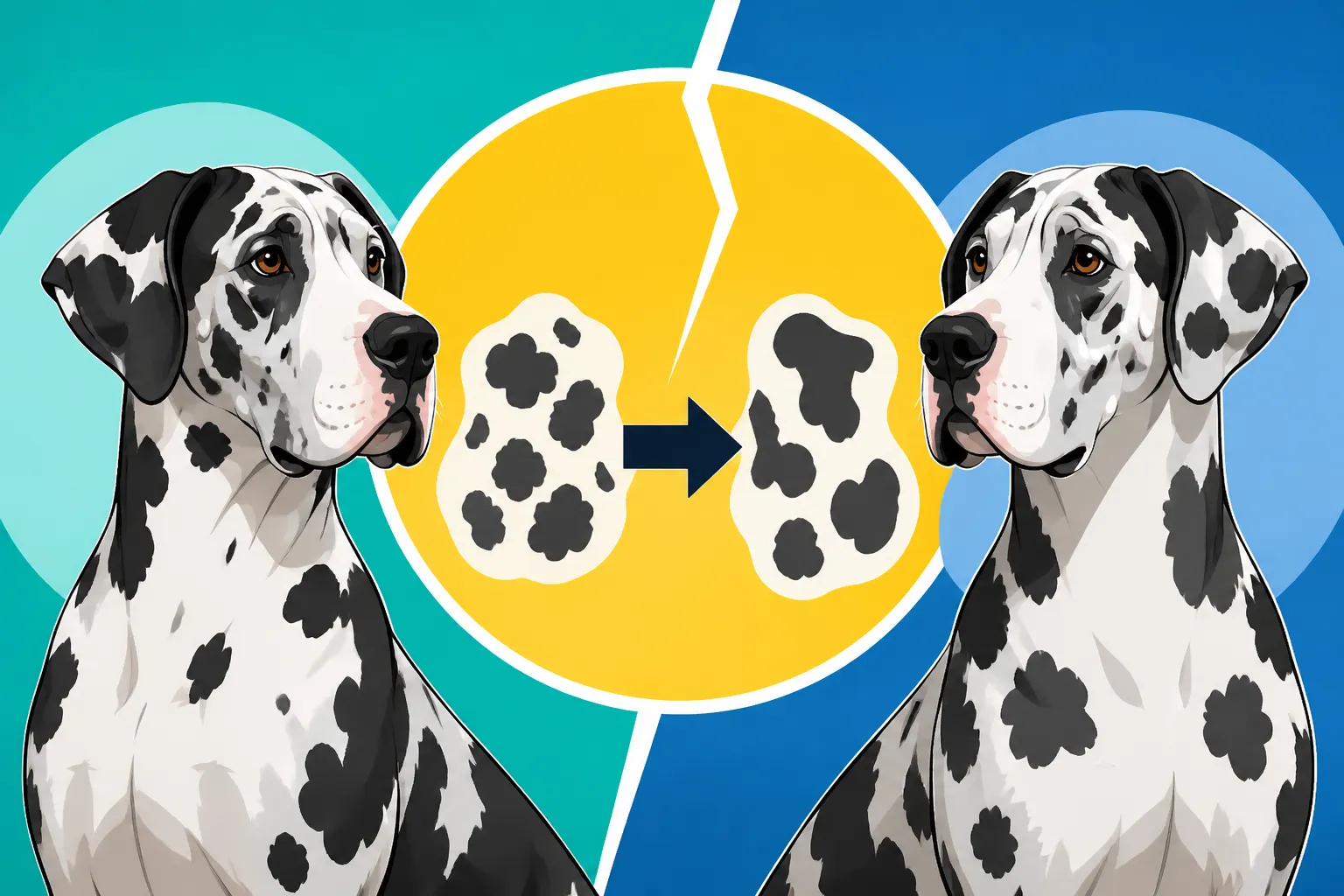
This is the burning question, and the short answer is: no, not in the way you might imagine. The actual pigmentation that forms the patches is set from birth. However, our perception of them can absolutely change, leading to the common misconception that the patches are on the move.
The Illusion of Change: Puppy to Adult Development
When you bring home a tiny Harlequin puppy, they are a bundle of energy and growing fast! Their body proportions are different from an adult's. Their skin is looser, their coat is finer, and their overall size is, well, small! As they grow, stretching from gangly pup to majestic adult, their skin tightens, their body lengthens, and their musculature develops. Imagine taking a piece of patterned fabric, scrunching it up, and then pulling it taut. The pattern doesn't change, but its presentation does.
A patch that might have seemed small and close together on a compact puppy's shoulder will appear larger and more spread out as that shoulder grows into the powerful, broad shoulder of an adult Great Dane. Similarly, a patch that seemed to wrap around a tiny leg will now stretch further down a much longer limb. Their bodies can grow immensely, with How Big a Great Dane Actually Gets illustrating just how dramatic this growth can be. This expansion of their physical canvas creates the illusion that the patches themselves have stretched, migrated, or even multiplied. It's a fascinating visual trick that nature plays on us as our beloved Danes mature.
Factors That Can Alter the Appearance of Patches
While the patches don't literally "shift," certain factors can certainly alter their appearance and how distinct they seem over time.
Firstly, the texture and density of your Great Dane's coat can change from puppyhood to adulthood. A young pup often has a softer, less dense coat. As they mature, their coat can become thicker and coarser, which might make the edges of patches appear slightly softer or more defined. Sun exposure can also play a subtle role. Just like human hair, dog coats can be affected by sunlight. Intense, prolonged sun exposure might cause the black pigment in the patches to appear a tiny bit faded or reddish over time, especially if your Dane spends a lot of time outdoors. However, this is more about a subtle color change than a physical shift in the patch itself.
Another less common factor could be scarring. If your Great Dane sustains an injury that results in scar tissue, particularly in an area where a patch is located, the fur that grows back in that spot might be white or a different texture. This isn't the patch "shifting," but rather the skin being permanently altered, which then impacts the visual continuity of the marking. Luckily, Great Danes don't tend to have extremely long or fluffy coats that would dramatically obscure their markings, so these subtle changes are usually what we are observing.
| Feature | Puppy Appearance | Adult Appearance |
|---|---|---|
| Patch Size | Appears smaller, more concentrated | Appears larger, more spread out |
| Patch Location | Fixed, but appears to "move" due to body growth | Fixed, but covers more surface area |
| Coat Texture | Often softer, finer | Can be denser, coarser |
| Pigmentation | Sharp, vibrant | Can subtly lighten with age/sun |
| Overall Effect | Compact, distinct markings | Grand, flowing markings |
What to Expect as Your Harlequin Great Dane Grows
Beyond the optical illusion of shifting patches, there are very real developmental changes that occur as your Great Dane matures. These changes impact their overall appearance, and understanding them helps you appreciate every stage of their life.
Pigmentation Maturation: Nose, Paw Pads, and Eye Rims
While the black patches on the coat don't move, other areas of your Harlequin Great Dane's pigmentation can mature and darken over time. Many Harlequin puppies are born with what's called a "butter nose" or "snow nose" – a pinkish or liver-colored nose that gradually darkens to solid black. This is a very common developmental stage, and most Harlequins will achieve a fully black nose by the time they are a few months old. The same maturation can happen with their paw pads and the rims around their eyes. A young puppy might have pinkish pads that fill in with black pigment, or eye rims that are not as dark as they will be in adulthood.
This change is a normal part of development and doesn't indicate anything is wrong. It's just another aspect of their growing up! It’s important to note that a Harlequin with significant pink on its nose, eye rims, or paw pads in adulthood might be less desirable in the show ring, but it doesn't impact their health or their wonderful personality as a companion. Just like their coat, these pigmentations are part of their unique genetic makeup.
Coat Texture and Density Changes
As your Great Dane puppy transitions into an adult, you might notice subtle changes in their coat. Puppy coats are often softer and a bit less dense than an adult's. As they mature, the coat generally becomes firmer, sleeker, and more robust. This change in texture can also influence how the light hits their patches, sometimes making them appear more or less defined. The short, smooth coat of a Great Dane is generally easy to care for, but they do shed! Regular brushing, perhaps with a rubber curry brush you can find at Chewy, can help manage loose hair and keep their coat looking its best.
For some Harlequins, the amount of 'ticking' – small flecks of black pigment within the white areas – can also become more apparent as they age. This isn't the patches moving, but rather these tiny, individual pigmented hairs becoming more prominent as the coat fully develops. It's another subtle but beautiful detail that adds to the complexity of the Harlequin coat pattern. Proper nutrition, especially as detailed in articles like Whether a Great Dane Puppy Should Be Kept Lean, also contributes to healthy coat development.
Common Misconceptions About Harlequin Markings
The unique appearance of Harlequin Great Danes often leads to a few persistent myths and misunderstandings. Let's tackle some of the most common ones.
The "Growing Out" Myth
One common misconception is that Great Danes, particularly Harlequins, will "grow out" of their markings or that their patches will fade completely into white. This simply isn't true. The genetic blueprint for their coat pattern is set. While the appearance can change due to growth and coat maturation as discussed, the underlying pattern of black patches on a white background remains. You won't wake up one morning to find a completely white Great Dane where a Harlequin used to be!
The idea of "growing out" often stems from seeing very young puppies compared to adolescents. A Harlequin puppy might have fewer, more intense black patches, and as they grow, the expansion of their skin can make the white areas seem more dominant or widespread. It's still the same amount of black pigment, just stretched over a larger surface area. This is also why The Seven Great Dane Colors are so distinct and don't typically blend or fade into one another over a dog's lifetime. Their coat is part of their identity.
Health Implications and Coat Color
While the patches themselves don't shift, some people mistakenly link coat color variations to specific health issues, especially with Harlequins and Merles. It's true that the merle gene, when inherited as two copies (double merle), can lead to serious health problems such as deafness and blindness. This is why responsible breeders go to great lengths to understand the genetics involved and avoid such pairings. Why a White Great Dane Is Often Deaf delves into these specific health concerns related to extreme dilution of pigment.
However, a single-merle Harlequin (which is the vast majority you'll see) is generally not predisposed to these severe issues simply because of its pattern. The health of a Harlequin Great Dane is much more dependent on sound breeding practices, comprehensive health testing of the parents for conditions common in the breed, and excellent care throughout their life. This includes screenings a breeder owes you, as outlined in The Health Testing a Great Dane Breeder Owes You. Don't confuse the beauty of their unique pattern with inherent fragility; a well-bred Harlequin is just as robust as any other color variety.
Living with a Harlequin: Care and Appreciation
Owning a Harlequin Great Dane means having a truly stunning companion, but their care is much the same as any other color Dane, with a few considerations for their unique coat.
Regular Grooming and Skin Health
Harlequin Great Danes have short, smooth coats, which are generally low maintenance compared to long-haired breeds. However, "low maintenance" doesn't mean "no maintenance." Regular brushing is still essential to remove loose hair, distribute natural oils, and keep their coat healthy and shiny. A good grooming session can also be a wonderful bonding experience. Tools like a rubber curry brush or a shedding blade, easily found at Chewy, work wonders on their short coats. While bathing isn't required frequently, when they do need one, prepare for a big job – these are large dogs! Bathing a Great Dane at Home offers practical tips for this Herculean task.
Because a significant portion of their coat is white, Harlequins can be more prone to sunburn, especially on areas with sparse hair or thin skin, like their ears or belly, if exposed to prolonged intense sunlight. It's a real consideration, as Sunburn on a Harlequin Great Dane details. If your Harlequin loves to lounge in the sun, especially during peak hours, consider providing shade or even dog-safe sunscreen on exposed areas. Their light skin also means that any minor skin irritations or scrapes might be more visible. Regular checks of their skin during grooming can help you spot any issues early.
Celebrating Their Unique Beauty
The Harlequin Great Dane is truly a masterpiece of canine genetics. Every single one is unique, with their own distinctive arrangement of patches. Instead of worrying if their patches are shifting, embrace the journey of watching your Great Dane grow and fill out, observing how their markings gracefully expand with their magnificent physique. These dogs draw attention wherever they go, not just for their size, but for their captivating appearance.
Beyond their looks, Harlequins embody the classic "Apollo of Dogs" temperament: gentle, affectionate, and noble. Their striking appearance is just one layer of their charm. Appreciating a Harlequin means celebrating their vibrant personality, their loyal nature, and the sheer joy they bring to a home, all wrapped up in a coat that truly stands out from the crowd. Whether their patches appear larger or more defined as they mature, one thing is for sure: their presence will always make a monumental impact.
Disclaimer
This article is for general informational purposes only and does not constitute professional advice. Laws, prices and regulations vary by location and change over time. Consult a qualified professional for guidance on your specific situation.