The Great Dane the Show Ring Is Looking For
Stepping into the world of dog shows with a Great Dane can feel incredibly daunting, especially when you start trying to decipher the breed standard. It’s a document filled with precise descriptions that can seem almost poetic yet frustratingly vague when you're trying to figure out if your beloved Dane truly embodies the "Apollo of Dogs." This guide aims to demystify the breed standard, walking you through exactly what judges are looking for in a Great Dane in the show ring, from their noble head to their powerful gait.
The Foundation of the Great Dane Standard
Before we even begin to dissect the physical attributes, it's crucial to understand that the Great Dane breed standard isn't just a list of desirable traits; it's a historical document, a blueprint that protects the integrity and functionality of the breed. It ensures that Great Danes, regardless of where they are bred, maintain the characteristics that define them. Without a standard, breeders could stray, and the breed we know and love could fundamentally change, perhaps losing its unique combination of power, grace, and gentle temperament.
A Glimpse into History: The Deutsche Dogge
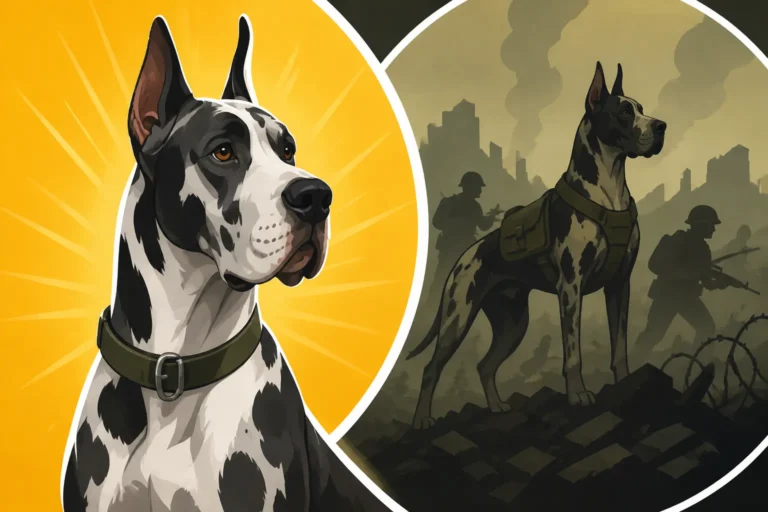
To truly appreciate the Great Dane standard, one must first understand its origins. Despite its misleading name, the Great Dane is not Danish at all. In fact, many people are often surprised to learn the rich European history behind this magnificent breed. The standard itself reflects a history deeply rooted in Germany, where the breed is known as the "Deutsche Dogge" – or German Mastiff. This lineage speaks to its original purpose as a powerful boar hound, capable of holding formidable wild boars for hunters. The traits described in the standard, therefore, aren't just for aesthetics; many have their roots in the Dane's historical function.
This historical context helps us understand why certain characteristics are so prized. For instance, the deep chest and well-sprung ribs aren't just for show; they provided the lung capacity and endurance needed for tracking and engaging in strenuous hunts. The strong bone and powerful musculature were essential for both speed and strength. Even the noble and elegant head, while beautiful, needed to be proportionate to the dog's large size, allowing for effective scenting and a powerful bite if needed. The Great Dane's past as a formidable hunter, and its subsequent refinement into a companion, has shaped every line and curve the standard describes. This legacy is something serious breeders work tirelessly to preserve, often discussing their lines and how they align with the historical intent.
Why a Standard Matters for the Breed
The breed standard acts as the definitive written description of the ideal specimen of the breed. It guides breeders in their selection of breeding stock, helping them make informed decisions to produce healthy, well-tempered dogs that conform to the breed's historical purpose and aesthetic. For judges, it's the ultimate rubric, allowing them to objectively evaluate each dog against a consistent set of criteria, rather than simply personal preference. This uniformity is what preserves the breed type across generations and geographical locations.
Think of the standard as the North Star for Great Dane breeders and enthusiasts. It provides a shared vision, ensuring that a Great Dane recognized in New York looks fundamentally similar to one in California, or even across the globe. Without it, the breed could splinter into various types, each developing differently based on individual tastes. It also helps to prevent the exaggeration of certain traits to the detriment of health or function. For example, while Danes are large, the standard specifies proportions that ensure agility and soundness, rather than just raw mass. It's a living document, occasionally tweaked by breed clubs, but its core purpose remains to maintain the Great Dane as a distinct and recognizable breed for future generations.
General Appearance: More Than Just Size
When a Great Dane steps into the show ring, the first impression is everything. Judges don't just see a big dog; they observe the entire package, seeking that elusive balance and presence that defines the breed. It's a comprehensive evaluation that begins the moment the dog enters the ring, encompassing its overall bearing, proportions, and that unmistakable aura of nobility.
Overall Impression: The Apollo of Dogs
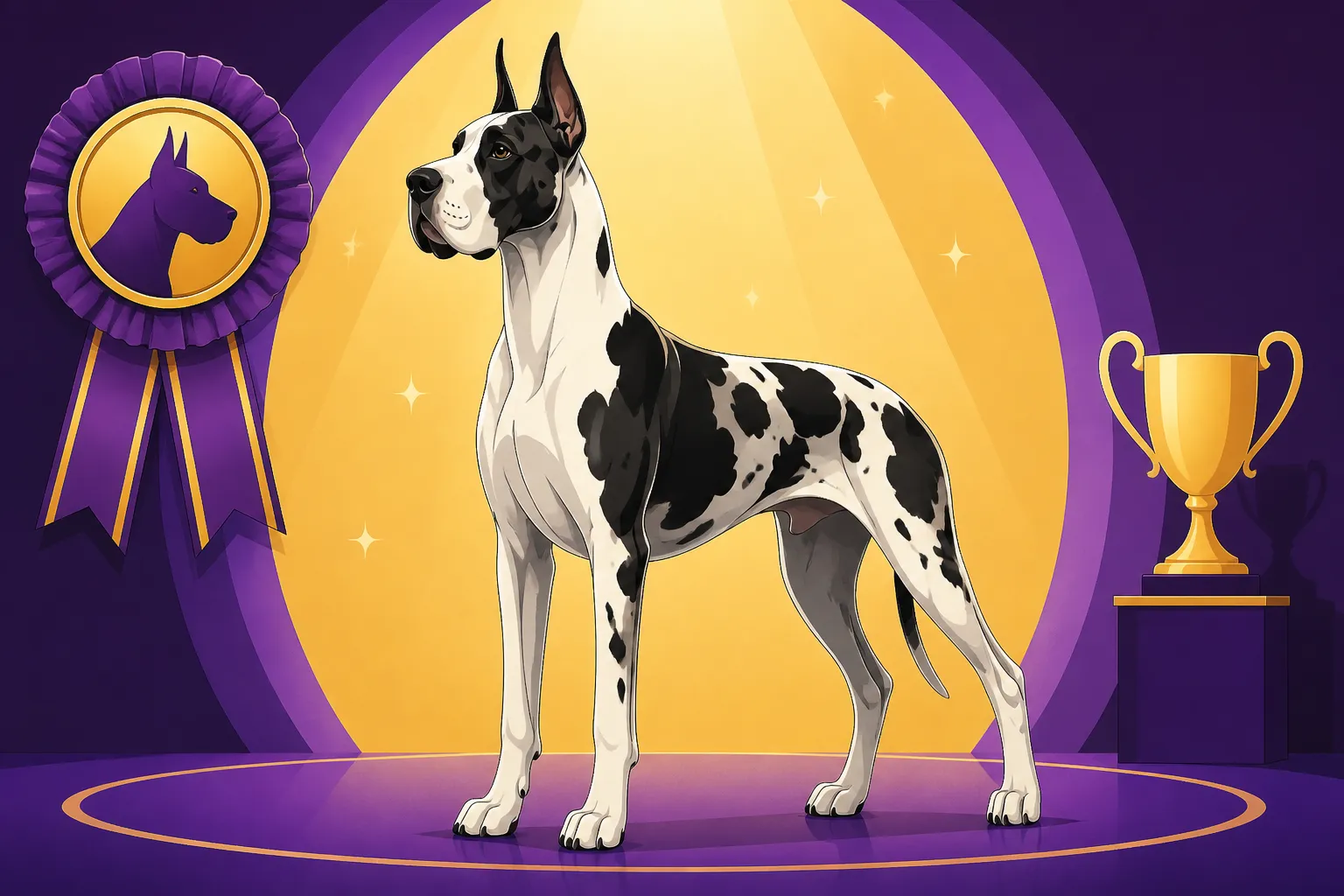
The Great Dane is often referred to as the "Apollo of Dogs," a moniker that perfectly encapsulates its desired overall impression in the show ring. This isn't just a nickname; it's a concise description of the elegance, grace, and power that judges seek. An ideal Great Dane should exude strength and elegance, standing tall with a majestic presence that is both commanding and refined. There should be an immediate sense of grandeur and dignity, a harmonious blend of large size and smooth, flowing lines.
This "Apollo" quality means a Dane should never appear coarse, clumsy, or overly heavy. While substantial, their build should be athletic and capable, not cumbersome. When you observe a show-quality Great Dane, you should see a creature of superb balance, where no single feature seems out of proportion to the whole. Their head should be in scale with their body, their legs proportionate to their height, and their movement fluid and unencumbered. This overall impression speaks volumes about the dog's breed type and is often the first thing that catches a judge's eye, setting the stage for the more detailed examination to follow.
Ideal Size and Proportion: Balance is Key
While Great Danes are undoubtedly a giant breed, simply being large isn't enough for the show ring. The standard emphasizes specific size guidelines and, perhaps even more importantly, proportions. For males, the minimum height is typically 30 inches at the shoulder, and for females, it's 28 inches. However, judges almost always prefer dogs that are taller than the minimum, provided that their overall balance and proportion are maintained. A towering Dane that is leggy or disproportionate will not fare as well as a slightly smaller one that embodies perfect harmony.
The ideal Great Dane is square in profile, meaning the length of its body from the forechest to the rear of the upper thigh should be approximately equal to its height at the withers. This squareness contributes significantly to the breed's powerful yet elegant appearance. Deviations from this proportion can result in a dog appearing long-backed and short-legged, or conversely, too tall and narrow. Furthermore, the standard calls for a strong, well-muscled body, with good bone. Judges will evaluate how the dog carries its impressive size, looking for soundness and athleticism. A dog that is too slight in bone or too bulky and heavy will be faulted. The Minimum Size a Great Dane Has to Reach is just one aspect; how that size is put together is paramount.
| Trait | Ideal Description (Show Standard) | Common Faults to Avoid |
|---|---|---|
| Overall Build | Powerful, graceful, square, strong bone, muscular | Coarse, clumsy, leggy, long-backed, too light or too heavy bone |
| Height (Min) | Males: 30 inches; Females: 28 inches (taller preferred with balance) | Under minimum height |
| Head | Long, narrow, distinct stop, parallel planes of skull and muzzle | Short, blocky, dish-faced, snipey muzzle, weak stop |
| Neck | Long, high-set, arched, muscular | Short, thick, ewe neck |
| Topline | Firm, level or slightly rising to the rear | Swayback, roach back, sloping croup |
| Chest | Deep, moderately broad, well-sprung ribs | Shallow, narrow, barrel-chested |
| Forequarters | Straight, strong bone, well-laid back shoulders, moderate angulation | Out at elbow, fiddle front, straight shoulder, weak pasterns |
| Hindquarters | Strong, muscular, well-angulated, parallel when viewed from rear | Cow-hocked, bow-legged, straight stifle, weak thighs |
| Coat | Short, thick, smooth, glossy | Long, silky, wiry, dull |
| Gait | Powerful, long-reaching, effortless, straight, coordinated | Pacing, hackney gait, close moving, waddling |
| Temperament | Friendly, courageous, never timid or aggressive | Shy, aggressive, nervous, dull |
The Great Dane Head: A Study in Noble Expression
The head of a Great Dane is arguably one of its most defining features, often described as a sculpture of nobility and intelligence. It's where much of the breed's distinct character and expression reside. A judge will spend significant time evaluating the head, as it carries key indicators of breed type and purity.
Skull and Muzzle: Length, Width, and Depth
The Great Dane's head should be long, aristocratic, and finely chiseled, without appearing coarse or lacking substance. When viewed from the top or side, the skull and muzzle planes should be parallel, forming a distinctive profile. The skull itself should be flat rather than domed, and moderately broad, maintaining the balance with the dog's overall size. There should be a distinct, well-defined stop—the transition between the skull and the muzzle—but it should not be abrupt or overly exaggerated, instead flowing smoothly.
The muzzle is critical. It should be deep and broad, never appearing snipey or pointed. Its length should ideally be equal to the length of the skull. A short or shallow muzzle detracts significantly from the noble expression. The jaws should be powerful, indicating strength, with well-developed cheeks that are not too prominent. Judges are looking for a powerful yet refined head, one that speaks of ancient lineage and refined breeding. Any deviation from these precise proportions can throw off the entire balance of the head, diminishing the "Apollo" effect. The Great Dane Head the Standard Wants is truly a masterpiece of canine architecture.
Eyes, Ears, and Bite: Defining Features
Beyond the skull and muzzle, the eyes, ears, and bite complete the picture of the Great Dane's head. The eyes should be medium in size, deep-set, and dark, with an intelligent and alert expression. The rims of the eyes should be tight, showing no looseness. While darker eyes are generally preferred, a lighter eye color can be acceptable in blue or merle Danes, but should still convey a kindly, steady gaze. Eyes that are too round, too light, or show a significant amount of haw (the red inner eyelid) are considered faults.
Ears in the show ring can be either cropped or natural. If cropped, they should be set high and cut to a proportionate length, carried erect and alert. If natural, they should be medium in size, set high, and fold forward against the cheek without a hard crease, forming a neat triangle. The bite is also critical: it should be a strong, full complement of teeth meeting in a scissors bite, where the outer side of the lower incisors just touches the inner side of the upper incisors. Any deviation, such as an overshot or undershot bite, or missing teeth (other than those lost to injury), is a serious fault. These details might seem minor, but they contribute immensely to the Great Dane's characteristic expression and breed type.
Body and Structure: Power and Grace Combined
The Great Dane's body is a magnificent display of powerful musculature, deep chest, and flowing lines, all designed to support its considerable size with grace and agility. Judges meticulously examine every angle and curve, ensuring that the dog's build aligns with the breed's historical function and the pursuit of athletic elegance.
Neck, Topline, and Chest: The Silhouette of a Dane
Starting from the head, the neck of a Great Dane should be long, high-set, and muscular, flowing gracefully into strong, well-laid-back shoulders. It should have a distinct arch, adding to the noble carriage, and should never appear short or thick, which would detract from its elegance. A "ewe neck," where the top line of the neck is concave rather than convex, is a serious fault. This long, arched neck not only looks beautiful but was functionally important for maneuvering during a hunt.
The topline, the line from the withers (the highest point of the shoulder blades) to the base of the tail, should be firm and level or have a very slight rise over the loins, maintaining a powerful and solid appearance. A swayback or a roach back are significant faults, indicating structural weakness. The chest should be deep and moderately broad, reaching at least to the elbows, with well-sprung ribs that provide ample room for the heart and lungs. This deep chest is a hallmark of the breed and directly relates to the stamina required for its original purpose. A shallow or narrow chest compromises both appearance and function.
Forequarters and Hindquarters: Strength and Angulation
The legs and angulation are paramount for a Great Dane to move with power and efficiency. The forelegs should be perfectly straight, with strong bone, extending down from well-laid-back and muscular shoulders. The elbows should be close to the body, neither turning in nor out. Pasterns (the part of the leg just above the foot) should be strong and slightly sloping, acting as shock absorbers. "Fiddle front," where the elbows turn out and the pasterns turn in, is a serious fault. Proper angulation in the shoulders allows for a long, free-reaching stride, a key characteristic of the Great Dane's impressive movement.
The hindquarters must be equally powerful and well-angulated. Thighs should be broad and heavily muscled, demonstrating the propulsive force needed for movement. The stifle (knee) joint should be well-bent, and the hocks (ankles) should be strong, well-let-down, and parallel when viewed from the rear. "Cow-hocked" (hocks too close together) or "bow-legged" are structural faults that impede proper movement and indicate weakness. A Great Dane must possess strong, sound hindquarters to carry its imposing frame with ease and grace. Judges are always looking for powerful rear drive, which begins with correctly structured hindquarters.
Coat and Color: The Kaleidoscope of the Dane Ring
The Great Dane breed standard recognizes a variety of colors and patterns, each with its own specific requirements. While color is often a personal preference for owners, in the show ring, adherence to the precise descriptions of allowed colors and the absence of disqualifying color faults is crucial. It’s a fascinating aspect of the breed, showcasing a vibrant array of genetic possibilities.
Recognized Colors and Patterns
The AKC Great Dane standard recognizes seven primary colors, each with specific criteria:
- Fawn: A golden yellow, ranging from light to deep gold, always with a black mask. White markings on the chest and toes are undesirable. A fawn Great Dane without a black mask would be a serious fault.
- Brindle: Fawn with black cross stripes. These stripes should be distinct and evenly distributed, running in the direction of the ribs. A "dirty" brindle, where the fawn base is muddy or the stripes are indistinct, is less desirable.
- Blue: A pure steel blue, resembling a deep, muted grey. White markings on the chest and toes are not ideal. The blue should be consistent throughout the coat, without patches of lighter or darker shades.
- Black: A glossy black, with a deep, rich hue. White markings on the chest and toes are permitted but should not be excessive. A faded or rusty black is considered a fault.
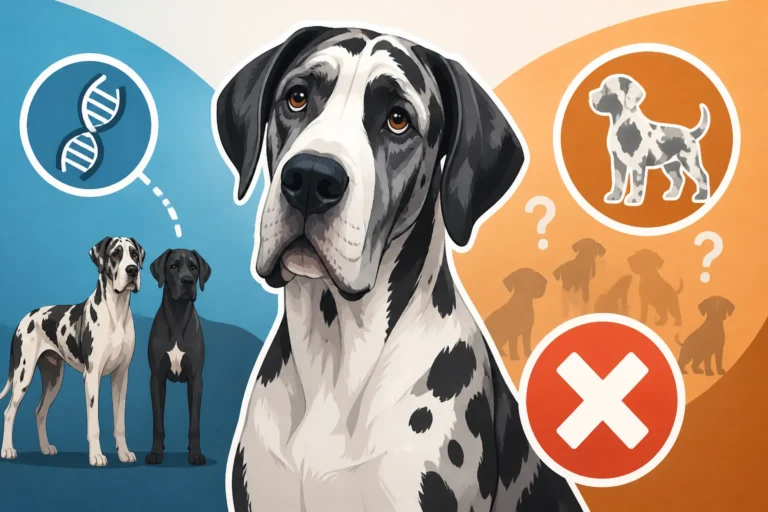
- Harlequin: This is perhaps the most striking and complex color pattern. It consists of pure white with well-distributed, irregular black torn patches over the entire body. A pure white neck is preferred. The black patches should appear torn, not round or square, and should be of varying sizes. Patches of grey or merle are permitted in the harlequin, but pure black patches are preferred. What a Correct Harlequin Great Dane Looks Like involves a very specific pattern of pigment.
- Mantle: Black and white, often resembling a tuxedo. The body is primarily black, with a solid black blanket extending over the body, a white chest, white collar (preferably unbroken), white on the forelegs (either partway or full), white rear pasterns, and a white-tipped black tail. A white blaze on the muzzle is also common.
- Merle: Recognized since 2019, merle Danes have a pale grey body with black, torn patches. They resemble a diluted harlequin. Harlequin and Merle Great Dane Genetics are complex, and responsible breeding is paramount to avoid health issues like deafness and blindness often associated with "double merle" dogs.
For all colors, the coat itself should be short, thick, smooth, and glossy. A dull coat, or one that is long or wiry, is a fault. While Great Danes shed, their short coat is relatively easy to maintain, often just needing a good brush-down with a curry comb or rubber grooming mitt, which you can find easily on sites like Chewy.
Faults and Disqualifications Based on Color
Understanding color faults and disqualifications is critical for anyone considering showing a Great Dane. Any color or pattern not explicitly recognized by the standard is a disqualifying fault. This means a judge cannot place a dog with such a color. Examples include fawn merle, blue merle (unless specific to a harlequin pattern), or any combination not described in the seven recognized types.
Furthermore, excessive white markings in colors where white is undesirable (like fawn or blue) can be penalized. In harlequins, too many small, pinpoint black spots (known as "ticking") or too few, or very large, confluent black patches can be considered faults, moving away from the "torn" appearance. A solid white Great Dane, often a result of merle-to-merle breeding, is a disqualifying fault due to its strong association with severe health issues like deafness and blindness. Responsible breeders prioritize health and temperament above all else, and adherence to color standards often goes hand-in-hand with sound breeding practices. What Puts a Great Dane Out of the Ring often includes serious color faults.
Gait and Temperament: The Movement and Mind of a Champion
A Great Dane isn't just judged on how it looks standing still; its movement and demeanor in the ring are equally, if not more, important. A champion Great Dane must not only embody the physical ideal but also move with purpose and possess the hallmark temperament of the breed.
Effortless Movement: The Great Dane's Stride
The Great Dane's gait should be powerful, long-reaching, and elastic, covering ground with an effortless, coordinated stride. When moving, the dog should appear as one fluid unit, neither stiff nor loose. Judges look for a strong drive from the hindquarters and a corresponding reach from the forequarters. As the dog increases speed, the legs will converge towards a center line, a natural and efficient way for a large animal to conserve energy, known as a "single track." The back should remain firm and level, with no bouncing or rolling.
Any deviation from this ideal movement is considered a fault. Examples include a "pacing" gait (where both legs on the same side move forward simultaneously, creating a rolling motion), a "hackney gait" (high-stepping front action like a hackney horse), close moving or crossing over in the front or rear, or a waddling, uncoordinated movement. The tail should be carried naturally, preferably not higher than the back, and should swing with the motion of the dog, acting as a rudder for balance. The Long Reaching Stride a Great Dane Shows is a testament to careful breeding and proper angulation, and it's a breathtaking sight to behold. A truly sound Great Dane moves with an almost regal air, a testament to its powerful yet graceful construction.
Temperament: The True Gentle Giant
Beyond physical beauty and athletic movement, a Great Dane's temperament is a cornerstone of the breed standard. The ideal Great Dane should be friendly, courageous, and dependable, possessing dignity and gentleness. They are known as "gentle giants" for a reason, and this calm, confident nature is highly valued in the show ring. Judges will observe how the dog interacts with its handler, with other dogs, and with the judge themselves. A Great Dane should be approachable, allowing the judge to examine it without showing shyness or aggression.
A dog that displays shyness, nervousness, or aggression towards people or other dogs is considered a serious fault and can even lead to disqualification. This isn't just about show etiquette; it's about the fundamental character of the breed. A dog of this size with an unstable temperament can be dangerous, and responsible breeders work tirelessly to ensure their lines produce dogs with stable, loving dispositions. Whether a Great Dane Ever Shows Aggression is a critical point; while they can be protective, true aggression is contrary to the breed's nature. A Great Dane should be a picture of calm confidence, a true testament to its reputation as a loyal and loving companion.
Common Misconceptions and What the Standard Avoids
There are often common misconceptions about what makes a "good" show dog, especially with giant breeds like the Great Dane. The standard isn't about extremes; it's about achieving a harmonious balance and ensuring the breed remains functional and healthy.
Over-exaggeration vs. Functional Excellence
One of the biggest pitfalls in breeding and judging is the tendency towards over-exaggeration. For Great Danes, this might manifest as breeders chasing extreme height, excessive head size, or disproportionate bone without considering the overall balance and health. The standard explicitly guards against this. For example, while tallness is desired, it's always "provided that proportionality is maintained." A dog that is extremely tall but is gangly, weak in bone, or poorly coordinated will be heavily faulted. Similarly, an overly heavy, coarse head that looks out of place on the body, or a massive amount of bone that impedes agile movement, is not desired.
The goal is functional excellence. Every trait described in the standard, from the deep chest to the powerful hindquarters, contributes to the dog's ability to move efficiently and carry its large frame without undue stress on its joints. The Great Dane was, after all, a working dog. While its specific "work" has largely shifted from hunting boar to being a cherished companion, its structure must still reflect the ability to be a sound, healthy, and active animal. Judges are trained to recognize when a trait has been pushed too far, valuing sound structure and balanced proportions over any single exaggerated feature. Chewy, for instance, offers a wide array of joint supplements and specialized large-breed foods designed to support the skeletal health of rapidly growing and large adult Danes, underscoring the importance of functional health.
Understanding Disqualifying Faults
Disqualifying faults are specific traits or conditions explicitly listed in the standard that render a dog ineligible for placement in the show ring. These are not merely serious faults; they are deal-breakers that prevent a dog from representing the breed ideal. We've touched on some already, such as colors not recognized by the standard, white Great Danes (often linked to severe health issues), or severe temperament flaws like aggression or extreme shyness. Other disqualifications might include an undershot or severely overshot bite, missing more than a specified number of teeth, or certain structural deformities.
For instance, structural issues that severely impede movement, such as lameness, would be a disqualification. Any condition that affects the dog's health or ability to function as a sound animal would also typically lead to disqualification. It's important for breeders and prospective show enthusiasts to thoroughly understand these disqualifying faults, as they highlight the core values of the breed standard: health, soundness, and true breed type. Knowing these can help in evaluating potential puppies or adult dogs, ensuring that one doesn't inadvertently invest time and resources into a dog that can never achieve show success due to an incurable fault.
Preparing Your Great Dane for the Show Ring
Stepping into the show ring with a Great Dane is a journey that begins long before the actual competition. It requires careful preparation, starting from puppyhood, focusing on socialization, training, and the development of proper ring etiquette. It's about showcasing your Dane's natural beauty and temperament in the best possible light.
Early Socialization and Handling
The foundation for a successful show career is laid through comprehensive early socialization. A Great Dane puppy needs to be exposed to a wide variety of sights, sounds, people, and other friendly dogs in a positive and controlled manner. This helps them develop into confident, well-adjusted adults who are unfazed by the bustling atmosphere of a dog show. Taking your puppy to puppy classes, local parks (once fully vaccinated), and even just having different people handle them regularly can make a huge difference.
Beyond general socialization, specific handling training is crucial. Your Dane needs to become accustomed to being examined by strangers – the judge will need to touch their head, open their mouth to check their bite, feel their body structure, and check for appropriate male anatomy. Practicing these examinations at home, making it a positive experience with treats and praise, is vital. Teaching your puppy to stack (stand in a show pose) both manually and free-stacked is also key. Consistent, positive reinforcement training from a young age is paramount. The Manners a Great Dane Needs Before It Grows includes basic obedience but extends to these specialized show skills.
The Role of a Professional Handler and Breeder Support
While many owners choose to handle their own dogs in the ring, particularly at local or entry-level shows, working with a professional handler can be invaluable, especially as you advance to more competitive events. Professional handlers have extensive experience, a keen understanding of ring strategy, and the ability to present a dog in its most flattering light. They can also offer guidance on grooming, conditioning, and show etiquette.
Even if you don't use a professional handler, leaning on the experience of your breeder is essential. Reputable Great Dane breeders are a treasure trove of knowledge about the breed standard, grooming tips, and how to navigate the show circuit. They often have mentors, or other clients, that they can connect you with. Your breeder has invested years in understanding The Health Testing a Great Dane Breeder Owes You and the nuances of the standard, making them an excellent resource for insights into what judges are looking for and how to best prepare your particular dog. Building a strong relationship with your breeder goes a long way in your journey into the competitive world of Great Dane conformation.
Disclaimer
This article is for general informational purposes only and does not constitute professional advice. Laws, prices and regulations vary by location and change over time. Consult a qualified professional for guidance on your specific situation.