Which Is Taller, a Great Dane or a Wolfhound
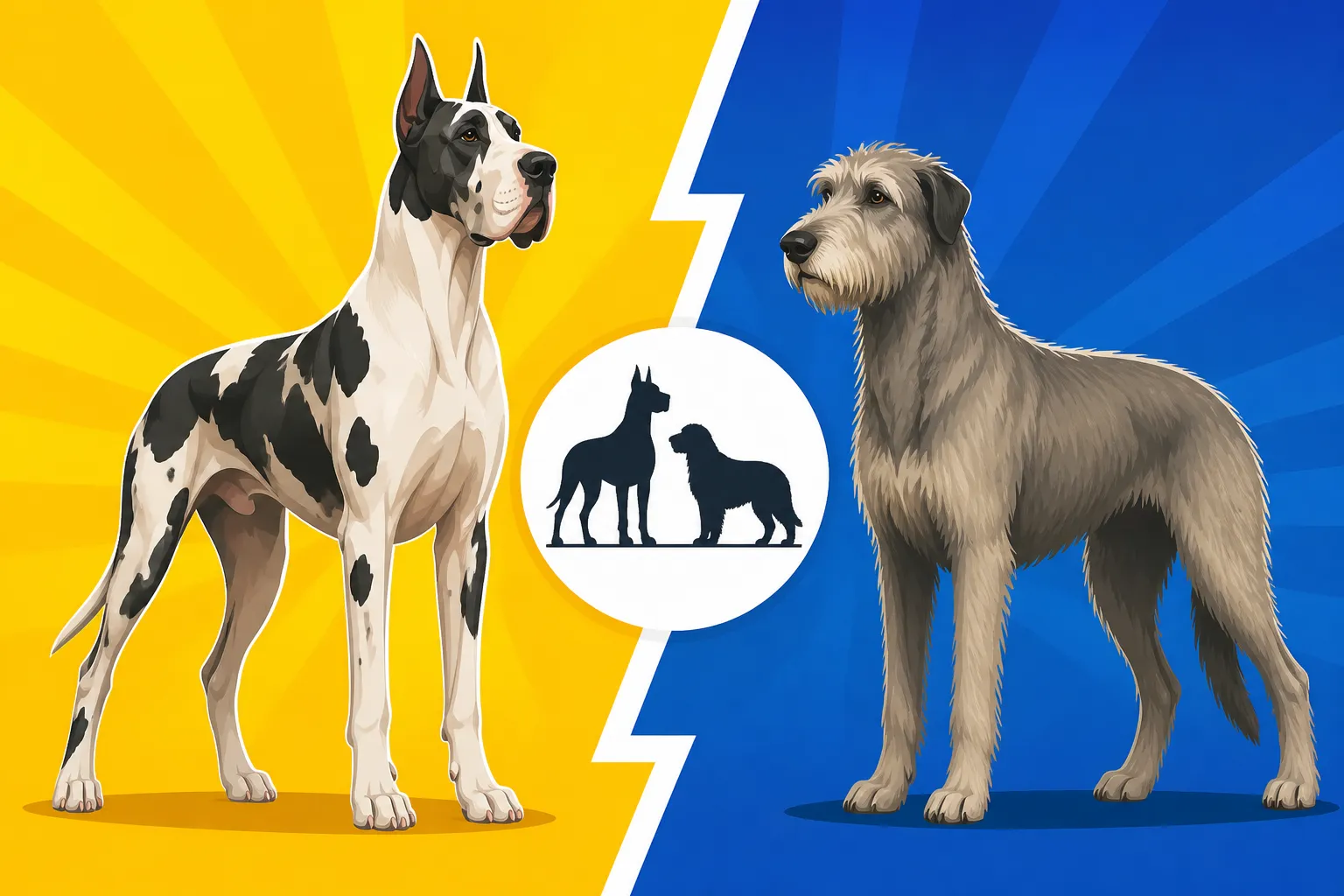
It's a question I hear all the time from folks fascinated by giant breeds: when you stand a Great Dane next to an Irish Wolfhound, which one actually reaches higher? Both are undeniably majestic, imposing dogs, and while most people know Danes are huge, the Wolfhound's reputation for sheer height often sparks confusion. This guide will dive deep into the breed standards, typical measurements, and the nuances that make one of these incredible canines consistently the world's tallest.
Unpacking the "Tallest Dog" Title
When we talk about the tallest dogs in the world, these two magnificent breeds almost always come up in conversation. It’s not just about their size; it’s about their presence. Yet, there’s a distinct difference in how they carry their height and what the breed standards dictate. Understanding these nuances helps clarify which one truly holds the crown for towering above the rest.
The Great Dane's Stature
The Great Dane, often dubbed the "Apollo of Dogs," is renowned for its elegance and powerful build. While they are undeniably enormous, their stature is characterized by a strong, muscular frame and a deep chest. When you picture a Great Dane, you see a dog that is both tall and substantial, with considerable bone density.
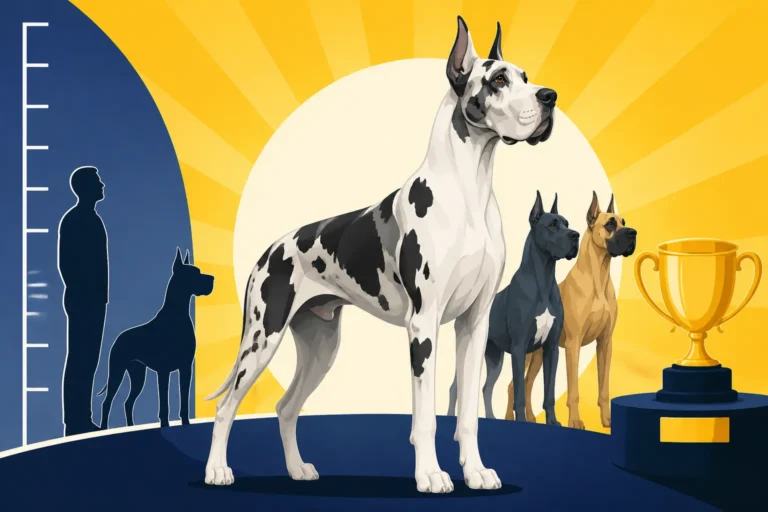
According to breed standards, male Great Danes typically stand at least 30 inches tall at the shoulder, with many reaching 32-34 inches or even more. Females are generally a couple of inches shorter, usually starting at 28 inches. They have a certain regal uprightness that makes them appear even grander. Their proportions are generally square, meaning their length from chest to rear is roughly equal to their height at the shoulder. This balanced build, while impressive, often means they are heavy and powerfully built, which can sometimes make them seem less lanky than their cousins, the sighthounds. We talk more about How Big a Great Dane Actually Gets in another article, but suffice it to say, they are truly giants in every sense.
The Irish Wolfhound's Lofty Presence
Now, let's turn to the Irish Wolfhound. If the Great Dane is the "Apollo of Dogs," the Irish Wolfhound is arguably the true colossus. This breed was historically bred for hunting wolves and other large game, requiring immense size, speed, and incredible reach. Their entire build is designed for athleticism and a profound stretch.
Irish Wolfhounds are described as being of "great size and commanding appearance," and the breed standard explicitly states that males should be at least 32 inches tall at the shoulder, with many individuals routinely exceeding this. It's not uncommon to see male Wolfhounds standing 34-36 inches or even taller. Females are also incredibly tall, with a minimum height of 30 inches. What sets them apart is their leaner, rangier frame compared to the Great Dane. They possess a deep chest and a long, muscular back, but their overall impression is one of graceful, athletic slenderness rather than sheer bulk. Their long legs contribute significantly to their towering height, giving them an almost ethereal, statuesque quality.
Official Breed Standards and What They Mean
Breed standards are the blueprints for what an ideal dog of a particular breed should look like. They outline everything from temperament to tail set, but for giant breeds, height and weight are, of course, critical components. Comparing the official guidelines really highlights the intended differences between these two breeds.
AKC and Kennel Club Standards
Both the American Kennel Club (AKC) and other international kennel clubs like The Kennel Club in the UK have clear standards for Great Danes and Irish Wolfhounds. These standards are not just suggestions; they are the benchmarks breeders strive for and judges use to evaluate dogs in the show ring.
For the Great Dane, the AKC standard states:
- Males: Minimum height of 30 inches at the shoulders, preferred 32 inches or more.
- Females: Minimum height of 28 inches at the shoulders, preferred 30 inches or more.
Notice the "preferred" height — it pushes the ideal Dane even higher. This emphasizes that while 30 inches is the baseline, judges are often looking for that extra bit of grandeur. The standard also stresses a powerful, well-muscled body, indicating that this height should be accompanied by substance.
For the Irish Wolfhound, the AKC standard is even more demanding regarding height:
- Males: Minimum height of 32 inches at the shoulders. Less than 32 inches is considered a disqualification.
- Females: Minimum height of 30 inches at the shoulders. Less than 30 inches is considered a disqualification.
The crucial difference here is the "disqualification" clause. For a Great Dane, being slightly under 30 inches might be a fault, but for a Wolfhound, being under the minimum is a deal-breaker for show purposes. This clearly indicates that immense height is a fundamental, non-negotiable trait for the Irish Wolfhound. This breed is truly about reaching for the sky.
Beyond the Inches: Overall Impression
While the tape measure provides objective numbers, the overall impression a dog gives can sometimes be just as important. A Great Dane, with its smooth, sleek coat and impressive musculature, presents an image of stately power and elegance. They are often broader through the chest and have a slightly more substantial head. This robust build contributes to their 'giant' feel in terms of mass and presence. Many owners find their Great Danes often stand at a similar height to a kitchen counter, and A Great Dane That Takes Dinner Off the Table is a common, often humorous, complaint!
The Irish Wolfhound, on the other hand, with its rough, shaggy coat and deep-set eyes, projects a more ancient, rugged, and truly towering image. Their long, lean legs and relatively lighter bone for their size create a silhouette that emphasizes height and reach. They are built for galloping across open fields, and their height facilitates that powerful stride. While both breeds are incredibly tall, the Wolfhound's physique is specifically geared towards maximizing verticality, making them appear ganglier and more dramatically tall.
Factors Influencing a Giant Dog's Perceived Height
It's easy to get caught up in the numbers, but a dog's perceived height isn't just about how many inches they measure at the shoulder. Several factors contribute to how tall a dog appears, from their unique genetic makeup to the way their body is proportioned.
Individual Variation and Genetics
Just like people, individual dogs within a breed can vary significantly in size. While breed standards set minimums and ideals, not every dog will perfectly fit those parameters. You might encounter a particularly tall Great Dane that stands eye-to-eye with an average Irish Wolfhound, or a slightly smaller Wolfhound. Genetics play a huge role, of course, as does the quality of breeding. Responsible breeders strive to produce dogs that adhere closely to the standard, but there's always a spectrum.
It’s also worth noting that many of the "world's tallest dog" record holders have often been Great Danes. This might seem contradictory given the Wolfhound's typical greater height. However, these record holders are outliers – exceptionally tall individuals who push the absolute limits of their breed's potential. On average, across the entire breed population, the Irish Wolfhound consistently registers as taller. The average is a key distinction from the exceptional record-breaker. If you're looking for a reliably tall dog, the average Wolfhound will likely out-measure the average Dane.
The Illusion of Proportion
The way a dog is built can create an optical illusion about its height. A Great Dane has a relatively shorter body length compared to its leg length and a more substantial, deep chest. This square, powerful build makes them look incredibly sturdy and imposing. They have a certain gravitas.
An Irish Wolfhound, conversely, has a longer back and very long, lean legs. This gives them a more rectangular, almost elongated appearance. Their depth of chest is still significant, but their leaner musculature and longer overall outline emphasize their verticality. When you see a Wolfhound, your eye is drawn upwards along its immense frame. This difference in proportion means that even if a Great Dane and an Irish Wolfhound were the exact same height at the shoulder, the Wolfhound might appear taller due to its lankier build. Think of it like comparing a bodybuilder to a marathon runner; both are impressive, but one might look "bigger" while the other looks "taller" due to different builds.
Living with Giants: Practical Considerations of Height
Bringing a giant breed into your home isn't just about having an impressively tall dog; it comes with a unique set of practical challenges and considerations that go far beyond picking out a standard dog bowl. Their sheer size impacts everything from daily routines to long-term health.
Everyday Challenges for the Taller Breed
The undeniable height of both Great Danes and Irish Wolfhounds means that everything in your home that was once out of reach for a typical dog is now fair game. Kitchen counters become accessible snack bars, and table manners need to be impeccable from day one. I've had many Great Dane owners laugh about their dog casually "counter-surfing" without even standing on its hind legs! You might find yourself needing extra-tall baby gates or specialized crates that can comfortably accommodate their majestic stature. Speaking of crates, Crates That Hold a Full-Grown Great Dane are not your average pet store variety; they need to be robust and truly enormous.
Car travel also becomes an adventure. While a smaller dog might fit neatly in a carrier, a Great Dane or Irish Wolfhound often requires the entire cargo area of an SUV or a significant portion of the back seat. Ramps can be a lifesaver for helping them get in and out of vehicles, especially as they age, to protect their joints. You can find durable, extra-long ramps on pet supply sites like Chewy. Even simply navigating doorways or narrow hallways can be a comical maneuver, as they learn to duck their heads or turn sideways.
Health Implications of Giant Stature
Unfortunately, great size often comes with specific health challenges. Both Great Danes and Irish Wolfhounds are prone to certain conditions simply because of their rapid growth and immense weight. Joint issues, such as hip and elbow dysplasia, are a concern, making Great Dane Hips, Elbows and Growing Joints a topic every owner should be familiar with. Their rapid growth phases as puppies are particularly critical, and improper nutrition can lead to Bone Development Problems in a Great Dane Puppy. Owners need to be diligent about managing their exercise and diet to ensure slow, steady growth.
Heart conditions are also more common in these large breeds. Dilated cardiomyopathy (DCM) is a particular worry for Great Danes, and regular cardiac screenings are often recommended. Bloat (gastric dilatation-volvulus or GDV), a life-threatening condition where the stomach twists, is another significant risk for deep-chested breeds like both the Great Dane and Irish Wolfhound. Understanding Bloat in a Great Dane and the One in Three Odds is vital for any giant breed owner. Due to their size, any veterinary procedure, from anesthesia to medication dosages, tends to be more complex and costly.
Careful attention to nutrition, including feeding a high-quality large-breed puppy food designed for slow growth, and providing adequate, but not excessive, exercise is paramount. Investing in supportive, Orthopedic Beds a Great Dane Needs is also crucial for cushioning their large joints.
The Definitive Answer: Irish Wolfhounds Take the Crown
So, after all that, which breed is typically taller? On average, and according to strict breed standards, the Irish Wolfhound is the taller breed. While individual Great Danes can certainly be exceptionally tall and often hold world records for height, the Irish Wolfhound consistently has a higher minimum height requirement and a leaner build designed to emphasize that vertical reach.
It's a testament to centuries of breeding for specific functions – the Great Dane for powerful guardianship and elegance, and the Irish Wolfhound for the pursuit of large, fast prey, which demanded incredible height and stride. Both are magnificent, gentle giants, but if you're measuring pure verticality in the average adult dog, the Irish Wolfhound stands a little closer to the clouds.
Here’s a quick comparison of their typical adult heights:
| Feature | Great Dane | Irish Wolfhound |
|---|---|---|
| Males (Min) | 30 inches (76 cm) at shoulder | 32 inches (81 cm) at shoulder (disqualification below) |
| Males (Typical) | 32-34 inches (81-86 cm) | 34-36+ inches (86-91+ cm) |
| Females (Min) | 28 inches (71 cm) at shoulder | 30 inches (76 cm) at shoulder (disqualification below) |
| Females (Typical) | 30-32 inches (76-81 cm) | 32-34+ inches (81-86+ cm) |
| Build Impression | Powerful, muscular, substantial, elegant | Leaner, rangier, rugged, athletic, towering |
Remember, no matter which of these awe-inspiring breeds captures your heart, living with a giant dog requires dedication, understanding, and a willingness to embrace a truly larger-than-life companion. Finding suitable supplies like massive food bowls and sturdy leashes on trusted sites like Chewy will become a regular part of your life. They bring immense joy, but their size means their needs are also immense.
Disclaimer
This article is for general informational purposes only and does not constitute professional advice. Laws, prices and regulations vary by location and change over time. Consult a qualified professional for guidance on your specific situation.