Why a Blue Great Dane Looks Steel Gray
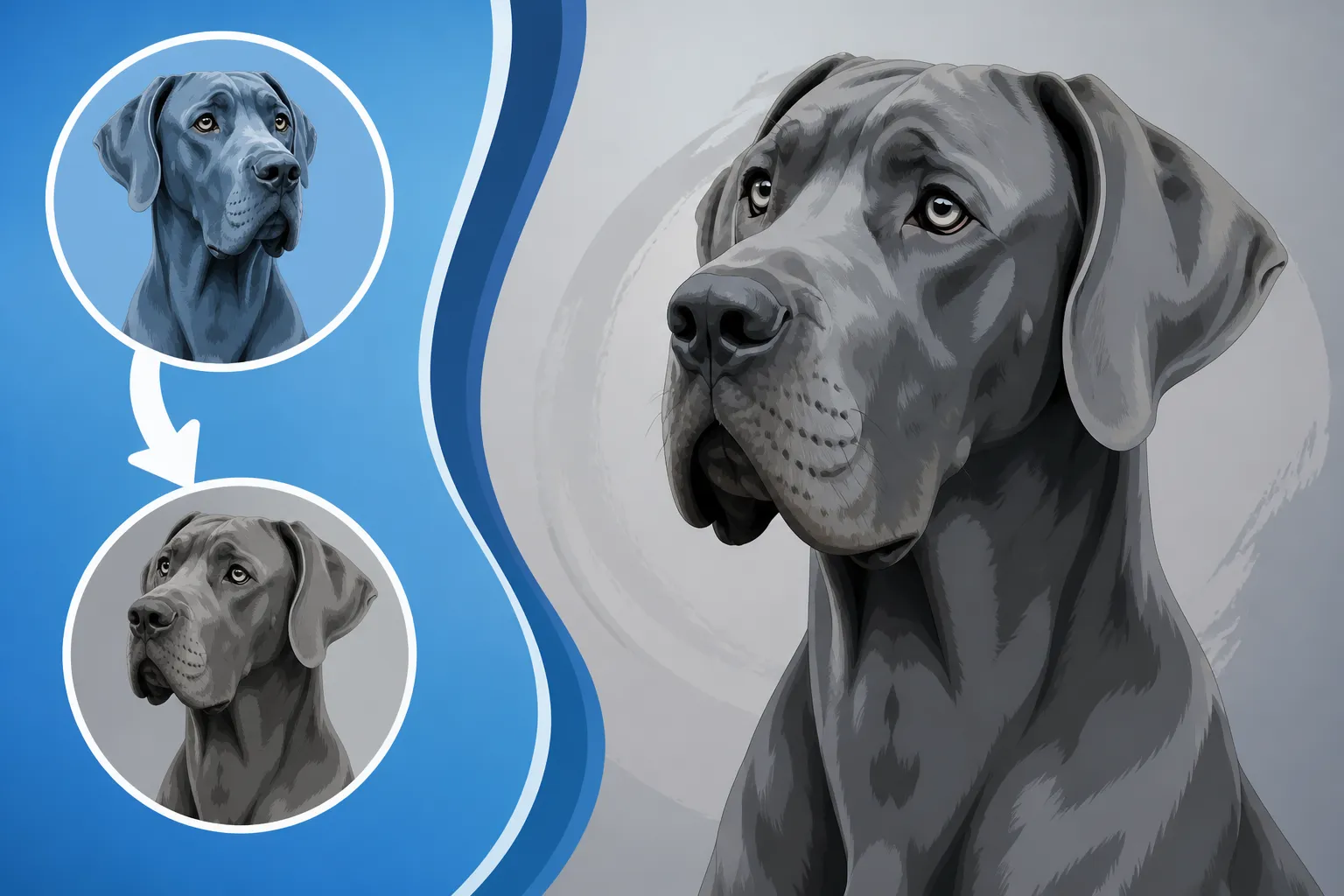
It's a really common point of confusion for so many Great Dane lovers: you hear about "blue" Great Danes, and you picture a vibrant, sapphire hue, perhaps like a cartoon character. Then, you see one in person, and they look distinctly, beautifully, gray. It's not just your eyes playing tricks on you, nor is it a trick of the light. There's a fascinating genetic reason why these magnificent dogs, officially known as "blue," actually present as a stunning steel gray, and this guide is here to unravel that mystery for you.
The Genetic Blueprint Behind "Blue"
The world of canine coat colors is surprisingly complex, far beyond what meets the eye. When we talk about "blue" in Great Danes, or indeed many other breeds, we're not talking about a pigment that is inherently blue. Instead, we're discussing a genetic modification of black pigment, which results in that characteristic steel-gray appearance. It's all thanks to a specific gene that acts like a dimmer switch for color.
Understanding Color Dilution Genes
At the heart of a blue Great Dane's coat lies a fascinating genetic process known as color dilution. Imagine you have a bucket of rich, dark black paint. Now, picture someone adding a significant amount of white paint to it. The black paint doesn't disappear; it's simply diluted, becoming various shades of gray. This is essentially what happens at the genetic level in a blue Great Dane.
The gene responsible for this dilution is often referred to as the "D locus." Dogs carry two alleles (versions of a gene) at this locus. A dog with two dominant "D" alleles (DD) or one dominant "D" and one recessive "d" allele (Dd) will display full, undiluted color – so if they are genetically black, they will look black. However, a dog that inherits two copies of the recessive "d" allele (dd) will have its black pigment diluted. This "dd" genotype is the secret behind the blue Great Dane's steel-gray coat. It doesn't create a new color; it simply waters down the existing black. This is true for other colors too; if a dog were genetically liver (brown), the "dd" gene would dilute that to a lighter, lilac or Isabella color, but with Great Danes, the focus is on the dilution of black to gray.
Black Pigment and Its Transformation
So, what exactly happens to the black pigment? Canine coat colors are primarily determined by two main pigments: eumelanin (black/brown) and phaeomelanin (red/yellow). In Great Danes, the "blue" gene specifically affects eumelanin. When the "dd" genotype is present, the black eumelanin pigment granules are not produced in their usual dense, evenly distributed fashion. Instead, they are clumped together and spaced out within the hair shaft.
This clumping and spacing doesn't mean less pigment; it means the pigment is arranged differently. When light hits these irregularly clustered pigment granules, it doesn't absorb or reflect in the same way it would with dense, uniform black pigment. Instead, the light scatters, and our eyes perceive this scattered light as shades of gray. The overall effect is a softer, duller, more muted version of black, which we refer to as blue in genetics, but visually experience as steel gray. It’s a trick of light and pigment arrangement, not an actual blue hue in the pigment itself.
More Than Just Black and White: The Spectrum of Blue
While we talk about "blue" Great Danes, it's important to understand that this isn't a single, uniform shade. Just like human hair can be dark brown or light brown, a blue Great Dane's coat can vary in its depth of gray. Furthermore, appreciating this color means understanding how it differs from other Great Dane coat patterns and why it's a recognized, distinct beauty.
The Many Shades of "Blue" Danes
When you observe a group of blue Great Danes, you'll quickly notice that not all "blue" is created equal. The shades can range from a very light, almost silver-gray, to a deep, dark charcoal that, in certain lighting, might almost be mistaken for black. These variations can be influenced by several factors, including secondary modifier genes that affect the intensity of dilution, individual genetic expression, and even environmental factors.
For instance, a blue Dane that spends a lot of time in direct sunlight might experience a slight lightening or even a reddish cast to its coat over time, similar to how human hair can lighten. The condition and health of the coat also play a significant role in how the color appears. A healthy, well-nourished coat will often have a more lustrous, even appearance, reflecting light beautifully and emphasizing its steel-gray depth. Ensuring your Great Dane receives a high-quality diet, perhaps by exploring the diverse options available at retailers like Chewy, can contribute significantly to overall coat health and shine. Regular grooming, as discussed in Brushing a Short-Coated Great Dane, also helps to distribute natural oils and keep the coat looking its best, enhancing whatever shade of blue they happen to be.
Comparing Blue to Other Great Dane Colors
To truly understand why a blue Great Dane looks steel gray, it helps to compare it to other Great Dane colors. A "true" black Great Dane, for example, possesses dense, undiluted eumelanin pigment that absorbs light and appears deep, uniform black. There's no genetic dilution at play here.
Here's a quick comparison to illustrate the differences:
| Color | Genetic Basis | Visual Appearance | Nose Color | Eye Color (Typical) |
|---|---|---|---|---|
| Black | Undiluted eumelanin | Deep, solid black | Black | Dark Brown |
| Blue | Diluted eumelanin (dd) | Steel gray, slate gray, charcoal | Gray (slate) | Brown, Amber |
| Merle | M Locus (Mm or M/m) | Patches of diluted color over solid | Black or mottled | Blue, Brown, or mixed |
| Fawn | Phaeomelanin | Golden tan with black mask | Black | Dark Brown |
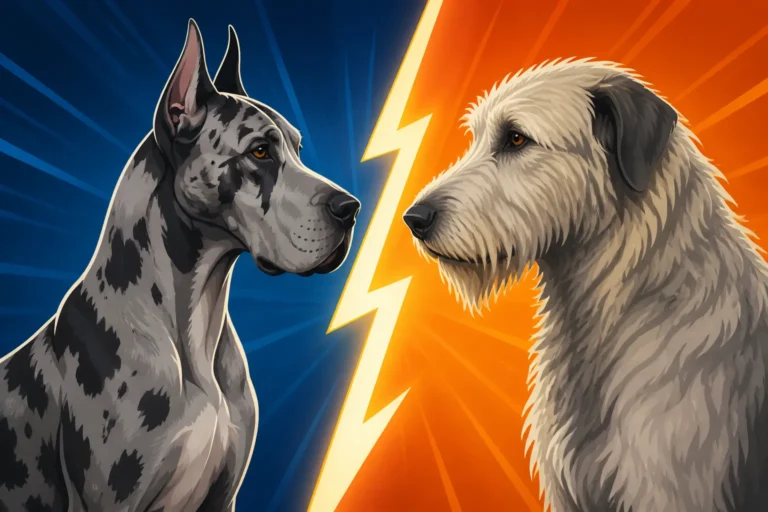
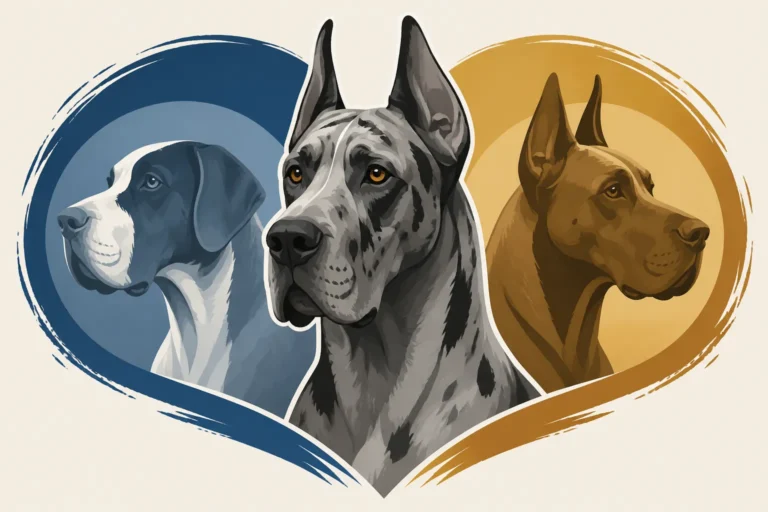
It's crucial to differentiate blue from merle, which is another common Great Dane pattern but arises from a completely different gene. Merle Great Danes have patches of diluted color (often gray or tan) over a solid base color, along with darker, undiluted patches. The merle gene creates a mottled or spotted pattern, not a uniform dilution like the blue gene. For more on merle genetics, you can read Merle Great Danes Since 2019 and understand the critical considerations, especially regarding breeding, as highlighted in Why Two Merle Great Danes Should Not Be Bred.
A blue Great Dane will never look like a vibrant, sky-blue crayon or a deep navy. Its beauty lies in that distinctive, sophisticated steel-gray, a color that is recognized and celebrated within the breed. The Seven Great Dane Colors provides a broader overview of the diversity in Great Dane coat colors, all of which contribute to the breed's striking appearance.
Health and Care Considerations for Blue Great Danes
When a unique coat color, especially one that involves dilution, is discussed, it's natural for owners to wonder about any associated health implications. The good news is that for blue Great Danes, the single dilution gene itself is generally not linked to serious inherent health issues. However, understanding general coat care and distinguishing between responsible breeding and potential pitfalls is always important.
Is the Blue Gene Linked to Health Issues?
It's a valid question, as some color genes in other breeds are unfortunately tied to health concerns. For example, the double merle gene, which can result from breeding two merle dogs, is strongly associated with severe health problems like deafness and blindness in puppies. However, the simple "dd" genotype that produces a blue (steel-gray) Great Dane is not typically associated with these kinds of severe, direct health defects. A blue Great Dane should be just as healthy as a black, fawn, or brindle Great Dane, provided it comes from responsible breeding lines.
There is a condition known as Color Dilution Alopecia (CDA) that can affect some dogs with diluted coats. This condition can cause thinning hair, patchiness, or a dull, brittle coat, sometimes with secondary skin infections. While blue Great Danes can theoretically be affected by CDA, it's not a universal or guaranteed outcome simply because they are blue. Many blue Danes live their entire lives with perfectly healthy coats. Responsible breeders prioritize overall health and temperament, ensuring that their blue Great Danes are not predisposed to such issues. Always look for a breeder who conducts comprehensive health testing, as detailed in The Health Testing a Great Dane Breeder Owes You, regardless of the color you're interested in. Focus on the dog's overall well-being, longevity, and genetic health, not just its color, to ensure you're bringing home a robust companion. Why a Great Dane Only Lives Seven to Ten Years gives a good overview of general lifespan considerations for the breed.
General Coat Care for a Steel-Gray Coat
Caring for a blue Great Dane's coat is much like caring for any other short-coated Great Dane. Their short, dense coats are relatively low-maintenance, but their sheer size means there's a lot of coat to maintain! Regular grooming helps keep their steel-gray looking its best, reducing shedding and promoting healthy skin.
- Brushing Routines: Even though their coat is short, blue Great Danes do shed. Regular brushing, ideally a few times a week, with a rubber curry brush or a shedding blade (used gently), can help remove loose hair and stimulate the skin's natural oils, contributing to a shiny coat. This is also a great bonding experience.
- Bathing Considerations: Due to their size, bathing a Great Dane at home can be quite the undertaking! Bathing a Great Dane at Home offers some excellent tips. While they don't need frequent baths, a bath every few months, or when they've gotten particularly dirty, will suffice. Use a gentle dog-specific shampoo to avoid drying out their skin or coat.
- Nutrition for Coat Health: A healthy coat starts from within. Feeding your Great Dane a high-quality, balanced diet is paramount. Look for foods with good sources of Omega-3 and Omega-6 fatty acids, which are crucial for skin and coat health. Many excellent dog food options, including those rich in skin-supporting nutrients, can be found on platforms like Chewy. Consider options that cater to large breeds and their specific nutritional needs, which might be quite substantial, as discussed in Feeding an Adult Great Dane Six to Ten Cups. A dull coat can sometimes be an indicator of nutritional deficiencies, so a good diet ensures their beautiful steel-gray gleams.
Appreciating the Unique Beauty of the Blue Great Dane
The "blue" Great Dane might not be literally blue, but their steel-gray coat holds a unique allure that has captivated enthusiasts for generations. This distinct coloration is a testament to the breed's genetic diversity and contributes to its reputation as the "Apollo of Dogs."
The Allure of the Steel-Gray
There's something undeniably striking about a Great Dane draped in a coat of steel gray. It lends them an air of sophistication, elegance, and even a touch of mystery. Many describe the blue Great Dane as having a noble presence, with the subtle variations in gray adding depth and character to their massive, powerful physique. The color has a unique way of changing with the light, appearing lighter and more silvery in bright sunshine, and deepening to a rich, dark charcoal in dimmer settings. This chameleon-like quality only adds to their charm, making them a constant source of visual delight.
It’s important for new owners, or those simply admiring the breed, to understand that "blue" in the canine world is a genetic term, not a literal color description. Dispelling the expectation of a vibrant blue allows for a deeper appreciation of the actual, stunning steel-gray that these magnificent animals present. Their distinctive color, often paired with piercing amber or brown eyes and a slate-gray nose, creates a truly unforgettable picture.
What the Standard Says About Blue
For those interested in conformation or the official recognition of the breed, it’s comforting to know that blue is a perfectly acceptable and recognized color within the Great Dane breed standard. Organizations like the American Kennel Club (AKC) specifically list blue among the acceptable colors, acknowledging its place in the breed's heritage. The standard describes blue as a "pure steel blue," which perfectly encapsulates that beautiful gray hue we've been discussing. The Great Dane the Show Ring Is Looking For outlines many of the characteristics judges look for, and a correct blue coat is certainly one of them.
The specific shade of blue (light vs. dark gray) isn't usually as critical in the show ring as the overall health, conformation, and temperament of the dog. What matters is that the color is a true, undiluted steel gray, without any fawn, brindle, or black patches mixed in (unless, of course, it's a mantle blue, but that's a different discussion!). The accompanying slate-gray nose and eye rims, along with the typically lighter eye color (ranging from brown to amber), are also defining characteristics of a correctly colored blue Great Dane. This adherence to a standard ensures the integrity and distinctiveness of each recognized color, allowing breeders to strive for excellence within each genetic expression.
Disclaimer
This article is for general informational purposes only and does not constitute professional advice. Laws, prices and regulations vary by location and change over time. Consult a qualified professional for guidance on your specific situation.