Whether Modern Great Danes Are Smaller Than They Were
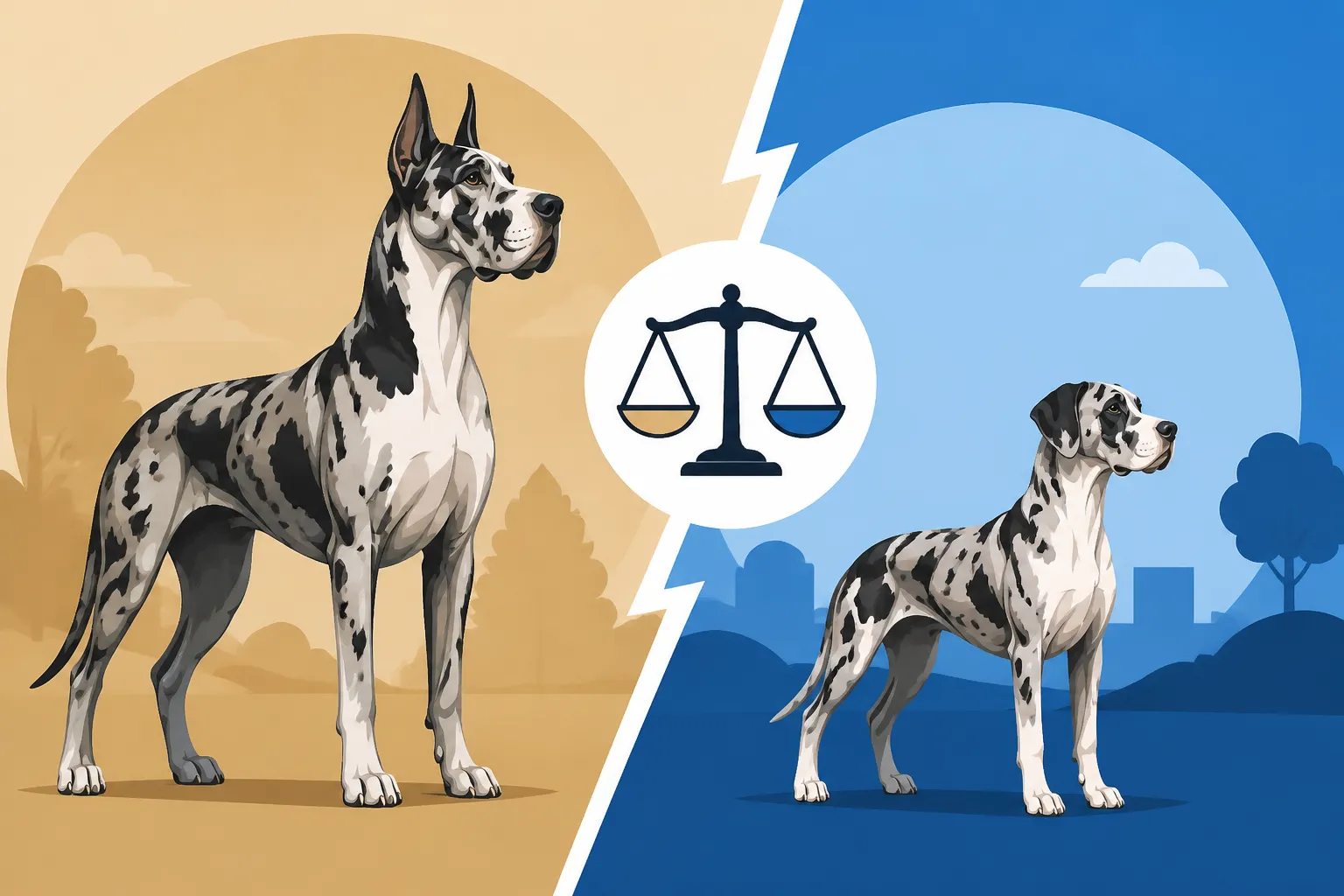
A photograph of an enormous Great Dane from decades ago can make today’s dogs look smaller, but one memorable image is not a reliable breed-wide comparison. The answer depends on what “modern” means, which dogs are being compared, and whether height, weight, or overall build is the measure. This guide separates documented standards from legends, records, and changing expectations.
What “smaller” means when comparing Great Danes
Height, weight, and overall build are different measures
A Great Dane can look imposing without being unusually tall. Height is measured at the highest point of the shoulders, while weight is affected by frame, muscle, age, and body condition. A dog with a deep chest and broad head may appear much larger than a taller, leaner dog standing beside it.
That distinction matters because old descriptions and photographs rarely give all the information needed for a fair comparison. A photograph might show a dog standing close to a person, but perspective can exaggerate its size. Without a reliable height measurement, weight, and details about the dog’s condition, the image can’t tell us whether it was larger than a typical Dane today.
“Bigger,” meanwhile, is often used to mean heavier or bulkier. That is not necessarily the same as being taller, and more weight is not automatically a sign of better size or better health. A Great Dane’s goal is a large, well-proportioned body—not simply maximum height or bulk.
Breed averages are more useful than exceptional examples
A comparison between eras should focus on typical dogs, not the tallest dog anyone can find in an old photograph or record book. Exceptional individuals have existed in different periods, but they don’t tell us what the average dog in a population looked like.
Record-holders are especially easy to overinterpret. A dog celebrated for extraordinary height is an outlier by definition. Reading about How Tall the Tallest Great Danes Have Been can help put those claims in perspective, but a record-holder shouldn’t be treated as a typical representative of the breed.
It is also worth separating a dog’s size from its health. A very tall or heavy Dane may attract attention, but that alone doesn’t show that it was sound, comfortably built, or representative of a well-bred dog. For a practical view of the breed, compare healthy adult dogs of similar sex and age, and look at their proportions as well as their measurements.
Why historical Great Danes are hard to compare with today’s dogs
The breed developed from less uniform dogs
The dogs behind the modern Great Dane were not always a single, consistent type. Historical accounts describe large hunting and guarding dogs, including boar-hunting dogs, but the names and descriptions used for them varied across places and periods. The Boar Hound the Great Dane Descends From gives useful background on that earlier working role.
Those dogs were selected for what they needed to do, not for matching a modern show-ring outline. Hunting a dangerous animal required a powerful, capable dog, but a written description such as “large” or “massive” does not provide a standard measurement. A historical dog might also have looked heavier because it had a different build, coat, posture, or condition.
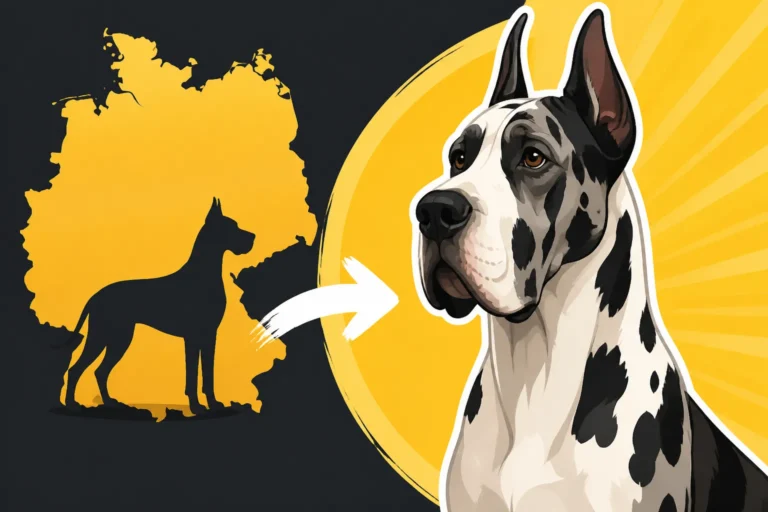
Over time, breeders worked toward a more recognizable breed type. That process makes it difficult to compare an early working dog directly with a modern Great Dane as if the two came from populations measured in the same way. The history of the Great Dane as Germany's National Breed helps explain how the breed came to be more formally recognized, but formalization does not mean every dog before that point was a uniform size.
Art, photographs, and stories can distort the comparison
Old portraits and illustrations can offer clues about appearance, but they are not measuring tools. Artists might emphasize a dog’s size to communicate strength or status. A person, horse, doorway, or piece of furniture in the scene may not be drawn to scale. Even photographs can mislead when the dog is positioned closer to the camera than the people beside it.
Written stories can be just as tricky. Terms like “giant,” “enormous,” and “mighty” convey an impression, not a measurement. A popular anecdote about an especially large dog may be repeated more often than the ordinary experiences of owners who lived with average-sized animals.
When a claim about historic size comes with a measurement, it helps to ask what was measured, by whom, and under what conditions. Was the dog measured at the shoulder? Was the figure estimated from an image? Is there a reliable record, or is the number part of a story repeated without supporting detail? Those questions don’t dismiss history; they help keep an interesting claim from turning into a misleading comparison.
How modern breed standards shape expectations
A minimum height is not a promise of extreme size
Breed standards set out the features desired in a breed, but they are not a prediction of how large every puppy will become. For Great Danes, the standard describes a tall dog and includes minimum height expectations. A minimum is a threshold, not a target that every dog must dramatically exceed.
The Minimum Size a Great Dane Has to Reach explains why a dog can be a legitimate Great Dane without matching the height of an unusually large individual. In everyday life, adult size varies. Sex, genetics, health, nutrition, and individual development all play a part, and two dogs from the same litter can mature to different dimensions.
Standards also emphasize proportion and soundness. A balanced dog with the right structure is not made more correct simply by adding height or weight. When someone compares today’s dogs with a strikingly large historic specimen, it is worth asking whether they are comparing typical adults or comparing one exceptional animal with an entire modern breed population.
The show-ring outline is not the same as maximum bulk
Modern breeding and judging place attention on the dog as a whole: its outline, movement, structure, and proportions. An impression of size may come from a long neck, a deep body, a strong frame, or the way a dog carries itself. Those traits can make a Dane look substantial without making it unusually heavy.
The Thirty-Two Inch Male Great Dane is a useful topic for understanding why height gets so much attention, but a number should not be mistaken for the whole breed standard. A measurement says little about whether a dog moves comfortably, carries appropriate weight, or has a well-balanced structure.
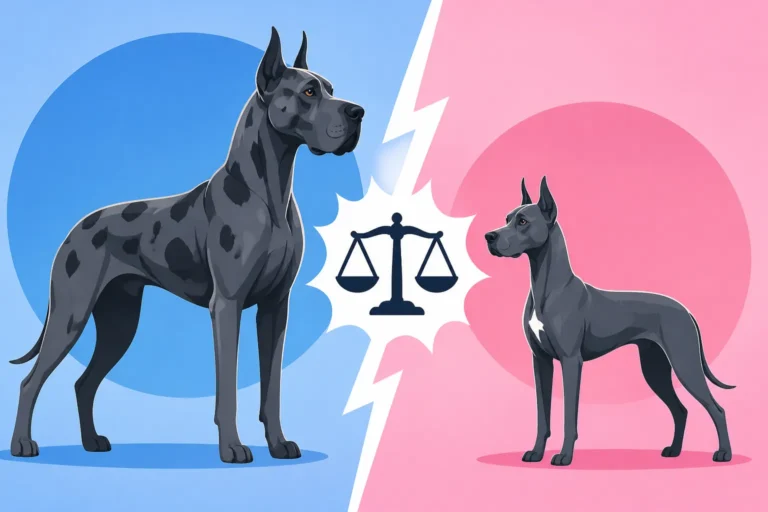
This also helps explain why two Great Danes can create very different impressions. One may be rangier and leggy; another may have a more substantial frame. A photo or brief encounter can make one appear “bigger,” even when the dogs’ measured heights are close. When comparing dogs across generations, appearance alone can’t establish that the breed has become smaller.
What the evidence can—and cannot—tell us
There is no simple proof that modern Great Danes are smaller
A confident claim that modern Great Danes are smaller would require comparable measurements from representative dogs across different periods. That means more than finding a few historic dogs described as giants or noticing that a particular modern dog looks less bulky.
A fair comparison would need consistent measurements, clear records of the dogs’ ages and sexes, and enough examples to say something about the typical population. Historical accounts often don’t offer that level of detail. As a result, anecdotes and photographs can suggest that large dogs existed in the past, but they can’t establish that Great Danes as a whole were larger then.
There may be differences in appearance between dogs from different lines or regions, but that is not the same as showing that the entire breed has shrunk. European Great Danes Against American Lines and Whether a Euro Great Dane Is Heavier address common comparisons between types. Even within those broad labels, individual dogs vary, so neither label guarantees a certain height or weight.
| Comparison | What it can show | What it cannot prove |
|---|---|---|
| A historic portrait beside a person | How the artist or photographer presented the dog | The dog’s exact height or weight |
| A famous record-holder | That an unusually large individual existed or was reported | The average size of Great Danes in that era |
| A modern breed standard | The traits breeders and judges are asked to consider | The size every adult dog will reach |
| Several measured dogs from different eras | A more meaningful population comparison, if records are reliable | A complete answer if the samples are small or inconsistent |
| A dog that looks heavier or broader | That its build or condition differs from another dog | That it is taller, healthier, or more representative |
A useful answer for prospective owners
If you are trying to picture the size of a Great Dane in your home, today’s adult dogs are a more practical reference than an old legend or a height record. Meet adult Danes if possible, and pay attention to how much room they take up when lying down, turning around, getting into a vehicle, and moving through a doorway. Their reach can be just as surprising as their height.
For planning, look at the actual dimensions of beds, crates, gates, and vehicle openings rather than relying on a general label like “giant breed.” Chewy’s listings can be one place to compare stated bed dimensions, but check the measurements against your dog’s sleeping posture and the space available at home. If you’re also planning food storage, Chewy’s package descriptions can help you compare bag sizes and storage needs without assuming that every Great Dane eats the same amount.
A second visit to a breeder, foster home, or rescue can be useful if your first encounter was with a puppy or an unusually large adult. Puppies change quickly, and one dog is not a reliable forecast for every adult. For practical household planning, Chewy’s size information for supplies may help you think through fit, but the individual dog’s measurements are what matter most.
The most accurate takeaway is modest: Great Danes have long been associated with impressive size, but the available historical comparisons do not make it easy to claim that modern dogs are generally smaller. Different kinds of evidence—standards, records, photographs, and owner recollections—answer different questions. A careful comparison keeps those limits in view and avoids treating a famous giant as the average Great Dane.
Disclaimer
This article is for general informational purposes only and does not constitute professional advice. Laws, prices and regulations vary by location and change over time. Consult a qualified professional for guidance on your specific situation.