Whether a Euro Great Dane Is Heavier
A “Euro Great Dane” may look broader, heavier-boned, and more substantial than the Dane standing beside it, but the label does not guarantee a particular weight. It is an informal description, not a separate breed or a reliable size category. This guide explains why some European-line Danes weigh more, what matters more than the label, and how to assess an individual dog’s size and condition.
What people mean by a Euro Great Dane
“Euro” describes a type, not a separate breed
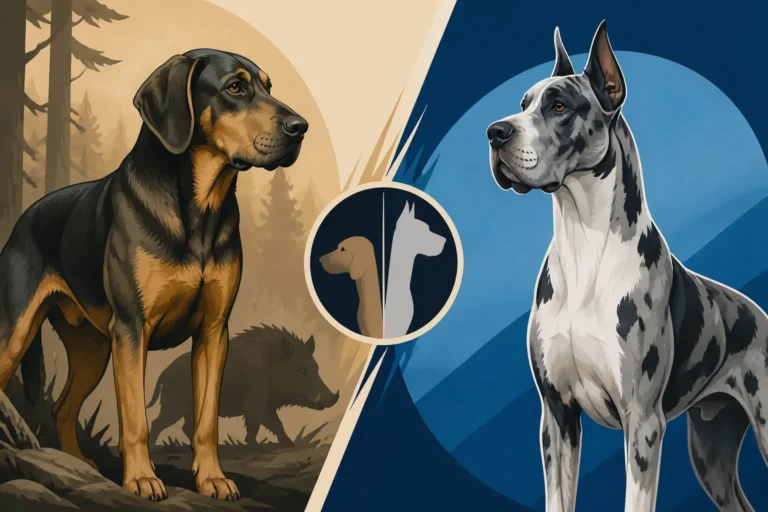
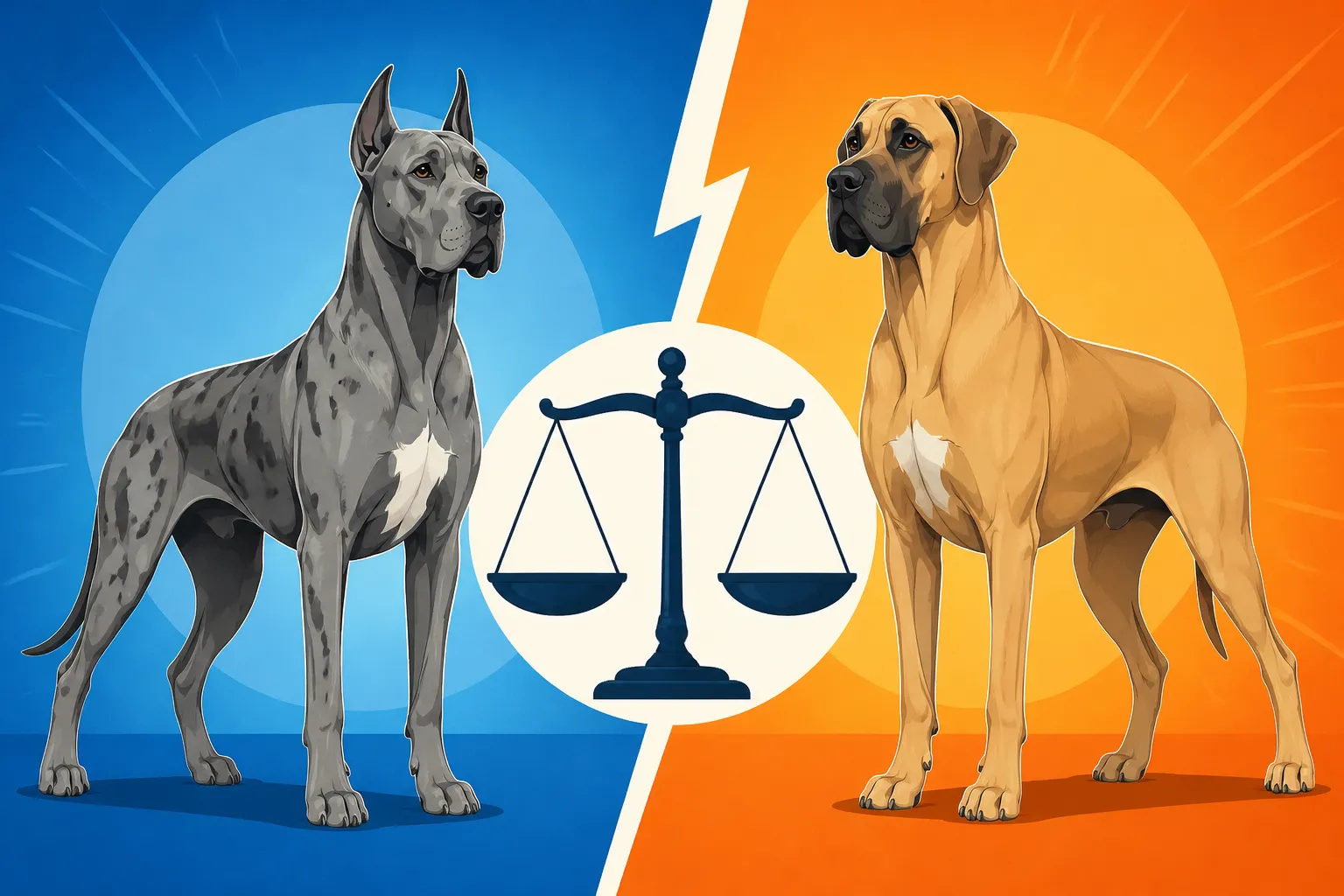
Great Danes are one breed, even though people often talk about “Euro” and “American” types. In casual conversation, a Euro Dane usually means a dog whose appearance reflects European breeding lines or a heavier, more mastiff-like look. People may use the term to describe a broad head, thicker muzzle, fuller body, substantial bone, or a more massive overall build.
There is no universal definition of “Euro Great Dane,” though. One breeder may use it to refer to ancestry, another to a particular look, and someone else may simply use it to describe a large, heavy dog. The label alone cannot tell you the dog’s pedigree, adult weight, health, or temperament. A puppy advertised as Euro may grow into a relatively lean adult, while a Dane from lines described as American may become notably heavy.
That ambiguity is worth keeping in mind when comparing dogs online or talking with breeders. Ask what the person means by “Euro,” and look for specifics: the parents’ size, the dogs’ body condition, and any relevant pedigree information. For broader context on the distinction between breeding traditions, see European Great Danes Against American Lines.
Why the Euro look can seem heavier
Some dogs commonly described as Euro-type have a stockier outline, more prominent bone, and a wider-looking head or body. Those traits can make a dog appear heavier even when the difference on the scale is modest. Height and proportions matter too: a tall, lean Dane may weigh more than expected without looking as bulky, while a shorter or more compact dog can look very substantial at a similar weight.
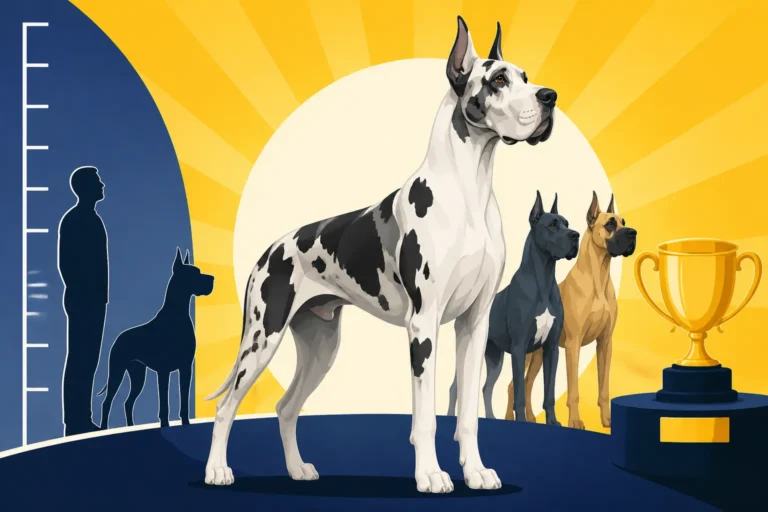
Coat, posture, and camera angle also affect perception. A dog photographed sitting, standing close to the camera, or next to a smaller animal can look enormous. A broad chest may make the body look heavier from the front, while a tucked waist and long legs can make a tall Dane appear comparatively light. If you are trying to understand the range of normal adult size, How Big a Great Dane Actually Gets offers useful background beyond the Euro label.
Weight is only one part of the picture. Two healthy Danes of the same height can differ in frame, muscle, and body composition. That is why “Euro means heavier” is best treated as a tendency some people observe in certain lines, not a dependable rule for every dog.
Are Euro Great Danes actually heavier
The short answer is sometimes, not always
Some European-line Great Danes are heavier than some American-line Danes, particularly when they have a larger frame and a more substantial build. But the categories overlap. There is no reliable conversion chart that says a Euro Dane of a given height must weigh a certain amount more than an American Dane of the same height.
Within either group, dogs vary. A dog’s sex, height, frame, age, muscle, and body condition all influence the scale reading. So do family traits: a puppy’s adult size is more likely to resemble the range seen in its relatives than a general label used in an advertisement. The parents’ size can offer clues, but even that is not a guarantee.
This is why comparing the breed types by a single weight number can be misleading. A heavier dog is not automatically more correct, healthier, or more representative of European ancestry. A lean, well-conditioned Dane can be entirely typical, even if it weighs less than a stockier dog of similar height. For a closer look at common size expectations, compare The Hundred and Forty Pound Great Dane Male with The Thirty-Two Inch Male Great Dane.
Height and frame change what a number means
A weight reading has to be considered alongside the dog’s height and build. A tall Dane with a large frame may naturally weigh more than a shorter, finer-boned dog while still having a visible waist and an appropriate body condition. Looking only at pounds can lead owners to assume a dog is too thin or too heavy when the overall shape suggests otherwise.
A useful comparison starts with the whole dog: How tall is it? Does its weight fit its frame? Can you feel its ribs without pressing hard? Is there a waist when viewed from above, and does the belly rise behind the rib cage when viewed from the side? These observations are more informative than trying to match a dog to a weight listed for a vaguely defined type.
| What you are comparing | Why it matters | What to keep in mind |
|---|---|---|
| Adult weight | Gives a useful measurement to track over time | It does not show whether the dog is lean, muscular, or carrying excess fat |
| Height | Helps put weight in context | Two Danes of different heights should not be expected to weigh the same |
| Frame and bone | Affect how substantial a dog looks and feels | A broad, heavy-boned appearance does not by itself indicate excess weight |
| Body condition | Helps assess whether weight is appropriate | Visible waist and ribs you can feel are more useful clues than a breed-type label |
| Family size | Provides clues about likely growth | Parents and relatives suggest a range, not a guaranteed adult weight |
If you are comparing two Danes, record their height and body condition as well as their weight. The same number can mean different things on different bodies. Whether a Great Dane’s Size Predicts Its Health is also a useful reminder that size by itself is not a health score.
How to tell whether your Dane is carrying a healthy weight
Use body condition, not a target number alone
For many owners, the confusing part is that a large Dane can look lean even when it is healthy. Ribs should generally be easy to feel beneath a light layer of tissue, but they do not necessarily need to be sharply visible. From above, the body should usually narrow behind the ribs; from the side, the abdomen should rise rather than hang level with the chest.
A thick frame can make the ribs feel less prominent, and a dog’s coat, posture, and age may make visual checks harder. When in doubt, ask your veterinarian to assess body condition during an exam. A vet can look at the dog’s shape and muscle as well as the scale, then help set a sensible plan if the dog needs to gain or lose weight. Reading Ribs on a Great Dane explains the hands-on check in more detail.
Avoid trying to make a Dane heavier just because the word “Euro” suggests bulk. Extra weight adds strain to the joints and can make movement more difficult, especially for a giant breed. The goal is not the biggest possible number or the broadest-looking silhouette; it is a body condition that supports comfortable movement and overall health. See Keeping a Great Dane Lean for Its Joints for more on why maintaining an appropriate condition matters.
Track growth carefully in puppies
Puppies change quickly, and a single measurement rarely tells the whole story. A growing Dane should be assessed over time, with attention to steady development, body condition, and veterinary guidance. A puppy that is growing tall or gaining weight rapidly is not necessarily healthier or more impressive. In giant breeds, pushing for maximum size can be counterproductive.
Keep a simple record of weight and date, and share it with your veterinarian at routine appointments. If you use a food chart, treat it as a starting point rather than a strict prescription: activity, metabolism, age, and body condition affect how much an individual puppy needs. Whether you buy food locally or browse options through Chewy, focus on a complete diet appropriate for a growing large-breed dog and discuss changes with your vet. The Calorie Load a Great Dane Actually Needs can help explain why feeding amounts should be individualized.
If you are buying a harness, coat, or other fitted supply through Chewy, measure the dog rather than choosing by weight alone. A heavier dog is not always wider in the same places, and a growing puppy can outgrow equipment quickly. Chewy or any other retailer can be a convenient place to compare supplies, but the fit still needs to suit the dog’s actual measurements. If you are unsure whether growth or weight gain is appropriate, ask the vet before adjusting portions; another mention of Chewy’s food listings should not replace that individualized advice.
Choosing and caring for a Dane based on more than a label
Ask breeders specific questions about size
If you are considering a puppy described as Euro, ask the breeder what that term means in their program. Request the adult heights and weights of the parents, and ask how those dogs are maintained in body condition. A breeder who can discuss the family’s size range honestly is more helpful than one who promises that a puppy will reach a particular impressive weight.
Ask about the puppy’s growth, health history, and expected adult build, but be wary of guarantees based on a marketing label. No responsible prediction can remove the natural variation between littermates. A puppy may inherit its height from one side of the family and its frame from the other, and its final adult size takes time to emerge.
Also consider whether the dog’s needs fit your household. A heavier Dane may be harder to lift in an emergency, more challenging to transport, and more demanding of sturdy beds and well-fitting gear. Weight can affect practical care, but temperament, health, training, and the ability to manage a giant dog matter just as much. For a broader comparison of large breeds, see The Great Dane Against the Mastiff.
Make decisions around the individual dog
When a Dane is already part of your family, focus on its own health and comfort rather than trying to make it match a type. Weigh it consistently if you can, such as on the same scale and under similar conditions, and note changes over time. A sudden change deserves attention even if the dog’s overall weight seems typical for its appearance.
Food portions should be adjusted based on body condition and veterinary advice, not on a goal of making the dog as heavy as a relative or a dog seen online. If portions need changing, make adjustments thoughtfully and monitor the result. Chewy can be one place owners look when comparing food or large-dog supplies, but product descriptions and general feeding charts cannot determine what an individual Dane needs.
The most useful answer to “Is a Euro Great Dane heavier?” is that some are, but the label does not settle the question. Look at the dog’s actual measurements, frame, body condition, and family history. A well-proportioned, healthy Dane does not need to reach a particular number to qualify as substantial—or to be a wonderful example of the breed.
Disclaimer
This article is for general informational purposes only and does not constitute professional advice. Laws, prices and regulations vary by location and change over time. Consult a qualified professional for guidance on your specific situation.