A Great Dane Trying to Vomit and Failing
It’s one of the most terrifying sights a Great Dane owner can witness: your gentle giant heaving and retching, desperate to bring something up, but nothing comes out. This isn't just an upset stomach; it's a critical sign that your beloved Dane could be suffering from Gastric Dilatation-Volvulus, or bloat, a life-threatening emergency that demands immediate veterinary attention. This guide will walk you through what's happening, why it's so urgent, and exactly what steps you need to take the moment you see these alarming symptoms.
The Alarming Sign: When Your Great Dane Tries to Vomit But Can't
That frantic, unproductive retching is perhaps the most defining and alarming symptom of Gastric Dilatation-Volvulus (GDV), more commonly known as bloat. For many Great Dane owners, it’s a moment of pure dread, a sudden shift from a normal evening to a frantic dash to the emergency vet. You might hope it's just a hairball or an upset stomach, but with a breed like the Great Dane, you simply cannot afford to wait and see.
Recognizing the Core Symptom
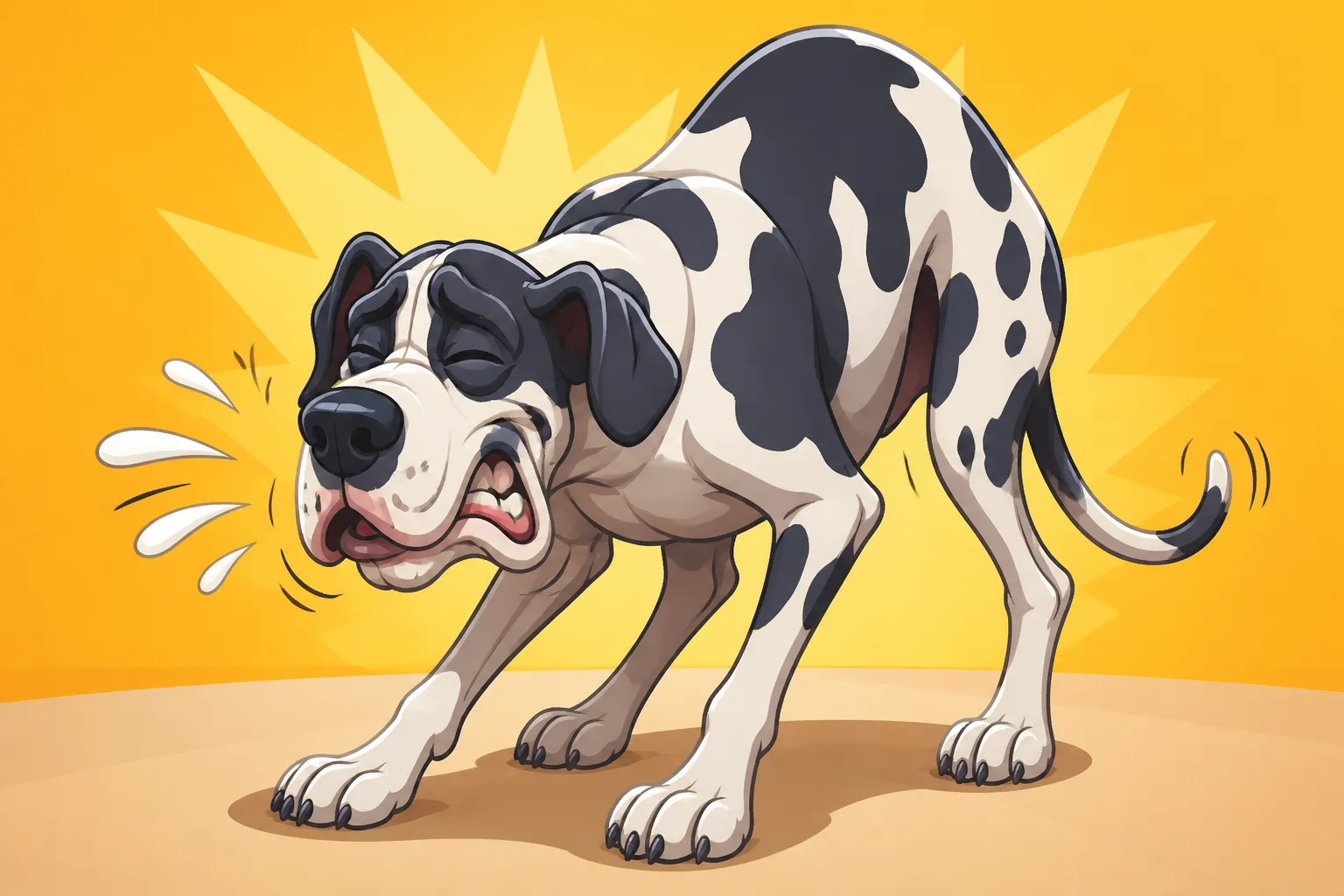
When your Great Dane is trying to vomit and failing, it means their stomach is dilated, often with gas, and is attempting to expel its contents. However, if the stomach has twisted (volvulus), the entrance and exit are pinched off, making it impossible for anything to come out. This is why you see the straining, the heaving, and the dry retching, often accompanied by a distressing groaning or whining sound. It's a hallmark sign that your dog is in severe distress and battling a physical obstruction within their own body. It’s not just uncomfortable; it’s a desperate struggle for relief that they cannot achieve on their own.
Many owners recount stories of their Dane looking incredibly anxious, pacing restlessly, and then suddenly starting to retch. It's a distinct sound and action that sets it apart from typical vomiting. With regular vomiting, you usually see some bile or food expelled. With bloat, there's nothing but air, saliva, or perhaps a small amount of foamy liquid, if anything at all. This lack of production despite intense effort is the critical clue that something is terribly wrong.
Other Telltale Signs of Bloat
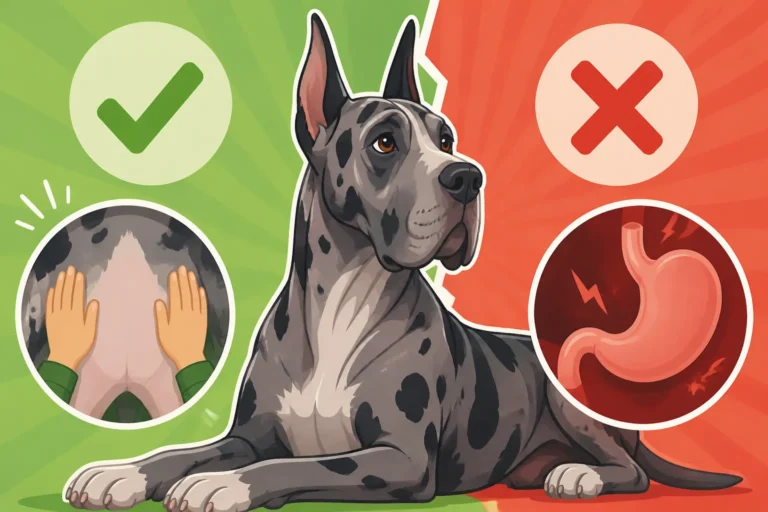
While unproductive retching is the most prominent sign, it's rarely the only one. You’ll likely notice a rapid onset of several other symptoms, all pointing to the severe internal distress your Great Dane is experiencing. A distended, hard abdomen is another major indicator. This swelling often appears very quickly, sometimes within minutes, and is usually most noticeable on the left side of their belly, just behind the ribs. The abdomen can feel tight as a drum, almost like a balloon ready to burst, which, terrifyingly, is not far from the truth.
Beyond the physical changes, observe your Dane's behavior. They might be extremely restless, pacing constantly, unable to settle down. They may whimper, groan, or look back at their abdomen repeatedly, indicating pain. You might see excessive drooling, as they are trying to swallow or dry heave. Their gums can appear pale or bluish, a sign of poor circulation, and their heart rate might be elevated. As the condition progresses, they can become weak, collapse, and even struggle to breathe due to the pressure on their diaphragm. Recognizing The Signs of a Great Dane Stomach Twisting quickly is absolutely vital.
| Symptom | Description | Urgency Level |
|---|---|---|
| Unproductive Retching | Dog strains to vomit but nothing, or only foamy saliva, comes out. | CRITICAL |
| Distended Abdomen | Belly appears swollen, tight, and often hard to the touch, usually on the left side. | CRITICAL |
| Restlessness/Pacing | Unable to get comfortable, constantly moving, anxious demeanor. | High |
| Drooling | Excessive salivation. | High |
| Whining/Groaning | Signs of pain or discomfort. | High |
| Pale Gums | Gums may appear pale pink, white, or even bluish (cyanotic) in severe cases. | CRITICAL |
| Rapid/Shallow Breathing | Difficulty breathing due to abdominal pressure. | CRITICAL |
| Weakness/Collapse | Lethargy, inability to stand, or collapse. | CRITICAL |
Why a Great Dane's Chest Shape Invites a Twist
It might seem unfair that Great Danes are so susceptible to this horrifying condition, but their very build contributes significantly to the risk. Great Danes, along with other deep-chested breeds like standard poodles, German Shepherds, and Weimaraners, possess a unique anatomical predisposition. Their chests are deep and narrow, rather than broad and barrel-shaped. This deep-chested conformation creates more space within the abdominal cavity for the stomach to swing and rotate. Think of it like a pendulum in a long, narrow hallway – it has more room to move around than one in a shallow, wide room.
This extra room, combined with factors like gas accumulation from eating or drinking quickly, exercise after meals, or even stress, can allow the stomach to dilate with gas, then twist upon its axis. Once it twists, it essentially "ties off" both the esophagus (where food enters) and the duodenum (where food exits), trapping the gas and stomach contents inside. This anatomical lottery is a key reason why The Lifetime Bloat Risk in a Great Dane is so tragically high, making vigilance and understanding of this condition a core part of responsible Great Dane ownership.
The Critical Danger of Gastric Dilatation-Volvulus (GDV)
Understanding that unproductive retching points to GDV is crucial because this condition is not just painful; it's rapidly fatal without immediate intervention. Every minute counts, and the internal damage progresses at an alarming rate. It’s not an exaggeration to say that this is the most terrifying medical emergency a Great Dane can face.
What Happens Inside Your Dane
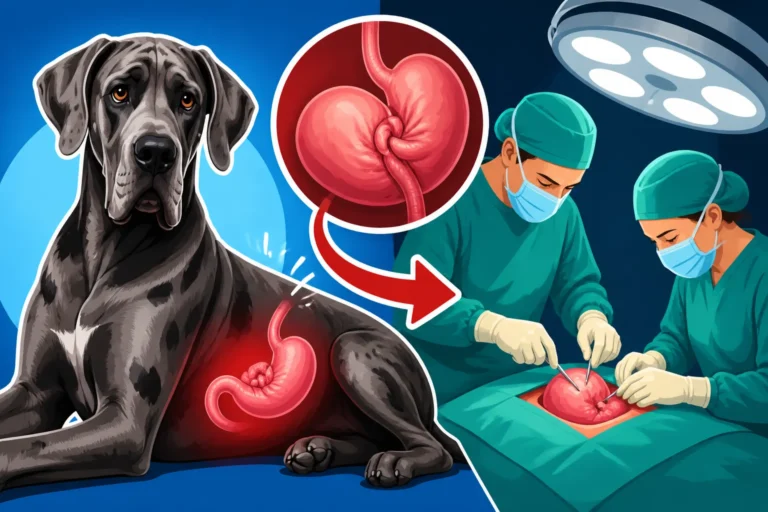
When a Great Dane’s stomach twists, it sets off a cascade of life-threatening events within their body. First, the twisting traps gas, food, and fluids inside the stomach, causing it to swell dramatically. This distended stomach then presses on major blood vessels, especially the vena cava, which carries blood back to the heart. This pressure severely restricts blood flow, leading to a dangerous drop in blood pressure and the dog quickly going into shock. It also compromises blood supply to other vital organs.
Crucially, the twisting often cuts off the blood supply to the stomach wall itself. Without oxygenated blood, parts of the stomach tissue begin to die, leading to necrosis. There's also a significant risk of the spleen, which is attached to the stomach, twisting along with it, further complicating the issue and increasing internal damage. Toxic substances released from the dying tissue and the compromised blood flow quickly spread throughout the body, leading to systemic shock and multi-organ failure. This rapid internal decay makes GDV such a devastating and time-sensitive emergency.
The Rapid Progression of Bloat
The progression of bloat in a Great Dane can be frighteningly fast. One minute your dog might seem a little off, restless perhaps, and the next they are clearly in severe distress. From the onset of the first subtle symptoms to a full-blown life-threatening crisis, the timeline can be incredibly short – sometimes as little as 30 minutes to an hour. This rapid deterioration is why any hesitation or "wait and see" approach can be catastrophic.
The initial discomfort of a swollen stomach quickly escalates into excruciating pain as the stomach wall stretches and tissue dies. The onset of shock can be swift, with symptoms like pale gums, a rapid and weak pulse, and labored breathing becoming apparent. A Great Dane that could walk just an hour ago might become too weak to stand, or even collapse. This rapid progression underscores why recognizing What to Do the Minute a Great Dane Bloats is not just important, but absolutely vital for their survival. You don't have hours; you often only have minutes.
How Many Minutes a Bloating Great Dane Has
This is the grim reality of bloat: a Great Dane has very few minutes, not hours, before irreversible damage sets in. Veterinary experts often state that intervention within one to two hours of the onset of symptoms offers the best prognosis for survival. Beyond two hours, the chances of survival drop significantly, and the risk of complications, such as stomach tissue necrosis or severe heart issues, skyrockets.
In practical terms, this means that as soon as you notice your Great Dane trying to vomit and failing, accompanied by a distended abdomen or other alarming signs, you need to initiate your emergency plan immediately. There is no time to call friends for advice, do extensive internet searches, or try home remedies. Every single minute spent not en route to an emergency veterinary clinic is a minute that critically reduces your dog’s chances of survival. This condition is a race against the clock, and your swift action is the only thing that can truly save your beloved companion.
Immediate Action: Every Second Counts
When you suspect bloat, panic is a natural reaction, but it’s crucial to channel that into swift, decisive action. Your Great Dane is depending on you to be their advocate in a dire emergency.
Contacting Your Emergency Vet Right Away
The very first thing you need to do, before you even get your keys, is to call your nearest emergency veterinary hospital. Do not just show up. A quick phone call allows them to prepare for your arrival, ensuring that staff and equipment are ready the moment you pull into the parking lot. When you call, clearly state that you suspect your Great Dane has bloat (Gastric Dilatation-Volvulus), detail the symptoms you are seeing – especially the unproductive retching and distended abdomen – and provide your estimated arrival time.
This pre-notification can shave precious minutes off the diagnostic and treatment process, which, as we’ve discussed, are absolutely critical. They might advise you on the quickest route or what to expect when you arrive. Having a plan in place for a Great Dane emergency, including knowing the location and phone number of the nearest 24/7 veterinary clinic, is part of responsible ownership for this breed.
Driving a Bloating Great Dane to the Emergency Vet
Getting a large, distressed Great Dane into a car and safely to the emergency vet can be a challenge, but it’s a necessary one. If your Dane is still able to walk, guide them gently into the vehicle. Avoid any rough handling or excessive movement that could exacerbate their discomfort or further twist their stomach. If they are struggling to move or have collapsed, you might need assistance to lift them. A large towel or blanket can be used as a makeshift stretcher for smaller Danes, but for a full-grown giant, it might require two or even three people.
Once in the car, try to keep them as calm and comfortable as possible. Speak to them reassuringly. Drive carefully but quickly, minimizing sudden stops or turns. Avoid long journeys if possible; every mile increases the risk. Have your emergency contact information, pet insurance details (if you have a provider like Healthy Paws), and any relevant medical history readily available for when you arrive. This journey is incredibly stressful for both you and your dog, but maintaining focus on getting them there safely and swiftly is paramount. Having a plan for Driving a Bloating Great Dane to the Emergency Vet is essential.
Preparing for Emergency Treatment
When you arrive at the emergency vet, be prepared for a rapid assessment and potentially immediate treatment. The veterinary team will quickly examine your Great Dane, confirm the diagnosis of bloat, and start stabilizing them. This often includes intravenous fluids to combat shock, pain medication, and sometimes a temporary stomach decompression procedure using a tube or needle to relieve pressure. This initial stabilization is critical before any surgical intervention.
The vet will discuss the prognosis and the necessary surgery, known as a gastropexy, to untwist the stomach and tack it to the abdominal wall to prevent future occurrences. This is a major surgery, and it's expensive. While thinking about money during such a crisis is hard, it's a reality. Having pet insurance like Healthy Paws can truly be a lifesaver, covering a significant portion of these unexpected emergency costs. Be ready to make quick decisions, as delays can dramatically impact the outcome for your beloved Dane.
Post-Crisis and Prevention Considerations
Surviving a bloat episode is a huge relief, but it’s only the beginning of understanding and managing this serious condition. Prevention is key, and understanding the medical follow-up is vital.
Understanding Surgical Intervention
The definitive treatment for GDV is emergency surgery. The surgical team will carefully untwist your Great Dane's stomach, assess the viability of the stomach tissue, and remove any dead or severely damaged portions. If the spleen has also twisted or been damaged, it may need to be removed. Critically, during this surgery, a procedure called a gastropexy is performed. This involves permanently tacking the stomach to the abdominal wall. This tacking doesn't prevent bloat (the stomach still fills with gas), but it does prevent the stomach from twisting, which is the truly life-threatening part of GDV.
Recovery after such an intense surgery is a process. Your Great Dane will require close monitoring, pain management, and restricted activity for several weeks. The vet will provide detailed post-operative care instructions, including dietary changes and medication. Understanding What Surgeons Do to a Twisted Great Dane Stomach and the subsequent Recovery After Great Dane Bloat Surgery is crucial for helping your dog heal fully. It’s a tough road, but with proper care, many Danes go on to live full lives after a bloat event.
Proactive Steps to Reduce Future Risk
While emergency gastropexy is performed after a bloat incident, many Great Dane owners proactively choose to have a preventive gastropexy done, often when their dog is spayed or neutered. This elective procedure significantly reduces the risk of future GDV by preventing the stomach from ever twisting in the first place. You might wonder Whether Tacking Ends Great Dane Bloat Risk completely, and the answer is that it drastically lowers the risk of the volvulus (twisting) component, which is the fatal aspect.
Beyond surgery, there are several management strategies to consider to minimize your Dane's bloat risk. Feeding multiple smaller meals throughout the day instead of one large meal can help, as can using slow-feeder bowls to prevent rapid eating. Restricting vigorous exercise an hour before and after meals is also widely recommended. Ensuring your Dane has constant access to fresh water, but not allowing them to gulp excessive amounts right after eating, can also be beneficial. Discussions about Meal Habits That Cut a Great Dane's Twist Risk are common among owners. Deciding When to Book a Great Dane Gastropexy and implementing these daily routines are proactive steps that offer immense peace of mind for any Great Dane parent.
Disclaimer
This article is intended for informational purposes only and does not constitute veterinary advice. In a suspected bloat emergency, contact your veterinarian or nearest emergency animal hospital immediately. Prompt professional medical attention is critical for survival.