Harnesses and Leads for a Great Dane
Walking a Great Dane can be an incredibly rewarding experience, but let's be honest, it also comes with unique challenges. Anyone who's been yanked off their feet by a sudden squirrel sighting knows the struggle of controlling a dog that outweighs them by a significant margin. This comprehensive guide is here to help you navigate the world of harnesses and leads, ensuring both your Great Dane's comfort and your peace of mind during every outing.
The Unique Challenges of Walking a Great Dane
Owning a Great Dane means understanding and respecting their incredible size and strength. What might work for a smaller breed simply isn't going to cut it when you're attached to a hundred-plus pounds of pure, enthusiastic dog. We need to think differently about how we equip our gentle giants for walks to ensure safety and comfort for everyone involved.
Sheer Strength and Size
Imagine a Great Dane, even a well-behaved one, suddenly deciding to lunge after a rabbit or greet an unexpected friend with full-body enthusiasm. That's a force to be reckoned with. Traditional flat collars, while fine for holding ID tags, often become a tool for opposition reflex when a large dog pulls. The more they feel pressure around their neck, the more they often lean into it, making the situation worse for both dog and handler. It’s not about them being naughty; it's just physics. Their sheer weight and muscular build mean that if they decide to go, you're either going with them or desperately holding on. This is precisely why a Great Dane pulls you off your feet.
Beyond the immediate control issue, prolonged pulling on a flat collar can cause real physical harm. The delicate structures in a Great Dane's throat, including the trachea and thyroid, are not designed to withstand constant pressure. A sudden jerk can lead to coughing, gagging, or even more serious long-term issues. We want to protect our big pals, not inadvertently cause them discomfort or injury every time we step out the door.
Protecting Their Delicate Necks and Throats
Great Danes, like many large and rapidly growing breeds, can be predisposed to certain health conditions that make neck safety paramount. One notable concern is The Neck Condition That Trips a Great Dane Up, often referred to as Wobblers Syndrome. This neurological condition affects the spinal cord in the neck, and any excessive pressure or sudden impact on that area can exacerbate symptoms or cause injury. Using a collar that puts direct strain on the neck is simply an unnecessary risk when we have better alternatives available.
Even without a specific neck condition, the sheer weight of a Great Dane’s head and neck, combined with their powerful build, means that any force applied to a standard collar can put significant stress on their cervical spine. Think about the leverage involved when a large dog pulls; it's a lot. A properly fitted harness, by distributing pressure across the chest and shoulders, bypasses these vulnerable areas entirely. This is why many experienced Great Dane owners, myself included, will recommend Swapping a Great Dane's Collar for a Harness early on in a Great Dane's life to safeguard their health.
Understanding Different Harness Types for Great Danes
The world of dog harnesses can seem overwhelming, but for a Great Dane, the choice often boils down to a few key styles. Each has its pros and cons, and understanding them will help you select the best option for your dog's individual needs and your walking goals. Remember, the goal is always comfort, safety, and effective communication with your giant companion.
Front-Clip Harnesses: The Game Changer
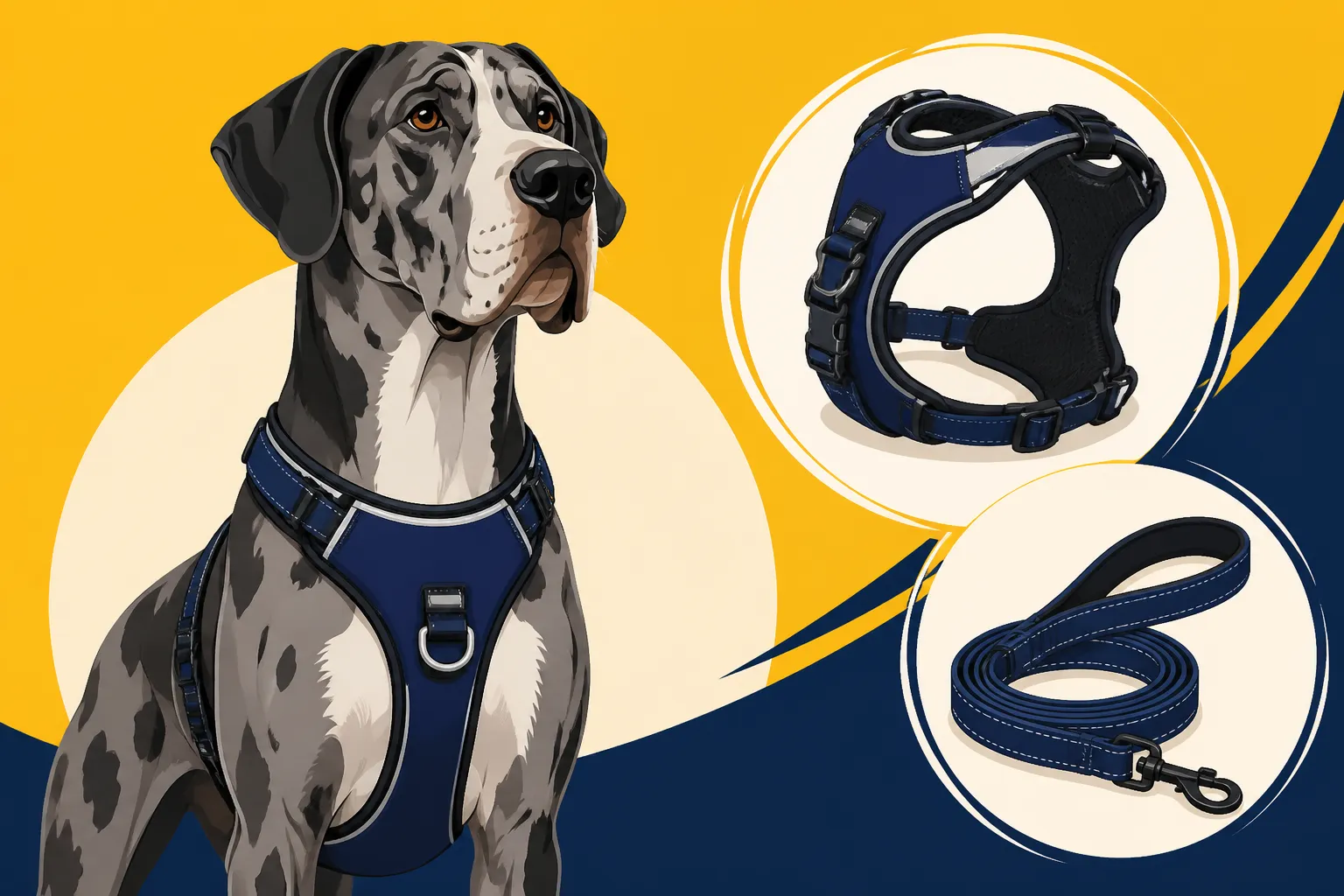
If you're dealing with a Great Dane who loves to pull, a front-clip harness can be an absolute revelation. Instead of the leash attaching at the back, it clips to a ring on your dog's chest. When your Great Dane pulls, the leash redirects their momentum gently to the side, turning them back towards you. This makes it incredibly difficult for them to get full leverage to pull forward. It's a game-changer for control, making walks far more enjoyable for both of you. Many new Great Dane owners are often amazed at Whether a Front-Clip Harness Slows a Great Dane as effectively as it does.
The beauty of a front-clip harness lies in its simple, humane mechanics. There’s no pinching, no pain, just a redirection that interrupts the pulling motion. This allows you to regain control without needing to yank or resort to uncomfortable methods. Look for brands that offer robust construction and wide, comfortable straps that won't dig into your Great Dane's sensitive underarms or chest. Always ensure the fit allows for a full range of motion, especially across their broad shoulders. You can find a good selection of durable options from online retailers like Chewy, which often stock harnesses designed for giant breeds.
Back-Clip Harnesses: Comfort and Security for Calm Walkers
For Great Danes who already have excellent Great Dane Leash Manners at a Hundred and Fifty Pounds or those who simply don't pull, a back-clip harness offers comfort and security. With the leash attachment point on the back, usually between the shoulder blades, these harnesses distribute pressure evenly across the chest and rib cage if your dog does lean into the leash. They are fantastic for dogs who walk politely by your side, providing a secure way to hold identification and for you to maintain a connection without putting any pressure on their neck.
While comfortable and secure, a back-clip harness isn't the best choice for a strong puller. When the leash is attached at the back, it essentially gives your Great Dane a leverage point to pull forward with their full body weight, much like a sled dog. If your Great Dane is prone to lunging or consistently pulls, a back-clip harness will likely offer little in the way of correctional leverage. They are, however, excellent for casual strolls, short potty breaks, or for connecting to a car restraint system for safety during travel.
Dual-Clip Harnesses: Maximum Versatility
Some harnesses offer the best of both worlds with both a front-clip and a back-clip attachment point. These "dual-clip" harnesses are incredibly versatile, allowing you to choose how you want to attach your leash based on the situation. For training sessions or walks where you anticipate your Great Dane might be more excited (like a new park or meeting new people), you can use the front clip for better control. On a familiar, quiet walk where your Dane is typically calm, you might switch to the back clip for a more relaxed feel.
The flexibility of a dual-clip harness makes it a fantastic long-term investment, especially as your Great Dane matures and their leash manners improve. You can start with consistent front-clip use for training and then transition to back-clip for routine walks once they've mastered Teaching a Great Dane to Heel Beside You. These harnesses are a testament to how far dog gear has come, providing practical solutions for the varying needs of active Great Danes and their owners. Look for brands that ensure the hardware for both clips is robust and can withstand the significant force a Great Dane can exert.
Choosing the Right Lead for Your Giant Companion
A harness is only half of the equation; the lead (or leash) is equally critical. For a Great Dane, you can't just grab any leash off the shelf. It needs to be strong, durable, and comfortable for you to hold, even when your Great Dane decides to do their best impression of a freight train.
Length and Material Matters
For a Great Dane, a standard 4-foot or 6-foot leash is generally ideal. A 4-foot leash offers excellent control, keeping your giant close by in busy environments or when Getting a Great Dane to Greet Without Standing Up is paramount. A 6-foot leash provides a bit more freedom for sniffing and exploration while still allowing you to maintain good control. Anything longer than 6 feet can make it difficult to manage such a large dog, giving them too much room to build momentum or get tangled. Retractable leashes are a definite no-go for Great Danes; they offer no real control and the sudden stop at the end of the line can cause serious injury to both you and your dog.
When it comes to material, durability is key. High-quality nylon, thick leather, or Biothane are excellent choices.
- Nylon leashes are strong, often machine washable, and come in many colors. Look for double-ply or reinforced nylon for extra strength.
- Leather leashes are incredibly durable, comfortable in the hand, and soften beautifully with age. They can be more expensive but are often a lifelong investment.
- Biothane is a fantastic synthetic alternative, offering the feel of leather but with waterproof, odor-proof, and easy-to-clean properties. It's especially great for Danes who love to splash or explore muddy areas.
Many online retailers, including Chewy, specify Leashes Rated for a Great Dane or giant breeds, which is a good indicator of their robust construction.
The Importance of a Sturdy Handle and Hardware
This is not a detail to overlook! The handle of your lead needs to be comfortable and secure in your hand. A padded handle can make a huge difference, especially during longer walks or if your Great Dane unexpectedly pulls. A thin, unpadded handle can quickly dig into your palm, leading to discomfort or even rope burn. Remember, you need to be able to maintain a firm, safe grip at all times.
Equally important is the hardware – specifically, the clip that attaches to the harness. For a Great Dane, you need a heavy-duty, robust snap hook made of solid brass or stainless steel. Those small, flimsy clips designed for toy breeds simply won't withstand the strength of a Great Dane and could bend or break under pressure, leading to a dangerous escape. Check that the clip mechanism is smooth but secure, and that there are no weak points. A well-constructed clip provides peace of mind that your giant friend will stay safely attached to you.
Here's a quick comparison of common harness types:
| Harness Type | Leash Attachment Point | Primary Benefit | Best For | Considerations |
|---|---|---|---|---|
| Front-Clip | Chest | Reduces pulling, redirects dog | Strong pullers, training leash manners | Ensure proper fit to prevent chafing, may tangle legs if too loose. |
| Back-Clip | Back (shoulders) | Comfort, secure ID | Calm walkers, short potty breaks, car safety | Offers little leverage for control if dog pulls significantly. |
| Dual-Clip | Chest and Back | Versatility, adaptable control | All Great Danes, especially during training | Can be slightly more complex to adjust, ensure both clips are robust. |
This table should help you visualize the core differences when you're looking for Harnesses and Collars That Control a Great Dane.
Proper Fit and Maintenance for Longevity
Even the best harness and lead in the world won't be effective or comfortable if they don't fit correctly or aren't maintained. Given the investment in good gear for a Great Dane, and more importantly, the safety of your dog, these steps are crucial.
Achieving the Perfect Harness Fit
A poorly fitting harness can be uncomfortable, cause chafing, or even allow your Great Dane to escape. Achieving the perfect fit involves adjusting several straps. First, the neck opening should be snug enough that it doesn't ride up into their throat but loose enough that you can easily slide two fingers underneath. Next, adjust the chest strap; it should sit comfortably across the chest bone, not too low to restrict shoulder movement, nor too high to press on the throat. Then, the girth strap around the rib cage needs to be tight enough that it doesn't rotate easily or allow the dog to back out, but again, two fingers should slide underneath.
Finally, pay close attention to the straps that go behind your Great Dane's front legs. These are common spots for chafing. Ensure there's enough space – usually several inches – between the strap and the armpit. If the harness causes rubbing, you'll see irritation or hair loss in those areas. Take your time with adjustments, and observe your dog walking for a few minutes. A well-fitted harness allows for full, unrestricted movement and doesn't rub or pinch anywhere. If you're struggling, don't hesitate to ask for help at a reputable pet store or consult your trainer.
Cleaning and Inspecting Your Gear Regularly
Great Danes love to explore, and their gear is going to get dirty. Regular cleaning is important not just for hygiene, but also for the longevity of the harness and lead. Most nylon or Biothane harnesses can be hand-washed with mild soap and water, or even tossed in a washing machine on a gentle cycle inside a laundry bag (always check manufacturer instructions first). Leather requires specific leather cleaners and conditioners to keep it supple and prevent cracking. Drying thoroughly, away from direct heat, is essential for all materials.
Beyond cleaning, make it a habit to regularly inspect all your Great Dane's gear. Look for frayed stitching on harnesses, stretched fabric, bent or rusted D-rings, and worn-out clips on leads. Small issues can quickly become major safety hazards when dealing with a powerful dog. If you notice any significant wear and tear, it's time to replace the item. Investing in quality gear, and then taking good care of it, will ensure that your Great Dane's harness and lead remain reliable tools for safe and enjoyable walks for years to come. Remember, durable products for giant breeds, like those found on Chewy, are designed to last, but even the best gear needs attentive care.
Disclaimer
This article is for general informational purposes only and does not constitute professional advice. Laws, prices and regulations vary by location and change over time. Consult a qualified professional for guidance on your specific situation.