Whether a Great Dane Needs Two Beds
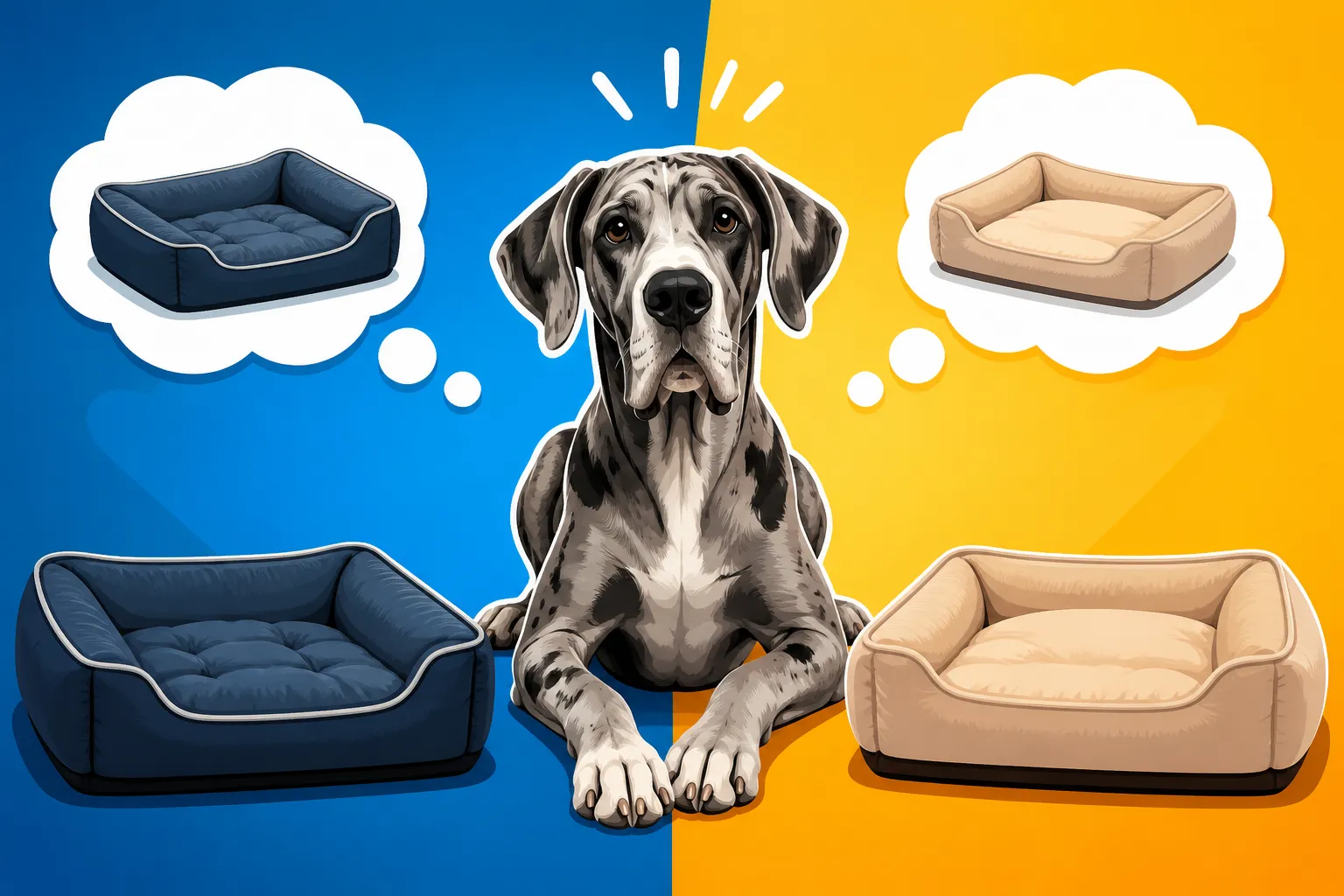
Bringing a Great Dane into your home means preparing for a dog that quite literally changes the landscape of your living space. One common question, and often a real head-scratcher for new owners, is whether a single giant dog bed is truly enough to provide the comfort and support these magnificent giants need. Many of us fall into the trap of buying "the biggest one they have" only to find our Dane's head hanging off one end and their tail off the other. This guide will dive deep into why one bed might not cut it and explore the benefits of a multi-bed approach for your cherished Great Dane.
The Giant Problem: Why One Bed Might Not Be Enough for Your Great Dane
Let's face it, Great Danes aren't just big; they're enormous. Their size dictates everything, from how much food they eat to the space they occupy on your sofa. When it comes to their resting spots, many owners quickly discover that what seems like a sufficiently large bed for a regular big dog simply doesn't measure up for a Dane. This isn't just about aesthetics; it's about their health, comfort, and even their behavior.
Size and Sprawl: The Reality of a Great Dane's Sleep Habits
Great Danes are renowned for their impressive length, and when they stretch out, they truly take up some serious real estate. Unlike smaller breeds that might curl into a tight ball, many Danes love to sprawl, spreading their long limbs in every direction. Imagine your Dane trying to get comfortable on a bed that's meant for a much more compact German Shepherd or a Labrador. Their legs inevitably dangle, their spine might not be adequately supported, and they're constantly shifting to find a patch of floor that feels better than the edge of their expensive bed.
Think of it from their perspective: they are built for power and grace, but years of that powerful frame resting on inadequate surfaces can take a toll. A bed that's too short means their head or tail is always off it, potentially causing strain over time. A bed that's not wide enough means they can't fully stretch out, leading to restless sleep and discomfort. You might notice them abandoning their bed for a cool, hard patch of floor, not because they prefer it, but because it's the only place they can fully extend.
Joint Health: The Critical Need for Ample Support
This brings us to perhaps the most crucial reason for ensuring proper bedding: the formidable joint health challenges that Great Danes face. These gentle giants are unfortunately prone to a host of orthopedic issues, including hip and elbow dysplasia, osteochondritis dissecans (OCD), and eventually arthritis as they age. Every single ounce of support you can give their growing and aging joints makes a difference.
A single, inadequate bed means more time spent on hard floors or on beds that compress too easily under their immense weight. This constant pressure on their joints can contribute to inflammation, pain, and the worsening of pre-existing conditions. For a breed like the Great Dane, whose lifespan is already shorter than many smaller dogs, focusing on joint care from puppyhood is paramount. Investing in the right kind of bedding is a preventative measure, akin to providing them with the right nutrition and controlled exercise during their growth phases. You’ll want to be particularly mindful of Great Dane Hips, Elbows and Growing Joints and ensure they have plush, supportive places to rest.
Temperature Regulation: Finding the Cool Spot
Great Danes have relatively short coats, but their sheer size can make them prone to overheating, especially in warmer climates or during the summer months. Conversely, in colder environments, their thin coats don't offer much insulation, making them susceptible to chills. One bed, fixed in one spot, might not cater to their changing thermal needs throughout the day or year.
During a hot afternoon, your Dane might seek out the coolest tile in the house, leaving their plush bed untouched. When winter rolls around, that same tile might become a source of discomfort. Having multiple resting spots, some on cooler surfaces with minimal padding, and others with thick, insulating beds, allows your Dane to self-regulate their temperature. They can move freely between these zones, finding the spot that offers optimal comfort, whether they're trying to cool down after a walk or burrow into warmth during a chilly evening.
More Than One Spot: The Case for a Multi-Bed Approach
So, if one bed often isn't enough, what's the solution? For many Great Dane owners, the answer lies in strategically placing multiple beds throughout the home. This isn't about extravagance; it's about optimizing comfort, health, and practicality for a dog of this unique stature.
Zonal Comfort: Addressing Different Needs in Different Areas
Think about your own home. Do you have one single chair that serves every purpose? Probably not. You have a comfy sofa for lounging, a supportive desk chair for work, and a cozy bed for sleeping. Your Great Dane, whether they realize it or not, benefits from a similar multi-zone approach to comfort.
A large, plush, orthopedic bed in a quiet corner of your bedroom can be their primary sleeping sanctuary, offering deep, restorative rest. This is where they'll retreat for their longest stretches of sleep, needing maximum support for their joints and spine. Meanwhile, a slightly different type of bed – perhaps a cooler, firmer mat, or a chew-resistant elevated cot – could be placed in a high-traffic area like the living room or kitchen. This second bed serves as a convenient lounging spot where they can supervise family activities, grab a quick nap, or simply hang out without being directly on the hard floor. This distributed comfort ensures that no matter where your Dane chooses to relax, they have a dedicated, appropriate spot to do so.
Practicality and Protection: Spreading the Wear and Tear
Let's be real: Great Danes are powerful, and their beds take a beating. From enthusiastic "nesting" before a nap to the sheer weight of their bodies settling down countless times a day, even the most durable bed will show wear. Having multiple beds helps distribute this wear and tear, potentially extending the lifespan of each individual bed. Instead of one bed being constantly used and breaking down quickly, two or more beds share the load.
Beyond protecting the beds themselves, multiple resting spots offer protection for your home. A Great Dane constantly shifting and settling directly on hard floors can lead to scuffs, scratches, and wear patterns. Strategically placed beds, even just thick mats, act as a buffer between your giant dog and your flooring. This is especially important for areas where they tend to lie down often, preventing damage and making cleanup easier. This also plays into avoiding issues like Elbow Hygromas on a Great Dane which can form from repeated pressure on hard surfaces.
Behavioral Benefits: Offering Choice and Security
Dogs, like people, appreciate having options. Offering your Great Dane multiple resting spots can have subtle yet significant behavioral benefits. It provides them with a sense of security and ownership over different areas of the house, allowing them to choose where they feel most comfortable and safe at any given moment.
For instance, some Danes prefer to be right in the middle of the family action, while others seek a quieter, more secluded spot. By providing options, you empower them to make these choices, which can reduce anxiety and promote a more relaxed demeanor. A Great Dane who has a designated, comfortable spot in every room where they spend significant time is less likely to try and claim the entire sofa, or constantly nudge you for your spot on the armchair. It also ensures that if one bed is in the wash or temporarily unavailable, they always have another comfortable go-to.
Choosing the Right Beds for Your Great Dane
So, you're convinced that two beds (or even more!) are the way to go. But what kind of beds should you be looking for? This isn't a "one-size-fits-all" situation, even for a single dog. Considering the specific needs of your giant breed is paramount.
Material Matters: Durability and Support
When it comes to Great Danes, generic foam beds just won't cut it. Their weight demands serious support. Look for beds specifically designed for giant breeds, often featuring dense, orthopedic, or memory foam.
- Orthopedic Memory Foam: This is often the gold standard for large and giant breeds. It contours to your Dane's body, providing even support and relieving pressure points on their joints. The density is key; it shouldn't flatten out entirely under their weight. Brands often tout their multi-layered foam for ultimate support and durability.
- Supportive Fill: Some beds use a blend of shredded memory foam or dense polyfill. While potentially more affordable, ensure the fill is packed tightly and maintains its loft. Avoid beds that feel flimsy or that you can easily compress to the floor with your hand.
- Elevated Cots: For hot climates or as a secondary "cooling" bed, elevated cots made with durable mesh fabric can be fantastic. They promote airflow, keeping your Dane off the hot floor and offering a different kind of pressure relief. They're also often very easy to clean.
Beyond the internal materials, consider the cover. Look for heavy-duty, chew-resistant, and easily washable fabrics. Accidents happen, and a machine-washable cover is a non-negotiable for a Great Dane bed. Many online retailers like Chewy offer a wide selection of orthopedic beds designed for large breeds, with detailed descriptions of materials and durability. For preventing injuries from hard surfaces, finding the right Bedding That Prevents Great Dane Hygromas is crucial.
Sizing it Up: Actual Dimensions for a Giant Breed
Forget vague labels like "Jumbo" or "XXL." You need to look at actual dimensions. Measure your Great Dane from nose to tail while they are fully stretched out, and then measure them from shoulder to paw when lying on their side. Your bed should comfortably accommodate these measurements, with extra room to spare for sprawling.
A good rule of thumb for a primary sleeping bed is to look for something that is at least 48-60 inches long and 36-48 inches wide. Some Danes, especially large males, might even need bigger. For elevated cots, ensure the frame is sturdy enough to hold their weight without bowing, and that the fabric area is similarly generous. It’s also wise to check the maximum weight capacity, as many standard large dog beds aren't truly designed for a 150+ pound dog.
Location, Location, Location: Where to Place Each Bed
The placement of each bed is as important as the bed itself. Think about your Dane's daily routine and where they naturally gravitate.
- The Primary Sleep Zone: This bed, likely the most robust and comfortable, should be in a quiet, undisturbed area where your Dane feels safe to truly unwind. Often, this is your bedroom, allowing them to be close to you during the night. If they're prone to anxiety, a cozy corner away from foot traffic might be ideal.
- The Lounging Zone: This secondary bed can be in a more central, high-activity area, such as the living room or family room. This allows them to be part of the family without hogging furniture or being on the hard floor. An elevated cot or a durable, washable mat might be perfect here.
- The "Cool Down" Zone: If you live in a warmer climate, consider placing a cooling mat or an elevated cot near a fan or in a naturally cooler part of the house, like a tiled kitchen or basement. This gives them an option when they're feeling warm.
- Outdoor or Garage Bed (if applicable): If your Great Dane spends supervised time outdoors or has access to a garage, a heavy-duty, weather-resistant outdoor bed can be useful, preventing them from lying directly on concrete or damp ground.
The Investment: Weighing the Costs and Benefits of Multiple Beds
The idea of buying two or more giant dog beds can feel daunting, especially when you consider the price tag that often comes with high-quality, durable options. However, when you factor in the long-term health and happiness of your Great Dane, it quickly becomes clear that it's an investment well worth making.
Upfront Cost vs. Long-Term Health Savings
Let's not sugarcoat it: quality beds for a Great Dane aren't cheap. You might be looking at a significant upfront cost for even one top-tier orthopedic bed, let alone two. However, consider this: what is the cost of a veterinary visit for a flare-up of arthritis? What about long-term pain medication? Or even a major orthopedic surgery down the line?
Providing ample, supportive bedding from an early age can genuinely contribute to mitigating the severity of joint issues as your Dane ages. It helps keep their joints cushioned, reduces pressure points, and promotes better rest, all of which support their overall musculoskeletal health. Think of it as preventative medicine. The initial investment in good bedding, especially for a breed known for The Short Expensive Life of a Great Dane, can actually save you money and heartache in expensive vet bills and treatments down the road. Furthermore, having solid pet insurance, like a plan from Healthy Paws, can help cushion the blow of those inevitable large vet bills for conditions specific to giant breeds.
Space Considerations: Fitting Two Beds in Your Home
We know, a Great Dane already takes up a lot of space, and adding a second giant bed might seem impossible in a smaller home. This is where strategic choices and creative placement come into play. You don't necessarily need two enormous, identical beds.
Perhaps one primary bed in the bedroom is a full-fledged orthopedic mattress, while the second "lounge" bed in the living area is a more streamlined, lower-profile mat or a corner-fitting elevated cot. Utilize corners, under windows, or even a spacious crate (if your Dane is crate trained) as designated bed zones. The key is to find spots that work with your home's layout rather than against it. Even a thicker, high-density foam mat can provide significant comfort without the bulk of a full-blown dog mattress.
Maximizing Comfort and Longevity
Ultimately, the goal is to provide your Great Dane with the utmost comfort and support throughout their life. Multiple beds allow them to always have a comfortable spot, no matter their mood, the room, or the temperature. This contributes to better sleep, reduced joint pain, and overall improved quality of life.
To make your investment last, make sure you're properly maintaining your beds. This means regularly washing removable covers, spot cleaning as needed, and rotating beds if one gets more use. Even the best beds will eventually wear out, but proper care can significantly extend their lifespan. You'll likely find yourself needing to address Replacing a Bed a Great Dane Has Worn Through more often than you'd expect, so having a backup or rotating strategy helps.
Whether you opt for two distinct beds or a combination of a luxurious primary bed and a durable, practical secondary option, providing multiple comfortable resting places is a thoughtful and beneficial approach for any Great Dane owner. Their comfort, health, and happiness are worth every bit of planning and investment.
Disclaimer
This article is for general informational purposes only and does not constitute professional advice. Laws, prices and regulations vary by location and change over time. Consult a qualified professional for guidance on your specific situation.