Teaching a Great Dane a Place to Settle
One of the biggest challenges of living with a Great Dane, beyond their sheer size, is managing their enthusiastic energy and ensuring they know when and where to settle down. Nobody wants a towering, wagging, 150-pound dog trying to join dinner at the table or nudging guests off the sofa. This guide will walk you through the essential steps and patient practice needed to teach your magnificent Great Dane the "place" command, helping them understand how to relax calmly on their designated spot.
Why "Place" is Non-Negotiable for a Great Dane
Let's be honest, living with a Great Dane is a unique experience. Their size alone means that any uncontrolled behavior is amplified. A small dog jumping up might be annoying; a Great Dane jumping up can send you, or a guest, sprawling. This is why foundational training, like the "place" command, isn't just a nice-to-have; it's a must-have for the safety and sanity of everyone in the household. It gives your dog a job, a boundary, and a predictable space where they can be calm and out of the way, which is incredibly valuable in a busy home.
The Chaos an Unruly Giant Can Create
Imagine trying to enjoy a quiet family dinner, but your gentle giant is constantly hovering, sniffing, and perhaps even "counter-surfing" without a second thought. Or picture guests arriving, and your Dane, full of joy and excitement, bounces off them with a paw on their shoulder, completely unaware of their own immense power. These scenarios aren't just irritating; they can be genuinely unsafe, especially for children or elderly visitors who might be easily knocked over. A Great Dane needs to learn impulse control, and "place" is a powerful tool for that. It teaches them to remain in a specific spot, ignoring the tempting smells of food or the exciting arrival of new people, until released. Without this kind of boundary, your home can quickly feel like it's being run by a very large, well-meaning, but utterly chaotic creature.
Mental Stimulation vs. Physical Exhaustion
Many Great Dane owners assume that if their dog is acting up, they simply need more exercise. While physical activity is absolutely crucial for a Dane's well-being and helps with Wearing Out a Great Dane Without Wrecking Its Joints, it's not always the complete answer. Often, what they need is mental stimulation and the ability to self-regulate their excitement. Teaching "place" provides just that. It's a cognitive exercise that challenges them to focus, use their brain, and practice self-control.
Think of it like this: a physically tired Dane might still get over-excited when the doorbell rings, but a mentally engaged Dane, one who understands and respects the "place" command, can choose to remain calm on their bed. It engages their problem-solving skills and reinforces the idea that good things happen when they listen and settle. This kind of mental work can be just as tiring, if not more so, than a long walk, and it builds critical behavioral habits that physical exercise alone cannot achieve. It helps solidify The Manners a Great Dane Needs Before It Grows, preparing them for a lifetime of polite interactions.
Setting Up for Success: Your Dane's Dedicated "Place"
Choosing the right "place" for your Great Dane is more important than you might think. This isn't just any old dog bed; it's their designated calm zone, their personal retreat. It needs to be comfortable, appropriately sized, and located in a spot where they can still feel part of the family without being disruptive. Think about both the physical attributes of the 'place' itself and the environment it's in.
Choosing the Right "Place" and Gear
Your Dane's "place" needs to be substantial. A flimsy bathmat isn't going to cut it. Consider a large, sturdy dog bed, a comfortable mat, or even a spacious crate. If you opt for a crate, make sure it's one of the Crates That Hold a Full-Grown Great Dane, giving them ample room to stand, turn around, and lie down comfortably. For a bed or mat, look for something with good orthopedic support, especially since Great Danes are prone to joint issues. Companies offer robust, giant-breed-specific options that you can often find on platforms like Amazon. These beds are designed not just for comfort but also to protect their joints, an important consideration for preventing issues like elbow hygromas, so look for options similar to what you'd consider for Orthopedic Beds a Great Dane Needs.
The location matters too. Placing it in the corner of a busy kitchen might be too distracting, but banishing them to a separate room entirely could make them feel isolated, especially if you have A Great Dane That Is Anxious Rather Than Gentle. A good compromise is a spot in the living room, dining room, or a den where they can observe family activities without being in the middle of them. It should be easily accessible but out of the main thoroughfare.
Creating a Positive Association
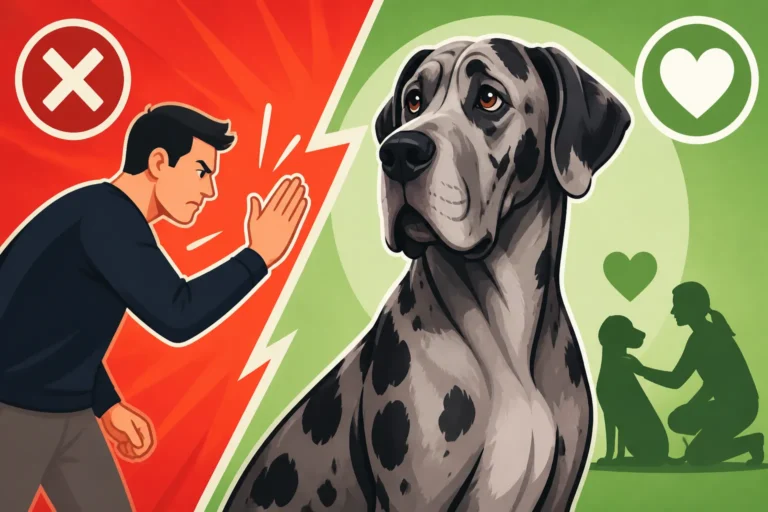
The "place" command should never feel like a punishment. It should be a positive experience, a safe haven where good things happen. To build this positive association, always reward your Dane generously when they go to their place and stay there. High-value treats, a favorite chew toy, or even a gentle praise and pet are all excellent motivators. Start by simply tossing a treat onto the bed and saying "place." When they go to get the treat, immediately praise them. Don't worry about duration yet; the goal is to make them think, "Oh, my bed means good things!"
Avoid using their "place" as a time-out spot for bad behavior. If you only send them there when they've done something wrong, they'll quickly associate it with negativity, making them reluctant to go there voluntarily. Instead, encourage voluntary use by occasionally dropping treats on their bed even when you haven't given the command, or by having them settle there during calm family time. This proactive approach helps your Great Dane see their "place" as a desirable, comfortable spot.
Step-by-Step: Teaching the "Place" Command
Teaching "place" requires patience and consistency, especially with a dog as intelligent and sometimes as stubborn as a Great Dane. Break it down into small, manageable steps, celebrating every little success along the way. Remember, you're building a foundation, not rushing to a perfect outcome overnight.
Luring and Rewarding
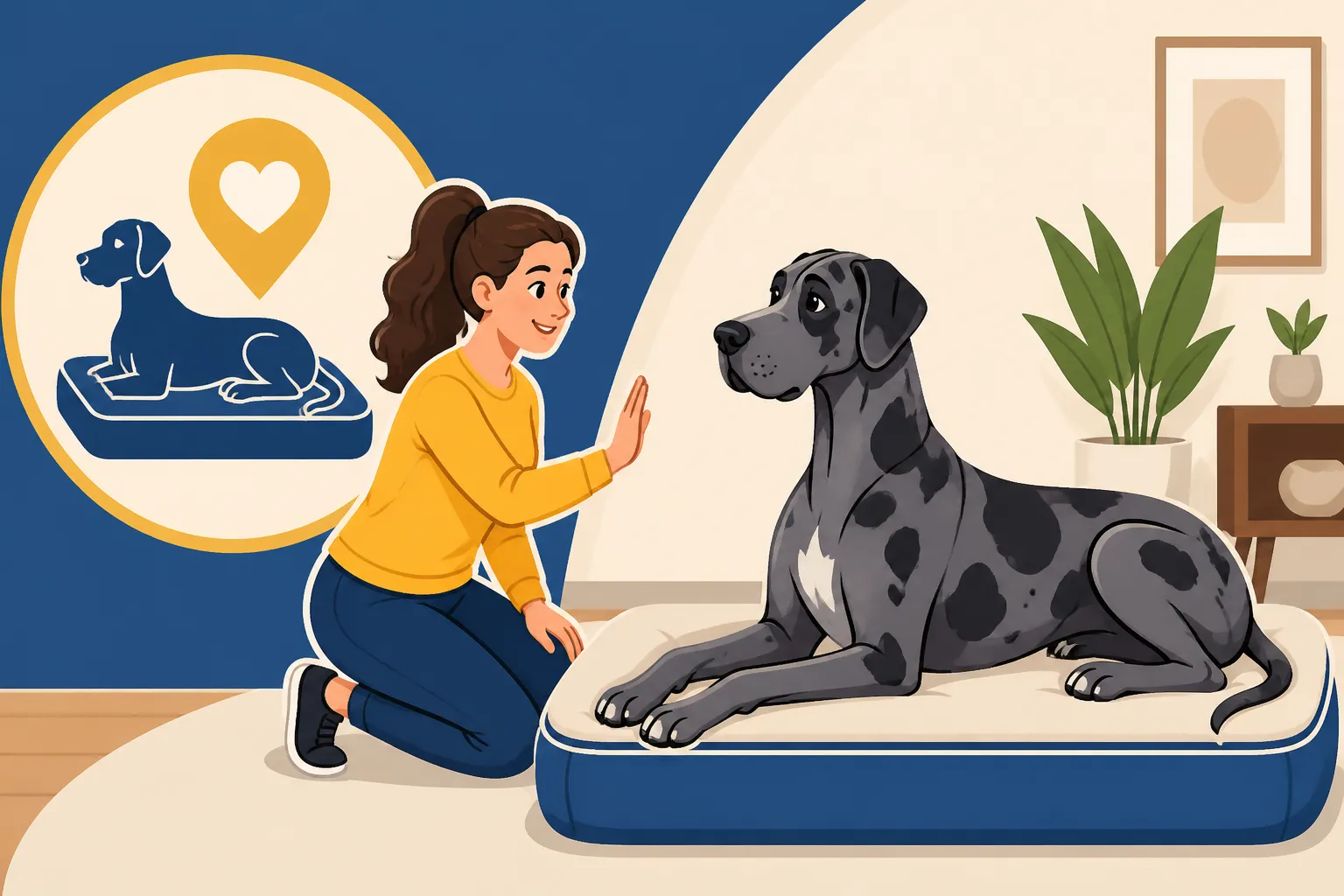
Start with your Great Dane near their designated spot, whether it's a bed, mat, or open crate. Hold a high-value treat in your hand and use it to lure them towards and onto their "place." As their front paws touch the bed, say your chosen command, "Place!" or "Bed!" and immediately reward them with the treat and enthusiastic praise. Don't worry if they don't lie down initially; the first step is just getting all four paws onto the chosen spot.
Repeat this several times in short, positive sessions throughout the day. Keep the sessions brief to maintain their interest and enthusiasm. As they reliably step onto the place, you can start shaping the behavior by holding the treat slightly lower, encouraging them to lie down. The moment their belly touches the bed, mark it with a verbal "Yes!" or a clicker, and reward them. The key here is consistency and making it a fun game, not a chore. This foundational luring helps immensely in teaching commands like Teaching a Great Dane to Leave Food Alone, as it builds focus.
Adding the Verbal Cue and Hand Signal
Once your Dane is consistently stepping onto their place and lying down with the lure, it's time to introduce the formal verbal cue and a hand signal. As you lure them, say "Place!" (or your chosen word) clearly, and simultaneously use a simple hand signal – perhaps pointing to the spot. When they go to their place and settle, reward immediately. Gradually, you'll start to fade the lure, using the verbal cue and hand signal more prominently than the treat in your hand.
The goal is for them to associate the words and gestures with the action, not just the presence of the treat. Practice in different parts of the house, but always return to their specific "place" for this command. This helps generalize the understanding that "place" means that specific spot. When you're ready to start working on more advanced behaviors or dealing with specific challenges like Stopping a Great Dane Jumping Up on People, a strong "place" command will be an invaluable tool.
Increasing Duration and Distance
Now comes the real test: getting them to stay. Begin by asking them to "place," rewarding them as they settle. Then, take one step away. If they stay, step back, praise, and reward. If they get up, gently guide them back to their place (without scolding), ask again, and try stepping away for an even shorter duration this time. Slowly increase the number of steps you take away, and then the amount of time they stay there before you return to reward them.
Don't forget to incorporate a release cue, like "Okay!" or "Free!" This tells your Dane when they are allowed to leave their spot. Always go back to their place to give the release cue and a final reward. This prevents them from "breaking" the command prematurely. Gradually, you can introduce distractions while they're on their place. Start with low-level distractions, like you walking around the room, and slowly build up to things like another person entering, or even a child playing nearby. This is especially important for managing Great Danes With Children and Small Dogs. Remember that adolescent Great Danes might test these boundaries, so be prepared for The Age a Great Dane Stops Listening with consistent reinforcement.
Troubleshooting Common "Place" Problems
Even with the best intentions and consistent training, your Great Dane might encounter some hiccups when learning the "place" command. It's totally normal! Their size, intelligence, and sometimes their sheer enthusiasm can make certain aspects of training a bit more challenging. The key is to understand why they might be struggling and adjust your approach patiently.
The "Pop-Up" Dane
You've asked them to "place," they've gone to their spot, laid down… and then pop! They're up again, sometimes before you've even had a chance to reward them, or maybe a moment after you've stepped away. This "pop-up" behavior is often due to a few things:
- Too much too soon: You might be asking for too long of a duration or too great of a distance too quickly. Go back to basics. Ask for just a second or two, reward, and release. Build up in tiny increments.
- Low-value rewards: Is the treat enticing enough? For a Great Dane, a bland piece of kibble might not cut it, especially when there are exciting smells or people around. Try higher-value treats like small pieces of cheese, cooked chicken, or specialized training treats.
- Lack of understanding the "stay" concept: Your Dane might understand "go to place" but not "stay on place." Work specifically on duration exercises. Stand right next to them, say "Place," have them lie down, count to one second, say "Yes!" (or click), treat, and release. Slowly increase that count.
- Over-excitement: Sometimes, they're just so happy or excited that they can't contain themselves. This is where patience and consistent reinforcement of calm behavior are vital. You might even consider working with a professional trainer who is comfortable with giant breeds, as finding a good one can be a challenge but is well worth the effort. Finding a Trainer Comfortable With a Great Dane is crucial for addressing complex behavioral issues.
Distraction Management
Teaching "place" in a quiet, empty room is one thing; expecting your Great Dane to hold their place when the mail carrier rings the doorbell, or dinner is being prepared, is quite another. Distraction management is a crucial step in generalizing the command.
Start by introducing very low-level distractions, such as:
- You walking slowly past them while they're on their place.
- Someone else quietly entering the room.
- A soft noise from another room.
As they succeed with these, gradually increase the level of distraction. For instance, have a family member walk by, then drop a non-startling object, or even run a small appliance like a blender in the kitchen while they're on their spot. Always return to reward them for staying, even if they show signs of wanting to break the command but resist. If they do break, calmly reset them to their place and try a slightly lower level of distraction. The goal is to gradually desensitize them to common household stimuli while reinforcing their ability to stay on place. This progressive exposure helps them understand that "place" means settling down no matter what's happening around them.
Making "Place" a Lifestyle, Not Just a Command
The true power of "place" isn't in perfecting a trick; it's in integrating it seamlessly into your daily life. This isn't just about training sessions; it's about making "place" a default behavior when appropriate. For instance, when you're cooking dinner, ask your Dane to "place" by the kitchen entrance. When guests arrive, send them to their place before you open the door. During movie night, have them settle on their bed instead of hogging the sofa.
The more you use the "place" command in varied, real-life situations, the stronger it becomes. This teaches your Great Dane to understand the context and the expectation of calm behavior in different scenarios. It also helps manage their colossal presence, making life smoother for everyone. Many dog owners find that using "place" regularly can dramatically reduce other unwanted behaviors, turning your boisterous giant into a truly gentle, well-mannered companion. Think of it as an ongoing communication tool, helping your Great Dane thrive within your family dynamic. Investing time in these foundational skills now will pay dividends over their lifetime, saving you from headaches and ensuring a more harmonious home.
| Aspect of "Place" Training | Beginner (First few days) | Intermediate (Weeks 2-4) | Advanced (Months 1-3+) |
|---|---|---|---|
| Duration | 1-3 seconds | 5-30 seconds | Several minutes to an hour or more |
| Distance | Next to the dog | 1-3 steps away | Across the room, out of sight |
| Distractions | None / Minimal | Family movement, soft noises | Doorbell, guests, food prep, other pets |
| Reward Frequency | Every successful attempt | Every few attempts | Intermittent, unexpected rewards |
| Common Challenges | Luring onto spot | Getting up too soon | Reacting to high distractions |
| Focus | Building positive association | Consistency and fading lure | Generalization and real-life application |
Disclaimer
This article is for general informational purposes only and does not constitute professional advice. Laws, prices and regulations vary by location and change over time. Consult a qualified professional for guidance on your specific situation.