Teaching a Great Dane to Have Its Feet Handled
One of the most common battles Great Dane owners face, yet one of the most vital for their dog's well-being, is getting those massive paws and thick nails handled without a wrestling match. Neglecting foot care or allowing fear to fester can lead to agonizingly overgrown nails, painful infections, and make crucial vet examinations or injury assessments nearly impossible. This guide will walk you through building a positive association with foot handling, turning what can be a stressful chore into a manageable routine for both you and your gentle giant.
Why Foot Handling is Non-Negotiable for Great Danes
It's easy to dismiss foot handling as just about nail trims, but for a Great Dane, it's so much more. These magnificent dogs are prone to a range of orthopedic issues and their sheer size means minor foot problems can quickly escalate into major mobility challenges. Regular, calm handling of their feet is fundamental to their health and comfort throughout their lives.
Preventing Painful Nail Overgrowth
Great Danes grow fast, and their nails grow just as quickly, often thicker and stronger than those of smaller breeds. When nails get too long, they push back into the nail bed, causing significant pain with every step. Imagine walking on pebbles constantly – that's what it feels like for your Dane. Overgrown nails can also change their gait, putting undue stress on their Great Dane Hips, Elbows and Growing Joints and leading to long-term orthopedic problems. This isn't just a cosmetic issue; it's a structural one that impacts their quality of life. Without consistent foot handling from a young age, even a simple trim can become a two-person, highly stressful event, or worse, require sedation at the vet, which itself carries Anesthesia Risk in a Great Dane.
The quick, the sensitive part of the nail that contains blood vessels and nerves, grows along with the nail. The longer the nail, the longer the quick becomes, making it harder to trim without causing pain and bleeding. This creates a vicious cycle where a painful experience makes the dog even more reluctant to have their feet touched, perpetuating the problem. Learning to comfortably manage your Dane's nails early on will save you and your dog a world of trouble and expense down the road. Regular trimming helps the quick recede, allowing for shorter, healthier nails that support proper paw structure.
Essential for Health Checks and Injury Management
Great Danes are stoic, and sometimes the first sign of a problem like a paw injury, a foreign object embedded between their pads, or even Swollen Painful Joints in a Great Dane Puppy might be a slight limp or an unusual reluctance to put weight on a paw. If your Dane isn't comfortable with you examining their feet, you could miss critical early signs of trouble. Trying to inspect a painful paw on a dog that weighs over a hundred pounds and is resisting can be dangerous for both of you.
Think about a scenario where your Great Dane suddenly starts favoring a leg after a run in the park. You need to be able to gently pick up their paw, spread their toes, and feel for heat or swelling without them pulling away or snapping. This allows you to assess the situation quickly and decide if a vet visit is needed. Furthermore, many serious conditions, like Bone Cancer in a Great Dane, can present with lameness. Being able to calmly examine a potentially painful limb provides your veterinarian with crucial information and makes their job easier, potentially leading to faster diagnosis and treatment.
Grooming and Hygiene Habits
Beyond nails and injuries, regular foot handling makes routine grooming much simpler. Great Danes, despite their short coats, still need paw care. Their paw pads can crack, especially in extreme weather, or collect debris and foreign objects during walks. Being able to comfortably wipe their paws after a muddy outing, check for ticks, or apply paw balm ensures better hygiene and prevents minor irritations from becoming serious infections.
If you ever need to apply medication to a cut, bandage a paw, or simply clean between their toes, a dog that tolerates foot handling will make the process stress-free. Imagine trying to treat a yeast infection between a Dane's toes if they refuse to let you touch them! It becomes a battle, often leading to incomplete treatment and prolonged discomfort. A relaxed attitude towards foot handling translates directly to better overall care and a stronger bond between you and your dog.
Starting Early: Puppy Foundations for Foot Confidence
The absolute best time to start building positive associations with foot handling is when your Great Dane is a tiny puppy. Their paws are small, their nails are soft, and their minds are sponges. Every positive interaction now lays the groundwork for a lifetime of cooperative care.
Gentle Introduction and Positive Reinforcement
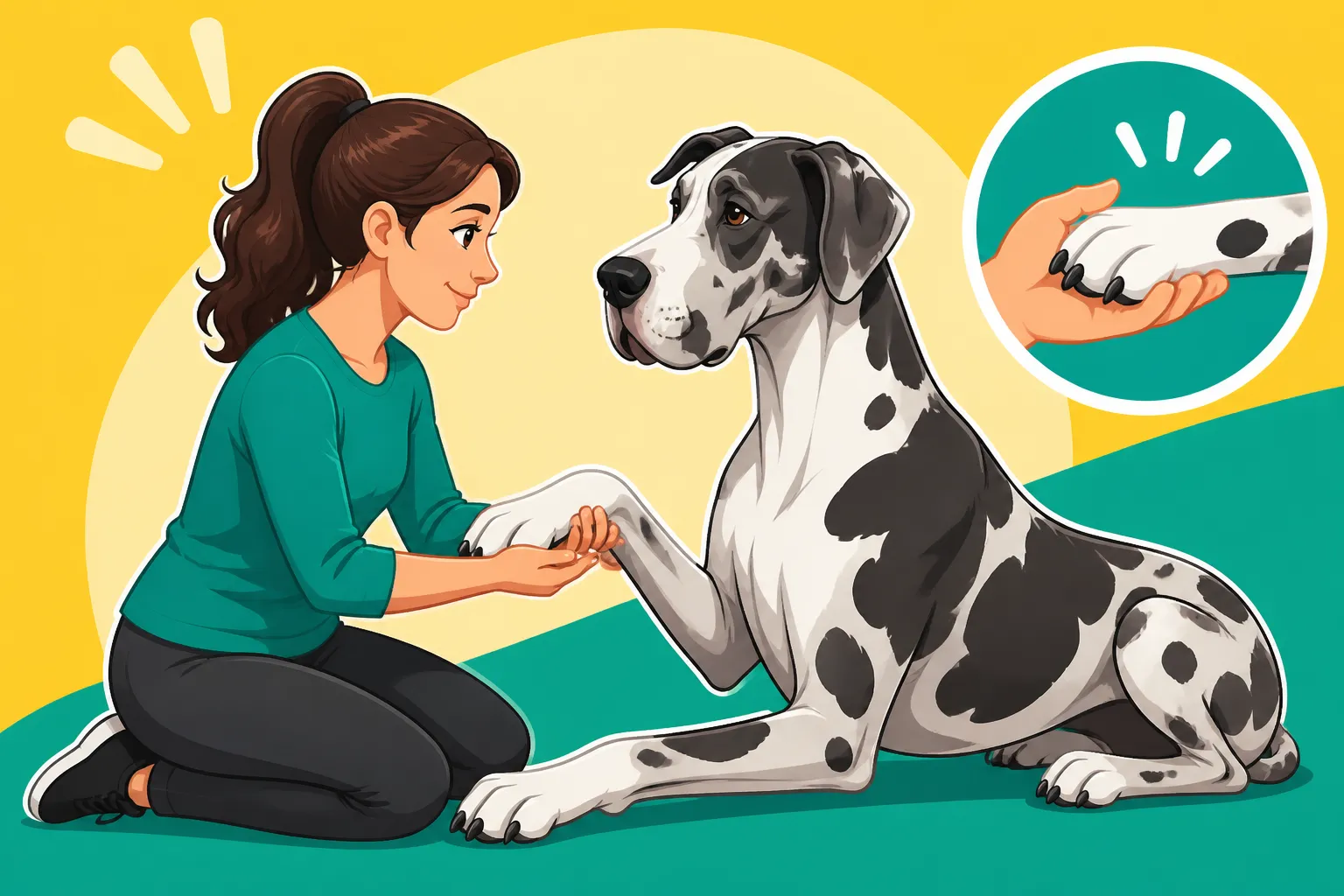
From the moment your Great Dane puppy comes home, start making foot handling a positive experience. Don't wait until it's time for a nail trim. Instead, incorporate gentle paw touches into your daily cuddle sessions. While they're relaxed in your lap or dozing nearby, gently touch a paw. The second you touch it, immediately offer a high-value treat – something they absolutely adore, like a tiny piece of cheese or cooked chicken. The key is to make the touch predict something wonderful.
Start with just a quick touch. As your puppy tolerates this, gradually increase the duration and intensity. Move from just touching the paw to gently holding it for a second, then spreading their toes, then touching each individual toe, then gently pressing on a nail. Each step, no matter how small, should be followed by a treat and praise. Keep these sessions short and sweet, never pushing your puppy past their comfort level. The goal is to build a positive emotional response, not to force compliance. This is very similar to how you would approach Getting a Great Dane Puppy Used to Handling in general.
Desensitization to Tools
Once your puppy is comfortable with your hands on their feet, it’s time to introduce the tools you'll be using: nail clippers or a dremel grinder. Don't actually use them yet! Just let your puppy see them, sniff them, and associate them with treats. Place the clippers on the floor, give a treat. Pick them up, give a treat. Touch the clippers to their paw (not clipping), give a treat. Turn the dremel on away from them, let them hear the sound, and give a treat. Gradually bring the tools closer, always pairing their presence with something good.
The table below outlines a typical progression for desensitizing a puppy to foot handling and nail care tools:
| Step | Action | Reward/Outcome |
|---|---|---|
| Phase 1: Basic Touch | Gently touch paw with fingers. | Immediate high-value treat + verbal praise. |
| Hold paw for 1-2 seconds. | Immediate high-value treat + verbal praise. | |
| Touch each toe/pad. | Immediate high-value treat + verbal praise. | |
| Phase 2: Introducing Pressure | Gently squeeze a toe/nail. | Immediate high-value treat + verbal praise. |
| Apply light pressure to the top of the foot. | Immediate high-value treat + verbal praise. | |
| Phase 3: Tool Familiarization | Show clippers/dremel (tool in sight). | Treat. |
| Touch tool to paw (no action). | Treat. | |
| Turn dremel on (away from dog), dog hears sound. | Treat. | |
| Bring vibrating dremel near paw (not touching). | Treat. | |
| Phase 4: Simulated Action & First Trim | Touch dremel to one nail (briefly, without grinding). | Treat. |
| Clip one tiny tip off a nail or briefly grind one nail. | Jackpot of treats, lots of praise. Immediately stop session. | |
| Phase 5: Building Duration | Gradually increase number of nails/duration of grinding in one session. | Consistent high-value treats after each nail/short burst of grinding. |
This step-by-step approach ensures your puppy learns that these tools and actions are not scary, but rather predict delicious rewards. Many online training platforms, such as BAXTER & Bella, offer structured programs for puppy socialization and handling that include detailed guidance on desensitization to make this process even smoother.
Consistency is Key
Young Great Danes are growing rapidly, and their experiences shape their behavior profoundly. Consistent, daily handling sessions, even if they're only 30 seconds long, will reinforce the positive associations. Don't just do it when nails are overgrown and you're feeling desperate. Make it a routine part of your day, like mealtime or a potty break. This builds a strong foundation of trust and teaches your puppy that foot handling is just another normal, pleasant interaction with you.
If you skip days or weeks, your puppy might forget the positive associations, or new fears could develop. Remember, a Great Dane puppy is quickly going to become a very large dog, and their sheer size means that bad habits or fears become much harder, and potentially dangerous, to address later on. Invest the time now, and you'll reap the rewards for years to come.
Building Up Tolerance in an Adult Great Dane
If you've adopted an adult Great Dane, or perhaps you're realizing you missed some crucial early training, don't despair! While it might take more patience and time, an adult Dane can absolutely learn to tolerate and even enjoy foot handling. It’s all about positive reinforcement, consistency, and understanding their individual comfort level.
Counter-Conditioning Past Negative Experiences
Many adult dogs who are fearful of foot handling have had negative experiences in the past – perhaps a quicking incident during a nail trim, rough handling, or pain associated with an injury. Your job is to change their emotional response from fear or anxiety to neutrality or even anticipation. This is called counter-conditioning. Start exactly where your dog is comfortable, even if that's just touching their shoulder. Touch, treat.
Gradually work your way down their leg, only moving closer to the paw when your Dane shows no signs of stress (lip licking, yawning, turning head away, stiffening). If they pull away, you've gone too far, too fast. Go back to a step where they were comfortable and try again. Use very high-value treats – something they rarely get, like boiled chicken, hot dogs, or liverwurst. The stronger the positive association, the faster you can re-wire their emotional response. Think of it like a bank account: every positive experience is a deposit, every negative one is a withdrawal. You want far more deposits than withdrawals.
Gradual Desensitization Steps
Just like with puppies, you’ll want to break down foot handling into tiny, manageable steps. Don't expect to trim all their nails in one go initially. Your first goal might just be to gently hold a paw for two seconds and give a treat. The next might be to gently touch one toe and treat. You're building a chain of positive experiences, one link at a time. This process can be slow, sometimes taking weeks or even months, but rushing it will only set you back further.
For instance, after successfully touching a paw, you might work on:
- Touching the top of the paw. Treat.
- Gently squeezing a paw pad. Treat.
- Spreading a toe. Treat.
- Touching a single nail. Treat.
- Gently moving a nail. Treat.
Only when they are completely comfortable with your touch should you reintroduce the tools, using the same desensitization steps as with a puppy: present the tool, treat; touch the tool to the paw, treat; turn the dremel on nearby, treat. Remember, patience is your superpower here. You are literally re-training their brain to associate formerly scary things with good things.
Enlisting Professional Help (If Needed)
If your adult Great Dane has a deeply ingrained fear or shows any signs of aggression (growling, snapping) when you attempt to handle their feet, it’s absolutely okay, and often recommended, to seek professional help. A certified professional dog trainer or a veterinary behaviorist can provide tailored guidance and hands-on support. They can help identify specific triggers, teach you appropriate handling techniques, and even suggest medication if anxiety is severe.
Never put yourself at risk. A bite from a Great Dane, even an accidental one, can be very serious. A good trainer can demonstrate techniques, help you build confidence, and provide a safe environment for your dog to learn. They might also suggest specific harnesses or handling equipment that can give you more control without causing pain or fear. Organizations like BAXTER & Bella also provide online consultations and resources that might be a good starting point for professional guidance if in-person help isn't readily available.
Essential Tools and Techniques for Success
Having the right tools and knowing how to use them effectively can make all the difference in successful foot handling for your Great Dane. It’s not just about brute force; it’s about precision, comfort, and safety.
Choosing the Right Nail Trimmers or Grinders
For Great Danes, whose nails are often thick and strong, you'll need heavy-duty nail clippers. Scissors-style clippers with a sharp blade are often preferred over guillotine-style for larger breeds as they provide more leverage. Brands like Millers Forge or Safari offer sturdy options for large dogs. However, many Great Dane owners find a rotary tool, or dremel grinder, to be less stressful and more effective for maintaining nail length. Grinders slowly file the nail down, reducing the risk of cutting the quick. This is particularly useful for dogs with dark nails where the quick isn’t visible. You can find a wide range of these tools on platforms like Amazon.
When using clippers, always have styptic powder (like Kwik Stop) on hand. This powder quickly stops bleeding if you accidentally cut too far into the quick. For grinders, ensure you use a coarse grit and keep the tool moving to prevent heat buildup, which can be uncomfortable for your dog. Remember, whether clipping or grinding, short, frequent sessions are far better than infrequent, lengthy ones. Aim to trim or grind just the very tips of the nails every week or two to keep them at a healthy length, preventing issues like Nail Length and How a Great Dane Stands.
Creating a Calm and Safe Environment
Before you even start a foot handling session, set the stage for success. Choose a quiet time when your Great Dane is already relaxed, perhaps after a walk or a play session when they're a bit tired. Find a comfortable spot where both of you can be at ease – a soft dog bed, a carpeted area, or even on the sofa if your Dane is allowed. You might want to use a non-slip mat to prevent slipping, especially if your Dane is on a hard floor, as feeling unstable can increase anxiety.
Have all your tools ready and within reach before you begin: treats, clippers/grinder, styptic powder, and maybe even a helper if your dog is still learning. A calm, confident demeanor from you is crucial. Dogs are incredibly perceptive and will pick up on your anxiety. Take a few deep breaths, speak in a soothing voice, and make the experience as positive as possible. Consider a soft blanket or favorite toy to help them feel more secure.
The Power of High-Value Treats and Praise
We've talked about treats, but it bears repeating: for foot handling, you need high-value treats. These are the treats your Great Dane would do backflips for – chicken, cheese, hot dogs, peanut butter (xylitol-free!), or special store-bought soft treats. Dry kibble or everyday treats often won't cut it when you're asking your dog to overcome a deep-seated fear or discomfort. The treat should be delivered immediately as or just after the desired action (touching the paw, touching a nail). This instantaneous connection is what creates the positive association.
Verbal praise is also vital. Use a happy, encouraging tone, telling them "Good boy/girl!" or "Yes!" when they cooperate. Don't be afraid to sound a little silly; your enthusiasm will rub off on them. For dogs who are very food motivated, you can even use a lick mat spread with peanut butter to distract them while you work. This can be a game-changer for keeping them occupied and calm during the process. The combination of tasty treats and genuine praise creates a powerful reward system that reinforces cooperative behavior.
Disclaimer
This article is for general informational purposes only and does not constitute professional advice. Laws, prices and regulations vary by location and change over time. Consult a qualified professional for guidance on your specific situation.