Whether a Great Dane Even Fits on a Vet Table
Bringing your majestic Great Dane to the vet can often feel like trying to fit an elephant into a teacup – a deeply frustrating and sometimes anxiety-inducing experience. The sheer size of our beloved gentle giants often means they simply don't fit on standard examination tables, leading to awkward maneuvering, potential stress for your dog, and extra strain for the veterinary staff. This guide is all about navigating those common challenges, offering practical advice, and empowering you to make vet visits as smooth and stress-free as possible for your enormous companion.
The Reality of Great Dane Size at the Vet's Office
Let's be honest, most veterinary clinics are designed with the average-sized dog in mind. When you walk in with a Great Dane, who can easily stand three feet tall at the shoulder and weigh upwards of 150-200 pounds, it's immediately clear that standard equipment might not cut it. This isn't a criticism of vets, who are amazing, but a simple fact of the infrastructure designed for a much smaller clientele. Owners of smaller dogs might never even consider this logistical hurdle, but for us Great Dane parents, it's a very real concern we face with every check-up or emergency.
Why a Standard Vet Table Just Isn't Built for a Dane
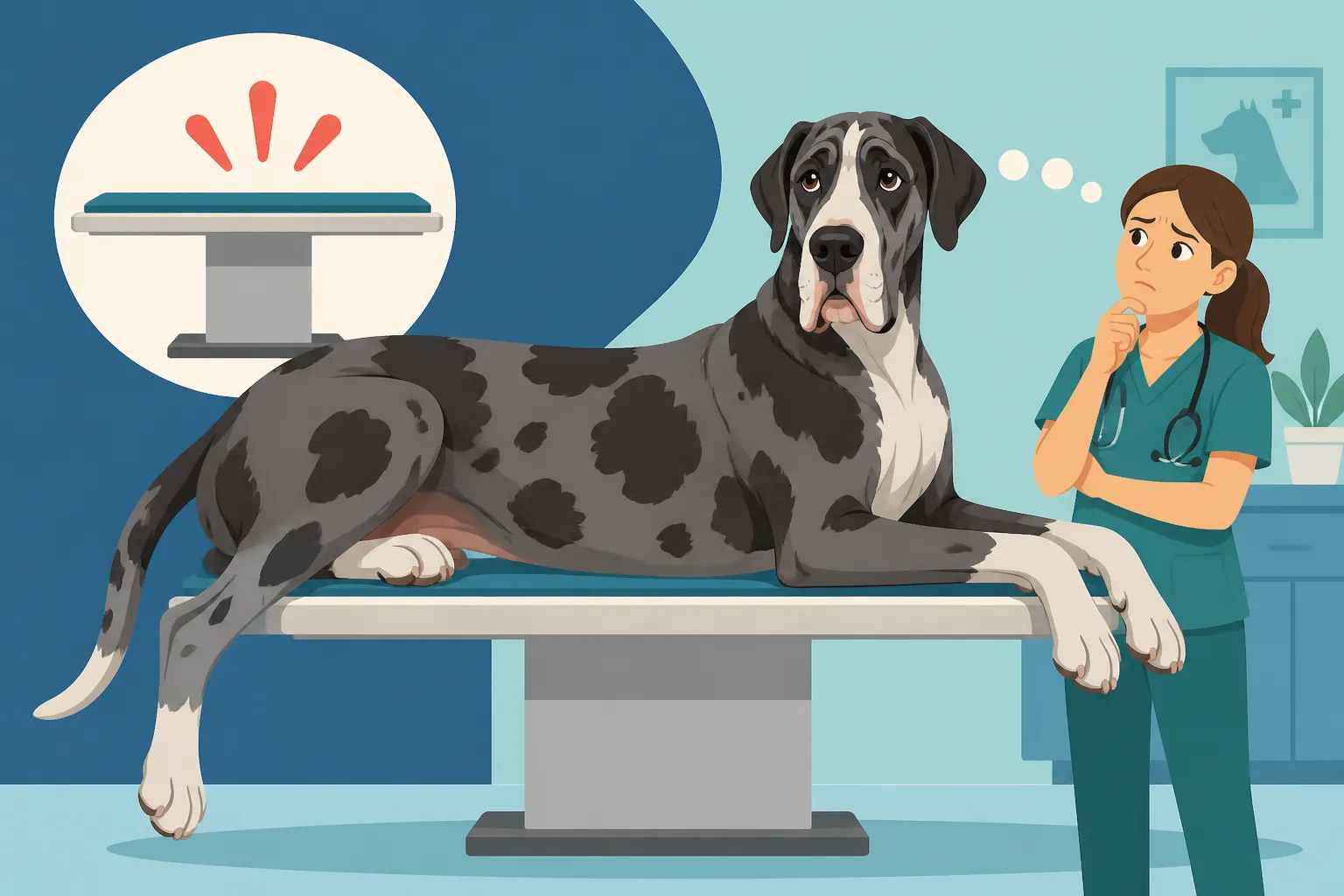
Standard veterinary examination tables typically measure around 24 to 30 inches wide and 48 to 60 inches long. Now, let's compare that to a mature Great Dane. A male Dane can stand 30-34 inches tall at the shoulder and easily stretch 6-7 feet from nose to tail when fully extended. You can see the immediate mismatch. Trying to get a dog of this length and height onto a table that's barely half their length and offers little room for them to turn around or lie down comfortably is a non-starter.
The table simply isn't long enough for them to stand or lie down without significant parts of their body hanging off, which is not only unstable but can also be frightening for the dog. Imagine trying to balance on a small ledge while someone pokes and prods you; it's unsettling. This size discrepancy means that many routine examinations, such as listening to heart and lungs or checking joint mobility, become incredibly challenging, if not impossible, on a typical table. It also makes procedures like blood draws or nail trims, which often require a stable, elevated surface, much more difficult and potentially unsafe.
The Physical Challenges for Your Vet and Their Staff
Beyond the logistics of fitting, there's the very real physical challenge of lifting a Great Dane. A dog that weighs more than a human child, sometimes even an adult, requires significant strength and coordination to lift safely. Veterinary staff are dedicated professionals, but they are still human. Attempting to lift a stressed, possibly injured, or simply reluctant 150-pound dog onto a table poses a serious risk of injury to both the staff and your Dane. A slip or an awkward movement could lead to pulled muscles, back injuries, or even cause the dog to fall, potentially exacerbating an existing condition or creating a new injury.
Even once they are on the table, if somehow managed, keeping a large, squirming or anxious Dane still on an undersized surface is a monumental task. This can lead to rushed examinations, incomplete procedures, and a less thorough overall assessment. The goal of any vet visit is accurate diagnosis and treatment, and battling with an ill-fitting table actively hinders that. The best clinics understand these challenges and have adapted their approach, recognizing that prioritizing safety and comfort for giant breeds often means thinking outside the traditional exam room setup.
Strategies for Managing a Giant at the Vet
Thankfully, veterinary professionals are adept at adapting, and there are many ways clinics accommodate our larger-than-life companions. It's all about proactive communication and finding a vet who is comfortable and equipped to handle the unique needs of a Great Dane.
Ground-Level Examinations: A Common and Effective Approach
For many routine check-ups, vaccinations, or even minor examinations, the most practical and often least stressful solution is a ground-level examination. This means your Great Dane stays on the floor, and the vet and their team conduct the exam right there with them. This approach has numerous benefits. For one, it eliminates the anxiety and physical strain of lifting, making the entire experience calmer for everyone involved. Your Dane feels more secure on a stable, familiar surface (the floor), which can significantly reduce their stress levels.
I've seen vets get down on their knees, even sit on the floor, to get eye-level with a Dane, providing a more comforting and less intimidating interaction. For general health checks, listening to heart and lungs, palpating the abdomen, checking ears and eyes, and even giving injections, the floor works perfectly. It allows the vet to observe your dog's gait and posture naturally, which can be crucial for detecting orthopedic issues. If your vet does this, it's a great sign they understand giant breeds and prioritize their comfort. It’s also often easier to perform certain procedures, like Nail Care on a Great Dane That Cannot Balance or administering oral medication, when the dog is relaxed and grounded.
Specialized Equipment for Larger Breeds
While ground-level exams are fantastic for many situations, some procedures truly do require an elevated, stable surface. This is where clinics with specialized equipment shine. Some veterinary hospitals and larger practices invest in extra-large, heavy-duty hydraulic lift tables. These tables can be lowered almost to the floor, allowing your Great Dane to simply walk or step onto them, then gently raised to a comfortable working height for the vet. This completely removes the need for manual lifting, ensuring safety for both your dog and the staff.
These specialized tables are a game-changer for detailed examinations, some imaging procedures, or even minor surgical interventions that don't require a sterile operating room. If you live in an area with multiple veterinary options, it's absolutely worth asking if any clinics are equipped with such tables, especially if your Dane has mobility issues or is prone to anxiety during lifts. Another fantastic option that's gaining popularity is mobile veterinary services. Imagine your Great Dane getting a full check-up, vaccinations, or even some minor diagnostics right in the comfort of your own home, eliminating car rides, strange environments, and the table dilemma entirely. This can be a godsend, particularly for older Danes, or those with significant health challenges like those mentioned in Mobility Aids for a Failing Great Dane.
Training Your Great Dane for Vet Visits from Puppyhood
The single most impactful thing you can do to make vet visits easier, regardless of equipment, is to start positive, consistent training and socialization from the moment you bring your Great Dane puppy home. Waiting until they are a massive adult to tackle vet visit manners is a recipe for disaster. A well-socialized and desensitized Great Dane is a far less stressful patient.
Start early by making handling a positive experience. Practice touching their paws, ears, tail, mouth, and belly daily, rewarding them with delicious treats (like those from BAXTER & Bella or other high-value options found easily on Amazon). This helps them become comfortable with being touched all over, mimicking a vet exam. Regularly take your puppy to the vet's office just for positive visits – no pokes or prods, just hellos, treats, and maybe a weigh-in on their walk-on scale. These "happy visits" can make a world of difference in associating the clinic with good experiences. You want your Dane to be comfortable with strangers, novel sounds, and different surfaces. A good trainer can help you build these foundations, ensuring your giant grows into a polite and cooperative patient. Remember, Getting a Great Dane Puppy Used to Handling is not just about manners, it's about making future necessary veterinary care manageable.
Practical Tips for a Smoother Vet Visit
Even with the best intentions and training, a vet visit can still be a big deal for a Great Dane. Having a few practical strategies in your toolkit can make all the difference, helping to keep everyone calmer and the appointment more productive.
Communicating Ahead of Time with Your Vet
This is perhaps the most crucial step. When you call to book your appointment, always inform the clinic that you're bringing a Great Dane. Don't assume they'll know or be prepared. Mention your dog's approximate weight and temperament. You can ask specific questions like:
- "Do you have a walk-on scale or a large, low-rise table?"
- "Are you comfortable doing examinations on the floor for a giant breed?"
- "Do you have a large exam room that allows my dog to move comfortably?"
This advanced notice allows the staff to allocate a suitable room, prepare their equipment, and perhaps even schedule your appointment during a quieter time, reducing overall stress. If your Dane is particularly anxious, discuss mild sedative options or calming supplements with your vet beforehand. Sometimes a little bit of help to take the edge off can make the entire experience safer and more positive, especially if they need something done that absolutely requires them to be still, or if you're dealing with an emergency like Bloat in a Great Dane and the One in Three Odds.
Bringing Support and Comfort Items
Never underestimate the power of familiar comfort. If possible, bring a second person with you to help manage your Dane. An extra set of hands can be invaluable for support, gentle restraint, or simply distracting your dog with affection. Always bring high-value treats that your Dane absolutely loves. These can be used to reward calm behavior, create positive associations, or redirect attention during a potentially uncomfortable procedure. Things like cheese sticks, cooked chicken, or even specialized training treats from brands like BAXTER & Bella can be incredibly effective.
Consider bringing a favorite blanket or a plush, oversized dog bed that your Dane is accustomed to. Placing this on the floor can provide a familiar scent and soft spot for them to settle, making the foreign environment feel a little less intimidating. Ensure your Great Dane is wearing a comfortable, secure harness (like those sturdy options available on Amazon) rather than just a collar, as it offers better control and reduces pressure on their neck if they pull or need gentle guidance. Harnesses and Leads for a Great Dane are essential for their safety and yours.
Weighing Your Dane and Transport Considerations
Weighing a Great Dane is rarely a delicate dance on a small scale. Most vet clinics that regularly see large breeds will have a large, low-profile, walk-on scale that your Dane can simply step onto. If not, they might use a freight scale in a back area or estimate weight based on previous records. It's usually not an issue, but again, a quick call ahead can confirm their setup.
Transporting a Great Dane to the vet presents its own set of challenges. Most Danes don't comfortably fit in standard car crates, and some don't even fit easily into the back of smaller SUVs. If your Dane struggles with jumping into the car, consider investing in a large, sturdy dog ramp. You can find excellent options on Amazon. Ramp Training a Great Dane for the Car can save your back and prevent injury to your dog's joints, especially as they get older or if they're injured. Practice using the ramp at home before you actually need it for a vet trip. Ensuring a safe and calm journey to the clinic contributes greatly to a less stressed dog upon arrival.
When the Vet Table Might Be Necessary (and How to Prepare)
While many routine procedures can happen on the floor, there are definitely situations where a Great Dane absolutely needs to be on an elevated table, even if it's a specialized lift table. These moments require extra planning and coordination with your veterinary team.
Procedures Requiring a Table and the Associated Risks
Certain diagnostic procedures and medical interventions truly benefit, or outright require, a stable, elevated surface. These might include:
- Advanced Imaging: While large X-ray plates can sometimes be used on the floor, getting a Great Dane into a specific position for precise images (like OFA hip and elbow clearances, which you might consider if you have a breeding dog or want a baseline for future Great Dane Hip and Elbow Screening) can be much easier and more accurate on a table. Ultrasound examinations of the abdomen or heart (an echocardiogram, especially important given The Heart Muscle Disease Great Danes Are Prone To) often require the dog to be still in a specific position for an extended period, which is best achieved on a table with staff support.
- Minor Surgeries/Sedated Procedures: Procedures like suturing a small wound, draining an abscess, or performing a thorough dental cleaning require sterile conditions and immobility, usually under sedation or light anesthesia. While general operating tables are separate, prep tables are often where these smaller procedures begin.
- Intensive Care/Monitoring: In emergency situations or for dogs requiring intensive care, being on a table or specialized large bed allows for easier access for medical monitoring, IV fluids, and critical interventions.
It's important to remember that general anesthesia carries an Anesthesia Risk in a Great Dane due to their size, unique physiology, and propensity for certain health conditions. Your vet will always discuss these risks and take precautions, such as pre-anesthetic blood work and careful monitoring.
Working with Your Vet for Safe Handling
If a procedure absolutely necessitates getting your Great Dane onto a table, open communication with your veterinary team is paramount. Discuss the plan for lifting or moving your dog before they even attempt it. It might involve multiple staff members, a special lifting sling, or careful guidance onto a hydraulic table. Your presence and calm demeanor can also be a huge asset in reassuring your Dane.
Ensure you're clear on how you can best assist without getting in the way or compromising safety. Sometimes, a quiet, reassuring presence is all that's needed. For an older Great Dane, or one with existing joint issues, the thought of getting on a table can be particularly daunting. Caring for a Great Dane Past Six often means rethinking how all vet procedures are done to prioritize their comfort and mobility. Don't hesitate to advocate for what you believe is best for your dog, and remember that a good vet will always appreciate an owner who is actively engaged in their pet's care. The collective goal is always to provide the best possible care while ensuring the safety and well-being of your magnificent Great Dane.
Disclaimer
This article is for general informational purposes only and does not constitute professional advice. Laws, prices and regulations vary by location and change over time. Consult a qualified professional for guidance on your specific situation.