Whether a Great Dane Should Be Crated in a Vehicle
Transporting a Great Dane can feel like orchestrating a small logistical marvel. Their sheer size often means that what works for a smaller dog just won't cut it, leaving many owners feeling frustrated and unsure of the safest way to travel with their gentle giants. This guide will delve into the critical reasons why vehicle safety is paramount for Great Danes and explore whether crating is the best, or even a feasible, option, alongside other effective restraint methods.
The Indisputable Need for Vehicle Safety for a Great Dane
It's tempting to think a big dog like a Great Dane, who often just loves to stretch out and snooze, would be perfectly fine riding loose in the back of an SUV or even on the back seat. But the reality is, their size, while endearing, also presents significant safety hazards for everyone in the vehicle if they aren't properly secured. This isn't just about preventing accidents; it's about protecting your beloved companion and yourself from the unpredictable nature of the road.
Why an Unrestrained Great Dane Poses a Huge Risk
Imagine hitting the brakes suddenly, even at a moderate speed. An unrestrained Great Dane, weighing upwards of 120-180 pounds or more, instantly becomes a massive projectile. The force generated by such a large, heavy object can be catastrophic, not only causing severe injury to your dog but also posing a mortal threat to human passengers. It’s a sobering thought, but it’s a physical reality that cannot be ignored. Even a minor fender bender can send them flying, potentially through a windshield or into another occupant with devastating impact.
Beyond the grim scenario of an accident, an unsecured Great Dane can be a huge distraction for the driver. A sudden bark, a lean onto the driver's lap, or an attempt to reach a dropped toy can pull your attention from the road in a split second. And let's not forget the risk of escape. If a window is open too wide, or a door is accidentally unlatched at a stop, a curious or panicked Dane could bolt, leading to potential injury or becoming lost. Their size, while offering a sense of security at home, dramatically magnifies these risks on the move.
Beyond Accidents: Protecting Your Dane from Sudden Stops and Turns
Even if you manage to avoid a collision, the everyday bumps, sudden stops, and sharp turns of driving can be incredibly jarring for an unsecured Great Dane. Their long limbs and large bodies aren't designed to brace against the lateral forces of a moving vehicle. Picture them sliding across the seat or slamming into the side of the cargo area with every corner you take. This uncontrolled movement can lead to painful muscle strains, joint sprains, or even more serious orthopedic injuries over time.
Think about the long-term health of their joints. Great Danes are already prone to issues like hip and elbow dysplasia, and repeated, uncontrolled jostling in a vehicle only exacerbates these vulnerabilities. Great Dane Hips, Elbows and Growing Joints are delicate, especially during their growth phases. Providing a stable, secure environment minimizes these stresses. Moreover, some dogs experience car sickness, and feeling unstable can definitely worsen that nausea. A steady, predictable spot in the car can make a huge difference in their comfort levels and overall willingness to travel.
Crating as the Gold Standard for Great Dane Vehicle Travel
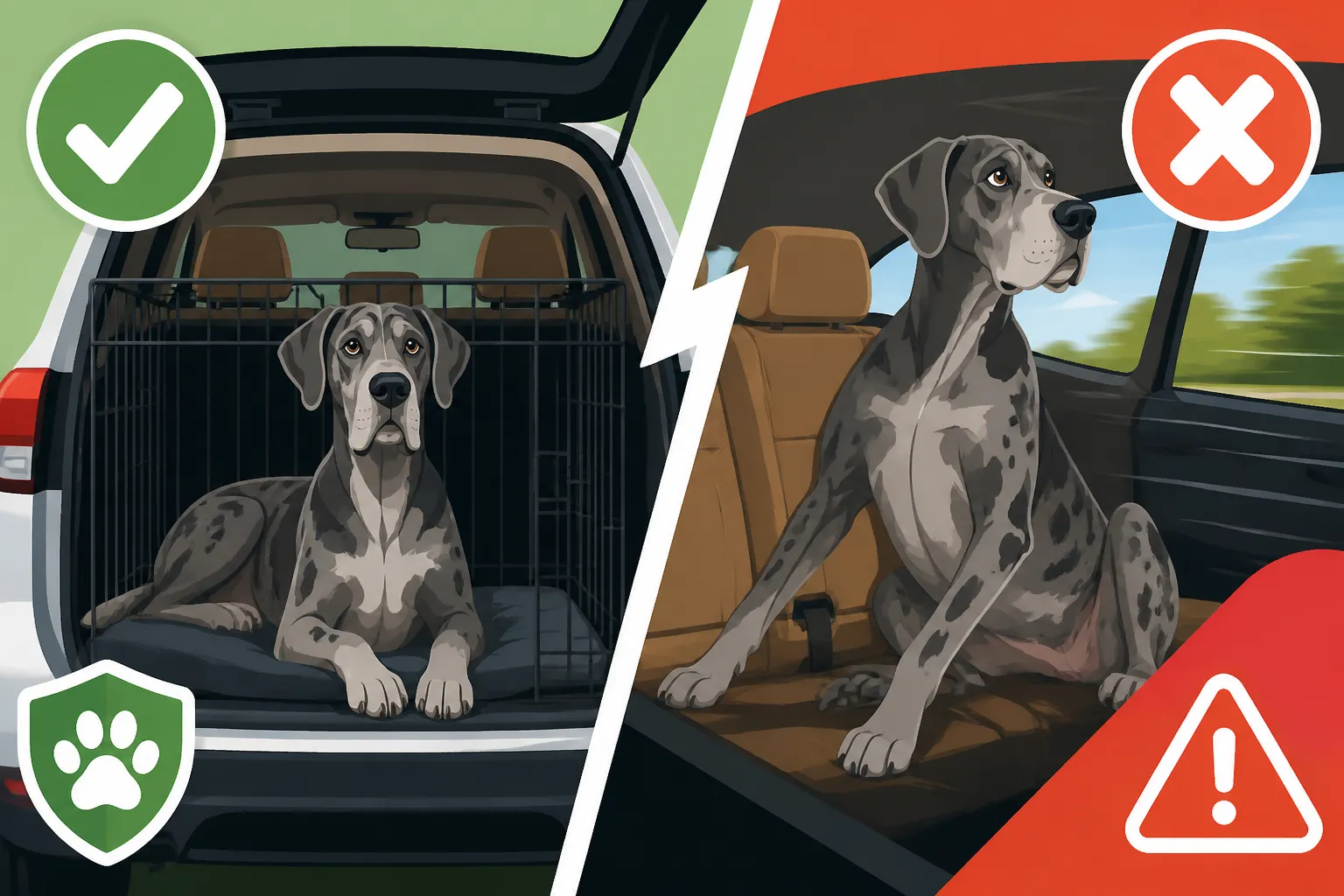
When it comes to vehicle safety for any dog, but especially a large breed like a Great Dane, a properly secured crate is widely considered the safest option. It offers a level of protection and containment that other methods simply can't match.
The Benefits of a Properly Sized and Secured Crate
A crash-tested travel crate designed for large dogs offers the best possible protection in the event of an accident. It acts as a protective shell, absorbing impact and preventing your Great Dane from being ejected or becoming a dangerous projectile. But the benefits extend beyond crash protection. A crate contains all the usual Great Dane "stuff" – the generous drool, the inevitable shedding, and any sudden messes from car sickness. This keeps your vehicle cleaner and more hygienic.
From a behavioral standpoint, a crate significantly reduces driver distraction. Your Dane is safely contained, unable to jump into the front seat or interfere with your driving. For your dog, a familiar crate can be a comforting, den-like space, reducing anxiety during travel. Many dogs feel more secure when they have a defined, stable area to rest in, especially if they've been positively crate-trained at home. It becomes their little mobile sanctuary. This psychological anchor can turn a stressful car ride into a calm, even enjoyable, experience for them.
Finding a Crate That Actually Fits a Great Dane in a Vehicle
Here's where the rubber meets the road, or rather, where the crate meets the cargo area. Finding a crate that genuinely fits a Great Dane and fits into a typical family vehicle is often the biggest hurdle. A Great Dane needs a crate large enough for them to stand up, turn around, and lie down comfortably without feeling cramped. This usually means a crate that is at least 48-54 inches long, 30-34 inches wide, and 32-36 inches high – these are significant dimensions! Choosing a Crate a Great Dane Can Stand In can feel like a quest.
Most sedans simply won't accommodate a properly sized crate for a Great Dane. You'll likely need an SUV with the rear seats folded down, a minivan, or a truck with a secure, climate-controlled topper. When shopping, always measure both your dog (standing height, nose to tail length) and your vehicle's cargo area meticulously. Remember to account for door openings and any wheel well intrusions. Look for crates made from heavy-duty materials like aluminum or reinforced steel, as these offer superior crash protection compared to collapsible wire crates, which are more for home containment than vehicle safety. Some manufacturers even offer specific "car crates" designed to fit vehicle contours. Once you have the right crate, it's crucial to secure it firmly to your vehicle's tie-down anchors to prevent it from shifting or sliding during transit. Websites like Amazon offer a vast array of crates, but it's essential to scrutinize dimensions and customer reviews to ensure both robust construction and accurate sizing for your colossal companion.
Alternatives to Crating for Great Danes in Cars
While crating offers the highest level of protection, it's not always practical or possible for every Great Dane owner and every vehicle. Thankfully, there are other options available that can provide a reasonable degree of safety, even if they don't quite match the gold standard of a crash-tested crate.
Safety Harnesses and Seatbelt Attachments
For many Great Dane owners, a crash-tested safety harness combined with a seatbelt attachment is a viable alternative. These harnesses are specifically designed to distribute forces across your dog's chest and back in the event of a sudden stop or collision, rather than concentrating them on the neck. It's absolutely critical to seek out harnesses that have been independently crash-tested and certified by organizations focused on pet safety, as many standard harnesses offer little to no protection in a crash. Harnesses and Leads for a Great Dane are available, but discernment is key.
The harness connects to your car's seatbelt system, either directly through a loop or via a short tether that clips into the seatbelt buckle. This prevents your Great Dane from becoming a projectile and keeps them contained in a specific area of the vehicle, reducing driver distraction. While it offers less comprehensive protection than a solid crate, especially against crushing injuries, it's a vast improvement over an unrestrained dog. It also allows your Dane a bit more freedom to shift position, which some dogs prefer for shorter trips. Remember, a good harness should fit snugly but comfortably, without restricting movement or causing chafing. For training your Great Dane to accept and be comfortable in a harness and seatbelt, resources like BAXTER & Bella’s online training program can offer guidance on positive reinforcement methods, even if their core product is a training system.
Car Barriers and Cargo Area Dividers
If you have a large SUV or minivan and your Great Dane rides in the cargo area, a car barrier or divider can be a useful tool, though it's important to understand its limitations. These devices typically consist of a metal grid or strong netting that separates the cargo area from the passenger compartment. Their primary function is to prevent your Great Dane from climbing into the front seats, reducing driver distraction.
However, a barrier provides absolutely no restraint for your dog in the event of an accident. Your Great Dane would still be thrown around within the cargo space, risking serious injury to themselves. They are also not protected from impacts from the rear of the vehicle. For this reason, car barriers are best suited for containing a dog and preventing distraction, but they should not be considered a primary safety device for crash protection. They might be a practical choice for very short trips where crating is simply not an option due to space or logistics, or in emergency situations, such as rushing to the vet, where getting a dog into a crate might be too time-consuming or painful for an injured animal. Always ensure the barrier is securely installed and robust enough to withstand your Great Dane's strength and weight.
| Restraint Method | Primary Benefit | Protection Level (Crash) | Distraction Prevention | Space/Vehicle Requirement | Comfort for Dane |
|---|---|---|---|---|---|
| Crash-Tested Crate | Maximum physical protection | High | Excellent | Large cargo area (SUV, Van, Truck w/ topper) | High (familiar den) |
| Safety Harness | Restrains dog, some impact diffusion | Moderate | Good | Backseat of most vehicles | Moderate (more movement) |
| Car Barrier | Prevents access to front seats | Low (no restraint) | Good | Large cargo area (SUV, Van) | Variable (dog can move freely) |
Making Vehicle Travel Comfortable and Safe for Your Great Dane
Getting your Great Dane safely from point A to point B is about more than just the right equipment; it’s about making the entire experience a positive one. A calm, well-adjusted Great Dane is a safer travel companion, regardless of the restraint method you choose.
Acclimatization and Training for Car Rides
For Great Danes, just like with any big dog, starting early with positive exposure to car rides is crucial. You want them to associate the car, and whatever restraint you choose, with good things. Begin with short, positive trips – perhaps just to the end of the driveway and back, followed by praise and a favorite treat. Gradually increase the duration and distance. This is where Teaching a Great Dane to Get Into a Car comes into play; make it a game, perhaps using a ramp for easier access as they grow, and always reward their cooperation.
If you opt for a crate, spend time letting your Great Dane relax in it at home before ever putting it in the car. Make it their cozy den with familiar bedding and toys. For harnesses, let them wear it for short periods around the house to get used to the feel. Addressing car sickness early on, perhaps with advice from your vet or by limiting food before travel, can prevent negative associations. The goal is to make the car a happy, predictable space, not a source of fear or discomfort. Consistent, calm training will build their confidence and make every journey smoother. Paying to Train a Great Dane Early is truly an investment in their overall well-being and ease of handling in all situations, including travel.
Essential Considerations for Long Journeys
Long road trips require extra planning when you have a Great Dane. Firstly, never, ever leave your Great Dane unattended in a parked vehicle, especially in warm weather. Their size means they can overheat very quickly, and even on a mild day, interior car temperatures can skyrocket. Ensuring proper ventilation and temperature control throughout the journey is vital.
Plan for frequent stops – at least every couple of hours – for potty breaks, a stretch of the legs, and a drink of fresh water. Their bladders are only so big, and their large joints appreciate the chance to move around. Pack plenty of water and a portable bowl. Bringing their favorite familiar blanket or toy to place in their crate or on their harnessed spot can provide additional comfort and a sense of security during unfamiliar travels. Think about their How Much Sleep a Great Dane Actually Needs – long stretches of confinement can be tiresome, so a comfy bed is a must. These small considerations can make a huge difference in your Great Dane's comfort, happiness, and safety on the road.
Disclaimer
This article is for general informational purposes only and does not constitute professional advice. Laws, prices and regulations vary by location and change over time. Consult a qualified professional for guidance on your specific situation.