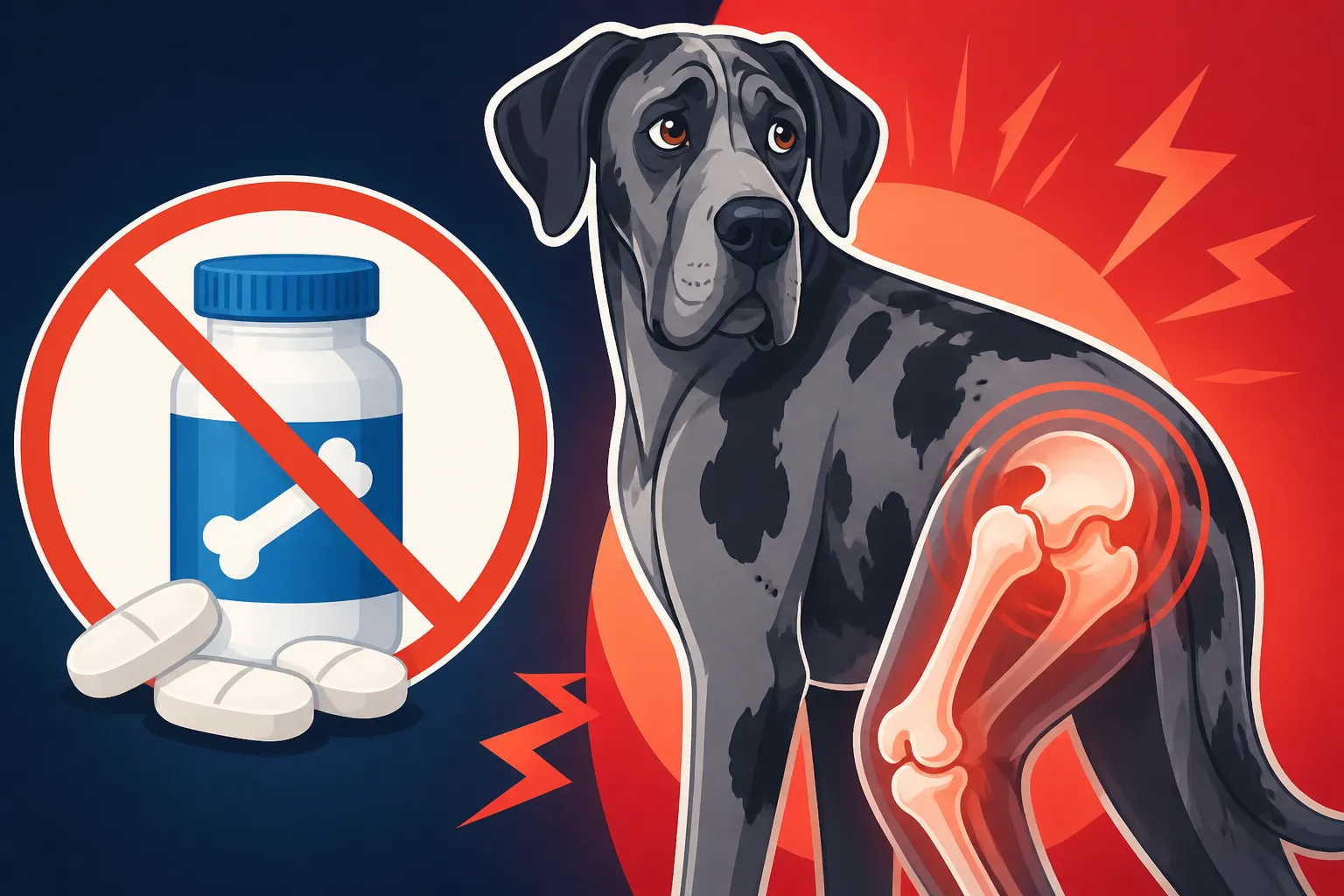
Why Calcium Supplements Damage a Great Dane
It's heartbreaking to realize that something we do with the best intentions for our beloved Great Dane puppies could actually be causing them harm. We all want our giants to grow up strong, healthy, and free of pain, and it's so easy to fall into the trap of thinking that if a little bit of something is good, more must be better. Unfortunately, when it comes to calcium supplementation in growing Great Danes, this couldn't be further from the truth. This comprehensive guide will walk you through exactly why giving extra calcium to your Great Dane puppy can be incredibly damaging, leading to serious orthopedic problems that can impact their entire life.
The Unique Growth Trajectory of a Great Dane
Bringing home a Great Dane puppy is an experience unlike any other. You watch in awe as they transform from a clumsy, adorable ball of fluff into a towering, magnificent dog in what feels like the blink of an eye. But this incredibly rapid growth, while fascinating, is also a period of immense vulnerability for their developing bodies.
The Astonishing Speed of Great Dane Puppy Development
Consider for a moment the sheer scale of growth involved. A tiny Great Dane puppy, often weighing around 1 to 2 pounds at birth, will typically reach 100 pounds or more by their first birthday, and many will continue to fill out until they are two years old. This isn't just a slight increase; it's an exponential explosion of growth, far surpassing what smaller breeds experience. A Chihuahua might gain a few pounds in its first year, but a Great Dane is adding ounces every single day, sometimes even a pound a week during peak growth spurts. This means their skeletal system, muscles, and organs are all working overtime, demanding precise nutritional input to develop correctly. The sheer speed places an extraordinary demand on their bodies, and any imbalance during this critical time can have amplified, devastating effects.
The Delicate Balance of Bone and Cartilage Formation
During this intense growth period, your Great Dane's bones aren't just getting longer; they're undergoing complex processes of ossification and remodeling. At the ends of their long bones, in areas called growth plates or physes, cartilage is constantly being laid down and then gradually replaced by bone. This process, known as endochondral ossification, is highly intricate and susceptible to disruption. Cartilage, which acts as a cushion in joints, is also rapidly developing. If this delicate ballet of bone and cartilage formation is thrown off, even slightly, it can lead to structural weaknesses that predispose your puppy to painful and often irreversible orthopedic conditions. This balance is crucial, and anything that pushes growth too fast or skews the mineral deposition can lead to defects rather than robust health.
Why 'Bigger, Faster' Is Detrimental for Giant Breeds
It's a common, understandable misconception that feeding a puppy extra nutrients, including calcium, will help them grow bigger and stronger. For a Great Dane, however, this thinking is dangerous. The goal for giant breed puppies is not maximal growth, but controlled, slow growth. Why a Great Dane Puppy Should Grow Slowly Pushing a Great Dane puppy to grow faster than its natural, healthy pace puts immense stress on their developing skeletal system. Their bones and cartilage aren't given enough time to mature and strengthen adequately before they are subjected to the increasing weight and demands of their rapidly enlarging frame. Instead of creating a robust structure, accelerated growth often results in weak, malformed bones and damaged cartilage, leading to serious and painful orthopedic issues that can plague them for life.
The Double-Edged Sword of Calcium in Great Dane Puppies
Calcium is undeniably essential for strong bones and overall health. We know this, and it’s why our instinct might be to ensure our growing puppies get plenty of it. But with Great Danes, the story isn't as simple as "more is better." In fact, an excess of calcium can be far more detrimental than a slight deficiency, completely derailing the body's natural regulatory systems and paving the way for serious health problems.
Calcium's Essential Role in Skeletal Health
Of course, calcium plays a fundamental role in your Great Dane's health. It's the primary mineral component of bones and teeth, giving them their strength and structure. Beyond that, it's vital for nerve transmission, muscle function, blood clotting, and heart health. In a healthy, growing puppy, calcium is absorbed from the diet, and its levels in the blood are tightly regulated by a sophisticated hormonal system involving parathyroid hormone (PTH) and calcitonin, working in conjunction with Vitamin D. When dietary calcium is appropriate, the body efficiently absorbs and utilizes what it needs, depositing it in the growing bones and maintaining stable blood levels. It's a remarkably efficient system designed to ensure proper development.
The Perils of Excess Dietary Calcium
The problem arises when we introduce too much calcium into a Great Dane puppy's diet. Unlike smaller breeds, giant breed puppies, particularly Great Danes, have a unique metabolic quirk: their bodies are not very good at down-regulating calcium absorption when faced with an excess. This means if you feed them more calcium, they tend to absorb more calcium, far beyond what they actually need. This uncontrolled absorption throws the entire delicate hormonal balance out of whack. Instead of building stronger bones, the excess calcium interferes with the normal growth plate closure, ossification processes, and cartilage development. It's like trying to build a house too fast with too much cement – the structure becomes rigid and brittle rather than properly formed and flexible. This isn't just about a slight imbalance; it's a systemic disruption that directly leads to architectural failures in the skeletal system. Whether Extra Calcium Damages a Great Dane
The Impact on Parathyroid Hormone and Vitamin D
When there's a chronic excess of calcium in the diet, your Great Dane puppy's body tries to compensate, but often in ways that are ultimately harmful. High calcium levels can suppress the production of parathyroid hormone (PTH), which normally helps regulate calcium and phosphorus in the blood and bone. Simultaneously, it can interfere with the metabolism of Vitamin D, which is crucial for calcium absorption and bone mineralization. This suppression and interference mean the body loses its ability to properly manage calcium, even if it's absorbing too much. The feedback loop gets jammed. Instead of finely tuning calcium deposition, the system starts depositing calcium haphazardly, particularly in growth plates and joint cartilage, where it causes inflammation and structural abnormalities. This creates a cascade of issues that can profoundly affect skeletal development, leading to pain and lameness.
Common Orthopedic Diseases Triggered by Calcium Overload
The consequences of feeding a Great Dane puppy too much calcium are not merely theoretical; they manifest as very real, often painful, and sometimes devastating orthopedic diseases. These conditions can result in chronic lameness, significant veterinary bills, and a diminished quality of life for your majestic companion. Understanding these issues is crucial to preventing them.
Hypertrophic Osteodystrophy HOD
Hypertrophic Osteodystrophy, mercifully shortened to HOD, is a painful inflammatory condition affecting the growth plates of long bones, most commonly seen in rapidly growing large and giant breed puppies like Great Danes. It's often referred to as "growing pains," but it's far more severe than the mild aches humans might experience. Puppies suffering from HOD typically develop lameness, swelling and heat around their joints (especially the wrists and ankles), fever, lethargy, and a reluctance to move. In severe cases, they can be completely unable to stand. While the exact cause is complex and multi-factorial, it's well-established that rapid growth, often exacerbated by high-calorie, high-calcium diets, plays a significant role. The excess calcium contributes to abnormal bone growth and inflammation in the metaphysis (the part of the bone next to the growth plate), causing intense pain. Imagine the equivalent of severe shin splints and swollen joints throughout your body as a growing child, only magnified by the puppy's size. Hypertrophic Osteodystrophy in a Great Dane
Osteochondritis Dissecans OCD
Osteochondritis Dissecans, or OCD, is another serious orthopedic disease linked to improper nutrition and rapid growth in Great Danes. This condition occurs when cartilage, instead of properly turning into bone in the joints, develops abnormally thick areas. These thickened areas of cartilage don't receive adequate nutrition and blood supply, causing them to weaken and, eventually, crack and detach from the underlying bone. The detached piece of cartilage, called a "flap," can then float freely within the joint space, causing immense pain, inflammation, and chronic lameness. Common sites for OCD include the shoulder, elbow, stifle (knee), and hock (ankle). Imagine a loose shard of bone constantly irritating a sensitive joint – that's what your puppy experiences. Often, surgical intervention is required to remove these cartilage flaps and smooth the joint surface, but even with surgery, long-term arthritis is a common sequela. The disruption of proper cartilage development during those early months, influenced heavily by mineral balance, sets the stage for this debilitating issue. Elbow Problems in a Fast-Growing Great Dane
Dysplasia of Hips and Elbows
Hip and elbow dysplasia are unfortunately well-known conditions in Great Danes, and while genetics play a significant role, environmental factors like nutrition and rapid growth are major contributors. In hip dysplasia, the ball and socket joint of the hip doesn't fit together properly, leading to laxity, instability, and eventually degenerative joint disease (arthritis). Elbow dysplasia is a complex condition encompassing several developmental abnormalities within the elbow joint, also leading to pain and arthritis. Excess calcium and accelerated growth contribute to these problems by disrupting the precise formation of joint cartilage and bone, preventing the tight, congruent fit required for healthy joints. Instead of smoothly gliding over each other, the bones within the joint rub and grind, leading to inflammation, pain, and irreversible damage. While you might inherit good genes for sound joints, feeding a puppy incorrectly can easily undermine that genetic potential, turning a potentially healthy dog into one with chronic pain and lameness. Great Dane Hips, Elbows and Growing Joints
Navigating the Nutritional Minefield: Avoiding Accidental Over-Supplementation
It’s not just about deliberately adding calcium supplements. Many well-meaning owners accidentally over-supplement their Great Dane puppies without even realizing it, simply by feeding the wrong type of puppy food or offering what they perceive as healthy treats. Navigating the world of dog food labels and common household items can feel like walking through a minefield, but understanding what to avoid is crucial for your puppy's long-term health.
The Misleading Nature of Generic Puppy Foods for Great Danes
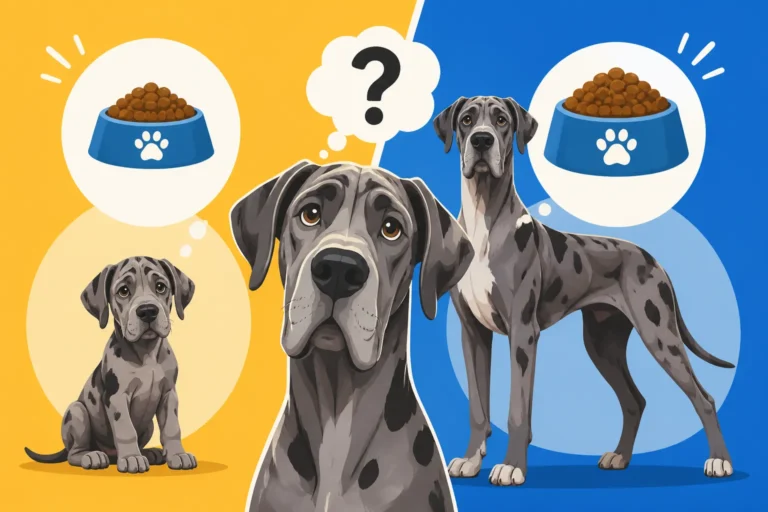
When you go to the pet store or browse online, you're faced with an overwhelming array of puppy foods. Many of these are excellent for smaller and medium-sized breeds, but they are often entirely unsuitable for a growing Great Dane. Generic puppy foods are typically formulated to promote rapid growth, which includes higher calorie counts and, crucially, higher calcium levels, to meet the needs of smaller dogs who finish growing much faster. However, as we've discussed, this accelerated growth and excess calcium are exactly what a Great Dane doesn't need. Feeding a regular puppy food to a Great Dane can inadvertently push their growth too quickly and flood their system with more calcium than their delicate growth plates can handle. This can set them up for the very orthopedic diseases we're trying to prevent. It's a frustrating paradox: what's good for a beagle puppy is potentially harmful to a Dane. Why Regular Puppy Food Hurts a Great Dane
Decoding Dog Food Labels: What Numbers Matter Most
The key to preventing calcium overload lies in becoming a savvy label reader. When choosing a food for your Great Dane puppy, look specifically for formulas designated as "large breed puppy" or "giant breed puppy." These foods are specifically designed with lower calorie densities and carefully controlled calcium levels to support slow, steady growth.
Here's what to look for:
| Nutrient | Ideal Range (Dry Matter Basis) | Why it Matters |
|---|---|---|
| Calcium | 1.0% to 1.5% | Too high leads to skeletal developmental issues. Too low (below 0.7%) can also cause problems, but excess is far more common with good quality foods. |
| Phosphorus | 0.8% to 1.2% | Works with calcium; the ratio is critical. |
| Ca:P Ratio | 1.1:1 to 1.3:1 (max 1.5:1) | This balance is paramount. Deviations can interfere with bone mineralization and absorption. |
| Protein | 23% to 26% | While some people fear high protein, it's generally calorie content, not protein, that drives rapid growth, as long as protein sources are digestible. |
| Fat | 12% to 16% | Contributes significantly to calorie density. Lower fat helps keep calorie intake moderate to prevent too-rapid growth and excess weight gain. |
| Calories (kcal/cup) | Moderate | Crucial for controlled growth. Avoid very high-calorie foods that encourage rapid weight gain, putting stress on developing joints. The Calorie Load a Great Dane Actually Needs |
Always calculate the dry matter basis (DMB) if the label provides "as fed" percentages. Most reputable brands that formulate for large breed puppies will already have these ratios dialed in. You can find many excellent large breed puppy formulas from brands like Purina Pro Plan, Royal Canin, or Eukanuba, which are widely available at pet supply stores or online retailers like Chewy and Amazon. Always double-check the specific formula you're purchasing. What to Look For on a Great Dane Puppy Food Bag
Hidden Calcium Sources: Treats, Dairy, and Table Scraps
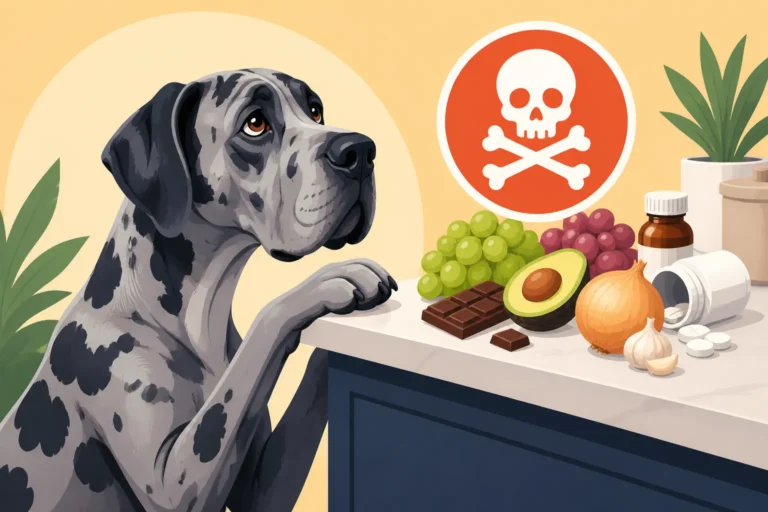
Even if you're feeding a perfectly formulated large breed puppy food, you can inadvertently undermine its careful balance through treats and table scraps. Many common treats, especially dental chews, milk bones, or even some joint supplements not specifically formulated for giant breed puppies, can contain significant amounts of calcium. Dairy products, while seemingly innocent, are also high in calcium and can easily push your puppy over the edge. Similarly, giving your Great Dane puppy leftover chicken bones (which are a choking hazard anyway) or other human foods rich in calcium adds to the total daily intake.
It's tempting to want to share everything with our growing pups, but with a Great Dane, vigilance is key. Every little bit of extra calcium from these hidden sources adds up and contributes to the overall burden on their regulatory system. Always read the labels on all supplementary items, including treats, and consult your vet before adding anything new to your puppy's diet. It’s better to err on the side of caution and stick to treats specifically designed for puppies and used in moderation.
The Cornerstone of Healthy Great Dane Puppy Nutrition
With all the potential pitfalls, it can feel overwhelming to ensure your Great Dane puppy gets the right nutrition. But it doesn't have to be complicated. The key lies in selecting the right foundational diet and working closely with your veterinarian. This proactive approach will set your puppy on the path to a lifetime of better health, minimizing the risks associated with improper growth.
Choosing the Right Large Breed Puppy Formula
The single most important decision you'll make regarding your Great Dane puppy's nutrition is selecting the right primary food. Forget the generic "all stages" or "regular puppy" formulas. Your Great Dane needs a diet specifically labeled for "large breed puppies" or "giant breed puppies." These formulations are carefully designed to support controlled growth by offering:
- Moderate Calorie Density: This prevents rapid weight gain and excessive strain on developing joints. We want slow and steady, not fast and furious growth.
- Controlled Calcium and Phosphorus Levels: As discussed, the precise balance is crucial. These formulas will have calcium percentages (on a dry matter basis) within the safe range of 1.0% to 1.5%, with an ideal calcium-to-phosphorus ratio of 1.1:1 to 1.3:1.
- Appropriate Protein and Fat Content: While it's a myth that high protein causes orthopedic issues, these foods will have good quality protein sources that support muscle development without being excessively high in overall calories.
When you're shopping, whether at your local pet supply store or browsing online on sites like Chewy or Amazon, make sure to scrutinize the bag and look for those keywords: "large breed puppy," "giant breed puppy," and the explicit nutritional analysis. Brands that invest in research for these specialized formulas are often your safest bet.
When (and if) to Consider Supplements
The short answer here is: generally, no, especially not calcium supplements. If you are feeding a high-quality, commercially prepared large breed puppy food, it is already nutritionally complete and balanced, including all the calcium your growing Great Dane needs. Adding extra calcium or any other mineral supplement without a diagnosed deficiency can throw off that delicate balance and cause more harm than good. It’s a common misconception that joint supplements are always beneficial for giant breed puppies. While some contain ingredients like glucosamine and chondroitin, which might be helpful in older dogs with established arthritis, their benefit for preventing growth disorders in puppies is not definitively proven, and if they contain unmonitored calcium, they could be detrimental. Always assume that the food itself is providing everything necessary.
Consulting Your Vet: The Only Source for Dietary Changes
Your veterinarian is your best partner in navigating your Great Dane puppy's nutritional journey. They have a deep understanding of giant breed specific needs and can assess your individual puppy's growth rate, body condition, and overall health. Before making any significant changes to your puppy's diet, introducing any supplements, or if you have concerns about their growth, always consult your vet. They can help you:
- Confirm the suitability of your chosen food: They can review the nutritional analysis of your selected large breed puppy food to ensure it meets appropriate guidelines.
- Monitor growth curve: Your vet can help you track your puppy's weight and height against healthy growth curves to ensure they're growing at an appropriate, slow pace.
- Address specific concerns: If your puppy shows any signs of lameness, pain, or unusual growth, your vet can conduct diagnostics and provide tailored advice.
- Discuss the need for specific supplements: In very rare cases, a vet might recommend a specific supplement for a diagnosed deficiency or condition, but this should never be done without their direct guidance.
Remember, every puppy is an individual, and while general guidelines are helpful, personalized advice from a veterinary professional is invaluable.
Practical Steps to Ensure Healthy Growth
Beyond carefully selecting the right food, there are several practical, everyday steps you can take to support your Great Dane puppy's healthy growth and minimize the risk of developmental orthopedic diseases. These actions complement proper nutrition and are crucial for nurturing a strong, resilient skeletal system.
Maintaining a Lean Body Condition
One of the most critical things you can do for your growing Great Dane puppy is to keep them lean, even a little on the thin side. It sounds counterintuitive when you see those big paws and want them to fill out, but excess weight puts undue stress on their rapidly developing joints and growth plates. Imagine carrying an extra 10-20 pounds during your own intense growth spurts – it would strain everything. For a Great Dane, this can translate into increased risk and severity of conditions like hip and elbow dysplasia, HOD, and OCD.
You should be able to easily feel your puppy's ribs with minimal pressure, and you should see a noticeable tuck-up at their waist when viewed from above and the side. If you have to press hard to feel ribs, or if they have a "barrel" shape, they are likely too heavy. Regularly check their body condition and adjust their food intake accordingly. It's far easier to add a little weight later if needed than to reverse the damage caused by carrying too much weight during crucial developmental stages. Keeping a Great Dane Lean for Its Joints
Controlled Exercise for Growing Paws and Joints
While Great Dane puppies need exercise to develop muscle tone and burn off puppy energy, the type of exercise is paramount. Avoid high-impact activities, forced running, jumping, and excessive stair climbing until their growth plates have closed, usually around 18-24 months of age. These activities can jar and damage delicate growth plates and joint cartilage.
Instead, focus on:
- Short, frequent walks on soft surfaces: Paved roads are hard on joints. Grass, dirt trails, or even a securely fenced yard are preferable.
- Free play: Allow your puppy to play at their own pace in a safe, controlled environment. They'll stop when they're tired.
- Gentle swimming: If introduced safely and in warm water, swimming can be excellent low-impact exercise for muscle development without stressing joints.
- Avoid over-exercising: A Great Dane puppy's enthusiasm can often outweigh their physical endurance. It's your job to ensure they don't overdo it. Just because they can run for an hour doesn't mean they should.
Structured, controlled exercise helps build muscle to support joints, while excessive or inappropriate exercise can accelerate wear and tear, contributing to long-term orthopedic issues.
Regular Weight and Growth Monitoring
Keeping a close eye on your Great Dane puppy's growth isn't about pushing them to maximum size, but rather ensuring they are growing at a healthy, consistent rate. Regular weigh-ins (weekly or bi-weekly initially) can help you quickly spot if they're gaining weight too rapidly or, conversely, if they're not thriving.
You don't need to stress over exact measurements every day, but having a general idea of your puppy's weight gain and comparing it to average Great Dane growth charts can be reassuring. More importantly, this monitoring allows you to make subtle adjustments to their food intake or exercise routine if they seem to be veering off course from a healthy, lean growth trajectory. Your veterinarian will also track this at their regular check-ups. Focus on the overall picture of a healthy, active puppy with good muscle tone, rather than simply hitting weight milestones, which can sometimes be misleading if growth is too fast. What a Great Dane Puppy Should Weigh at Four Months
Dispelling Common Calcium Myths
The desire to provide the best for our Great Danes often leads us to seek out information, but sometimes that information is outdated, misunderstood, or simply incorrect. When it comes to calcium and giant breed puppies, there are several pervasive myths that need to be thoroughly debunked to protect our gentle giants.
The "More Bone, Stronger Bone" Fallacy
One of the most stubborn myths is the idea that feeding extra calcium will result in denser, stronger bones, making them less prone to fractures or joint issues. This seems logical on the surface: bones are made of calcium, so more calcium equals more bone, right? Unfortunately, for Great Dane puppies, this is a dangerous oversimplification. As we've discussed, their bodies absorb calcium indiscriminately, meaning an excess doesn't just build more bone; it disrupts the delicate process of bone and cartilage formation.
Instead of perfectly laid down, resilient bone, you can end up with rapidly formed, structurally unsound bone. The growth plates, which are still soft cartilage, become prematurely mineralized or develop irregularities, leading to the painful conditions like HOD and OCD. It's not about the quantity of calcium, but the controlled and balanced incorporation of it into a properly paced growth process. Think of it like a finely tuned engine – adding too much of any one fluid, even an essential one, can cause it to seize up.
Why Human Supplements Are a No-Go
It's tempting to think that if a human calcium supplement is good for us, it must be good for our dog. Maybe you've seen an elderly relative taking calcium for bone density and thought it could help your growing puppy. This is a resounding no. Human supplements are formulated for human metabolism and often contain extremely high doses of calcium that are far too much for even an adult Great Dane, let alone a growing puppy.
Furthermore, human supplements can contain other ingredients, sweeteners, or flavorings that are not only unnecessary but potentially toxic to dogs. Xylitol, for example, is a common sweetener that is highly toxic to dogs, even in small amounts. Always remember that canine physiology is different from human physiology, and what's safe and beneficial for us can be harmful to our pets. Never administer human medications or supplements to your dog without explicit veterinary instruction and dosing.
The Misconception of Calcium for Fast Recovery
Another myth that sometimes circulates, particularly among well-meaning but misinformed individuals, is that if a puppy does show signs of orthopedic issues, a boost of calcium will help them recover faster. This is incredibly dangerous thinking. If a Great Dane puppy is already showing signs of HOD, OCD, or other growth plate issues, it's highly likely that excessive calcium has been a contributing factor. Adding more calcium would be pouring gasoline on a fire.
Recovery from these conditions often involves anti-inflammatory medications, pain management, controlled exercise, and, most crucially, a return to a properly balanced, large breed puppy diet that controls calcium intake. The focus shifts to reducing inflammation, managing pain, and allowing the body to heal itself under controlled conditions, not on adding more of the very substance that may have contributed to the problem in the first place. Trust your veterinarian's treatment plan, which will prioritize correcting the underlying imbalances, not exacerbating them.
The Long-Term Ramifications for Your Gentle Giant
While the immediate pain and lameness caused by calcium-induced growth disorders are heartbreaking enough, the consequences often extend far beyond puppyhood. Mistakes made in those crucial early months can set the stage for a lifetime of chronic issues, significantly impacting your Great Dane's quality of life and placing a considerable burden on you, their loving owner.
Increased Risk of Arthritis and Joint Degeneration
The abnormal bone and cartilage development that results from calcium overload and rapid growth doesn't just go away once the puppy stops growing. The structural irregularities, micro-traumas, and inflammation caused by conditions like HOD, OCD, and dysplasia invariably lead to early-onset and more severe degenerative joint disease, or arthritis. Joints that weren't formed correctly are predisposed to abnormal wear and tear. Cartilage that was damaged or flapped off during growth never fully regenerates to its original, smooth state.
As your Great Dane ages, sometimes as early as two or three years old, these previously compromised joints will begin to show signs of arthritis. They'll experience stiffness, pain, reduced range of motion, and a reluctance to engage in activities they once enjoyed. This means a shorter period of comfortable mobility and a longer period of managing chronic pain, which is a difficult reality for both the dog and their family. Arthritis in a Six-Year-Old Great Dane
Lifetime Management of Chronic Pain
A Great Dane suffering from orthopedic issues stemming from puppyhood nutrition will likely face a lifetime of pain management. This often involves daily medications, such as non-steroidal anti-inflammatory drugs (NSAIDs), joint supplements (chosen carefully with vet guidance to avoid calcium), and potentially other pain relievers. These medications come with their own set of considerations, including potential side effects on the liver and kidneys over prolonged use, requiring regular monitoring through blood work.
Beyond medication, chronic pain management can involve physical therapy, hydrotherapy, chiropractic care, and even acupuncture, all aimed at improving comfort and mobility. This isn't just a temporary fix; it's an ongoing commitment to mitigating discomfort and maintaining the best possible quality of life for your beloved companion. The goal shifts from thriving to simply being comfortable, which can be an emotionally taxing journey for owners.
The Emotional and Financial Toll on Owners
Witnessing your magnificent Great Dane, who should be enjoying their prime, struggling with chronic pain is incredibly distressing. There's the guilt of knowing that some of these issues could have been prevented with different early care, combined with the heartbreak of seeing them suffer. The emotional toll of managing a dog with chronic orthopedic problems is immense.
Financially, the costs associated with diagnosing and managing these conditions can be staggering. Diagnostic imaging (X-rays, CT scans, MRI), specialist consultations, surgeries (like for OCD), ongoing medications, and rehabilitative therapies can quickly add up to thousands, even tens of thousands of dollars over a Great Dane's lifetime. This isn't just an occasional vet visit; it's often a continuous stream of expenses, making proactive prevention through proper nutrition and growth management not just medically sound, but also a financially responsible choice. Many owners find themselves unprepared for these expenses, leading to difficult decisions about their pet's care. The Short Expensive Life of a Great Dane
Disclaimer
This article is for general informational purposes only and does not constitute professional advice. Laws, prices and regulations vary by location and change over time. Consult a qualified professional for guidance on your specific situation.