Bones Large Enough for a Great Dane to Chew
You’ve got this magnificent Great Dane, a gentle giant who probably thinks he’s a lapdog, but when it comes to chew bones, suddenly he’s a demolition expert. Finding something that lasts more than five minutes and won't splinter into dangerous shards is a constant headache for Great Dane owners. It's a real challenge to provide a satisfying, safe chewing experience for such a powerful dog, and you're not alone in feeling like you're constantly searching for the "perfect" bone. This guide is here to help you navigate the world of chew bones, ensuring your big pal gets to chew safely and happily.
The Tremendous Force of a Great Dane's Jaws
Let's be honest, a Great Dane's mouth is a marvel of engineering. When they decide to chew, it's not a gentle gnawing; it's a serious commitment. Many owners get frustrated spending good money on products advertised for "large breeds" only to find them decimated in minutes. This isn't just about wasting money; it's a genuine safety concern. A bone that's too small, too brittle, or made of inappropriate material can quickly become a choking hazard or cause serious internal injury.
Understanding Your Dane's Chewing Style
Not all Great Danes chew alike, but they all possess incredible jaw strength. Some might be more "gulpers," trying to swallow pieces that are too large, while others are meticulous "shredders," breaking down items bit by bit. Understanding your individual dog's approach to chewing is crucial. For a powerful chewer, even a bone advertised for a "large dog" might be insufficient. You're not just looking for something big, but something structurally sound that can withstand sustained pressure from powerful molars. Think about how quickly they can go through a standard rawhide or a flimsy plastic toy – it's often a testament to their strength, not a flaw in the product itself.
Why Off-the-Shelf "Large" Bones Often Fail
It’s easy to walk into a pet store and grab something labeled "large" or "extra-large" for your Great Dane. The problem is, for a breed that can easily weigh over 100 pounds, "large" means something entirely different than it does for a Labrador or a German Shepherd. Many commercially available bones, especially processed or flavored ones, are designed for dogs with moderate chewing power. They might be too porous, too brittle, or simply too small to withstand a Great Dane's focused attention. When these bones break apart, they often create sharp edges or small, ingestible pieces that can pose a significant risk to your dog's digestive system. This is where the frustration really kicks in – you're trying to do right by your dog, but the market isn't always set up for true giant breeds.
Types of Bones and Chews for Your Giant
When it comes to providing safe and satisfying chewing options for your Great Dane, not all bones are created equal. It's vital to differentiate between safe, appropriate chews and those that pose risks. Your goal is to provide mental stimulation, dental benefits, and pure chewing pleasure without ending up at the emergency vet.
Raw, Uncooked Recreational Bones
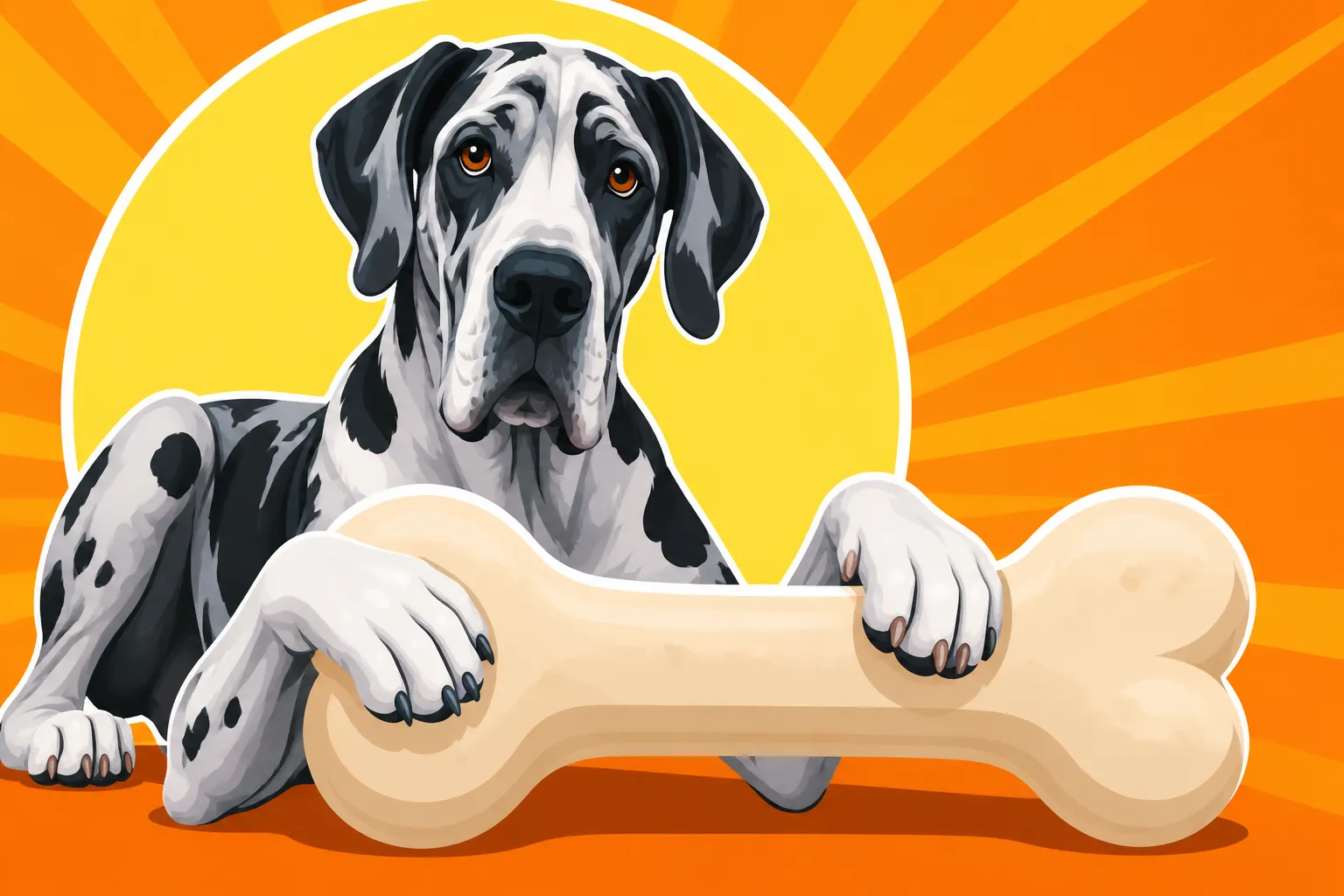
When people talk about giving dogs "bones," they often picture the raw variety. For Great Danes, large, raw, weight-bearing bones from cattle can be a good option. Think of beef femurs, knuckles, or hip bones. These are typically dense and difficult for a dog to splinter, designed to be gnawed on for the marrow and the meaty bits, not entirely consumed. They offer fantastic mental enrichment and can help clean teeth, but they do come with considerations.
Pros:
- Natural & Satisfying: Many dogs absolutely love the taste and texture of raw bones.
- Dental Health: The act of gnawing helps scrape tartar from teeth, contributing to Keeping a Great Dane's Very Large Mouth Clean.
- Mental Stimulation: Keeps your Dane engaged for a long time, reducing boredom.
Cons:
- Messy: Marrow and raw meat can make a significant mess, especially indoors.
- Bacterial Risk: Raw bones can carry bacteria like Salmonella or E. coli, posing risks to both dogs and humans. Proper handling and sanitation are essential.
- Potential for GI Upset: Some dogs, particularly those not accustomed to raw food, might experience digestive upset.
- Sourcing: Finding consistently high-quality, appropriately sized raw bones can be tricky. You want dense, non-splintering options, which usually means large beef bones.
Always supervise your Great Dane when they're chewing raw bones, and remove the bone once the majority of the meat and marrow is gone, or if it becomes small enough to be swallowed. Never give cooked bones, which we'll discuss more later.
Durable Non-Edible Chews
For a less messy and often safer option, many Great Dane owners turn to durable non-edible chews. Brands like Nylabone and Benebone specifically design products for aggressive chewers, often with "souper" or "monster" sizes that are appropriate for a Great Dane. These are designed to be chewed on, not consumed.
Nylabone: Nylabone offers a range of hard nylon bones in various shapes and flavors. For a Great Dane, you'll want their "Souper" or "Monster" sizes. These are often textured to help with dental cleaning and are designed to wear down slowly over time into fine, safe particles. The key is to pick one that is truly massive and heavy.
Benebone: Benebone chews are made from nylon and infused with real flavors like bacon, chicken, or peanut butter. They often have ergonomic shapes, like their wishbone or dental chew, making them easy for dogs to hold. Like Nylabones, you need the largest size available.
Pros:
- Safer: Less risk of splintering or large pieces breaking off compared to some natural bones.
- Less Messy: No raw meat or marrow to clean up.
- Dental Benefits: Many designs incorporate textures that help clean teeth.
- Long-Lasting: Good quality, appropriately sized non-edible chews can last a Great Dane for weeks or even months.
Cons:
- Can Be Too Hard: For some dogs, extremely hard nylon chews can contribute to tooth wear or even fractures, especially if they are enthusiastic power chewers. Always monitor your dog's teeth.
- Not Consumable: They don't offer any nutritional value, and small pieces should not be ingested. Replace them when they get too small or show significant wear.
- Lack of Interest: Some dogs might find them less enticing than natural chews.
These synthetic chews can be excellent for promoting good chewing habits and providing a safe outlet for your Great Dane's oral fixation, particularly when you consider The Manners a Great Dane Needs Before It Grows. You can find a huge selection of these on platforms like Chewy or Amazon, where you can easily filter by "giant breed" to see the biggest options.
Dental Chews and Soft Chews (with caution)
While dental chews are excellent for many dogs, for a Great Dane, their "dental cleaning" benefits are often short-lived. A typical dental chew designed to last for a few minutes with a medium-sized dog will be gone in seconds with a Great Dane. They often simply gulp them down.
Pros:
- Freshens Breath: Many contain ingredients designed to combat bad breath.
- Added Nutrients: Some offer supplemental vitamins or ingredients.
Cons:
- Very Short-Lived: For a Great Dane, these are more like a quick treat than a sustained chew. They won't offer much in the way of prolonged dental cleaning or mental stimulation.
- Calorie Content: These can add a significant number of calories to your dog's diet, which needs to be accounted for, especially if you're trying to keep Whether a Great Dane Puppy Should Be Kept Lean.
- Choking Hazard: If gulped too quickly, even large dental chews can pose a choking risk.
It's best to view large dental chews as a very occasional treat for your Great Dane rather than a primary chewing solution. They simply don't provide the long-lasting engagement that a giant breed requires. You can find large boxes of Treats Sized for a Great Dane on Amazon or Chewy, but manage expectations for how long they'll actually last.
Safety First: What to Avoid for Your Great Dane
When you're dealing with a dog the size of a Great Dane, safety isn't just a suggestion; it's a non-negotiable rule. Their immense size and powerful jaws mean that what might be a minor risk for a smaller dog can be life-threatening for a Dane. Knowing what to absolutely avoid is just as important as knowing what to choose.
The Absolute No-Go: Cooked Bones
This is perhaps the most critical rule of all: never give your Great Dane cooked bones. This includes bones from your dinner plate, like leftover chicken, pork, or beef ribs. The cooking process, whether boiling, roasting, or grilling, changes the molecular structure of the bone, making it brittle and prone to splintering into sharp shards. These shards can cause severe damage internally, leading to:
- Choking: Sharp pieces can get lodged in the throat.
- Internal Punctures: Splinters can perforate the esophagus, stomach, or intestines.
- Obstructions: Bone fragments can block the digestive tract, requiring emergency surgery.
- Constipation: Even if they don't splinter, cooked bones can become rock-hard in the digestive system, leading to severe constipation.
Many a concerned Great Dane owner has rushed to the emergency vet because their beloved pet got hold of a cooked bone, and the resulting vet bill and anxiety are simply not worth the risk. Always dispose of cooked bones safely where your Dane cannot access them.
Raw Bones That Are Still Dangerous
While raw, weight-bearing bones can be appropriate, not all raw bones are safe. Avoid small, brittle raw bones, especially those from poultry or pork. Even though they're raw, they can still present risks:
- Small Poultry Bones: Chicken, turkey, or duck bones, even raw, are often too small and can be easily swallowed whole, leading to choking or blockages. Their structure is not designed for sustained, heavy chewing.
- Pork Bones: Some pork bones, even large ones, can be quite dense but also prone to splintering in unusual ways. It’s generally safer to stick with large beef bones for raw recreational chewing.
- Ribs: Whether beef or pork, raw ribs are often consumed too quickly and can lead to digestive upset or shards.
The general rule is: if it's small enough to be swallowed whole or could easily splinter into sharp pieces, it's not safe for a Great Dane. Always opt for the densest, largest, and least likely-to-splinter raw bones, like large beef marrow bones, knuckles, or hip bones, and always supervise.
Other Chew Toys to Approach with Extreme Caution
Beyond bones, there are other types of chews that require careful consideration for a Great Dane:
- Rawhide: While many rawhide products are available in large sizes, they can be problematic. When wet, rawhide softens and can be torn off in large, gummy pieces that a Great Dane might swallow. These pieces can swell in the stomach or intestines, causing severe blockages that often require surgery. If you do offer rawhide, choose thick, pressed rawhide that is difficult to break apart, and always supervise closely. Remove it immediately if it becomes soft and pliable.
- Hooves & Antlers: Hooves can splinter, and their smell can be quite strong. Antlers are extremely hard, and while they last a long time, they pose a significant risk of tooth fractures for powerful chewers like Great Danes. A chipped or broken tooth can be incredibly painful and expensive to fix, potentially leading to a Dental Work on a Great Dane procedure that you weren't expecting. It's often better to avoid these entirely.
- Soft Plastic/Rubber Toys: Many standard dog toys, even those marketed as "durable," simply aren't up to the task for a Great Dane. They can be torn apart quickly, and ingested pieces of plastic or rubber can cause blockages. Only choose extremely tough, well-reviewed rubber toys specifically designed for power chewers. Brands like Kong are often a good bet, but again, always opt for their largest, most durable options.
Remember, the goal is always safety and satisfaction. If you have any doubt about a bone or chew, it's always best to err on the side of caution and choose something else.
Smart Sourcing and Best Practices for Great Dane Chews
Finding the right chews for your Great Dane can feel like a quest, but knowing where to look and how to manage the chewing experience makes all the difference. It's about being informed and strategic to keep your big companion happy and healthy.
Where to Find Appropriate Bones and Chews
For those substantial raw recreational bones, your best bet is often local. Building a relationship with a trusted local butcher can be incredibly valuable. They often have access to large beef bones like femurs, knuckles, or hip bones that are ideal for Great Danes. Make sure to specify that you need raw, uncooked bones for your dog. Sometimes, specialty pet stores that focus on raw feeding or natural products will also carry these. They can often provide guidance on the safest options and proper handling.
For durable non-edible chews, online retailers are often a fantastic resource because of their sheer variety and filtering options. Websites like Chewy and Amazon allow you to specifically search for "giant breed" or "XXL" dog chews, making it easier to find appropriate sizes from brands like Nylabone, Benebone, and Kong. Reading customer reviews, particularly from other Great Dane owners, can also give you a good idea of a product's real-world durability. Always double-check the product dimensions to ensure it's truly substantial enough for your Dane.
Introducing New Chews and Establishing a Routine
When introducing a new bone or chew, supervise your Great Dane closely. Watch how they interact with it. Do they try to break off huge chunks? Are they gentle gnawers? This initial observation is crucial for determining if the chew is truly safe and appropriate. Some dogs get overly excited with new things and might try to swallow pieces too large.
Establish a chewing routine. This can help manage mess, ensure safety, and make the chew last longer. For raw bones, you might designate an outdoor "chew zone" or use a washable mat indoors. Limit chew sessions to 15-30 minutes, especially for edible chews, to prevent overconsumption or excessive wear on teeth. Regular rotation of different types of safe chews can also keep your Dane mentally engaged and prevent boredom, while also protecting against repetitive strain on specific teeth. This also goes hand-in-hand with The Feeding Routine That Lowers Great Dane Bloat Risk – a consistent and managed approach to all things consumed.
Monitoring and Replacing Chews
Regardless of the type of bone or chew you choose, constant monitoring and knowing when to replace it are paramount.
Raw Bones: Once most of the meat and marrow are gone, and the bone starts to look dry and brittle, or if any pieces appear to be splintering, it's time to discard it. Never let a raw bone become small enough for your Great Dane to swallow whole.
Non-Edible Chews: Inspect nylon or rubber chews regularly for signs of excessive wear. If large pieces are breaking off, if it's worn down to a nub, or if it has sharp edges that could cut your dog's mouth, it's time for a new one. Remember, these are not meant to be consumed, so if your dog is managing to ingest significant chunks, it's too soft or not appropriate for their chewing style.
Being diligent about inspecting and replacing chews will save you a lot of heartache (and vet bills) in the long run. When you're dealing with a breed prone to various health issues, understanding their needs from puppyhood to The Great Dane Years That Count as Senior is part of responsible ownership.
| Chew Type | Pros | Cons | Great Dane Suitability | Safety Notes |
|---|---|---|---|---|
| Raw Beef Femur/Knuckle | Excellent mental stimulation, good for dental cleaning, highly palatable. | Messy (marrow/meat), bacterial risk, can lead to GI upset if dog isn't used to raw, potential for tooth fracture if dog chews too aggressively or bone is too hard/dense relative to the dog's tooth health. | High (with supervision) | ONLY raw, UNCOOKED bones. Choose largest, densest weight-bearing bones. Supervise closely. Discard when meat/marrow gone or bone shows signs of splintering. |
| Nylabone/Benebone (XXL) | Very durable, long-lasting, less messy, often infused with appealing flavors, good for dental health via texture. | Can be too hard for some Danes, leading to tooth fractures (especially molars). Not consumable; small ingested pieces are generally fine but large chunks are not. | High (monitor teeth) | Choose "Souper" or "Monster" sizes. Replace if excessively worn, sharp edges form, or dog manages to break off large pieces. Monitor for tooth wear or fractures. |
| KONG Extreme | Virtually indestructible rubber, can be stuffed with treats for mental enrichment, good for redirecting destructive chewing. | Not a "bone" per se, but an excellent chew toy. Some dogs may lose interest once treats are gone. | High | Ensure you buy the "Extreme" version in the largest size. Inspect regularly for damage and replace if pieces are torn off. |
| Large Dental Chews | Can help with breath and some plaque, generally palatable. | Consumed very quickly by Great Danes (more of a treat), high calorie count, minimal long-term dental benefit for a giant breed. | Moderate (as a treat) | Choose largest size available. Factor into daily calorie intake. Supervise to ensure dog doesn't gulp large pieces and choke. Not a substitute for actual dental care or proper chewing. |
| Cooked Bones | (N/A) | Splinters easily into sharp shards, can cause choking, internal punctures, or blockages, severe constipation. | NEVER | ABSOLUTELY AVOID. Never give cooked bones of any kind (chicken, beef, pork, etc.). |
| Rawhide (Thick, Pressed) | Long-lasting chew for some, satisfies natural urge to chew. | Can soften and be torn off in large, gummy pieces, leading to choking or digestive obstructions. Quality varies greatly. | Low (high risk) | If used, choose only thick, pressed rawhide, and SUPERVISE CLOSELY. Remove immediately if it becomes soft or dog tears off large pieces. Many owners choose to avoid entirely due to the risks. |
| Antlers | Very long-lasting, natural product. | Extremely hard, significant risk of tooth fractures (chipped or broken teeth). Expensive dental bills can result. | Low (high risk) | Generally not recommended for Great Danes due to high risk of tooth damage. If you must use, choose softer varieties (e.g., split antlers that expose marrow) and supervise. |
This table provides a quick overview, but always remember to use your judgment based on your individual Great Dane's chewing habits and overall health.
Disclaimer
This article is for general informational purposes only and does not constitute professional advice. Laws, prices and regulations vary by location and change over time. Consult a qualified professional for guidance on your specific situation.