Treats Sized for a Great Dane
Great Danes are magnificent, gentle giants, but finding treats that truly satisfy their enormous appetites and powerful jaws without posing a choking hazard or disappearing in a single gulp can feel like a Herculean task. Regular dog treats just don't cut it, leaving owners frustrated and Danes unimpressed. This comprehensive guide is here to help you navigate the often-overwhelming world of dog treats, specifically tailored for your colossal canine, ensuring their treats are safe, appropriate, and genuinely enjoyable.
The Unique Challenges of Treating a Great Dane
Anyone who has welcomed a Great Dane into their home quickly realizes that "large breed" often means something entirely different when discussing a Dane. Their sheer size, strength, and boundless enthusiasm present a unique set of considerations, especially when it comes to something as simple as a treat. It's not just about giving them more treats; it's about giving them the right treats.
Size and Swallowing Hazards
One of the biggest concerns for any Great Dane owner is the risk of choking or intestinal blockages. A treat that might be perfectly safe for a Golden Retriever or even a Labrador can become a dangerous morsel for a Dane. Their enormous mouths mean they can often swallow treats whole that other dogs would meticulously chew. Imagine giving a standard dental chew meant for a 50-pound dog to your 150-pound Dane. It's likely to vanish in a single gulp, creating a potential obstruction in their esophagus or stomach.
This isn't just a hypothetical scenario; it's a very real danger. We've all seen our Danes gulp down food with impressive speed. Small, hard treats are especially risky, as they can lodge painfully and dangerously. Even larger pieces that aren't truly Dane-sized can be swallowed with minimal chewing, leading to discomfort or an emergency trip to the vet. This is why when we talk about The Lifetime Bloat Risk in a Great Dane, every aspect of their oral intake, including treats, needs careful consideration to prevent rapid consumption or stomach upset.
Mighty Chewing Power
Beyond the risk of swallowing things whole, Great Danes possess incredibly powerful jaws. If you've ever watched your Dane dismantle a "durable" toy in minutes, you know exactly what I mean. Many treats marketed as "long-lasting" simply don't stand a chance against a determined Great Dane. This means you're not only constantly buying new treats but also risking them ingesting large chunks too quickly, or worse, splintered pieces from inappropriate chews.
Finding a treat that provides genuine chewing satisfaction without being demolished instantly is a quest many Dane owners are on. The goal is to engage their natural chewing instincts in a safe and productive way, rather than having them consume something so quickly it doesn't even register as a treat. This powerful chewing also means you need to be mindful of dental health; a treat that is too hard can cause broken teeth, leading to costly dental procedures and pain for your beloved companion.
Dietary Considerations and Sensitivities
Great Danes, like many large and giant breeds, can have sensitive digestive systems or specific dietary needs. This might mean avoiding certain ingredients that cause gas, diarrhea, or allergic reactions. Common culprits can include corn, soy, wheat, or certain protein sources. Because they burn through their years faster than smaller breeds, proper nutrition and avoiding inflammatory ingredients is key to their overall well-being. Why a Great Dane Ages Faster Than Smaller Dogs makes it even more important to be mindful of everything they ingest.
When choosing treats, it's not just about size and durability, but also about the quality and digestibility of the ingredients. Many commercial treats are loaded with fillers, artificial colors, and preservatives that offer little nutritional value and can upset a Dane's stomach. For dogs prone to conditions like bloat, ensuring treats are easily digestible and don't cause excessive gas production is another layer of concern.
Types of Treats That Stand Up to a Great Dane
Navigating the treat aisle can be overwhelming, but focusing on types specifically designed to withstand a Great Dane's unique attributes can make it easier. We're looking for substance, safety, and satisfaction.
Durable Chews for Extended Enjoyment
For those times when you want your Dane to settle down and enjoy a good, long chew, durable options are key. These aren't meant for quick consumption but rather for sustained gnawing.
- Thick Bully Sticks: Not all bully sticks are created equal. For a Great Dane, you need the thickest, longest ones you can find. Look for brands that offer "jumbo" or "braided" varieties. These are single-ingredient chews, usually beef pizzle, which makes them generally digestible and palatable. Always supervise your Dane with bully sticks, especially as they get to the last few inches, to prevent them from swallowing a piece too large. You can often find great selections of these on Amazon or from dedicated pet supply sites.
- Himalayan Yak Chews: Made from hardened cheese, these chews can be incredibly durable. They are lactose-free and relatively low in odor. Again, size matters here; opt for the largest available. Once they get small enough to be a choking hazard, you can often microwave the leftover piece to puff it up into a softer, safer treat.
- Natural Bones (with extreme caution): Some large, raw, recreational bones (like beef femurs or knuckle bones) can be offered under strict supervision. The key here is recreational – they are for chewing on, not for consumption. Never give cooked bones, as they can splinter dangerously. However, even raw bones carry risks of fractured teeth, contamination, or digestive upset. For this reason, many Great Dane owners prefer to avoid them entirely, or only offer them sparingly and with an abundance of caution, ensuring the bone is large enough not to be ingested. It’s a good idea to consider your Dane's individual chewing style and discuss any bone-feeding plans with your vet, especially if you're concerned about issues like Bone Cancer in a Great Dane which might make hard chews risky.
Training Treats and High-Value Rewards
Even the biggest dogs need training, and effective training relies on high-value, appropriately-sized treats. While you won't be using a tiny pea-sized treat, you also don't want a massive biscuit every time your Dane sits.
- Larger, Soft, Easily Breakable Treats: Look for treats that are soft enough to break into several pieces, allowing you to give multiple rewards without overfeeding. Examples include soft jerky treats, cooked chicken or liver (cut into decent chunks), or specific training treats designed for larger dogs. Ollie offers fresh food options that can be cut into high-value training treats, providing excellent motivation and quality ingredients.
- High-Value Meat-Based Treats: For particularly challenging training scenarios or recall, real meat is often the best motivator. Small cubes of cheese, cooked chicken, beef, or commercial freeze-dried meat treats are usually winners. When teaching a giant breed like a Great Dane their manners, especially something like Stopping a Great Dane Jumping Up on People, high-value rewards are indispensable.
Frozen and DIY Options
Sometimes the best treat isn't something store-bought, but something you prepare yourself, especially to extend the enjoyment or provide a cooling snack.
- Kong-Stuffed Delights: A classic for a reason! An appropriately-sized, extra-large Kong stuffed with dog-safe peanut butter, plain yogurt, canned pumpkin, or even a mix of their kibble soaked in broth, then frozen, can provide a good 30 minutes or more of quiet engagement for a Great Dane. Freezing makes the treat last significantly longer, offering mental stimulation as they work to get every last bit out.
- Frozen Fruits and Vegetables: Many Danes enjoy frozen banana slices, apple chunks (seeds removed!), green beans, or even carrots. These are low in calories and provide a refreshing crunch. They can be a fantastic way to offer a treat without adding excessive calories, which is important when you're trying to keep a Great Dane lean for their joints, especially their Great Dane Hips, Elbows and Growing Joints. Just be sure to introduce new foods slowly to avoid digestive upset.
- Ice Blocks with Treats: For a hot day, a large block of ice with a few kibble pieces or small dog-safe treats frozen inside can be a huge hit. It's hydrating, cooling, and provides extended entertainment as they lick and melt the ice to get to the goodies.
Dental Chews and Their Limitations
While dental chews are popular, their effectiveness for Great Danes can be a bit of a mixed bag.
- Large Breed Dental Chews: Some brands offer dental chews specifically for dogs over 50 or 75 pounds. These are usually larger and tougher than standard dental chews. They can help with plaque and tartar, but often they are still consumed too quickly by a Great Dane to provide significant dental benefit. Think of them more as a supplementary snack than a primary tool for oral hygiene.
- Hardness vs. Safety: Dental chews need to be hard enough to scrape teeth but not so hard that they risk breaking them. Always check the chew's flexibility – if you can't indent it with your thumbnail, it might be too hard. While Great Danes have powerful jaws, their teeth are still susceptible to fractures from overly hard items. For consistent dental care, nothing beats regular brushing or professional veterinary dental cleanings. If you're wondering Keeping a Great Dane's Very Large Mouth Clean, dental chews can be part of a strategy, but not the whole solution.
What to Look for (and Avoid) in Great Dane Treats
When you're standing in front of the massive display of treats, how do you make the best choice for your gentle giant? It comes down to a few critical factors that prioritize health and safety.
Ingredient Quality and Safety
Just like with their regular meals, the quality of ingredients in your Great Dane's treats matters immensely. You want to fuel their large bodies with wholesome nutrition, not empty calories or questionable additives.
- Whole, Recognizable Ingredients: Look for treats where the first few ingredients are real meat (chicken, beef, lamb, fish), vegetables, or fruits. Avoid products where the primary ingredients are ambiguous "meat meal" (unless specifically defined, like "chicken meal"), corn, soy, or wheat fillers. For dogs with sensitivities, single-ingredient treats are often the safest bet. Many natural brands available through Chewy or specialty pet stores focus on high-quality, limited ingredients.
- No Artificial Additives: Steer clear of artificial colors, flavors, and chemical preservatives (like BHA, BHT, ethoxyquin). These offer no nutritional benefit and can sometimes trigger allergies or digestive issues in sensitive dogs. Natural preservatives like mixed tocopherols (Vitamin E) are preferable.
- Be Mindful of Calorie Density: Treats, especially larger ones, can quickly add up in calories. A Great Dane may eat Feeding an Adult Great Dane Six to Ten Cups of food a day, but even so, treats contribute to their overall intake. Opt for lower-calorie options when training heavily, or for daily rewards, to help maintain a healthy weight. Remember, obesity puts extra strain on their already stressed joints.
Appropriate Size and Texture
This is where the "Great Dane" aspect truly comes into play. Forget treats designed for medium or even large dogs; your Dane needs giant treats.
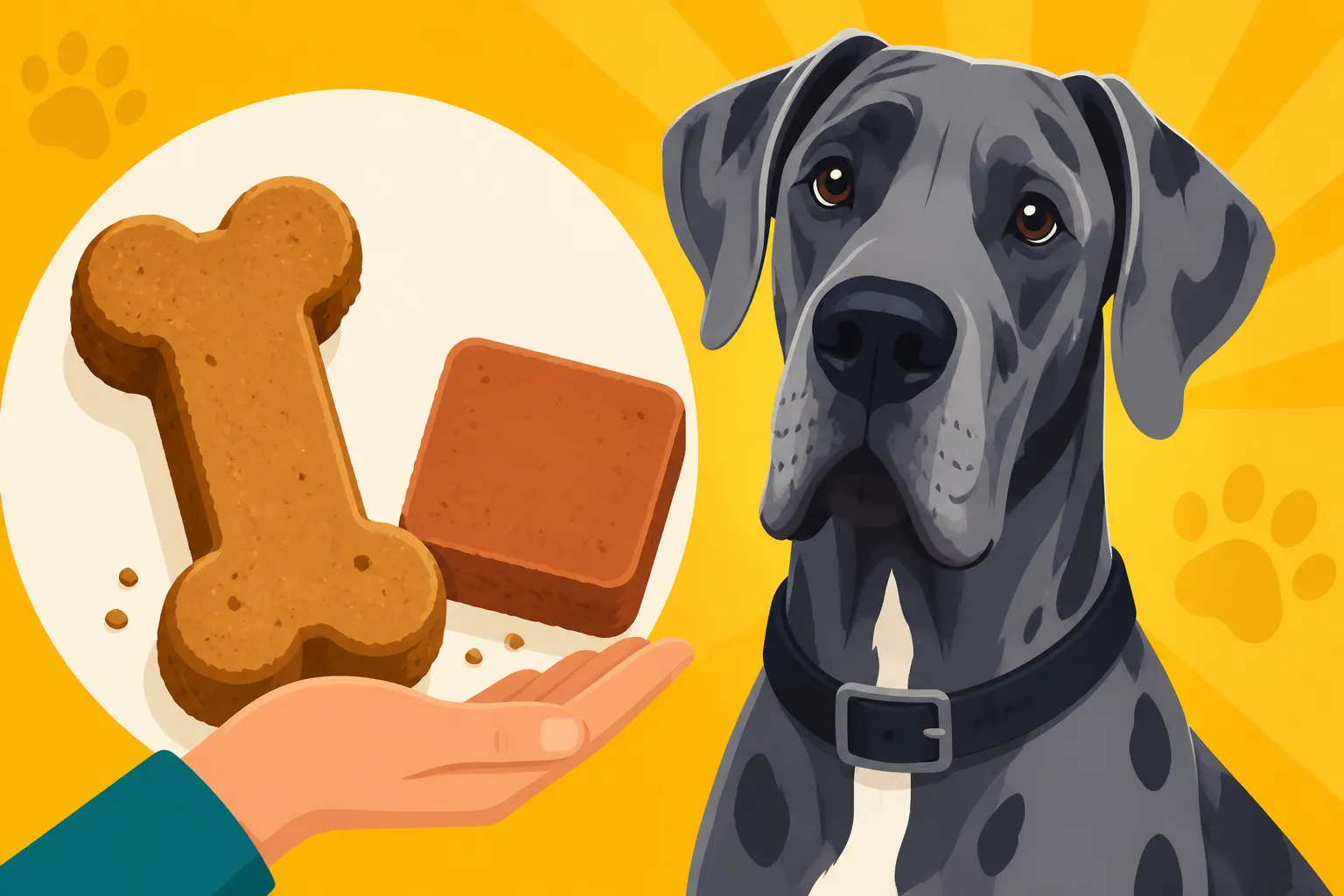
- Size That Cannot Be Swallowed Whole: The golden rule is that the treat should be too large for your Great Dane to attempt to swallow without significant chewing. If it looks like it could slip down their throat easily, it's too small. This applies to both the length and diameter of the treat. A good rule of thumb: if it's smaller than their tennis ball, it's probably too small to leave unsupervised.
- Texture for Chewing, Not Choking: The texture should encourage chewing. Treats that are too hard and brittle can break off in sharp shards, while treats that are too soft and sticky can become a gooey choking hazard. Look for treats that have some give but require effort to break down. Think dense, chewy, or fibrous. For puppies, especially as you navigate Bone Development Problems in a Great Dane Puppy, you'll want slightly softer, yet still durable, chews to protect their developing teeth.
Reading Labels for Giant Breed Suitability
Beyond general ingredient lists, specific labeling can help guide your choices.
- Weight Recommendations: Many treat brands specify a recommended dog weight range. Always choose treats at the very top end of these ranges, or those specifically marked for "Giant Breeds." If a treat says "for dogs 50-100 lbs," it's probably not truly ideal for a 150+ lb Great Dane.
- Choking Hazard Warnings: Some labels will explicitly warn about choking hazards for certain sizes or types of dogs. Pay close attention to these. If there's any doubt, err on the side of caution.
- Made in [Country]: While not a guarantee, many owners feel more comfortable with treats produced in countries with stringent pet food safety regulations. This information is usually found on the packaging.
Smart Treat Strategies for Your Giant Companion
Giving treats to a Great Dane isn't just about handing over a biscuit; it's an integral part of their diet, training, and overall well-being. A thoughtful approach ensures these rewards are beneficial, not detrimental.
Treat Frequency and Calorie Intake
It's easy to go overboard with treats, especially when you have a big, expressive face looking up at you. However, those extra calories add up quickly, and maintaining a lean body condition is paramount for Great Danes, given their susceptibility to joint issues and other health concerns.
- Treats as Part of Daily Calories: Remember that treats contribute to your Dane's total daily caloric intake. If you're giving a lot of treats, especially high-calorie ones, you might need to slightly reduce their main meal portions to prevent weight gain. Keeping your Great Dane lean for its joints is crucial throughout its life. It's helpful to understand The Calorie Load a Great Dane Actually Needs to balance meals and treats effectively.
- Moderation is Key: While tempting to constantly reward, spread out treats throughout the day. Opt for lower-calorie options for frequent training sessions. If you're using very high-value, higher-calorie treats, reserve them for specific, important training tasks or as a special occasional reward.
Supervision is Non-Negotiable
No matter how "safe" a treat or chew is marketed, vigilance is your best friend when it comes to your Great Dane. Their enthusiasm can sometimes override their common sense.
- Always Watch Your Dane: Never leave your Great Dane unsupervised with a new chew or any treat that could potentially be swallowed whole or break into dangerous pieces. This is especially true for items like bully sticks or raw bones. Remove the treat once it becomes small enough to pose a choking risk.
- Know Your Dane's Chewing Style: Some Danes are dainty chewers, while others are "gulpers" or "destroyers." Tailor your treat choices to your dog's individual style. A gulper needs larger, more durable items, while a dainty chewer might be fine with a slightly less robust option.
Rotation and Variety
Just like with their food, offering a variety of treats can keep your Great Dane engaged and provide different nutritional benefits.
- Mix It Up: Don't stick to just one type of treat. Rotate between durable chews, training treats, frozen options, and even simple fruits and vegetables. This keeps things interesting for your dog and ensures they aren't getting too much of any one ingredient.
- Consider Different Benefits: Some treats are great for dental health, others for mental stimulation, and some simply for pure enjoyment. Incorporate a mix to address various aspects of your Dane's well-being. For example, a good session with a stuffed Kong provides mental work, while a quick, tasty training treat reinforces good behavior like The Cues a Great Dane Needs Before Six Months.
Finding the perfect treats for your Great Dane is an ongoing process, but by prioritizing safety, understanding their unique needs, and being mindful of ingredients and portions, you can ensure that treat time is always a happy and healthy experience for your beloved giant.
Disclaimer
This article is for general informational purposes only and does not constitute professional advice. Laws, prices and regulations vary by location and change over time. Consult a qualified professional for guidance on your specific situation.