Reading a Great Dane’s Thyroid Panel
Great Dane thyroid panel results, including T4, T3, and TSH numbers, explained to help owners understand veterinary bloodwork.
Know what to watch for.
Breed-specific conditions, screening and DNA tests, what surgery actually costs, and the daily habits that stretch a healthy lifespan.
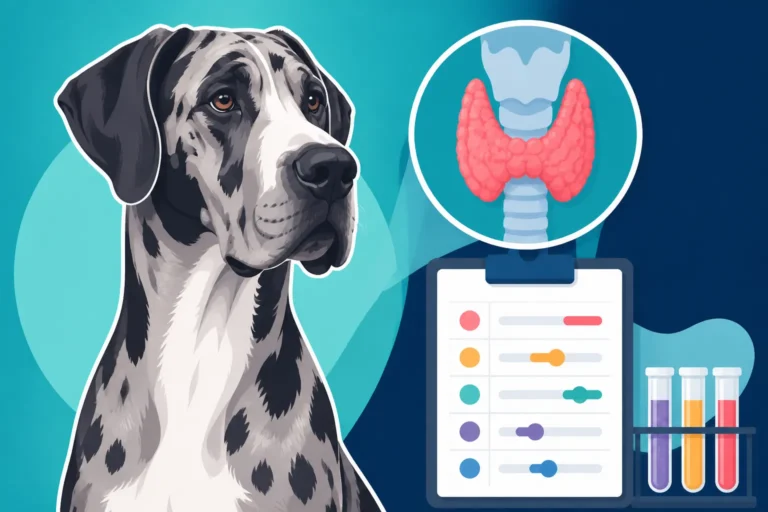
Great Dane thyroid panel results, including T4, T3, and TSH numbers, explained to help owners understand veterinary bloodwork.
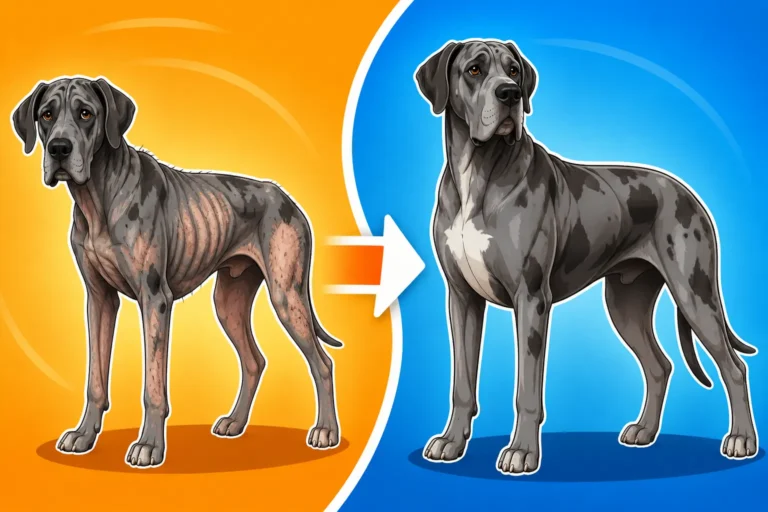
Hypothyroidism causes Great Dane hair loss and skin thickening, requiring veterinary diagnosis and thyroid hormone replacement.
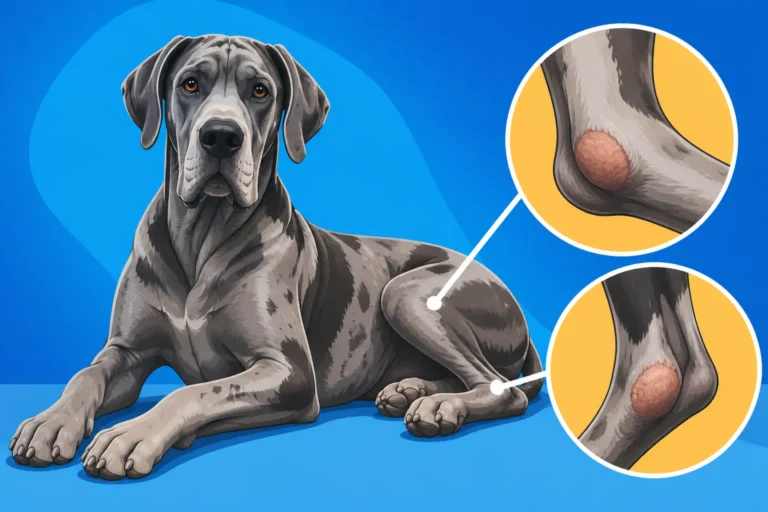
Great Dane elbow and hock calluses form from heavy body weight and friction, needing proper prevention and management steps.
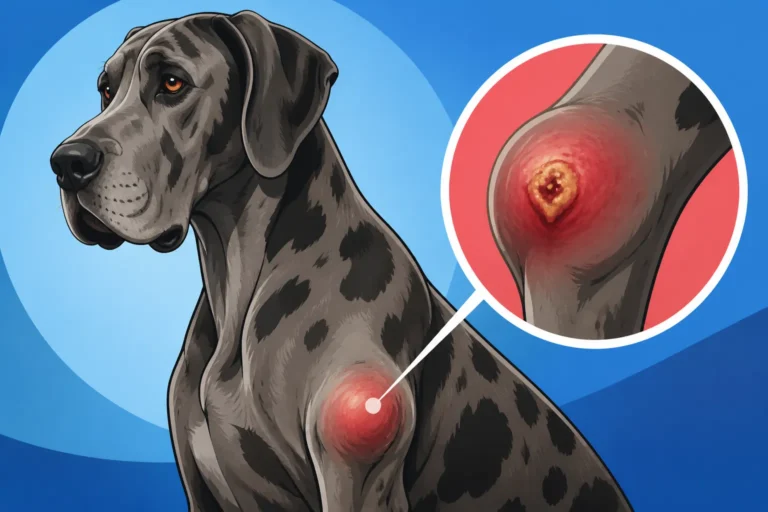
Infected elbow hygromas on Great Danes cause pain, heat, swelling, and open wounds oozing pus or blood over the bony joint.
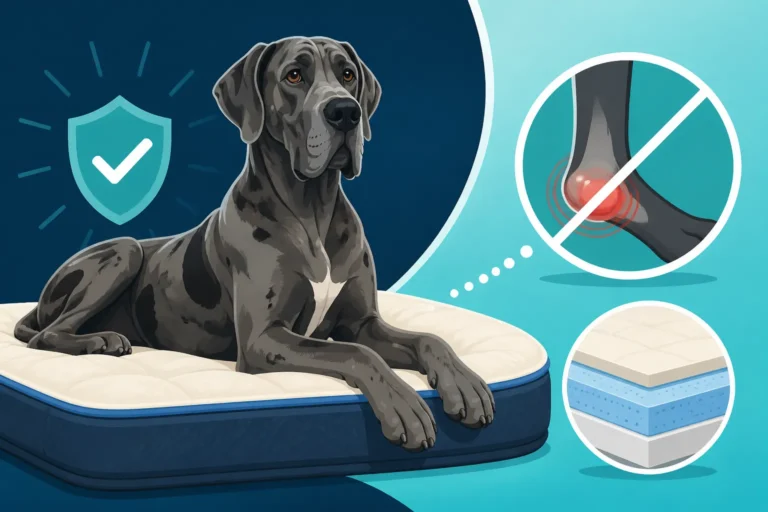
Proper bedding cushions heavy Great Dane elbows, preventing painful fluid-filled hygromas caused by constant pressure on hard floors.
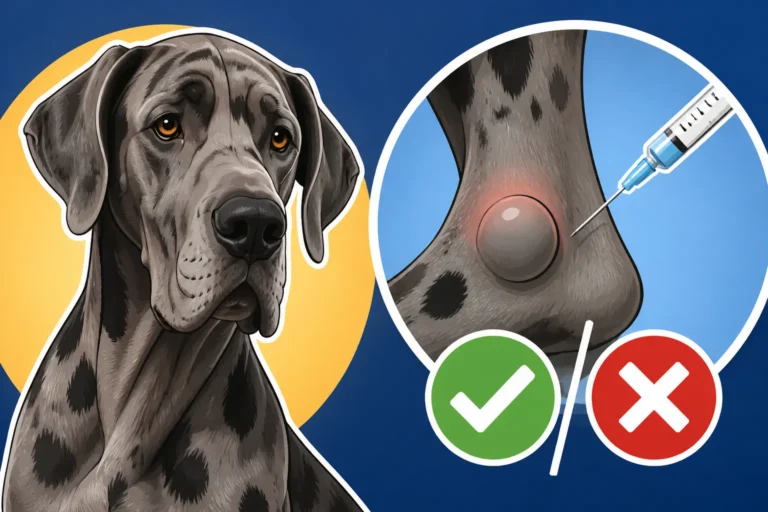
Great Dane elbow hygromas and the specific reasons for draining these sterile, fluid-filled sacs caused by hard flooring.
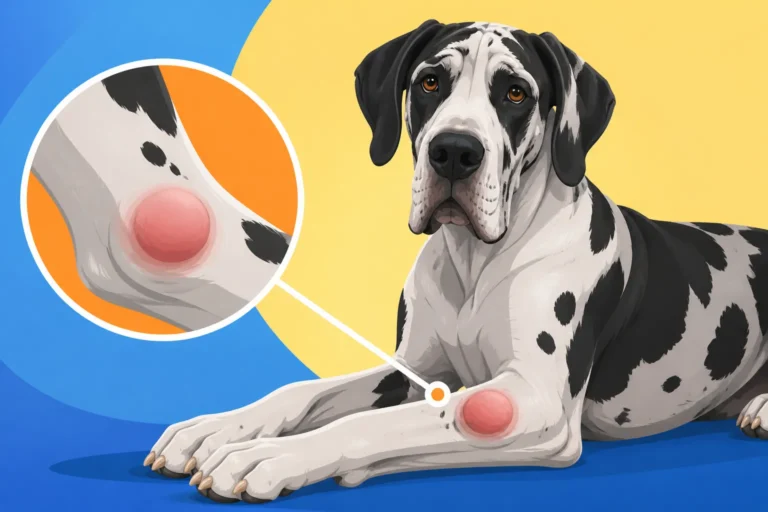
Great Dane elbow hygroma causes, management steps, and prevention methods explained for owners dealing with fluid swellings.
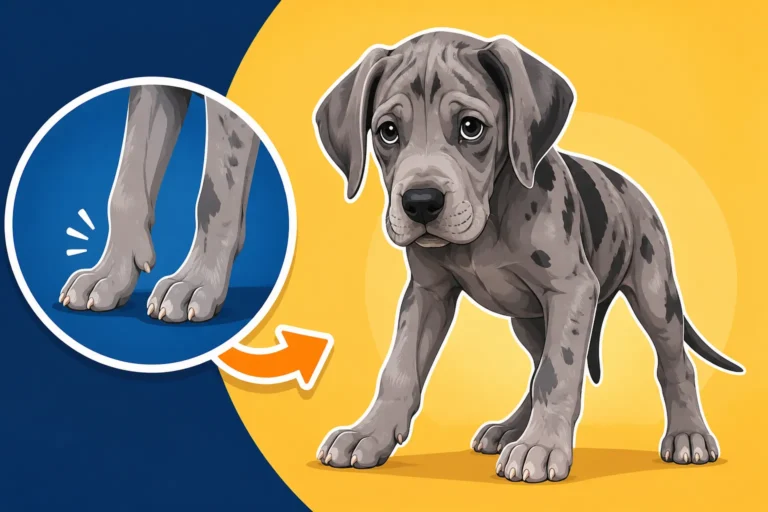
Great Dane puppy knuckling over involves walking on front paw knuckles due to rapid growth rates and developmental imbalances.
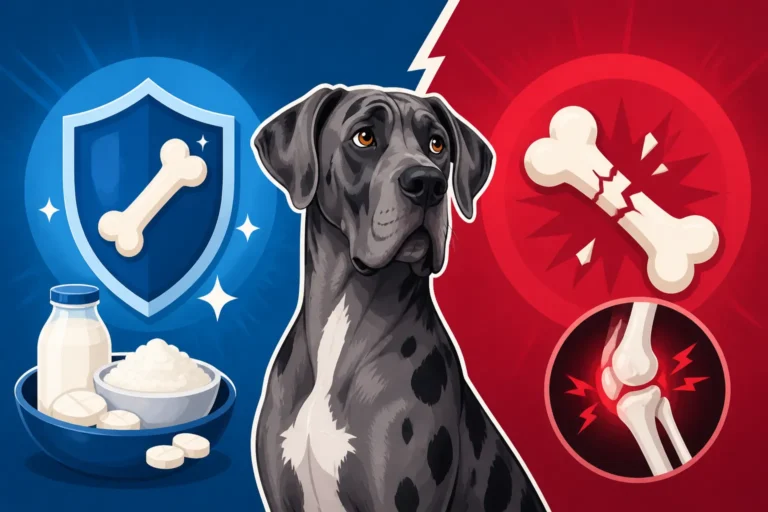
Extra calcium damages Great Dane puppy bones because giant breeds cannot regulate excessive mineral intake during rapid growth.
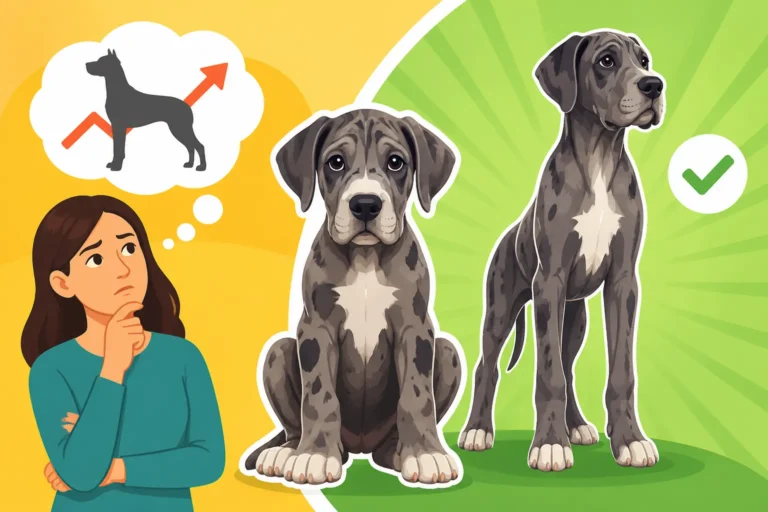
Great Dane puppy growth rates, expected weight milestones, and signs of unhealthy skeletal development are explained here.