Caring for a Great Dane Past Six
Senior Great Dane health care covers arthritis, joint pain, and why giant dog breeds reach senior status around age six.
Know what to watch for.
Breed-specific conditions, screening and DNA tests, what surgery actually costs, and the daily habits that stretch a healthy lifespan.
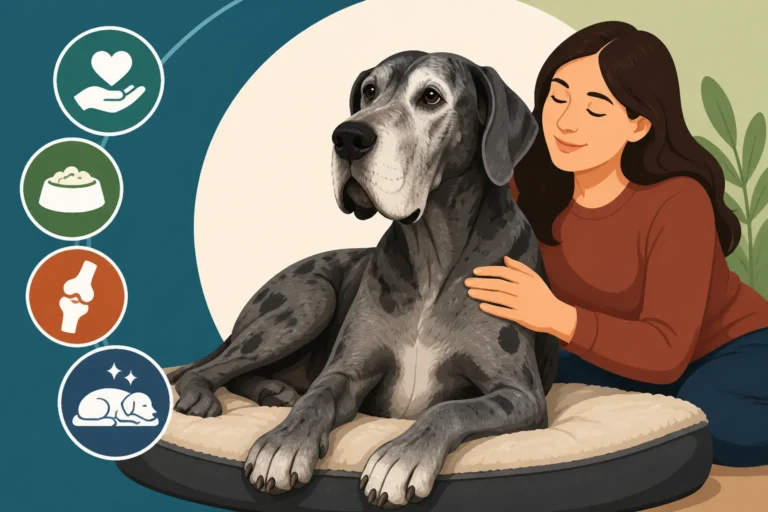
Senior Great Dane health care covers arthritis, joint pain, and why giant dog breeds reach senior status around age six.
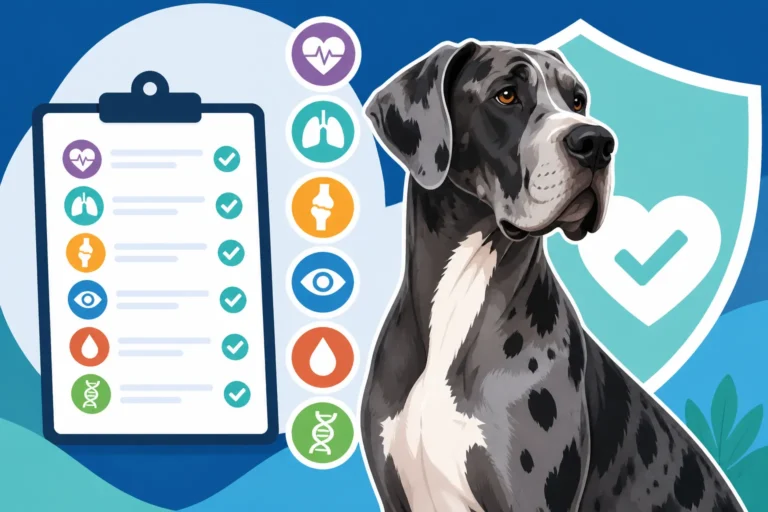
Great Dane health testing requirements cover genetic screenings for dilated cardiomyopathy, hip dysplasia, and elbow dysplasia.
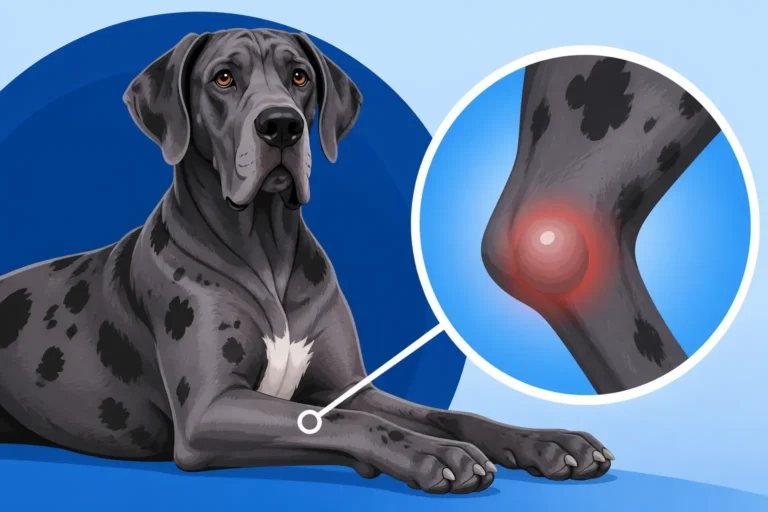
Great Dane elbow hygromas are fluid-filled sacs that form over bony joints due to repeated pressure on hard surfaces from their massive body weight.
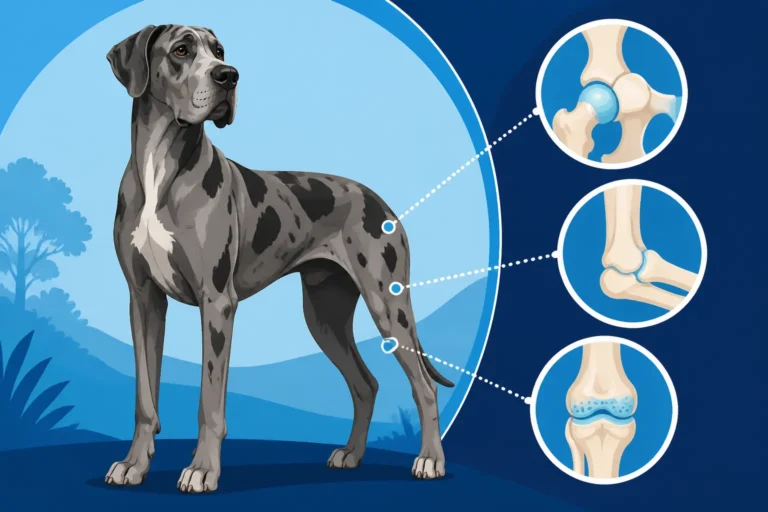
Great Dane puppy joint health, rapid two-year growth rates, and hip dysplasia prevention strategies are fully explained here.
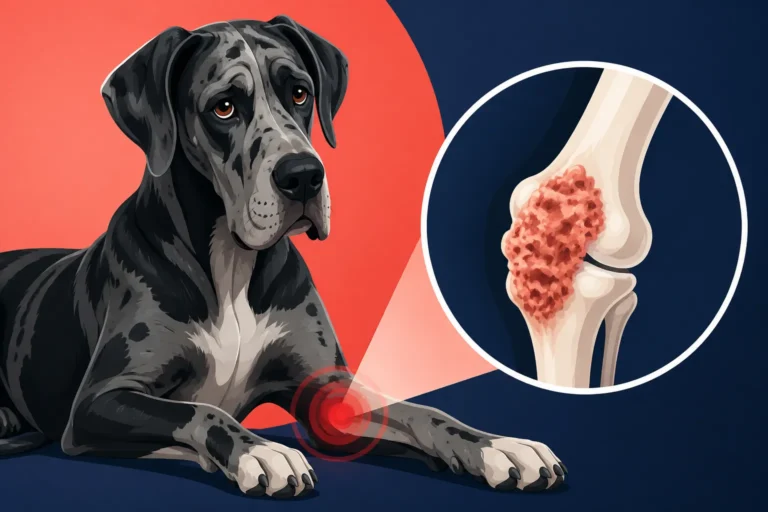
Osteosarcoma in Great Danes explains the aggressive bone cancer, early signs, diagnostic steps, treatments, and care options.
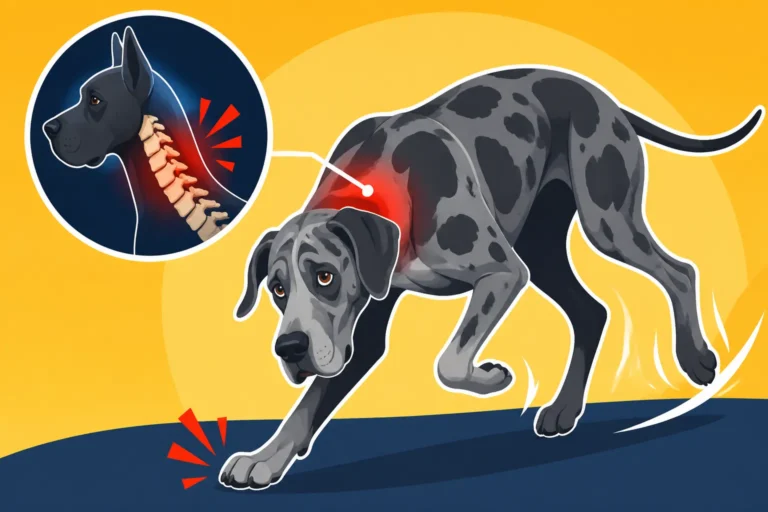
Wobbler Syndrome causes cervical spinal cord compression in Great Danes, resulting in a wobbly gait and neurological deficits.
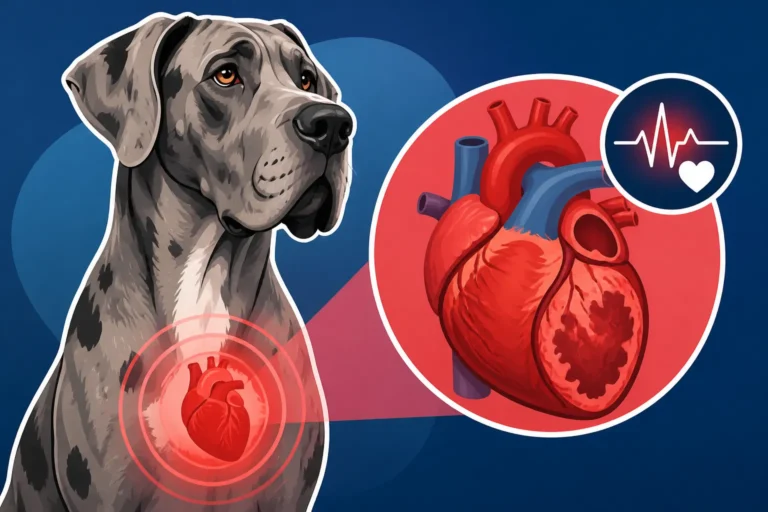
Dilated Cardiomyopathy in Great Danes causes weakened heart muscle walls, reduced blood pumping, and congestive heart failure.
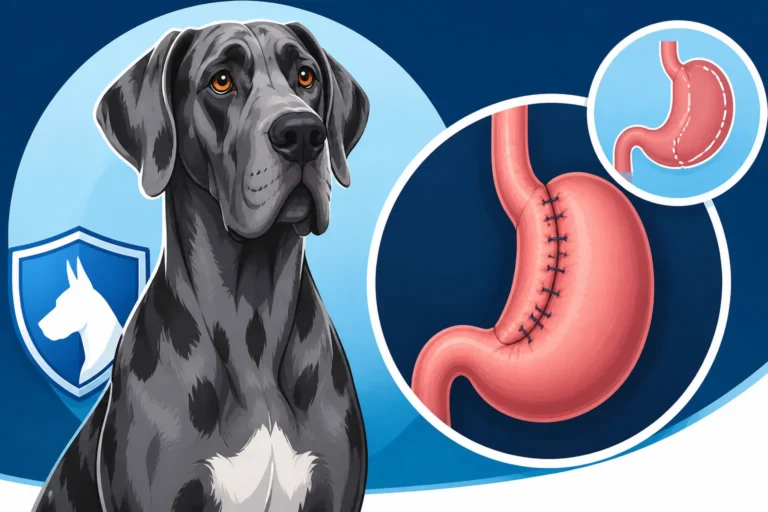
Stomach tacking surgery secures a Great Dane stomach to the abdominal wall, preventing fatal twists and gastric dilatation volvulus.
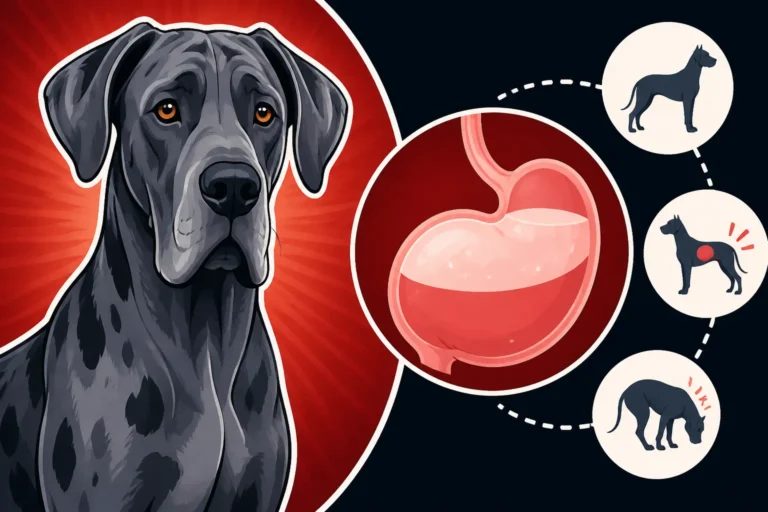
Great Dane bloat and gastric dilatation-volvulus causes a twisting stomach, affecting one in three dogs in their lifetime.
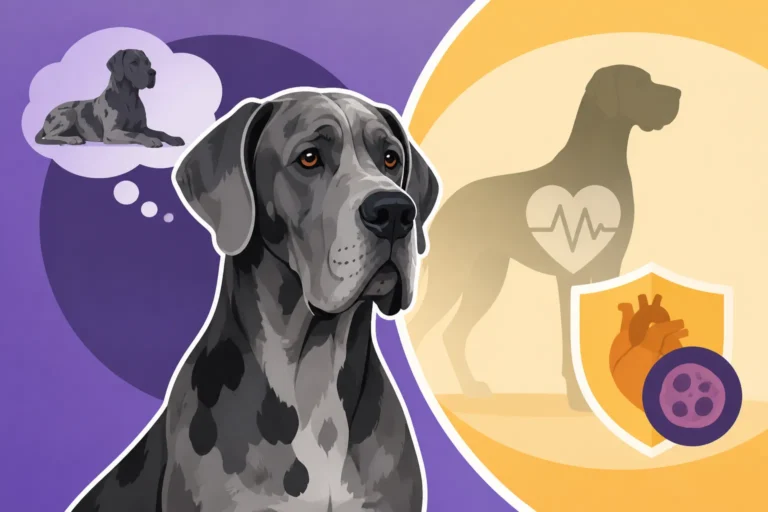
Great Dane lifespan limits of seven to ten years stem from rapid growth, massive size, and cellular oxidative stress.