A Great Dane That Cannot Finish a Walk
Great Dane walking difficulties stem from heart conditions, joint and orthopedic issues, or neurological problems affecting their gait.
Know what to watch for.
Breed-specific conditions, screening and DNA tests, what surgery actually costs, and the daily habits that stretch a healthy lifespan.
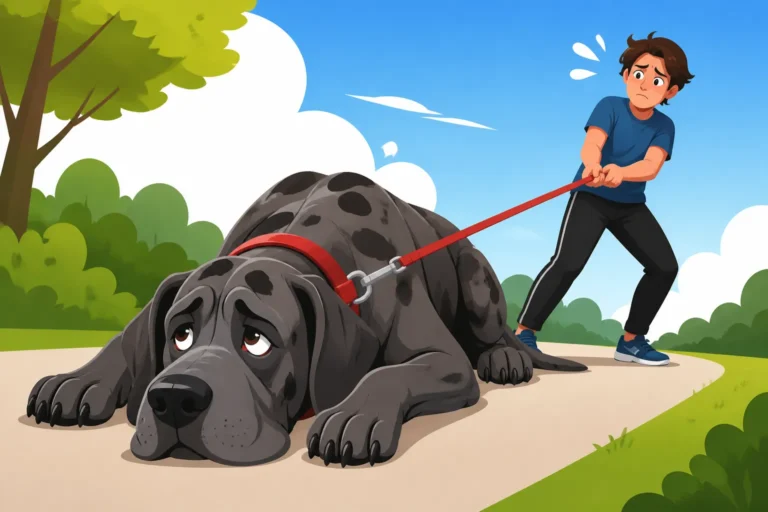
Great Dane walking difficulties stem from heart conditions, joint and orthopedic issues, or neurological problems affecting their gait.
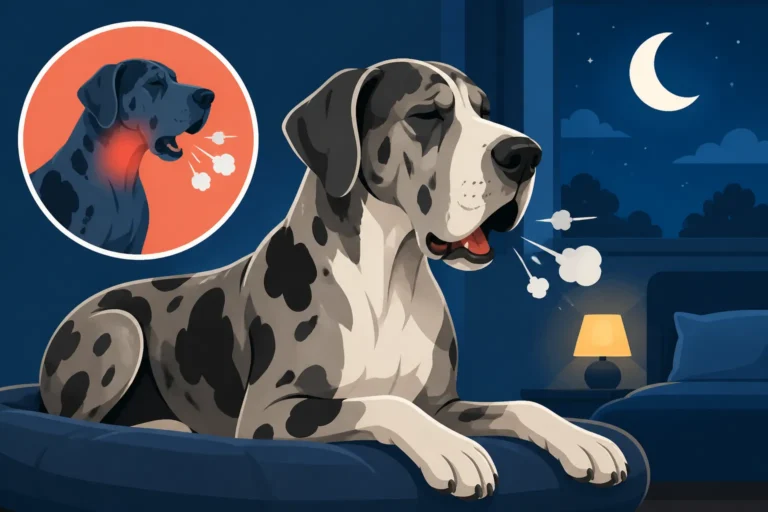
Nighttime coughing in Great Danes explains potential heart disease, fluid accumulation, and medical reasons for veterinary diagnosis.
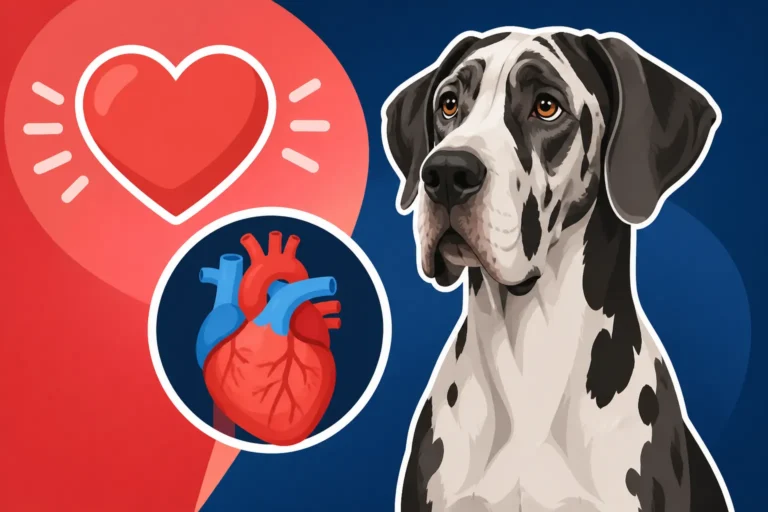
Dilated cardiomyopathy thins and weakens a Great Dane’s heart muscle and enlarges the left ventricle, so blood backs up and fluid builds in the lungs.
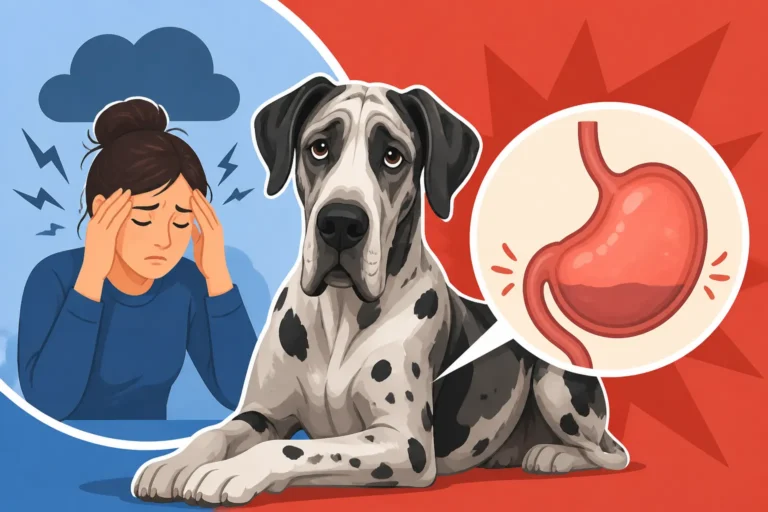
Stress and its connection to gastric dilatation-volvulus in Great Danes, including scientific research and owner observations.
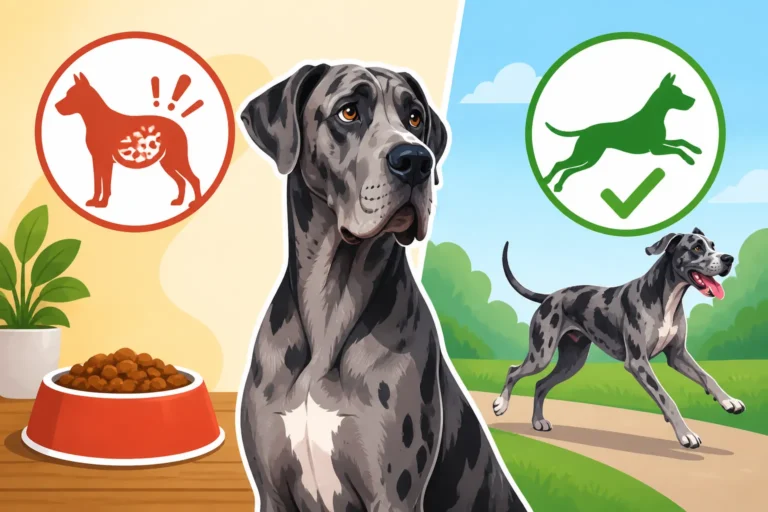
Post-meal exercise risks for Great Danes and the real connection between physical activity and gastric dilatation-volvulus.
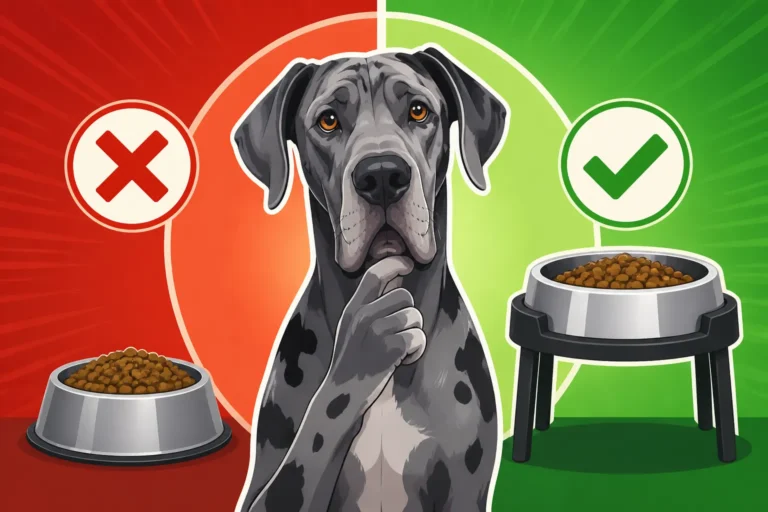
Raised feeding bowls and their link to bloat risk in Great Danes are explained using Purdue University research findings.
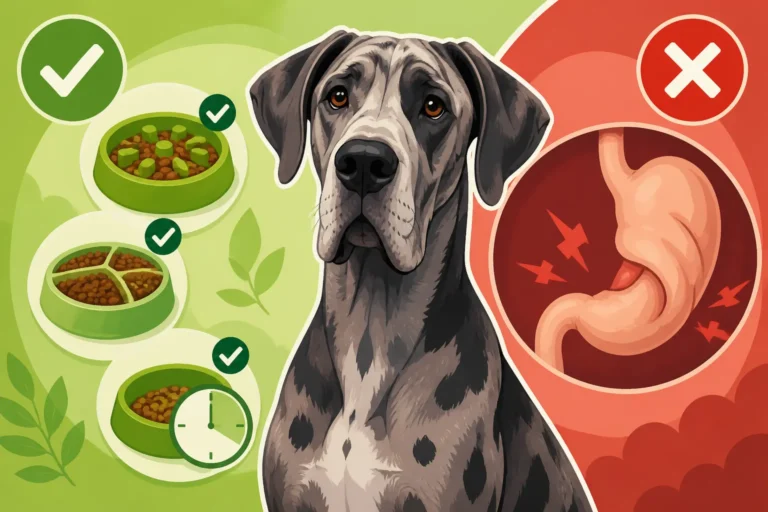
Splitting ten daily food cups into three or four smaller meals reduces bloat and gastric torsion risks for Great Danes.
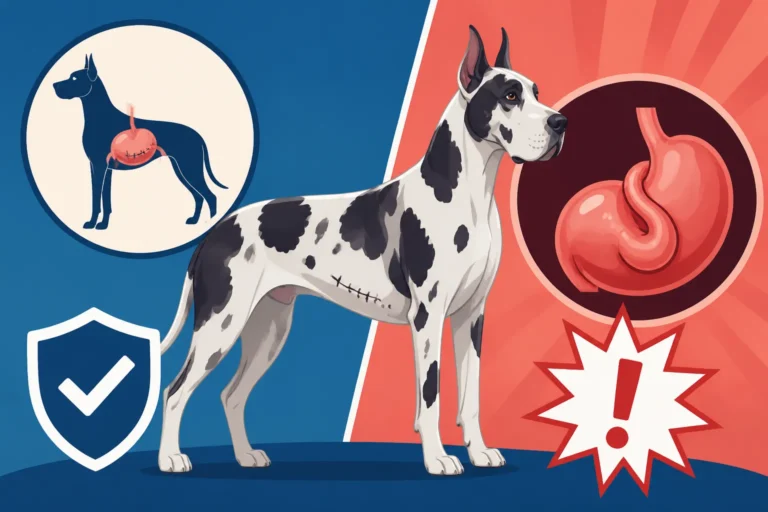
A tacked Great Dane can still experience simple bloat when gas fills the stomach, though the surgical procedure prevents dangerous twisting.
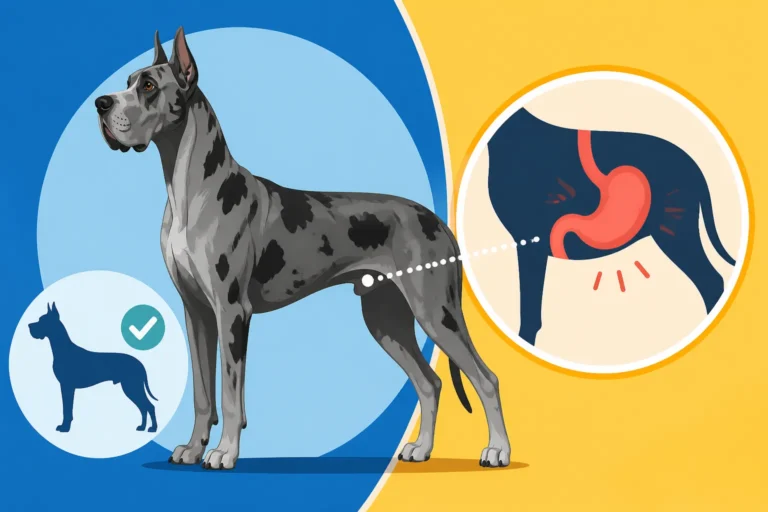
The optimal age for a prophylactic gastropexy surgery prevents gastric dilatation volvulus and stomach twisting in Great Danes.
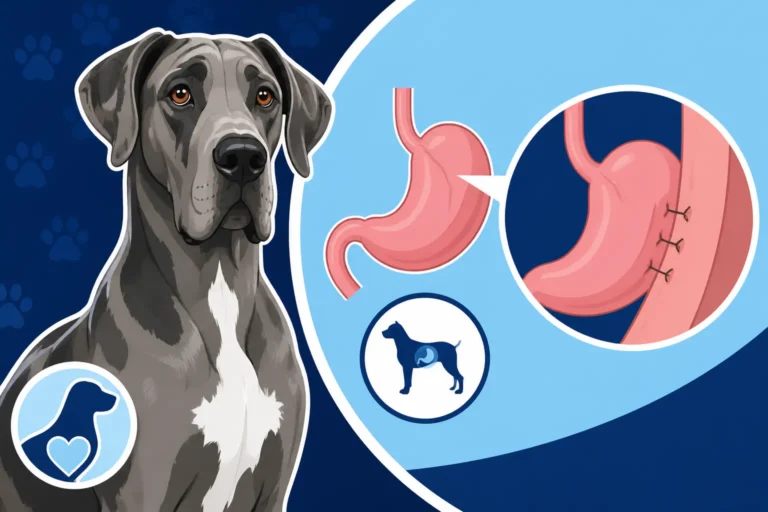
Adding a preventative gastropexy during a Great Dane spay permanently attaches the stomach to the abdominal wall to stop fatal twisting.