Whether Great Dane Wobblers Get Worse
Wobbler Syndrome progression in Great Danes explains spinal cord compression symptoms and how the neurological condition worsens.
Know what to watch for.
Breed-specific conditions, screening and DNA tests, what surgery actually costs, and the daily habits that stretch a healthy lifespan.
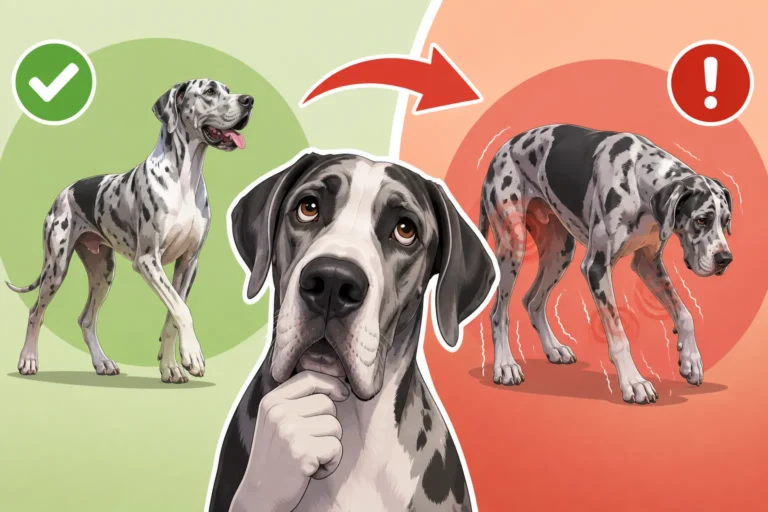
Wobbler Syndrome progression in Great Danes explains spinal cord compression symptoms and how the neurological condition worsens.
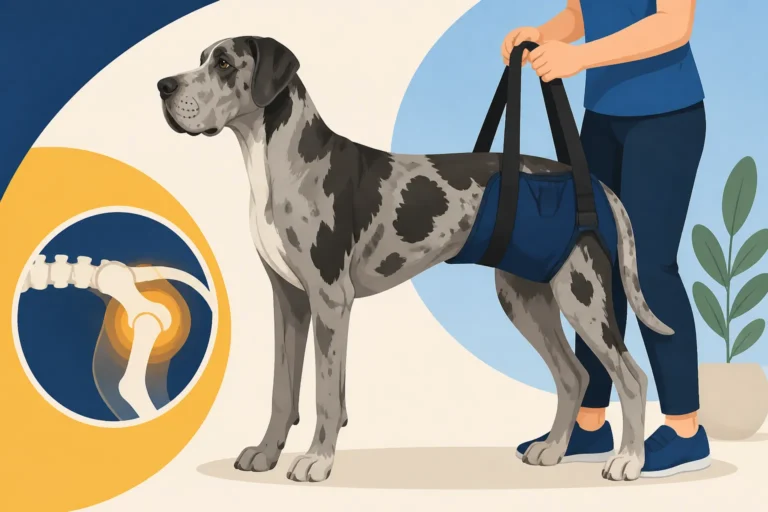
A hind-end support sling helps owners safely lift Great Danes suffering from arthritis, hip dysplasia, and degenerative myelopathy.
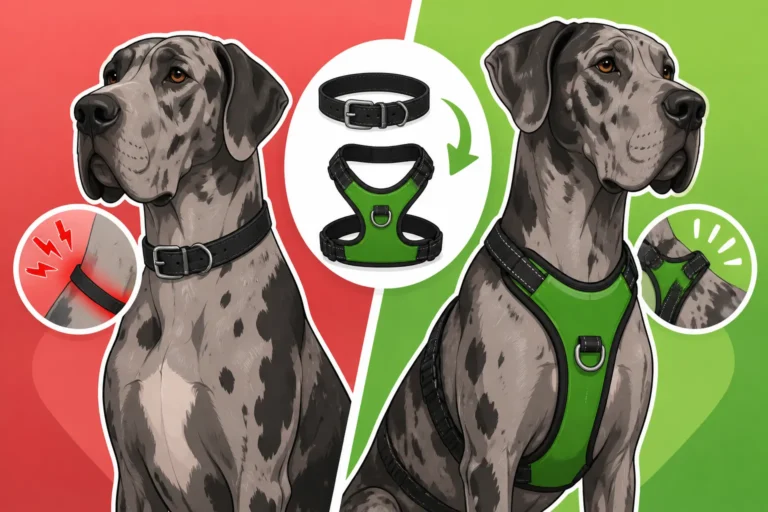
Transitioning a Great Dane from a collar to a harness protects the throat from dangerous pulling and prevents severe neck injuries during walks.
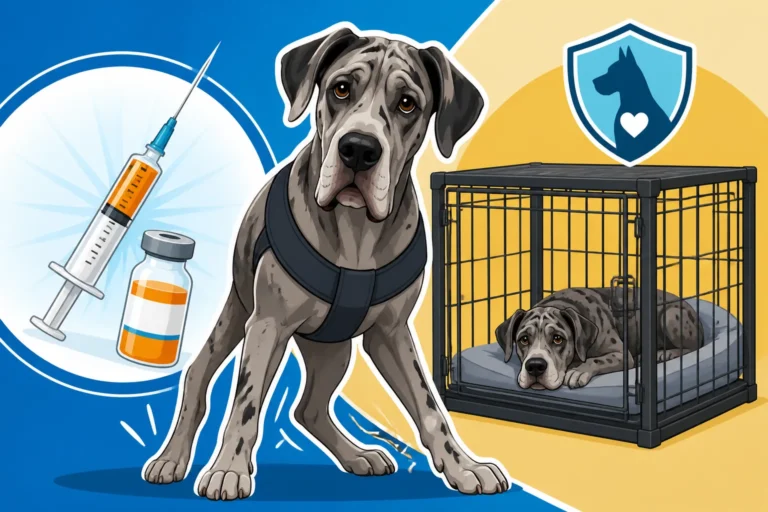
Corticosteroids and strict crate rest reduce spinal inflammation and manage mild neurological symptoms of Wobbler Syndrome in Great Danes.
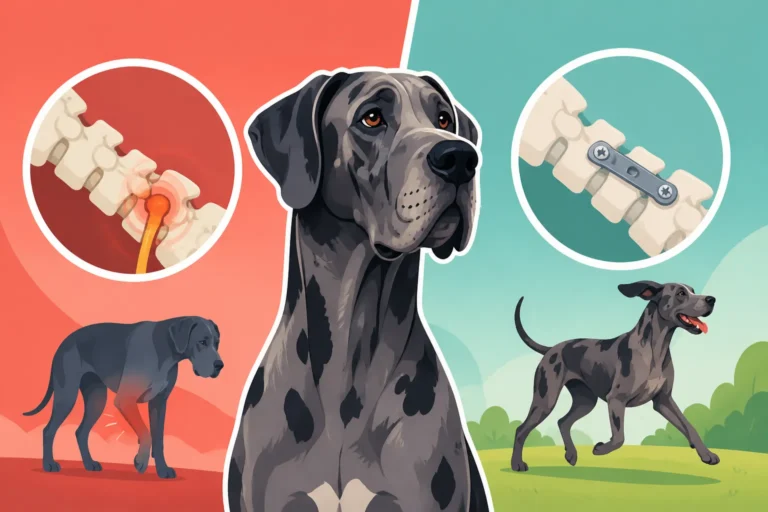
Wobbler surgery for Great Danes involves spinal cord compression risks, surgical choices, and recovery facts to evaluate.
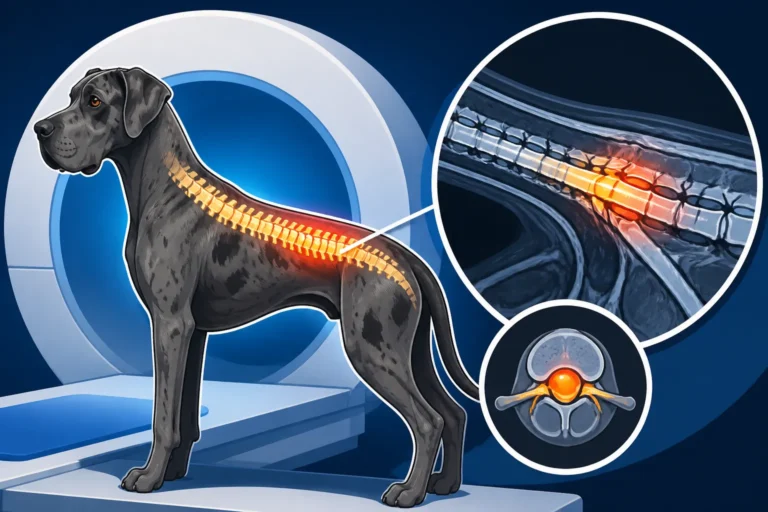
Great Dane spinal scans reveal neurological issues and specific conditions causing back leg stumbles, ataxia, and neck pain.
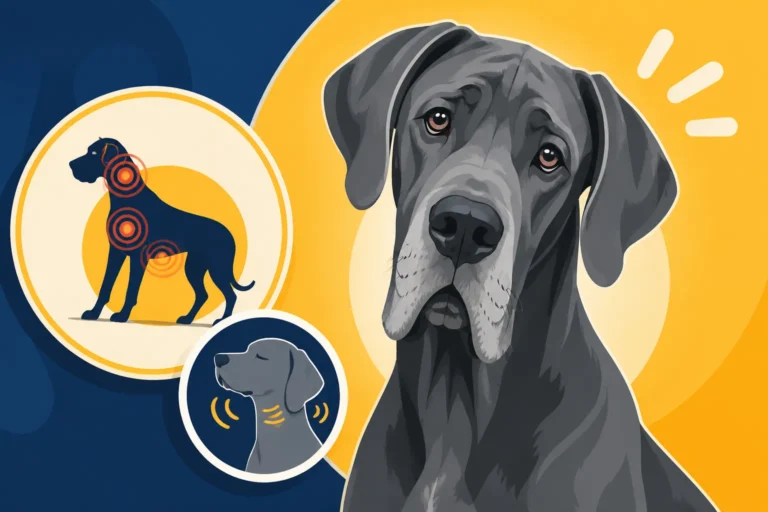
Great Dane Wobbler Syndrome signs typically appear between three and eight years of age due to cervical spinal cord compression.
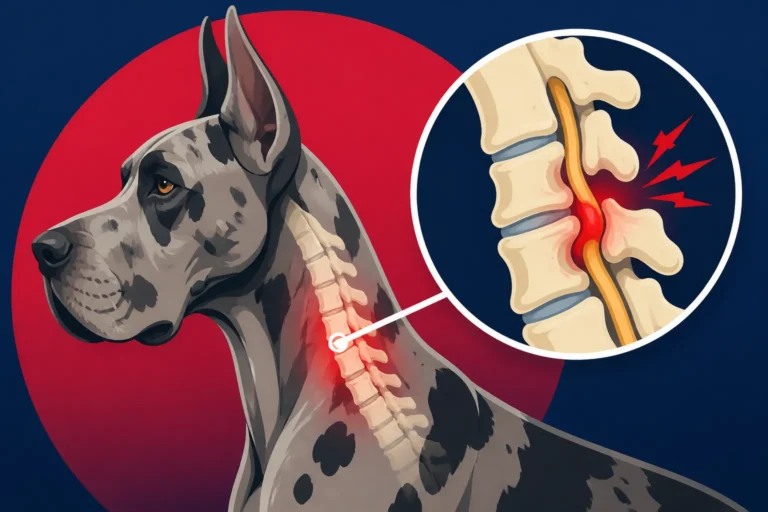
Great Dane neck vertebrae pinch the spinal cord due to bone malformation and soft tissue compression in Wobbler Syndrome.
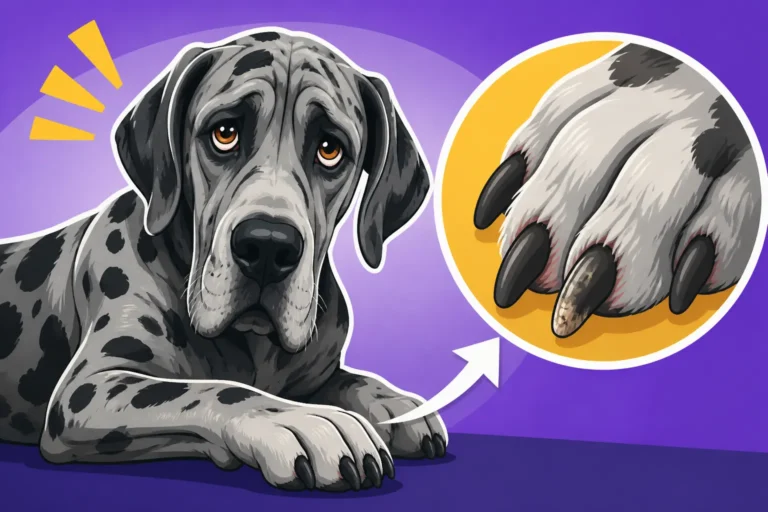
Great Dane scuffed back nails stem from unique weight distribution, overgrown lengths, or underlying health issues affecting hind limbs.
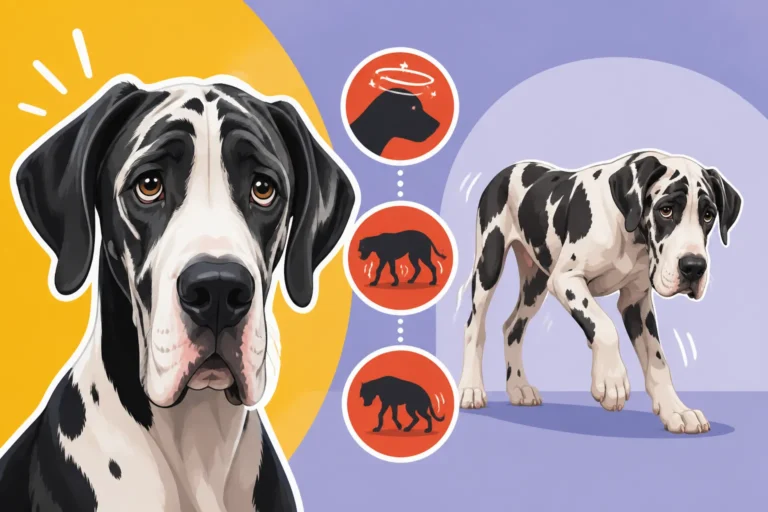
Early signs of Wobbler Syndrome in Great Danes include odd stumbles, dragged paws, and hind limb unsteadiness caused by cervical spinal cord compression.