Teaching a Great Dane Puppy Where to Go
Bringing a Great Dane puppy home is a whirlwind of joy, excitement, and let's be honest, a fair amount of anxiety about all the "firsts." One of the biggest challenges, and arguably the most crucial for keeping your sanity and your floors clean, is successfully house-training this magnificent, rapidly growing creature. This guide will walk you through the practical, empathetic, and truly realistic steps to teach your Great Dane puppy exactly where to go, minimizing stress for both of you.
Why House-Training a Great Dane Is a Big Deal
Let's not sugarcoat it: house-training any puppy takes dedication, but with a Great Dane, the stakes are just a little bit higher. We're talking about a dog that can weigh well over a hundred pounds as an adult, and even as a puppy, they produce a surprising volume of… output. The thought of cleaning up giant-sized accidents repeatedly is enough to make any new Dane parent break a sweat, but with the right approach, you can absolutely achieve a clean home.
The Sheer Volume of Puppy Output
You might envision a tiny trickle from a small breed puppy, but a Great Dane pup, even at a few months old, is already a substantial little being. Their bladders fill up quickly, and when they need to go, they really need to go. A half-cup of puppy pee from a Chihuahua is one thing; a pint or more from a growing Dane is an entirely different matter. This isn't just about smell; it's about the potential for soaked carpets, ruined flooring, and persistent odors if not handled correctly. The more often accidents happen indoors, the more a "potty spot" can be established there, making it even harder to break the habit. This is why consistency from day one is absolutely paramount.
Protecting Your Home from Giant Messes
Beyond the immediate clean-up, there's the long-term impact on your home. Great Dane puppies grow at an astonishing rate, and so does their capacity for holding their bladder and bowels. If you don't instill good habits early, you're not just dealing with small puddles; you're dealing with vast stretches of liquid or solid waste. Imagine a six-month-old Dane, already pushing 80-100 pounds, having a major accident on your living room rug. It's not just gross, it's expensive. Replacing flooring, deep cleaning upholstery, and battling ingrained odors become real possibilities. Starting strong with house-training protects your investment in your home and ensures you can enjoy your giant companion without constantly worrying about hidden surprises.
Understanding Your Great Dane Puppy's Control
Before you can effectively teach your puppy, you need to understand their physical capabilities and how they learn. A Great Dane puppy isn't born knowing where to relieve themselves; it's a learned behavior, heavily influenced by their physical development. Patience is key, as their bodies simply aren't ready for marathon holding sessions early on.
Developmental Timelines
A young Great Dane puppy, say 8-12 weeks old, has very little bladder and bowel control. Think of them like human toddlers – they can't hold it for long. Generally, a puppy can hold their bladder for roughly one hour for every month of their age, plus one. So, an 8-week-old (2 months) puppy might manage 3 hours, but often it's less when they're awake and active. This means frequent trips outside are non-negotiable. As they mature, typically around 4-6 months, their muscle control improves significantly.
However, individual dogs vary. Some Danes pick up house-training in a flash, while others take a bit longer. It's a journey, not a race. Don't compare your puppy to the perfectly house-trained dog next door or the one you had as a child. Focus on your puppy's progress and celebrate every small victory. Remember that even when they seem to have it down, adolescent Great Danes can sometimes experience The Age a Great Dane Stops Listening as they push boundaries, including those related to potty breaks.
Reading Your Puppy's Cues
Your Great Dane puppy will almost always give you signs that they need to go, long before an accident occurs. Learning to read these subtle (and sometimes not-so-subtle) cues is paramount to successful house-training. Common signs include pacing, sniffing the ground intently, circling, whining at the door, or suddenly interrupting play to look anxious. Some puppies will even start heading towards a spot they've previously soiled indoors.
It's your job to become a master detective of these signals. As soon as you see even the slightest hint, it's time to spring into action. Scoop them up (while you still can!) or gently guide them outside immediately. Don't wait until they're dancing at the door; by then, it might be too late. The more you respond correctly to their early signals, the faster they'll learn to communicate their needs to you, rather than just going where they stand.
Setting Up the Environment for Success
Creating the right environment makes all the difference in house-training a Great Dane puppy. It's about proactive management and setting boundaries, especially when they're too young to understand "no" or "outside only." This involves strategic use of crates and choosing a consistent outdoor potty spot.
The Role of a Crate
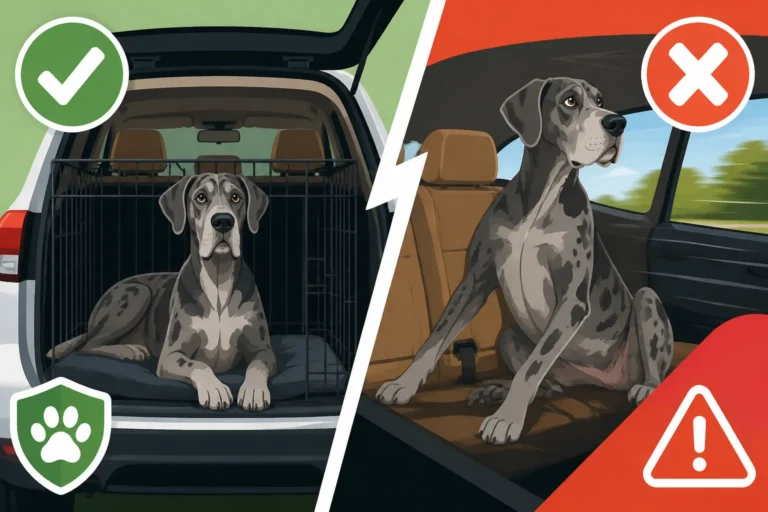
A crate is not a punishment; it's a vital tool for house-training, especially with a Great Dane. Dogs naturally do not want to soil their sleeping area. A properly sized crate for a Great Dane puppy is one where they can stand up, turn around, and lie down comfortably, but not one large enough to have a separate "bedroom" and "bathroom" area. As your Dane grows, you'll need to upgrade or use a crate with a divider to adjust the space. You'll find many extra-large crates available on Amazon that can accommodate their eventual size, often with adjustable dividers.
The crate serves a dual purpose: it gives your puppy a safe, den-like space, and it prevents accidents when you can't actively supervise them. When your puppy is crated, they're much less likely to have an accident. This buys you time between supervised trips outside. If you're looking for guidance on choosing the right size, consider checking out resources like Choosing a Crate a Great Dane Can Stand In for detailed advice. Remember to introduce the crate positively, making it a comfortable, inviting place with soft bedding and toys.
Choosing a Potty Spot
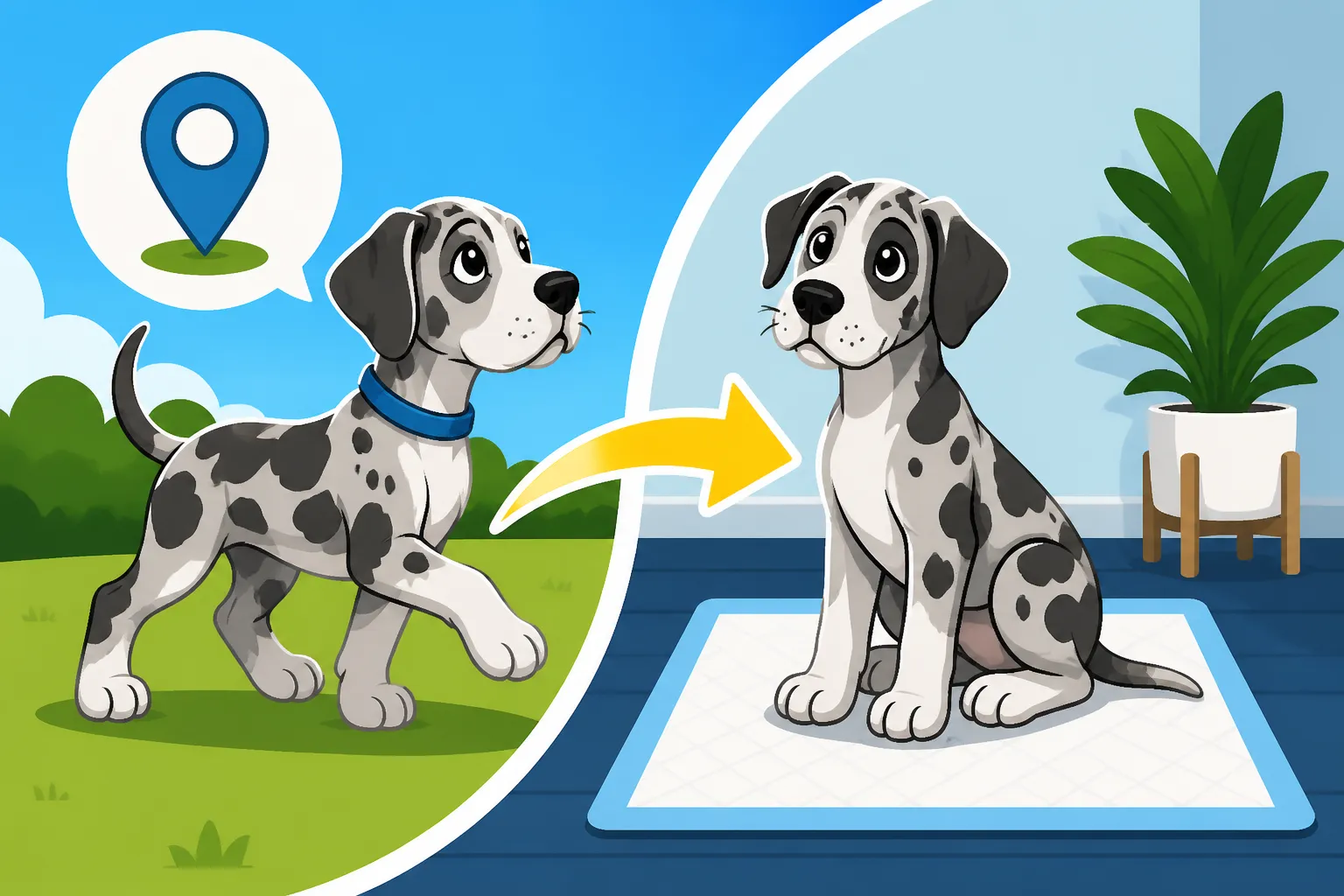
Consistency is key, and that includes the physical location where your Great Dane puppy is expected to relieve themselves. Choose one specific outdoor area in your yard or on your walk route that will be the designated "potty spot." This helps your puppy associate that particular smell and location with doing their business.
When you take them out, always go directly to this spot. Don't let them wander and play until they've done their business. The routine should be: go to potty spot, do business, then reward and play. If you allow them to explore and play first, they might get distracted and forget why they're out there, only to have an accident the minute they come back inside. Keep the area clean of old waste to discourage them from thinking it's okay to relieve themselves just anywhere.
The "Take Out" Routine: Consistency and Rewards
This is where the rubber meets the road. Successful house-training hinges on establishing a clear, consistent routine for taking your Great Dane puppy outside and rewarding them for getting it right. It's a repetition game, played with patience and positive reinforcement.
Establishing a Schedule
A predictable schedule is your best friend. Young Great Dane puppies need to go out very frequently. Here's a general guideline for a typical puppy schedule:
| Time of Day | Activity | Notes |
|---|---|---|
| First thing in AM | Potty break | Immediately out of the crate, no lingering |
| After waking | Potty break | Any nap, even a short one, means a potty break is likely needed |
| After eating/drinking | Potty break | Within 5-15 minutes of finishing a meal or a big drink. Food stimulates the bowels. |
| Before/after play | Potty break | Excitement can also stimulate the urge. Ensure they go before a long play session, and again right after. |
| Before crating | Potty break | Always, always before going into the crate, even for a short time. |
| Before bed | Potty break | The very last thing before settling down for the night. This is often the longest stretch they'll need to hold it. |
| Every 2-3 hours | Potty break (when awake/unsupervised) | This is your baseline. Set a timer if you need to. Don't wait for signs if it's been a while. |
This schedule needs to be adhered to religiously. Weekends, holidays, guests – it doesn't matter. Consistency teaches your Great Dane puppy what's expected. Don't deviate from the schedule, especially in the early weeks. Consider keeping a training log to track successes and accidents, which can help you identify patterns.
The Power of Positive Reinforcement
When your Great Dane puppy does their business in the designated outdoor spot, it's time for a party! Over-the-top praise, a special high-value treat (something they only get for potty success), and a few minutes of enthusiastic play. Make it clear that they've done something truly wonderful. The reward needs to be immediate – within 3 seconds of them finishing – so they connect the action (pottying outside) with the positive outcome.
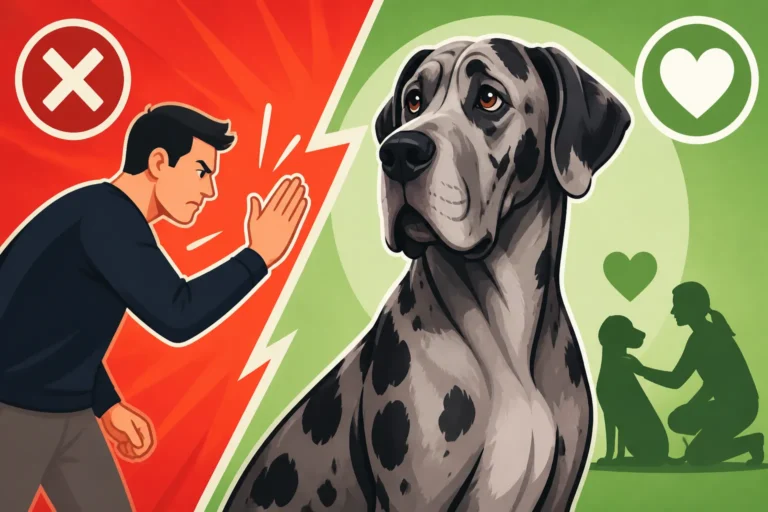
Avoid scolding or punishing accidents that happen inside. Your puppy doesn't understand "wrong" in that context; they just learn to fear you or hide when they need to go, which makes house-training much harder. The focus should always be on rewarding the desired behavior. If you're struggling with positive reinforcement techniques or other aspects of puppy training, an online program like BAXTER & Bella can offer fantastic step-by-step guidance. They often have resources tailored to managing large breeds, which is a huge bonus.
What to Do on a Potty Break
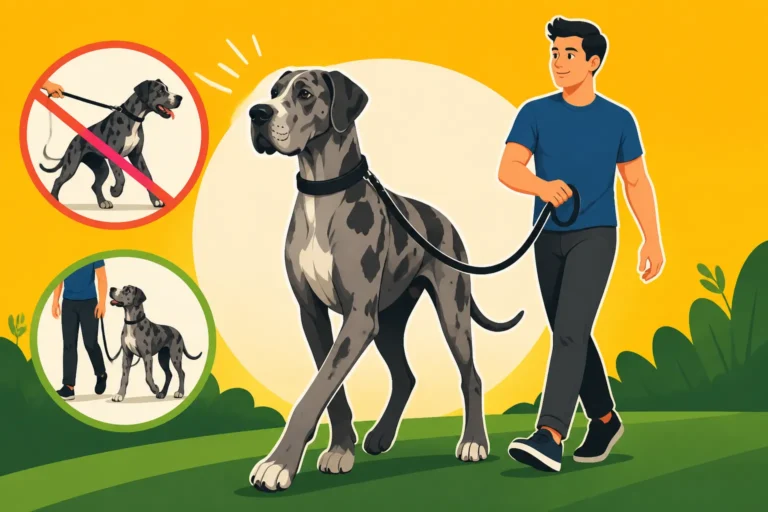
When you take your Great Dane puppy outside for a potty break, it's not playtime until they've done their business. Take them directly to their designated spot, put them on a leash (even in your own yard, especially initially) to keep them focused, and use a consistent, calm potty cue like "go potty" or "do your business." Stand still and be boring. Don't talk to them, play with them, or distract them with your phone. Just wait.
The moment they start to squat or lift a leg, silently encourage them. The second they finish, that's when the enthusiastic praise and treat should come out. After they've successfully gone, then you can spend a few minutes playing in the yard or going for a short walk. This sequence teaches them: outside first means potty, then fun. If they don't go after 5-10 minutes, bring them back inside, crate them for 10-15 minutes, and then try again. This cycle repeats until they successfully go outside.
Dealing with Accidents: Prevention and Cleanup
Accidents will happen. It's an inevitable part of puppyhood, especially with a breed as large and fast-growing as a Great Dane. The key is to minimize them, react correctly when they do occur, and ensure proper cleanup to prevent future incidents.
Catching Them in the Act
If you catch your Great Dane puppy in the act of having an accident indoors, interrupt them with a firm but not scary "Ah-ah!" or a clap. The goal isn't to frighten them, but to startle them enough to stop. Immediately pick them up (if small enough) or leash them and rush them outside to their designated potty spot. If they finish going outside, praise and reward them lavishly. This helps them connect the interruption with the correct action.
Never, ever punish them after the fact. If you come home to a puddle, or find one a few minutes after it happened, it's too late for them to connect your anger with their prior action. They'll just learn that finding pee makes you scary, which can lead to them hiding their accidents. It's frustrating, I know, but those moments are entirely about our failure to supervise or take them out on time, not their malice. How Quickly a Great Dane Puppy Gets Clean is really down to how well we manage their environment and our reactions.
Cleaning Up Thoroughly
Proper cleanup is non-negotiable. Dogs are drawn to the scent of their own urine and feces, and if those odors aren't completely neutralized, an indoor accident spot becomes an irresistible magnet for future accidents. Standard household cleaners often only mask the smell for humans; a dog's nose can still detect it.
You need an enzymatic cleaner. These cleaners break down the uric acid crystals in urine, completely eliminating the odor. Follow the product instructions carefully, often involving soaking the area and letting it air dry. Many effective options are available on Amazon. Failing to use an enzymatic cleaner is one of the biggest reasons for house-training setbacks, as your puppy will continually be drawn back to the "bathroom" smell indoors. Ensure you're cleaning up every single droplet, as Great Dane accidents cover a lot of real estate!
Advanced Tips and Troubleshooting
Even with the best intentions and the most consistent routine, you might hit a few bumps in the road. Understanding common challenges and having strategies to overcome them will ensure your Great Dane puppy becomes a reliably house-trained member of the family.
Weather Challenges
Sometimes, the weather just doesn't cooperate. Pouring rain, howling winds, or freezing temperatures can make even the most enthusiastic puppy reluctant to go outside. This is where your commitment really shines. Bundle up, put on your rain gear, and go out with your Great Dane puppy anyway. Some Danes, especially those with thin coats like a blue or fawn, might be particularly sensitive to the cold. A doggie raincoat or sweater can make them more comfortable.
If your puppy absolutely refuses to go in bad weather, lead them to a sheltered area if you have one – a covered porch, an overhang, or even under a large umbrella. The goal is to get them to go outside, even if it's not their usual spot. Avoid the temptation to use puppy pads indoors as a regular solution once house-training has begun, as this can confuse them and teach them it's okay to relieve themselves inside the house. You want an "outside only" rule.
Addressing Regression
It's common for puppies, even Great Danes, to experience occasional house-training regression. This means they were doing great, and then suddenly, they start having accidents again. Regression can happen for several reasons:
- Developmental Stage: Adolescent dogs (roughly 6-18 months) can sometimes test boundaries or have a temporary dip in focus. This isn't usually a sign they've forgotten; it's more about pushing limits.
- Changes in Routine: A new schedule, moving to a new house, or even a different family member taking over potty duties inconsistently can cause confusion.
- Stress or Anxiety: Any significant change or stressful event (a new pet, loud construction, separation anxiety) can manifest as house-training issues.
- Medical Issues: Always rule out a urinary tract infection (UTI) or other medical problems if accidents suddenly start happening without an obvious behavioral cause. A quick vet visit can provide peace of mind.
When regression occurs, don't panic. Simply go back to basics. Re-establish your strict schedule, increase supervision, and be extra diligent with praise and rewards. Treat them like an 8-week-old puppy for a week or two, and they'll usually get back on track.
Consistency is Key, No Matter What
I can't stress this enough: consistency is the absolute bedrock of successful Great Dane house-training. Every family member needs to be on the same page, using the same cues, the same schedule, and the same positive reinforcement. If one person is diligent and another is lax, your Great Dane puppy will become confused, and progress will stall. Why Great Dane Training Cannot Wait applies to house-training just as much as it does to manners and obedience.
This means committing to the routine even when you're tired, busy, or it's inconvenient. It means getting up in the middle of the night for those puppy potty breaks. It means rushing out the door the second you see those tell-tale signs. It's a significant investment of time and effort in the early months, but the payoff is a well-behaved, reliably house-trained Great Dane who can share your home peacefully for years to come. Remember, every successful potty break outside builds a positive habit, and every accident is a missed opportunity for learning. With patience and persistence, your Great Dane puppy will master this essential life skill.
Disclaimer
This article is for general informational purposes only and does not constitute professional advice. Laws, prices and regulations vary by location and change over time. Consult a qualified professional for guidance on your specific situation.