What a Great Dane Adolescent Does
Ah, the Great Dane adolescent phase. If you've got a growing giant who suddenly seems to have forgotten every single command you ever taught them, or whose energy levels have inexplicably skyrocketed, you're not alone. This stage can feel like you've got a completely different dog living in your house, one that's equal parts frustrating and endearing. This guide is here to walk you through exactly what to expect when your Great Dane hits their "teenager" years, offering practical advice to help both of you navigate this challenging yet crucial developmental period.
Understanding the Great Dane Adolescent Phase
It's easy to look at your rapidly growing Great Dane and assume they're all grown up. After all, they might already weigh over a hundred pounds and stand eye-to-eye with you at the counter! But physically mature doesn't always mean mentally mature, and understanding this distinction is key to navigating their adolescent period.
When Does Great Dane Adolescence Begin and End?
For a giant breed like a Great Dane, adolescence typically kicks in a bit later and lasts longer than it would for a smaller dog. While a tiny terrier might be "done" with this phase by a year old, your Dane is just getting started! You'll usually begin to see these adolescent behaviors emerge around 6 to 9 months of age. This can be a real shock if you thought you had a well-behaved puppy who was simply getting bigger. The full "teenager" stretch can then last until they are anywhere from 18 to 24 months old, sometimes even pushing towards three years for full mental maturity in some individuals. It's a long haul, but knowing the timeline helps manage expectations.
During this period, their bodies are still developing, but their brains are undergoing significant changes, too. Hormones are surging, and their impulse control might seem to vanish into thin air. Think of it like a human teenager: physically capable of adult tasks, but often lacking the judgment and emotional regulation to consistently execute them. Your giant puppy is becoming a giant, well, teenager, and that comes with its own unique set of challenges, especially considering their immense size.
The Physical vs. Mental Growth Disconnect
This is where a lot of the frustration often comes in for Great Dane owners. One day you have a clumsy, lovable puppy, and the next you have a dog the size of a small pony who still behaves like that clumsy puppy, but with much more force! Their physical growth often outpaces their mental maturity. They might look like an adult, but their brain is still very much a work in progress.
This disconnect means they have the power and strength of an adult dog, but often the decision-making skills of a much younger one. This can manifest as them forgetting their leash manners, despite weeks of practice, or suddenly deciding that jumping up on Aunt Carol is a fantastic idea, even though they know better. Their impressive size means that what might be a minor annoyance in a smaller dog becomes a significant safety concern with a Great Dane. This is precisely Why Waiting Until a Great Dane Is Grown Is Too Late for serious training; foundational work needs to be solid long before they hit this growth spurt. Their sheer mass demands careful handling and consistent reinforcement.
Why This Stage Feels So Challenging
Let's be honest, raising a Great Dane is a commitment, and adolescence can feel like a test of endurance. One of the biggest reasons it's so challenging is the sheer scale of the behaviors. A counter-surfing Chihuahua is a nuisance; a counter-surfing Great Dane can clear your entire dinner table in one swipe. A pulling Jack Russell Terrier is manageable; a pulling Great Dane can pull you off your feet. This is why you need to be prepared for Handling a Great Dane That Outweighs You long before this phase hits.
Beyond the physical challenges, there's the emotional toll. You might feel like you're failing, or that all your hard work on training has gone out the window. It's easy to get discouraged when your once-obedient dog seems to ignore you completely or regresses in behaviors you thought were mastered. But remember, this is a normal developmental stage. Their brains are literally being rewired, and sometimes, those wires get crossed temporarily. Patience, consistency, and a sense of humor are your best tools right now. Don't underestimate the impact of those teenage hormones on their ability to focus and comply.
Common Behavioral Changes You'll See
Adolescence in Great Danes isn't just about growing bigger; it's about a whole host of behavioral shifts that can leave owners scratching their heads. Understanding these changes is the first step to effectively managing them.
The Return of Selective Hearing and What to Do About It
Ah, selective hearing – the hallmark of many a canine teenager. It feels like one day your Dane was responding beautifully to "come," "sit," and "stay," and the next, your voice is just background noise. They aren't trying to annoy you (usually), but their brains are bombarded with new stimuli and developing decision-making processes. Their focus shifts, and their impulse control often lags. This means that a squirrel across the park, or the smell of a discarded french fry, suddenly becomes far more interesting than your urgent command.
This isn't the time to give up. In fact, it's the time to double down on your reinforcement. Go back to basics in a low-distraction environment. Make yourself the most exciting thing in their world. Use high-value treats and enthusiastic praise. Consider enrolling in an advanced obedience class, or revisiting the curriculum if you used an online program like BAXTER & Bella. Sometimes, simply changing the environment or the reward can make a huge difference. Remember, practice makes permanent, especially when you're working on The Cues a Great Dane Needs Before Six Months. Don't assume they've forgotten; assume they're testing, or simply overwhelmed.
Testing Boundaries and Pushing Limits
Just like human teenagers, adolescent Great Danes will test boundaries. They want to see what they can get away with. This might mean trying to sneak onto the sofa (even if it's a "no sofa" rule), pushing past you at the door, or trying to snag a treat directly from your hand rather than waiting patiently. Their confidence is growing, and with it, a newfound boldness that can be both endearing and exasperating.
Consistency is absolutely paramount here. Every single time your Dane attempts to push a boundary, you need to respond the same way. If jumping on visitors is off-limits, every visitor needs to be instructed not to reward the jump, and you need to intervene with a calm "off" or "four on the floor" command. If they try to dart out the door, reinforce the "wait" command every single time. This period is a prime opportunity to reinforce The Manners a Great Dane Needs Before It Grows, ensuring they understand what's acceptable. If you give in "just this once," they learn that the boundary is flexible, and they'll keep pushing.
Increased Energy and Destructive Tendencies
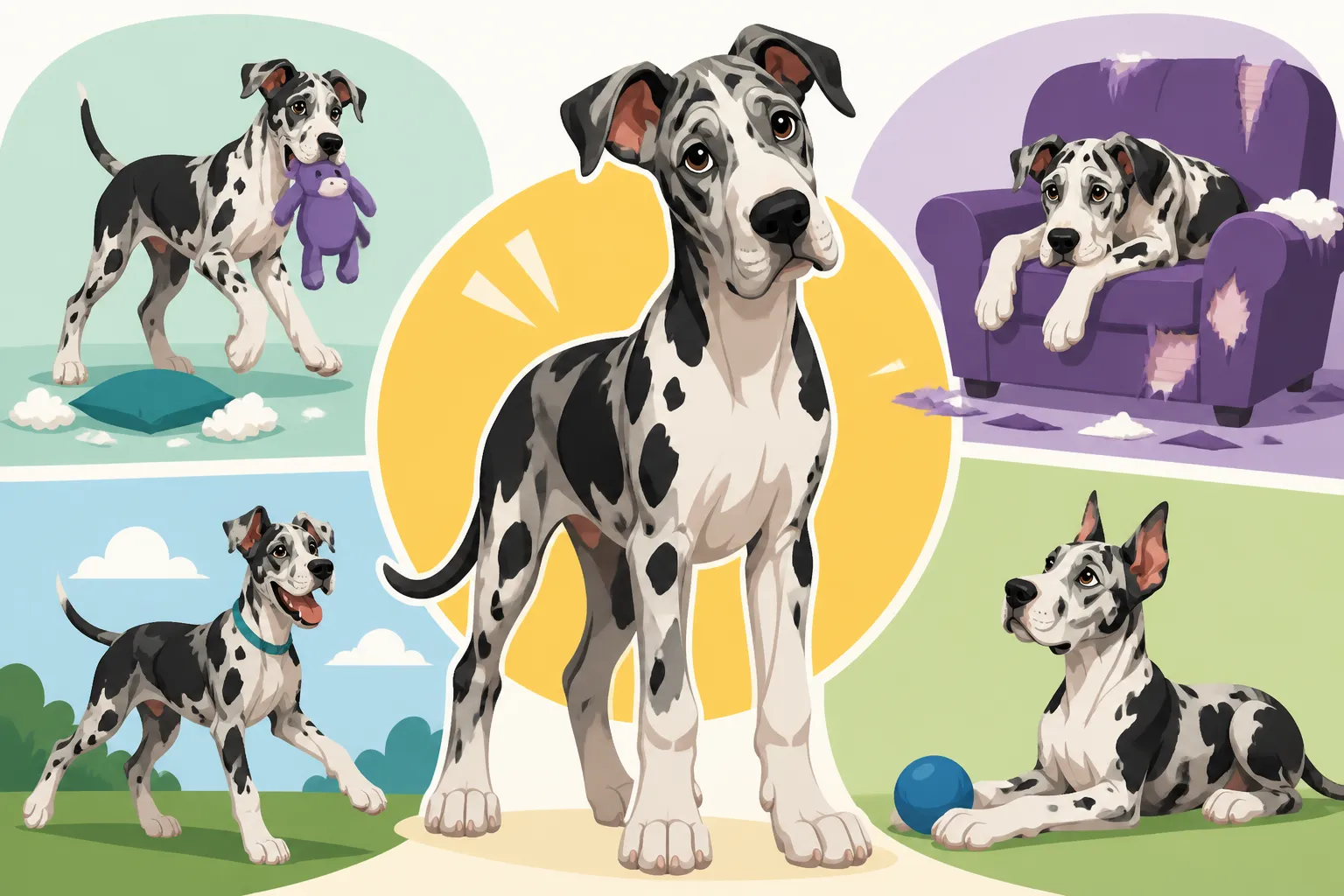
Many Great Dane owners are surprised by the surge in energy during adolescence. While Dane puppies have their bursts of zoomies, adolescent Danes can seem to have an endless well of energy that, if not properly channeled, can lead to destructive behaviors. Chewing, digging, and general rambunctiousness can become more pronounced. Suddenly, those "indestructible" toys you bought on Amazon are looking a little less sturdy.
It's crucial to provide appropriate outlets for this energy. This doesn't mean forced, high-impact exercise that could damage their developing joints – remember to respect Exercise Limits While a Great Dane Is Still Growing. Instead, focus on mental stimulation, structured walks, and safe, free play. Long walks on varied terrain, puzzle toys, scent work, or even short training sessions throughout the day can help burn off steam. A tired Dane is a good Dane, but more importantly, a mentally stimulated Dane is less likely to invent their own (often destructive) fun. Rotate toys, offer appropriate chew items, and consider a sturdy snuffle mat to engage their brains.
Reaffirming Training and Structure
If you thought puppy training was done, think again! Adolescence is a prime time to revisit and solidify all those good habits, ensuring your giant companion remains a well-mannered member of the family.
Consistency is Your New Best Friend
I cannot stress this enough: consistency. It's the bedrock of successful training, especially during the trying adolescent months. Your Great Dane is looking for loopholes, and if they find one, they'll exploit it. This means every member of the household needs to be on the same page with commands, rules, and expectations. If one person lets them jump, and another corrects them, your Dane will be confused and will likely continue jumping.
Establish clear rules, write them down if necessary, and ensure everyone follows them. This applies to everything from feeding times and potty breaks to how you respond to barking or leash pulling. If you're working on Getting a Great Dane to Walk on a Loose Leash, everyone who walks the dog needs to use the same tools (like a front-clip harness) and the same techniques. When your Dane realizes that the rules are always the same, regardless of who is present, they'll be far more likely to comply. It removes the ambiguity, which is very comforting for them.
Revisit Basic Commands and Proofing
Think of adolescence as a fantastic opportunity to proof your existing commands. "Proofing" means practicing commands in increasingly distracting environments. Start in a quiet room, then move to the backyard, then a quiet park, and eventually a bustling street corner. Your Dane might know "sit" perfectly in your living room, but can they "sit" when a child on a scooter whizzes by? This is where many adolescent Danes struggle.
Go back to basics, but challenge them with distractions. Make sure your rewards are still high-value, especially when working in more stimulating environments. If they succeed, celebrate big! If they struggle, simply reduce the distraction level and try again. Don't punish mistakes; guide them to the correct answer. This repeated, positive reinforcement will strengthen their understanding and impulse control, helping them remember What a Great Dane Must Know by Six Months even when the world gets exciting.
Harnessing Adolescent Energy Positively
Your adolescent Great Dane has a lot of energy, and it's up to you to give them appropriate outlets. Simply letting them out in the backyard isn't usually enough, as many Danes will just stand there or bark at squirrels. Structured activities are key. This doesn't mean hours of intense running, which could be detrimental to their joints. Instead, consider long, sniffy walks, where they get to explore and use their brain. Scent games, where you hide treats around the house or yard for them to find, are fantastic for mental stimulation and don't involve heavy impact.
Consider introducing them to dog sports like obedience, rally, or even beginner agility (with careful guidance to protect joints). Even if you never compete, the training involved is wonderful for building focus and confidence. Chew toys from reputable brands found on Amazon that are designed for power chewers can also be a lifesaver, redirecting their urge to chew from your furniture to something acceptable. Regularly engaging their minds and bodies helps prevent boredom-driven destructive behaviors and reinforces a positive bond between you.
Socialization in Adolescence
Just because your Great Dane is past puppyhood doesn't mean their socialization journey is over. In fact, adolescence can bring new challenges to how they interact with the world and others.
Navigating Fear Periods and Reactivity
It might sound counterintuitive, but many dogs, including Great Danes, go through secondary fear periods during adolescence. Your once-confident puppy might suddenly become wary of things they previously ignored – a trash can, a certain type of person, or even a new sound. This is a normal part of their brain development as they process and categorize experiences. If not handled correctly, this can lead to reactivity (barking, lunging) out of fear or uncertainty. It's important to understand A Great Dane That Is Anxious Rather Than Gentle can sometimes stem from these fear periods.
If you notice your Dane becoming fearful, avoid forcing them into situations that overwhelm them. Instead, create positive associations. If they're scared of men with hats, for example, ask a friend with a hat to stand at a distance and toss treats towards your Dane. Keep interactions positive, brief, and always allow your Dane to retreat if they're uncomfortable. Professional guidance from a positive reinforcement trainer can be invaluable during this time, helping you build their confidence safely.
Controlled Interactions with Other Dogs
The way your Great Dane interacts with other dogs can also change during adolescence. They might become more boisterous in play, or conversely, more selective or even reactive towards unknown dogs. Their sheer size means that even well-intentioned rough play can be overwhelming or even dangerous for smaller or less robust dogs.
Focus on controlled, positive interactions. Seek out play dates with well-matched, tolerant adult dogs who understand "Dane play." Supervise all interactions closely and be ready to intervene if play gets too rough or becomes one-sided. Dog parks, while popular, can be risky for adolescent Danes due to unpredictable dynamics and the potential for negative experiences that could shape their future interactions. Prioritize quality over quantity when it comes to dog-dog socialization, ensuring every encounter builds their confidence and good manners. This is especially true if your Dane displays A Great Dane That Lunges at Other Dogs.
Continuing Exposure to Novel Experiences
Don't let your Dane's size or potential awkwardness stop you from continuing their exposure to the world. A well-socialized adult Great Dane is a joy to be around, and that comes from a broad range of positive experiences during their formative years, including adolescence. Continue to take them to different places: pet-friendly stores, parks, friends' houses, and even just for car rides to new neighborhoods.
The goal isn't to expose them to everything at once, but rather to keep their world expanding in a safe, positive way. Let them see, hear, and smell new things, always pairing these experiences with positive reinforcement (tasty treats, calm praise). This helps build resilience and ensures they grow into confident, well-adjusted adults. Remember the early work you did with Socializing a Great Dane Puppy Early and continue to build upon that foundation, adapting as they grow.
Addressing Specific Adolescent Challenges
Some adolescent behaviors are particularly common in Great Danes due to their size and developmental stage. Being prepared for these can make a world of difference.
Counter Surfing and Food Stealing
Let's face it, a Great Dane's head is often at counter height, and their nose is incredibly powerful. As they grow more confident and their impulse control wavers, counter surfing or even outright food stealing from tables becomes a very real problem. It's frustrating to walk away for a moment and return to find your dinner gone! This is a classic example of Why a Great Dane Steals Food Off Counters.
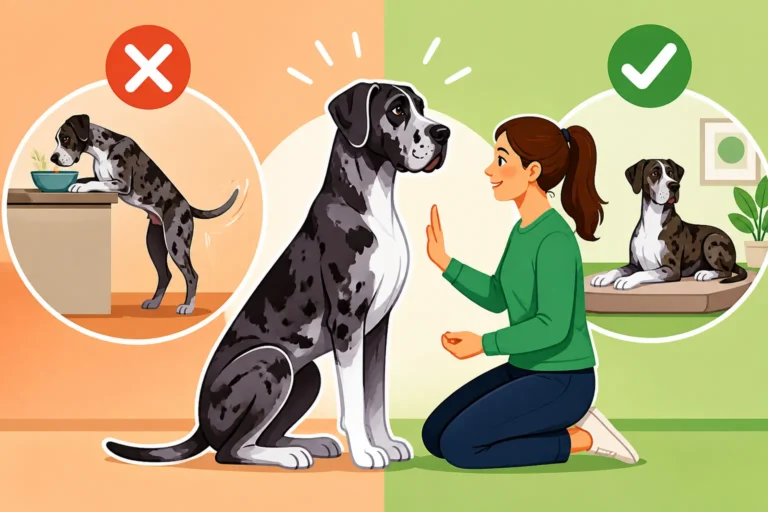
The best defense is a good offense: management. Keep counters clear of temptation. If food is out, your Dane should be crated, behind a gate, or securely in another room. Teach a strong "leave it" command and practice it consistently. Reward them heavily for keeping four paws on the floor when food is present. A simple "go to your bed" command, with a reward for staying there while you prepare meals, can also be a lifesaver. Remember, if they succeed even once, they've learned it's a viable strategy. Programs like BAXTER & Bella often have specific modules on managing household manners like this.
Jumping Up and Body Slamming
The affectionate Great Dane lean is charming, but an adolescent Great Dane jumping up or body slamming can be dangerous due to their sheer weight. It's often an enthusiastic greeting, but it can knock over children, elderly family members, or simply injure unsuspecting guests. This is a common issue that needs firm, consistent correction as you work on Stopping a Great Dane Jumping Up on People.
Teach and reward an alternative behavior, such as "four on the floor" or a polite sit for greetings. When your Dane attempts to jump, turn your back, cross your arms, and completely ignore them. Only when all four paws are on the ground do you turn around and offer calm praise and a treat. Enlist the help of visitors, asking them to do the same. Consistent, immediate feedback is crucial for them to understand that jumping gets them absolutely no attention. If you let them jump on you "just this once," they don't learn the rule.
Separation Anxiety and Alone Time Woes
Adolescence can also bring about or exacerbate separation anxiety. Your Dane might have been fine being left alone as a puppy, but suddenly, they're destructive, howling, or having accidents when you leave. This often stems from a combination of increased attachment, heightened awareness of your absence, and potentially a lack of adequate Building Up a Great Dane's Alone Time.
Work on building up their alone time gradually. Start with very short absences (just a minute or two), returning before they become anxious. Slowly increase the duration. Ensure they have plenty of exercise and mental stimulation before you leave them. Provide engaging, safe chew toys or a food puzzle to keep them occupied. A durable KONG stuffed with frozen peanut butter or plain yogurt can be a great distraction. If the anxiety is severe, consult with a professional positive reinforcement trainer or veterinary behaviorist. Remember, this isn't just "being naughty"; it's often genuine distress and requires empathy and structured intervention.
| Adolescent Behavior | Owner Response | Why it Works |
|---|---|---|
| Ignoring Commands | Revisit basics in low distraction, use high-value rewards. Gradually add distractions. | Rebuilds focus and shows that compliance is always rewarded, regardless of environment. |
| Testing Boundaries | Consistent application of rules by ALL family members. Never give in "just once." | Establishes firm expectations; removes ambiguity for the dog. |
| Counter Surfing | Strict management (clear counters, gates), "leave it" command, reward "four on the floor." | Prevents self-rewarding behavior and teaches alternative, acceptable actions. |
| Jumping Up | Turn away, ignore. Only give attention when all four paws are on the ground. | Teaches that jumping removes desired attention; politeness earns it. |
| Destructive Chewing | Provide appropriate chew toys (rotating them), increase mental stimulation and exercise. | Redirects natural chewing instincts to acceptable items, reduces boredom. |
| Fearfulness | Create positive associations with perceived threats, never force interaction. | Builds confidence and changes negative emotional responses to neutral or positive ones. |
| Leash Pulling | Use appropriate training tools (e.g., front-clip harness), consistent "heel" practice. | Manages physical strength while teaching desired walking manners. |
Disclaimer
This article is for general informational purposes only and does not constitute professional advice. Laws, prices and regulations vary by location and change over time. Consult a qualified professional for guidance on your specific situation.