Whether Great Dane Tails Are Ever Docked
One common question that often comes up in Great Dane circles, especially for those new to the breed or just admiring these magnificent dogs, revolves around their tails. Many people wonder if Great Dane tails are ever docked, much like they see with some other breeds. It’s a valid query, given how frequently we encounter images of dogs with altered appearances. This guide aims to thoroughly explore the history, current practices, and overall discussion surrounding Great Dane tails and the practice of docking.
The Historical Practice of Tail Docking in Dogs
For centuries, the practice of tail docking, which is the removal of part of an animal's tail, was common across many dog breeds. It wasn't just a cosmetic choice; it was rooted in specific beliefs and perceived necessities that have largely changed over time. Understanding this historical context helps shed light on why the question of docking still arises today.
Why Tails Were Docked in the Past
Historically, tail docking was performed for a variety of reasons, most of which were related to the dog's working function. For hunting breeds, especially those that worked in dense undergrowth or pursued game through thickets, tails were often docked to prevent injury. A long, active tail could easily get snagged, cut, or broken, leading to pain, infection, and time off work. Imagine a spirited pointer crashing through thorny bushes; a long tail could be a real liability.
Similarly, some guarding or fighting breeds had their tails docked. The idea was to reduce a potential "handle" for an opponent (animal or human) to grab, thereby preventing injury or control during a confrontation. In some cases, it was even believed to prevent rabies or strengthen the dog's back, though these theories were later debunked. These practices were often carried out by owners or breeders, sometimes without veterinary oversight, and usually on very young puppies to minimize pain and healing time.
The Tradition's Evolution for Different Breeds
Over time, as many breeds transitioned from working roles to companion animals, the reasons for docking became less about practical necessity and more about tradition or aesthetics. Some breed standards began to include docked tails as a characteristic feature, perpetuating the practice even when the original rationale no longer applied. For example, certain terrier breeds, known for going to ground, maintained docked tails in their standards long after many stopped hunting badgers or foxes.
The public perception also played a role. A docked tail became synonymous with a particular breed's "look." This tradition, passed down through generations of breeders and owners, meant that even if a dog was never going to work in the field, its tail might still be docked to conform to what was considered "correct" or characteristic for its breed. This created a strong inertia, making it difficult to shift away from the practice even as veterinary ethics and animal welfare concerns gained prominence.
Great Danes and the Question of Tail Docking
Now, let's get to the heart of the matter for our beloved giants. When we consider the Great Dane, the question of tail docking presents a different history and a unique set of considerations compared to many other breeds.
Great Dane Tails: Naturally Long and Elegant
Unlike breeds where docking was a long-standing tradition tied to their original purpose, Great Danes were historically bred for hunting large game like wild boar. While this was a dangerous job, their tails were typically left natural. A Great Dane's tail is naturally long, tapering to a fine point, and carried in a gentle curve when alert, or hanging straight down when relaxed. It's an integral part of their imposing yet elegant silhouette, often described as the "Apollo of Dogs."
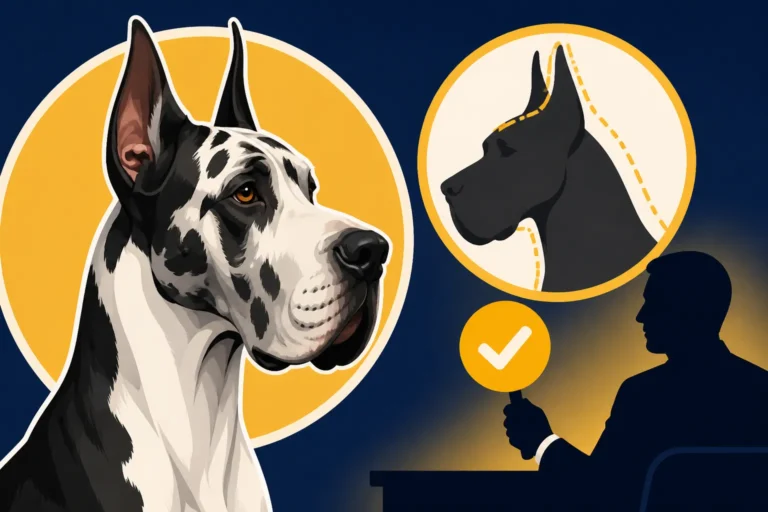
The breed standard for Great Danes, as recognized by major kennel clubs around the world, specifically describes a natural, undocked tail. In fact, many international breed standards and showing organizations now explicitly prohibit docking, and dogs with docked tails would be disqualified from competition. This reflects a global shift in animal welfare perceptions. The majestic sweep of a Great Dane's tail is a beautiful, expressive feature, communicating much about their mood and intentions. It's a key element of their physical grace and balance. The Great Dane the Show Ring Is Looking For places high value on correct proportions, and an undocked tail contributes significantly to this.
"Happy Tail Syndrome" and the Great Dane
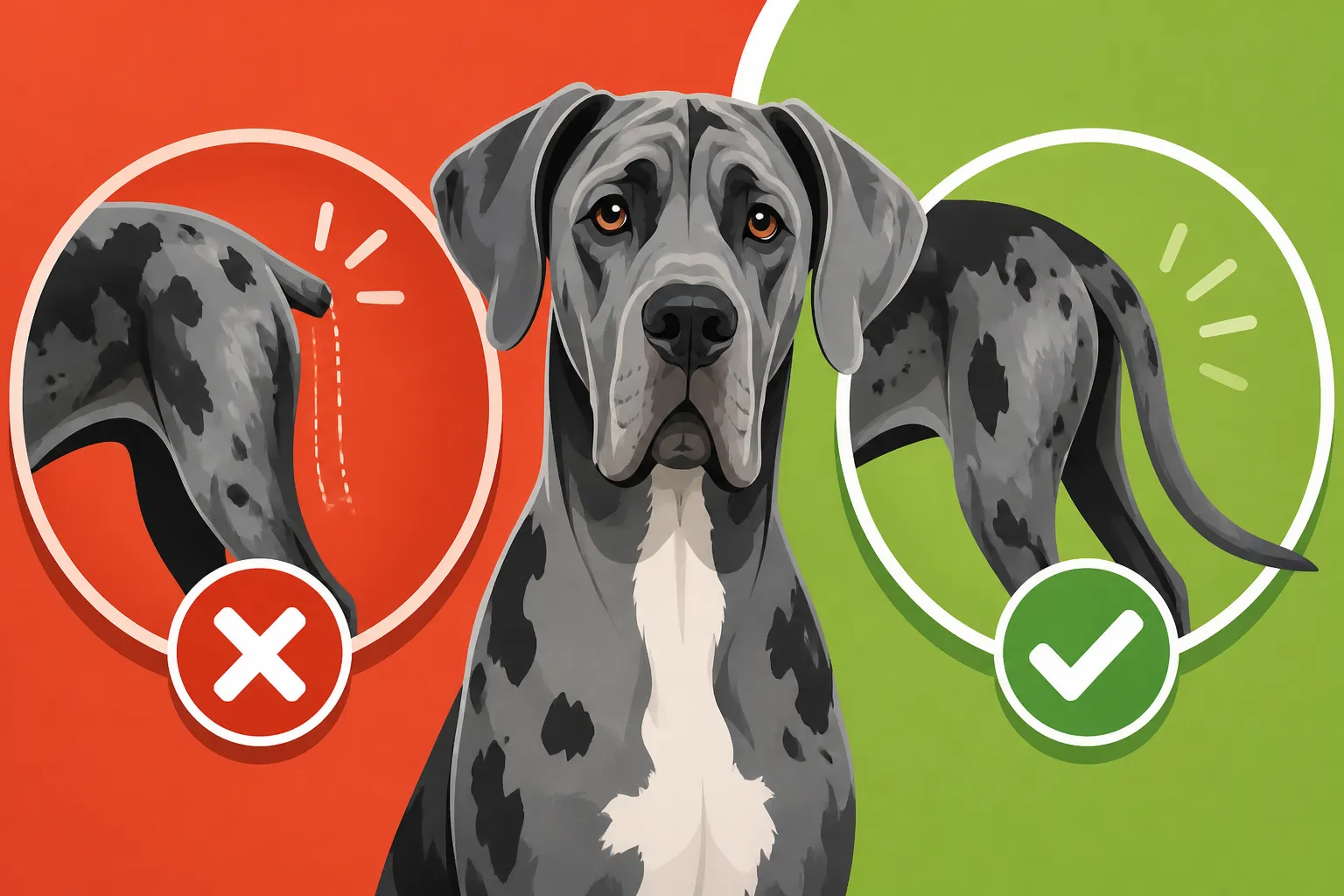
While Great Dane tails are not historically or commonly docked, there's a practical concern that sometimes leads owners to ask about modifications: "Happy Tail Syndrome." This isn't a disease, but rather an injury that can occur when a large, powerful tail, wagging with enthusiastic force, repeatedly strikes hard surfaces.
Imagine a Great Dane, thrilled to see you, wagging its tail against a concrete wall, a wooden table leg, or even furniture. The sheer power and speed of their tail, combined with its length and relatively thin skin over bone, can lead to nasty lacerations, scrapes, and bruising. These injuries are often slow to heal because the tail is constantly moving, reopening wounds and preventing scabbing. It can be a very messy and frustrating problem for owners, often resulting in blood spattered on walls and furniture, and considerable discomfort for the dog.
In severe, recurrent cases of "happy tail," where the tail is constantly injured and cannot heal, some veterinarians and owners might consider tail amputation as a last resort. This is not "docking" in the traditional sense, which is usually done for cosmetic or preventative reasons on puppies. Amputation in these cases is a medical necessity, performed to improve the dog's quality of life and prevent chronic pain and infection. It's a significant surgical procedure, not a routine cosmetic alteration, and would only be recommended after all other conservative treatments have failed. This is a very different scenario from the elective docking of tails in young puppies. Happy Tail Injuries in a Great Dane delves deeper into managing and preventing these frustrating injuries.
Modern Perspectives and Regulations on Tail Docking
The landscape surrounding tail docking has changed dramatically in recent decades, driven by advancements in veterinary medicine, heightened awareness of animal welfare, and evolving ethical standards.
Veterinary Stance and Ethical Debates
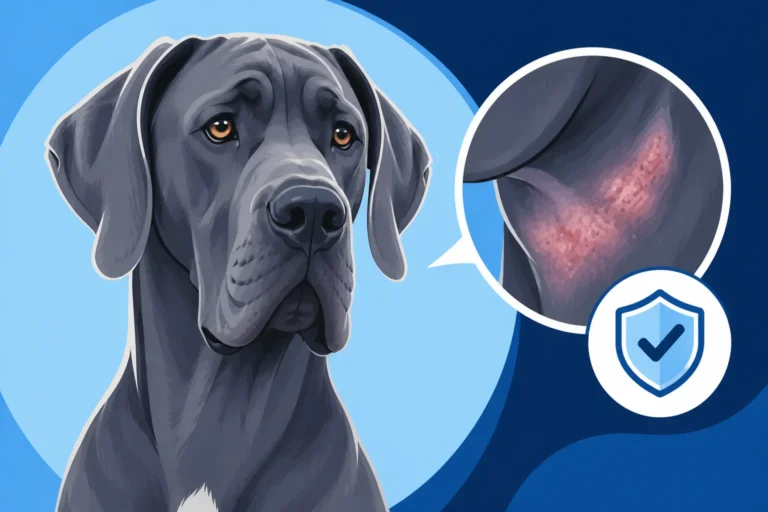
Today, the vast majority of veterinary organizations worldwide oppose routine tail docking for cosmetic reasons. They classify it as an unnecessary surgical procedure that causes pain and carries risks associated with anesthesia and infection, without providing any demonstrable health benefit to the animal. The tail is a complex anatomical structure, containing vertebrae, muscles, nerves, and blood vessels, and plays crucial roles in balance, mobility, and communication. Removing part of it impacts these functions.
The ethical debate centers on whether humans have the right to alter a dog's natural anatomy for purely aesthetic preferences or based on outdated traditions. Proponents of docking often cite tradition, breed aesthetics, or perceived injury prevention. Opponents emphasize the dog's right to its natural body parts, the pain involved, and the lack of scientific evidence supporting the health benefits. The trend is overwhelmingly towards preserving the natural state of dogs.
Legal Status and Breed Standards
The legal status of tail docking varies significantly across the globe. In many countries, particularly in Europe, tail docking is outright banned or severely restricted, with exceptions only for documented medical necessity performed by a veterinarian. Countries like the United Kingdom, Australia, and many parts of the European Union have robust animal welfare laws that prohibit non-medical docking.
In North America, the situation is more nuanced. While the American Veterinary Medical Association (AVMA) opposes cosmetic docking, and some states or provinces have restrictions, it is not universally banned. However, even where not explicitly illegal, many breeders and owners are voluntarily moving away from the practice. Reputable breed clubs, including The Great Dane Club of America Is, while acknowledging historical aspects, align their standards with the welfare-driven shift towards natural tails. For Great Danes, specifically, the breed standard generally calls for an undocked tail, making the question of whether they are ever docked mostly a historical one or one addressed only in extreme medical circumstances.
Caring for a Natural Great Dane Tail
Since the vast majority of Great Danes today proudly sport their natural, long tails, it's important for owners to understand how to care for them properly. A natural tail requires minimal but consistent attention to keep it healthy and free from injury.
First and foremost, ensuring your Great Dane has appropriate space where it can wag its tail without constantly hitting hard objects is key. This might mean adjusting furniture placement, using soft surfaces indoors, or providing ample outdoor space. For instance, a durable dog bed from a brand like Chewy can offer a soft landing spot, and some owners even put protective wraps on their Dane's tail tip if they are prone to minor scuffs, similar to how one might Bedding a Great Dane to Protect Its Elbows.
Regularly inspect your Great Dane's tail for any signs of injury, such as cuts, scrapes, swelling, or excessive licking. If you notice anything, clean the area gently and consult your vet. Keeping their nails trimmed helps prevent them from accidentally scratching themselves if they itch their tail. Trimming Nails on a Great Dane That Outweighs You is a task that needs regular attention with these big dogs, and it impacts their overall comfort.
Furthermore, a Great Dane's tail is a crucial part of its body language. Observing its movements can tell you a lot about your dog's mood, from happy wags to tucked-under anxiety. Understanding this communication is part of the bond you build with your gentle giant. A healthy, natural tail allows them to express themselves fully, whether they're leaning into you for a cuddle or doing a full-body happy wiggle. The Great Dane's Reputation as the Apollo of Dogs really comes to life when you see their full, expressive tails in action.
| Aspect of Tail Docking | Traditional Docking | Medical Amputation (e.g., Happy Tail) | Great Dane Tail Status |
|---|---|---|---|
| Purpose | Aesthetic, Tradition, Perceived Prevention | Treat severe, recurrent injury/infection | Natural, expressive, functional |
| Timing | Typically 2-5 days old | Any age, as medically necessary | Born with natural tail |
| Legal Status | Banned/restricted in many countries | Permitted for medical reasons | Generally required to be natural |
| Ethical Stance | Widely opposed by veterinary bodies | Accepted when medically indicated | Preferred for welfare and breed standard |
| Impact on Dog | Pain, loss of communication/balance | Relief from pain/chronic injury | Full expression, balance, communication |
In conclusion, while tail docking was historically practiced on many dog breeds for various reasons, it is not a traditional or current practice for Great Danes. Their tails are naturally long and elegant, and modern veterinary ethics and breed standards overwhelmingly favor leaving them intact. The only time a Great Dane's tail might be surgically altered is in rare medical cases, such as severe "happy tail" injuries, which is distinct from elective cosmetic docking. As Great Dane owners, our focus should be on celebrating and caring for these magnificent dogs exactly as nature intended.
Disclaimer
This article is for general informational purposes only and does not constitute professional advice. Laws, prices and regulations vary by location and change over time. Consult a qualified professional for guidance on your specific situation.