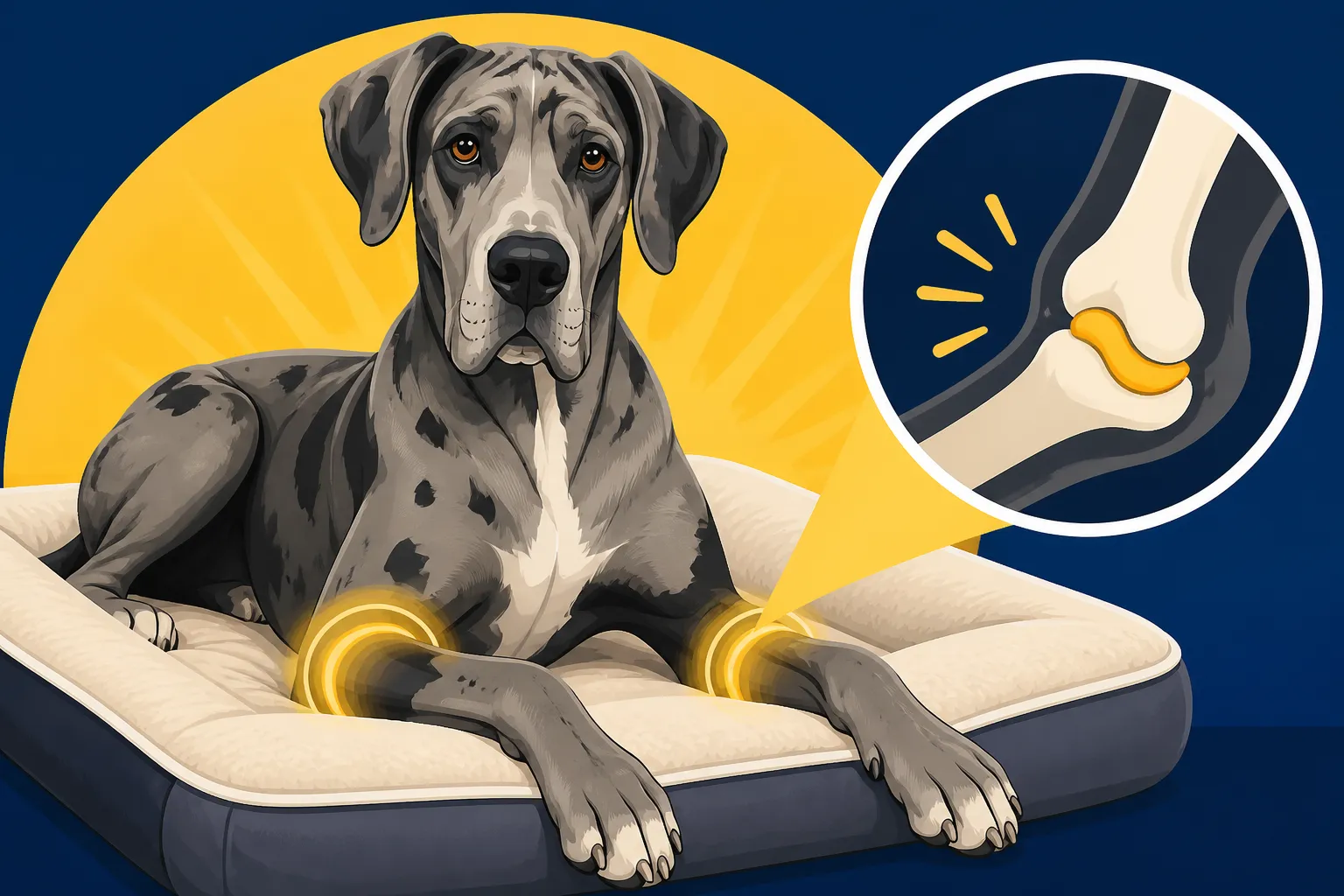
Bedding a Great Dane to Protect Its Elbows
One of the silent challenges of living with a magnificent Great Dane is safeguarding their joints, particularly their elbows, from the constant pressure of their immense weight. Many owners don't realize that simply letting their gentle giant flop down on a hard floor can lead to painful, chronic conditions over time. This comprehensive guide will walk you through everything you need to know about choosing and maintaining the right bedding to protect your Great Dane's precious elbows, ensuring their comfort and long-term health.
The Unique Vulnerability of a Great Dane's Elbows
Great Danes are undeniably impressive, but their sheer size, while majestic, also comes with specific anatomical vulnerabilities. Their elbows, in particular, are prone to certain issues that can cause discomfort and, if left unaddressed, lead to more serious problems. It's a heavy price to pay for being so grand!
Why Giant Breeds Develop Elbow Hygromas and Calluses
Imagine carrying an extra person's worth of weight around on your frame. That's essentially what a Great Dane's skeletal system, including its joints, experiences every single day. When a heavy dog like a Great Dane repeatedly drops down onto a hard surface – think concrete, tile, or even thin carpet over hardwood – the force of their body weight, especially at impact, is concentrated on specific bony protrusions, like their elbows.
This repeated trauma doesn't happen just once; it's a constant, daily occurrence. Over time, the body tries to protect these areas. In the case of calluses, the skin at the elbow thickens and hardens, often losing hair, in an attempt to create a protective pad. It's the body's natural response to friction and pressure. While calluses themselves aren't usually painful, they indicate that the area is under stress and can crack, bleed, or become infected if not managed.
Hygromas, on the other hand, are more concerning. These are fluid-filled sacs that develop over bony prominences as a direct result of chronic, low-grade trauma. Essentially, the body tries to create a cushion to protect the bone, filling a bursa (a small sac of fluid that reduces friction between tissues) with more fluid than usual. They look like a soft, squishy lump on the outside of the elbow. Initially, they might be small and painless, but they can grow quite large, become inflamed, and are very prone to infection if the skin breaks. It's critical to remember that this isn't just a cosmetic issue; it's a sign that the joint isn't adequately protected. For growing pups, issues like these can sometimes tie into broader Growth Disorders in a Great Dane Puppy, emphasizing the need for comprehensive care from a young age.
Recognizing the Early Signs of Elbow Issues
Catching elbow problems early is key to managing them effectively and preventing escalation. As a Great Dane owner, you become intimately familiar with every inch of your dog, and their elbows should be a regular point of inspection.
Calluses are usually the first thing you'll notice. Look for patches of skin on the point of their elbows that are thicker, tougher, and often hairless compared to the surrounding fur. The color might also be darker. Run your hand over their elbows daily; you'll feel the change in texture. While many Great Danes will develop some degree of callusing over their lifetime, excessive thickening, cracking, or any signs of tenderness or redness warrant attention.
Hygromas, as mentioned, present as a soft, sometimes slightly movable, swelling. It might start as a pea-sized lump and gradually grow. At first, your Dane might not show any discomfort, but as it gets larger, it can become noticeable, especially when they lie down. If you feel A Soft Swelling on a Great Dane's Elbow, it’s important to get it checked out by your vet right away, even if your dog isn't limping. Early veterinary assessment can determine the best course of action, which often includes preventing further trauma with proper bedding and sometimes medical intervention if the hygroma becomes infected or very large. Lameness, pain, or an open, weeping sore are much later and more serious signs, indicating an infection or significant discomfort that needs immediate veterinary care.
Understanding Different Bedding Materials and Their Impact
Choosing the right bed for your Great Dane isn't just about picking the biggest one you can find. The material inside that bed makes all the difference in providing the necessary support and preventing those dreaded elbow issues.
Memory Foam vs. Orthopedic Foam: What's the Difference for a Dane?
When it comes to high-quality dog beds, you'll often hear "memory foam" and "orthopedic foam" used, sometimes interchangeably, but there are important distinctions, especially for a giant breed like a Great Dane.
Memory foam, originally developed by NASA, is a type of polyurethane foam that reacts to body heat and pressure, conforming to the shape of whatever is resting on it. For your Great Dane, this means the foam molds around their heavy body, distributing their weight evenly. This even distribution helps to reduce pressure points on their elbows, hips, and other bony areas, cradling them in comfort. It can be incredibly beneficial for older Danes with arthritis or those recovering from injuries, as it provides a personalized cocoon of support. However, memory foam can sometimes retain heat, which might be a consideration for Danes who tend to get warm easily, though many modern dog beds incorporate cooling gels or breathable covers to counteract this.
Orthopedic foam, on the other hand, is a broader term that usually refers to high-density, supportive foam. It doesn't necessarily conform to the body in the same way memory foam does, but it offers robust, consistent support that prevents a heavy dog from "bottoming out" – sinking straight through the foam to the hard floor beneath. For a Great Dane, a thick, high-density orthopedic foam base is paramount. It needs to be firm enough to resist compression under significant weight, maintaining its supportive properties over time. Often, the best orthopedic beds for giant breeds combine a dense base layer of orthopedic foam with a top layer of softer memory foam or gel foam to offer both firm support and plush comfort. The key is that it prevents the dog from sinking too much, keeping their spine aligned and pressure off joints.
The Pros and Cons of Alternative Bedding Types
While memory foam and orthopedic foam are often the gold standard, you'll encounter other bedding options. It's important to understand why some may not be the best fit for your Great Dane.
- Bean Bags and Shredded Foam: These might seem appealing because they contour to the dog's shape, similar to memory foam. However, the internal filling (beans, shredded foam, or even cedar chips) shifts. This means that while it might feel supportive for a moment, it can easily create divots or thin spots where your Great Dane's elbows end up pressing against the hard floor. They don't offer the consistent, unyielding support required for a heavy breed, and they often compress significantly over time, requiring frequent fluffing or refilling. Cedar chips, while natural, can also be dusty and potentially irritating to some dogs' skin or respiratory systems.
- Simple Blankets or Thin Pads: While a soft blanket is a lovely addition for comfort, it provides virtually no protection against impact or pressure when laid directly on a hard floor. These are fine as an additional layer on top of a proper orthopedic bed but are insufficient on their own. Relying solely on these for your Great Dane is a sure way to invite elbow problems.
- Raised Beds or Cots: These are excellent options, particularly for Danes who get warm easily or for outdoor use. They typically feature a sturdy frame and a suspended mesh or fabric sleeping surface, lifting the dog off the hard ground entirely. This provides excellent airflow and eliminates pressure points on joints. However, not all Great Danes immediately take to them, and some older dogs might find it slightly harder to get on and off, especially if they have mobility issues. They also don't offer the same cushioned comfort as a thick foam bed. Nevertheless, they are fantastic for keeping elbows off hard surfaces. It’s worth exploring Raised Beds and Whether a Great Dane Uses One if you’re considering this option.
| Bedding Type | Support Level (Great Dane) | Durability | Cost | Pros | Cons |
|---|---|---|---|---|---|
| Orthopedic Foam | Excellent (dense, firm) | High | $$$$ | Prevents bottoming out, consistent support, joint health focus | Can be heavy, higher upfront cost |
| Memory Foam | Excellent (conforming) | High | $$$$ | Contours to body, pressure point relief, good for older dogs | Can retain heat, higher upfront cost |
| Blended Foam | Excellent (best of both) | High | $$$$ | Combines firm support with contouring comfort | Often the most expensive |
| Raised Cot/Bed | Excellent (off ground) | Medium-High | $$$-$$$$ | Excellent airflow, eliminates ground pressure, good for outdoors | Some dogs don't like suspended feel, less plush comfort |
| Shredded Foam/Fiber | Poor-Medium (shifts) | Medium | $$-$$$ | Can be soft, somewhat moldable | Shifts, creates divots, provides uneven support, compresses quickly |
| Bean Bag | Poor (shifts, unstable) | Medium | $$-$$$ | Conforms initially | Shifts dramatically, inadequate consistent support, punctures easily |
| Simple Blanket/Pad | Very Poor (no support) | Low | $ | Cheap, portable | No joint protection, bottoms out immediately, only for on top of a proper bed |
What to Look for in a Great Dane Bed
Now that we understand the types of materials, let's dive into the specifics that make a dog bed truly suitable for your colossal companion. It's about more than just aesthetics; it's about engineering for a giant.
Optimal Thickness and Density for Support
This is arguably the most critical factor for a Great Dane bed. Their weight isn't just substantial; it's distributed over a large frame. A bed that might feel wonderfully plush for a smaller dog will flatten like a pancake under a Dane.
You need significant thickness – we're talking a minimum of 4-6 inches for a healthy adult Great Dane, and even more (6-8 inches) for older, heavier, or arthritic dogs. This thickness provides the necessary depth for the foam to absorb impact and cushion their joints. However, thickness alone isn't enough; it must be paired with high density.
Density refers to how much material is packed into the foam. A thick piece of low-density foam will still compress completely, allowing your Great Dane to "bottom out" and feel the hard floor beneath. High-density foam, on the other hand, resists compression, providing resilient support that holds its shape under immense weight. Think of it like a firm mattress for a human – it supports the spine and joints without creating pressure points. When shopping, look for terms like "high-density orthopedic foam" or "medical-grade foam." This density ensures that when your Great Dane lies down, their weight is evenly distributed, and their elbows (and hips, shoulders, and spine) are properly cushioned, preventing them from pressing against hard surfaces. This proper cushioning is vital for maintaining good spinal alignment and overall joint health, delaying the onset of issues like arthritis.
Durability and Washability: Practical Considerations
Let's be real: Great Danes are not delicate creatures. Their size means they can be accidental demolition experts. A flimsy dog bed won't last a week.
Durability: The bed cover needs to be robust. Look for heavy-duty fabrics like ripstop nylon, canvas, or tough microfiber that can withstand digging, nesting, and general wear and tear from giant paws. Reinforced stitching is a huge plus. Some Great Danes are also chewers, so consider beds with chew-resistant covers, though no bed is truly indestructible for a determined Dane. Investing in a highly durable bed upfront will save you money and frustration in the long run, rather than constantly replacing cheaper, weaker alternatives. Remember, you're not just buying a bed; you're buying peace of mind that it will stand up to your dog's lifestyle.
Washability: Great Danes are big, and big dogs mean big messes. They drool, they shed, they track in dirt, and sometimes they have accidents. A bed that can't be easily cleaned is a nightmare. Look for beds with removable, machine-washable covers. Ideally, the cover should be easy to zip off and put back on. Some beds also come with waterproof liners beneath the main cover, which is a lifesaver for protecting the foam core from moisture, odors, and accidents. This feature drastically extends the life of the bed and keeps it hygienic. Regularly cleaning the bed also contributes to a healthier environment for your Great Dane. Keeping a Great Dane's Bed Clean is about more than just aesthetics; it's about preventing skin irritations and general hygiene.
Sizing Up: Ensuring the Bed is Large Enough
This might seem obvious, but it's where many well-meaning owners fall short. A Great Dane needs a truly enormous bed. They aren't going to curl up into a tight ball like a terrier; they like to stretch out, sprawl, and change positions. If their bed isn't big enough for them to fully extend their body – nose to tail – without any part of them hanging off, it's too small.
To measure your Great Dane for a bed, have them lie down in their most stretched-out position. Measure from the tip of their nose to the base of their tail (or even the end of their hind paw if they're stretched long). Then, measure their height from the top of their head to the floor. Add at least 6-12 inches to these measurements to ensure ample room for shifting and sprawling. A common mistake is getting a bed that's just barely big enough when they're curled up, but leaves their elbows and hips exposed when they fully relax. The goal is for their entire body, including those vulnerable elbows, to be comfortably supported on the soft surface. A generously sized bed enhances comfort, encourages deeper sleep, and provides continuous protection for their joints.
Integrating the Right Bedding into Your Home
Once you’ve selected the perfect orthopedic fortress for your Great Dane, the next step is strategically placing it within your home. It’s not just about having a good bed; it’s about having good beds everywhere your Dane needs them.
Strategic Placement of Beds Around the House
Great Danes love to be near their people. They’re part of the family, and they want to be where the action is, which often means following you from room to room. This tendency means you can't just have one bed in a designated "dog zone." To truly protect their elbows, you need to provide soft, supportive surfaces wherever they choose to lie down frequently.
Consider placing a primary, extra-large orthopedic bed in the main living area where the family gathers. This is often the spot for evening relaxation, movie nights, or general hanging out. A second, perhaps slightly smaller but still robust, bed could go in a den, office, or bedroom where you spend significant time working or sleeping. Think about areas with Hard Floors and a Great Dane's Elbows, such as kitchens, entryways, or tiled sunrooms. If your Dane enjoys lying in these spots, place a large rug or an additional, slightly less expensive, but still orthopedic-grade mat there. The goal is to eliminate hard surfaces as resting spots entirely. Observe your dog's habits: where do they gravitate when they're tired? Ensure those spots are adequately cushioned.
Creating a Den or Crate with Proper Bedding
Many Great Dane owners choose to crate train their dogs, especially during puppyhood or for safety when they can't be supervised. A crate can be a wonderful den for your Dane, but only if it's comfortable and properly bedded. Remember, a crate should be a positive, safe space, not a punishment.
First and foremost, the crate itself must be appropriately sized. It needs to be large enough for your Great Dane to stand up, turn around, and lie down comfortably at full adult size. We're talking about the largest crates on the market; don't skimp here. You can explore options like Choosing a Crate a Great Dane Can Stand In for guidance on dimensions.
Once you have the right crate, the bedding inside is crucial. You can't just throw in a thin blanket. The bottom of the crate is often hard plastic or metal. Line it with a thick, durable, and comfortable orthopedic bed that fits snugly. This prevents the bed from shifting and bunching, which could expose hard surfaces. Look for crate pads specifically designed with high-density foam and waterproof covers. Some brands, available through retailers like Chewy or Amazon, offer specialized crate mats that provide excellent support. The comfortable bedding will encourage your Dane to view their crate as a cozy haven, a place where they can truly relax and rest their joints without worry.
Outdoor Bedding Considerations
If your Great Dane spends time outdoors – perhaps lounging on a patio, in a kennel run, or in a fenced yard – their outdoor resting spots need attention too. Hard concrete or cold, damp ground is just as detrimental to their elbows as an indoor tile floor.
For outdoor use, durability and weather resistance become paramount. Elevated cots (those raised beds we talked about earlier) are an excellent choice. Their mesh fabric allows for airflow, keeping your Dane cool in warmer weather, and they dry quickly if it rains. They lift your dog completely off the hard, potentially hot or cold, ground. Many dogs absolutely adore them.
If a cot isn't an option, or if your Dane prefers a more traditional bed, look for outdoor-specific orthopedic beds. These typically feature water-resistant or waterproof covers made from rugged materials that can stand up to the elements and dirt. They should still offer the same high-density foam support as their indoor counterparts. Make sure any outdoor bedding is placed in a shaded area to prevent overheating and is cleaned regularly to remove dirt, debris, and potential pests.
Maintaining Bedding and Your Dane's Elbow Health
Having the right bedding is a fantastic first step, but it’s not a set-it-and-forget-it solution. Ongoing maintenance of both the bed and your Great Dane’s elbows is essential for long-term health.
Regular Cleaning and Inspection of Beds
Just like your own mattress, your Great Dane's bed needs regular care to stay supportive, hygienic, and free of allergens. This isn't just about keeping your house tidy; it's about preventing skin issues and extending the life of your investment.
Cleaning Frequency: Aim to wash the removable cover of your Great Dane's bed at least once a month, or more frequently if your dog is particularly messy, sheds a lot, or has any skin conditions. Use a mild, pet-safe detergent and follow the washing instructions on the tag. A fresh, clean bed smells better and prevents the buildup of dander, dust mites, and bacteria that can irritate your dog's skin. If your bed has a waterproof liner, give that a wipe down or wash as well, as needed. Consistent cleaning also helps prevent odors from permeating your home, which is a bonus when dealing with a large dog. You can find excellent pet-specific cleaning products at retailers like Chewy or Amazon that are designed to handle tough pet odors and stains.
Inspection: Every time you strip the cover for washing, take a moment to inspect the foam core. Look for signs of compression, especially in the areas where your Great Dane's heaviest parts (hips, shoulders, elbows) usually rest. Does the foam spring back completely, or are there permanent indentations? Are there any tears or weak spots in the foam? If the foam has significantly compressed and no longer offers adequate support, it might be time to consider a replacement. This inspection also allows you to check for any hidden damage to the cover, such as small tears from nails or teeth, which could worsen quickly. Regularly replacing a bed that has worn through, as discussed in Replacing a Bed a Great Dane Has Worn Through, is a cost of ownership that pays off in your dog's health.
Monitoring Your Dane's Elbows and Skin
Your Great Dane's elbows are the direct beneficiaries (or victims) of their bedding situation. Regular, proactive monitoring is key to catching any developing issues early.
Make it a habit to gently feel and examine your Great Dane's elbows (and hocks, hips, and other bony points) at least once a week, preferably daily.
- For calluses: Feel the texture. Is it excessively rough? Is it cracking? Is there any redness, warmth, or tenderness when you touch it? If a callus is becoming dry and flaky, you can apply a pet-safe moisturizer or balm, like a paw butter, to keep the skin supple and prevent cracking. Many Great Dane owners find success with coconut oil or specialized dog balms to address Calluses on a Great Dane's Elbows and Hocks. The goal isn't to remove the callus, as it's a protective layer, but to keep the skin healthy within that layer.
- For hygromas: Look and feel for any soft swelling. Even a small, painless lump should be noted. If you find a new hygroma, or if an existing one has grown, become warm, red, painful, or if the skin over it has broken open, this is an immediate trip to the vet. An infected hygroma can be very serious and requires veterinary intervention. While good bedding helps prevent them, a pre-existing hygroma needs careful management. For deeper understanding, refer to Treating a Great Dane Hygroma Before It Opens.
Being proactive with both bedding and physical checks can save your Great Dane a lot of discomfort and potentially expensive veterinary bills down the line.
Budgeting for Quality Great Dane Bedding
Let's not sugarcoat it: Great Dane ownership is not for the faint of wallet. And when it comes to their beds, this reality hits hard. The sheer size and specialized needs of these magnificent dogs mean that their bedding is a significant investment.
The Upfront Cost of Durable, Supportive Beds
You might balk at the price tag of a truly high-quality orthopedic bed for a Great Dane. Compared to beds for smaller breeds, the cost can feel disproportionately high. However, it's crucial to shift your perspective from "expense" to "investment."
A proper orthopedic bed for a Great Dane can range from moderate to premium prices, depending on the brand, materials, and features. This is because it requires a large volume of high-density, expensive foam, robust covers, and often specialized construction to withstand their weight and size. Think about it: a well-made, supportive dog bed is essentially a specialized piece of furniture. It’s a tool for preventative health.
Consider the alternative: frequent vet visits for elbow hygromas, skin infections, or worsening arthritis due to inadequate support. These medical bills, especially for a giant breed, can quickly dwarf the cost of even the most expensive bed. For context, the bills nobody mentions when getting a Great Dane often include emergency care and chronic condition management, which can be staggering. The Great Dane Bills Nobody Mentions are real, and preventative care through proper bedding can significantly mitigate some of these financial strains. Investing in a high-quality bed is often a cost-saving measure in the long run.
Long-Term Value vs. Frequent Replacements
It's tempting to opt for a cheaper, thinner bed that looks "big enough" on the shelf. However, this is almost always a false economy with a Great Dane. A low-quality bed will compress quickly, offer inadequate support, and fall apart within months. You'll find yourself replacing it repeatedly, and the cumulative cost will likely exceed what you would have spent on one really good bed.
Moreover, the hassle of constantly shopping for, buying, and disposing of beds that fail to meet your Great Dane's needs is substantial. Think about the environmental impact of repeatedly buying and discarding cheap, ineffective beds. A durable, well-constructed orthopedic bed, even if it has a higher upfront cost, offers superior long-term value. Many reputable brands offer warranties, which further protect your investment, ensuring you get years of use and comfort for your Great Dane. While no bed lasts forever, especially under a giant dog, a quality bed will significantly outlast its cheaper counterparts and provide consistent, crucial support throughout its lifespan. This is why Replacing a Bed a Great Dane Has Worn Through becomes less frequent when you choose quality from the start.
Top Recommendations for Great Dane Beds
Now that you're armed with the knowledge of what makes a great Great Dane bed, let's talk about where to find them and what characteristics to prioritize.
Brands Known for Large Breed Orthopedic Support
The market for giant dog beds has expanded, but discerning quality is key. When looking for beds, you'll want to seek out brands that specifically cater to large and giant breeds, understanding the unique demands of their weight and size.
Many of these specialized brands focus on creating beds with high-density, multi-layered foam constructions. They often combine a firm, supportive base layer (to prevent bottoming out) with a softer, memory foam or gel-infused layer on top for comfort and pressure relief. The covers are typically made from durable, tear-resistant, and often waterproof materials, with robust zippers for easy removal and washing. Some popular brands found at major pet retailers like Chewy or Amazon are known for their commitment to orthopedic support for larger dogs. Look for beds that clearly state they are designed for "extra-large" or "giant breeds" and provide specific foam density and thickness measurements. Reading reviews from other Great Dane owners can also be incredibly helpful in guiding your decision. Don't shy away from brands that are a bit more expensive; as we discussed, this is an investment in your dog's health and comfort.
Custom and DIY Bedding Solutions
Sometimes, even the largest commercially available beds aren't quite perfect, or perhaps you have a Great Dane with very specific needs (e.g., a senior dog with extreme arthritis, or one who needs an odd-sized bed for a particular space). In these cases, custom or DIY solutions can be a fantastic option.
Custom Beds: Some smaller, specialized manufacturers offer custom-sized dog beds. You can provide your Great Dane's exact measurements and even specify the type and density of foam you want. While this can be pricier, it ensures a perfect fit and tailored support, which can be invaluable for dogs with significant joint issues. These types of businesses are often found through online searches for "custom dog beds" or through recommendations from other giant breed owners.
DIY Bedding: For the handy and budget-conscious, a DIY approach can work, provided you prioritize the right materials. The core component should be a large piece of high-density orthopedic foam. You can often purchase these from upholstery suppliers, foam retailers, or even Amazon in various thicknesses and densities. Aim for at least 4-6 inches of firm foam. Once you have the foam, you can create a durable, washable cover yourself using heavy-duty fabric like canvas, duck cloth, or outdoor upholstery fabric. Look for patterns online for zippered dog bed covers, or simply create a large envelope-style cover. The benefit here is complete control over material quality and size, potentially at a lower cost than a premium brand. Just be sure the fabric is tough enough to withstand your Great Dane's weight and activity. For those interested in deeper insights into the development of a Great Dane, considering Bone Development Problems in a Great Dane Puppy can help inform decisions about long-term joint health and preventative measures from an early age, including proper bedding. Whether it’s choosing an Orthopedic Beds a Great Dane Needs or making your own, the principle remains the same: robust, reliable support is non-negotiable.
Disclaimer
This article is for general informational purposes only and does not constitute professional advice. Laws, prices and regulations vary by location and change over time. Consult a qualified professional for guidance on your specific situation.