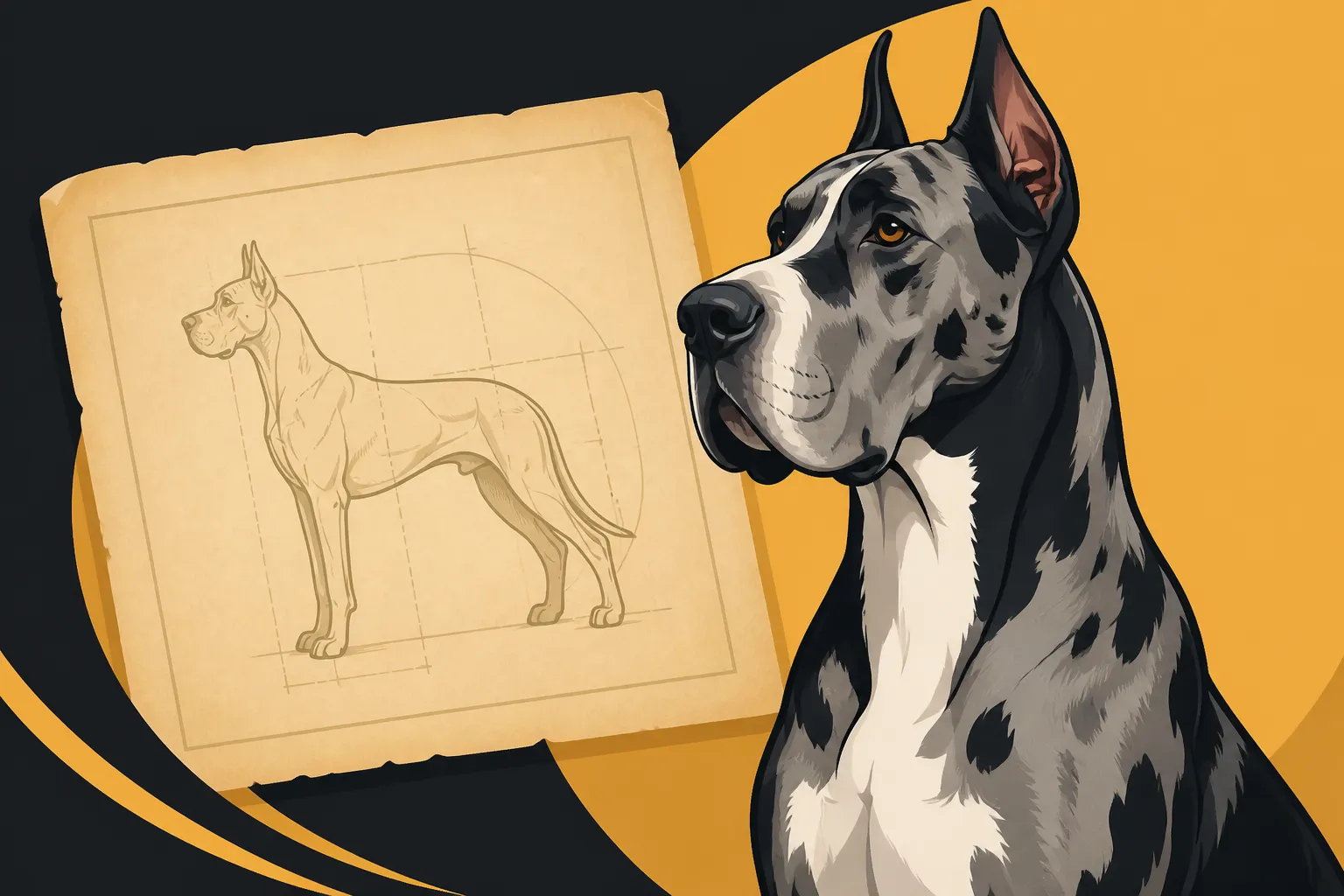
The First German Great Dane Standard
It's a common misconception, isn't it? People hear "Great Dane" and instantly picture some majestic hound lounging in a Danish castle. But the truth is, this magnificent breed, with its regal presence and gentle heart, has a rich history rooted deeply in Germany. Understanding where the breed truly comes from, and particularly the foundations laid by its very first official standard, is crucial for anyone who cherishes these incredible dogs and wants to appreciate their heritage. This guide will take you back in time to explore the genesis of the Great Dane standard, revealing how its earliest proponents shaped the "Apollo of Dogs" we know and love today.
The Misleading Name: Why "Great Dane" Isn't Danish
Let's clear up one of the biggest mysteries surrounding our beloved Danes right from the start: the name. It throws almost everyone off, and it's completely understandable why you might assume these dogs hail from Denmark. After all, the name literally says "Dane," implying a direct lineage to that Scandinavian country. However, the history books, and indeed the dedicated breeders and fanciers who brought the breed to prominence, tell a very different story. The connection to Denmark is tenuous at best, stemming from an old French term, "Grand Danois," which roughly translates to "Large Danish." This term was applied to a type of large, elegant dog seen in Denmark, but it certainly wasn't the origin point of the breed itself.
The True German Heritage
In reality, the Great Dane is unequivocally a German breed. In its home country, it's known as the "Deutsche Dogge," which literally means "German Mastiff." This name far more accurately reflects its origins and the dedication of German breeders to developing and refining it. Germany is where the different regional varieties of large, powerful dogs were meticulously crossbred and selectively bred over centuries to create the distinct type we recognize. Imagine the bustling German estates and hunting grounds, where powerful dogs were a necessity, not just for companionship, but for practical tasks like hunting wild boar. This demanding environment forged the early ancestors of the Great Dane, imbuing them with courage, strength, and an impressive stature.
The passion for these dogs in Germany led to a concerted effort to standardize the breed, creating a unified vision for its characteristics and temperament. This movement wasn't about simply having large dogs; it was about cultivating a specific type, one that combined immense power with elegance and a noble disposition. It was a proud declaration of a national breed, distinct from other mastiff types found across Europe. So, while the "Great Dane" moniker stuck in the English-speaking world, remember that in its heart, this dog is and always has been, truly German. Why the Great Dane Is Not Danish explains this fascinating divergence in naming history further.
Tracing Back to the Boar Hound
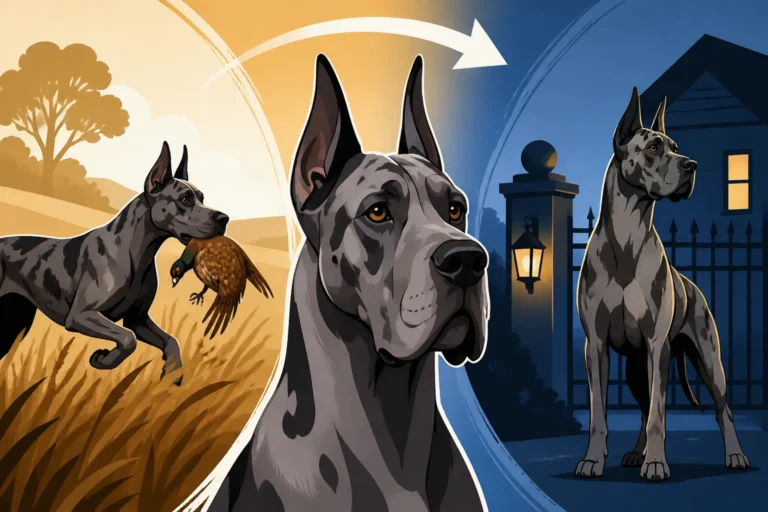
To truly understand the foundation of the first German Great Dane standard, we need to look back at its ancestors: the magnificent boar hounds. These weren't just any large dogs; they were specialized hunters, bred for the perilous task of confronting wild boars. Imagine a thick-skinned, powerfully muscled, and notoriously aggressive wild boar, and then imagine a dog courageous enough to track it, hold it at bay, or even engage it directly until the hunter could arrive. That was the job of the early boar hound. These dogs needed incredible speed, agility, and immense strength to tackle such formidable prey.
The earliest types of these hounds were varied, often coming from crosses between old English Mastiffs, known for their bulk and power, and Irish Wolfhounds, famed for their towering height and speed. This blend created a dog that was not only massive but also athletic and fast. The goal was to produce an animal that could move with incredible power and grace through rough terrain, track scent, and then hold its own against a dangerous opponent. This heritage of courage, athleticism, and imposing size is what laid the groundwork for the Great Dane's physical and temperamental traits, long before any official standard was penned. The Boar Hound the Great Dane Descends From delves deeper into the specifics of these ancestral breeds and their contributions.
Germany's National Dog: The Deutsche Dogge Takes Center Stage
The journey from a collection of powerful regional boar hounds to a recognized national breed was a long and dedicated one, fueled by the passion of German dog enthusiasts. It wasn't enough to simply have large dogs; there was a growing desire to unify these various types into a singular, distinct breed that could represent German canine excellence. This aspiration truly took hold in the late 19th century, a time of national pride and consolidation in Germany. The idea of a "Deutsche Dogge" – a German dog – resonated deeply and became a rallying cry for breeders.
From Regional Types to a Unified Breed
Before the official standard, there were several large dog types across Germany, each with slightly different characteristics depending on their local breeding lines and intended uses. You had the "Ulmer Dogge" (Ulm Mastiff), the "Danish Mastiff" (ironically, a German type), and the "Great Dane" of various regions. While they all shared a general impressive size and working capability, there wasn't a consistent appearance, temperament, or even name. This lack of uniformity made it difficult to promote them as a single, identifiable breed. Imagine trying to explain your dog's heritage when every other village had its own variation and nomenclature!
The vision was to create a dog that embodied strength, elegance, and nobility, a dog that was instantly recognizable as uniquely German. This meant bringing together the best qualities from these regional variants, ironing out inconsistencies, and establishing a clear ideal. It was a huge undertaking, requiring extensive discussions, careful breeding decisions, and a collective agreement on what the ultimate "Deutsche Dogge" should look like and how it should behave. The dedication to this goal was immense, driven by a desire to showcase a truly magnificent national breed to the world. The Great Dane as Germany's National Breed explores this fascinating period of national identity and breed development.
The Visionaries Behind the Standard
The creation of the first German Great Dane standard wasn't an accidental occurrence; it was the deliberate effort of passionate individuals and groups. Key among these were the early German fanciers and clubs, who recognized the immense potential of these dogs and the need for a definitive guide to their breeding. Foremost in this effort was the establishment of the Deutscher Doggen-Club in Berlin in 1888. However, the groundwork for the standard was laid even earlier.
A pivotal moment came in 1878 when a committee, led by Dr. Bodinus, met in Berlin. Their monumental task was to unite the different mastiff-like dogs of Germany under a single name and define their characteristics. This was a challenging endeavor, as regional loyalties and preferences ran deep. However, their efforts culminated in the decision to adopt "Deutsche Dogge" as the official name, solidifying its German identity. This set the stage for the formal creation of the very first breed standard. These visionaries weren't just dog lovers; they were meticulous observers, dedicated to preserving and enhancing the best traits of these powerful canines, ensuring a clear path for future generations of breeders. When Germany Adopted the Great Dane Officially provides more historical context on this critical period.
Crafting the Blueprint: What the 1881 Standard Demanded
The year 1881 marks a significant milestone in Great Dane history: the formal adoption of the first German Great Dane standard. This wasn't just a casual list of preferences; it was a carefully considered document, a blueprint that laid out the ideal characteristics for the breed. It provided a framework for breeders, judges, and owners, ensuring that everyone had a shared understanding of what made a "Deutsche Dogge" truly exemplary. This standard was a declaration of intent, a detailed description of the physical and mental attributes that would define the breed for generations to come.
Temperament: More Than Just Size
While the Great Dane's impressive size is undoubtedly its most striking feature, the 1881 standard understood that a magnificent physique was meaningless without a suitable temperament. The early standard emphasized a noble, courageous, and gentle disposition. These dogs were, after all, once used for hunting formidable prey like wild boars, demanding immense bravery and self-control. However, they also needed to be reliable companions, fitting into the homes and estates of their owners. The standard sought a balance: a dog that was fearless and protective when needed, but also calm, affectionate, and trustworthy in a family setting.
They wanted a dog that was dignified, not aggressive or overly timid. A Great Dane should possess confidence and a certain aloofness towards strangers, but never hostility. This "gentle giant" reputation, which is so central to the breed's appeal today, was a foundational element of its very first standard. They understood that a dog of such immense power absolutely had to have an even temper and good manners; a nervous or ill-tempered giant would be a danger, not a companion. This focus on character over mere brawn set a high bar for all future breeding efforts and established the breed's enduring reputation. The Words the Standard Uses for a Great Dane delves into the specific language used to describe this ideal temperament.
Physical Traits: The Ideal Form
The 1881 standard meticulously detailed the physical appearance of the ideal Deutsche Dogge, leaving little to interpretation. Every aspect, from the powerful head to the elegant tail, was described to create a unified vision.
Here's a breakdown of some key physical traits emphasized in the first standard:
- Head: The head was to be long, narrow, and distinctly molded, with a strong, broad muzzle. A pronounced stop (the indentation between the eyes) was desired, and the forehead should be flat, with clear musculature. This was about power and refinement. The Great Dane Head the Standard Wants goes into more detail on this critical feature.
- Eyes: Medium-sized, dark, and lively, with a keen and intelligent expression.
- Ears: The standard at the time favored cropped ears, set high on the head, to enhance the alert and formidable appearance. While ear cropping practices have changed over time and vary by region today, it was a prescribed feature in the initial standard. It spoke to the working heritage of the dog, where cropped ears might have been less prone to injury during a boar hunt. How a Natural Great Dane Ear Falls discusses the contrast with natural ears.
- Neck: Long, muscular, and arched gracefully, flowing smoothly into the shoulders. This emphasized strength and elegance.
- Body: A deep, well-sprung chest was essential, indicating lung capacity and power. The back should be short and strong, leading to a slightly arched loin. The overall impression was one of power without coarseness, agility despite size.
- Legs and Feet: Straight, strong, and muscular legs were required, with well-arched toes. The standard called for a powerful, elastic gait. The Long Reaching Stride a Great Dane Shows highlights the importance of movement.
- Tail: Set high and tapering gracefully, carried in a slight curve when moving, but never curled over the back.
The standard also specified minimum height requirements, though exact figures can vary slightly in historical translations. The overarching goal was a dog of immense size and substance, but always with elegance and proportion, never clumsy or disproportionate. This detailed description ensured a consistent type was being pursued by breeders across Germany.
Early Faults and Disqualifications
Just as important as outlining the desired traits, the 1881 standard also clearly defined what constituted a fault or even a disqualification. These were the characteristics that strayed too far from the ideal and indicated poor breeding or deviations from the desired type. Understanding these early prohibitions helps us grasp the purity of form and function the founders sought to preserve.
Minor faults might include slight deviations in coat color or less-than-perfect ear carriage (for cropped ears). However, more serious faults would include things like a weak or snipey muzzle, eyes that were too light, or an undesirable tail set. Imagine a tail that curled like a pig's — a definite no-go for the dignified Deutsche Dogge. Temperamental issues, such as shyness, nervousness, or aggression, were considered major faults, underlining the importance of a stable disposition. A dog of such size simply couldn't afford to have unpredictable behavior.
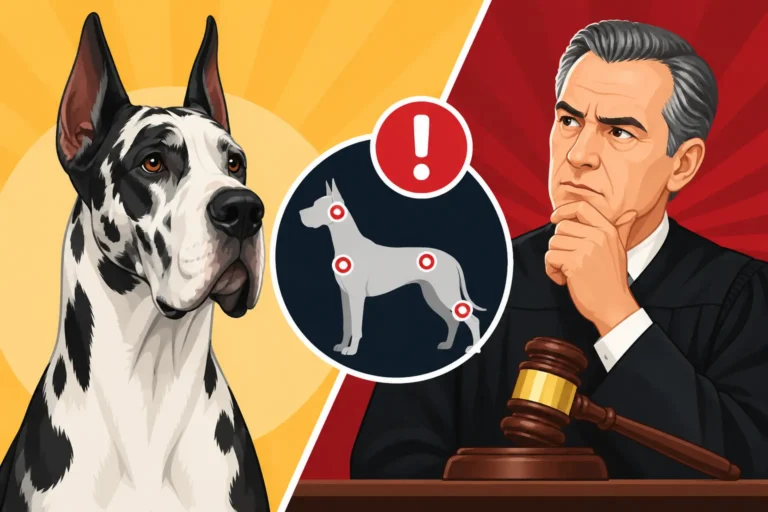
Disqualifications were reserved for the most severe departures from the standard, often indicating serious health issues or fundamental breaks from the breed's essence. These might have included extreme undershot or overshot bites, gross deformities, or temperaments that were completely unsound. The severity of the disqualifications highlighted the founders' commitment to maintaining the breed's health, structural integrity, and characteristic gentle yet courageous nature. The careful delineation of faults and disqualifications served as a critical guide for breeders, steering them away from undesirable traits and towards the continuous improvement of the breed. The Great Dane Faults a Judge Cannot Ignore provides a modern context for understanding breed disqualifications.
Here’s a simplified look at some key aspects emphasized in the 1881 Great Dane standard:
| Category | Key Emphasis in 1881 Standard |
|---|---|
| Name | "Deutsche Dogge" (German Mastiff), establishing German origin. |
| Temperament | Noble, courageous, gentle, loyal, and friendly. Confident but not aggressive or timid. High importance placed on character. |
| General Build | Powerful, large, elegant, well-proportioned, imposing presence, without coarseness. |
| Head | Long, narrow, chiseled, strong broad muzzle, pronounced stop, flat forehead. |
| Ears | Cropped, set high and carried erect (though natural ears also existed, cropped was the preferred show style). |
| Neck | Long, muscular, arched, smoothly flowing into shoulders. |
| Body | Deep chest, strong short back, slightly arched loin, powerful hindquarters. |
| Legs/Feet | Strong, straight, muscular, well-boned, well-arched toes. Powerful, elastic gait. |
| Tail | Set high, tapering, carried in a slight curve, never curled over back. |
| Coat/Color | Short, dense, smooth. Standard colors (e.g., fawn, brindle, black, blue, harlequin) were already recognized, though specific ideals for markings evolved. |
| Faults | Any deviation from the ideal, ranging from minor cosmetic flaws to significant structural or temperamental issues. Aggression or extreme shyness were serious faults. |
| Disqualifications | Severe structural deformities, pronounced bite issues, totally unsound temperament. |
Impact and Evolution: How the First Standard Shaped the Breed
The 1881 German Great Dane standard wasn't just a historical document; it was a living, breathing blueprint that profoundly influenced the direction and development of the breed for decades, and indeed, continues to echo in modern standards today. It provided a common language for breeders across different regions, fostering a sense of unity and purpose that was essential for consolidating the various mastiff types into a singular, recognizable "Deutsche Dogge." Without this foundational document, the Great Dane might have remained a collection of diverse local dogs, never achieving its global recognition.
Establishing the Breed's Identity
Before 1881, calling a dog a "Great Dane" or "Deutsche Dogge" could mean slightly different things depending on who you were talking to and where they were from. The standard changed that entirely. It created a universal benchmark, a clear definition of what a truly excellent specimen of the breed should embody. This meant that a breeder in Berlin could have confidence that their understanding of an ideal head shape or desired temperament matched that of a breeder in Munich. It allowed for focused breeding programs, encouraging the selection of dogs that consistently exhibited the desired traits.
This uniformity was vital for establishing the breed's identity not just within Germany, but internationally. When Great Danes began to be exported, their German standard served as the authoritative guide for fanciers and nascent clubs in other countries, including the United States. It gave the breed legitimacy and a strong foundation upon which to build. The meticulous details within the standard meant that the Great Dane was recognized as a serious, well-defined breed, rather than simply a large, generic dog. This solid identity allowed the breed to gain traction and admiration worldwide, becoming the icon it is today. When you see a Great Dane today, even if it's playing with its favorite Chewy toys, many of its defining characteristics can be traced back to this original vision.
Differences from Modern Standards
While the 1881 standard laid the bedrock, breed standards are not static. They evolve over time, reflecting new understanding of genetics, health, and societal attitudes. Comparing the original German standard to modern iterations reveals some interesting shifts. For instance, the emphasis on ear cropping was prominent in 1881, as it was believed to enhance the dog's appearance and align with its working heritage. Today, while cropping is still permitted in some regions and show rings, there's a growing acceptance and preference for natural, uncropped ears, and in many places, it's even illegal.
Another subtle, but important, evolution lies in the specific nuances of physical description. While the core idea of a powerful, elegant dog remains, the precise measurements and ideal proportions have been refined with generations of breeding experience. For example, the detailed descriptions of movement and gait might be more intricate in modern standards, reflecting a deeper scientific understanding of canine locomotion. Furthermore, modern standards often place an even greater emphasis on health, requiring specific health screenings for breeding animals, a concept that was not formalized in the same way in the late 19th century. This shows a progression from a focus primarily on appearance and temperament to a more holistic view that includes long-term well-being. Looking at current breed information, whether from a club or a retailer like Chewy, highlights how far these understandings have come.
The Ongoing Legacy of the Deutsche Dogge
The legacy of the first German Great Dane standard is undeniably profound and enduring. It didn't just define a breed; it set a precedent for how a breed could be developed, unified, and promoted globally. Every Great Dane we see today carries a piece of that 1881 vision within its genetic makeup and its breed characteristics. The ideal of a courageous yet gentle giant, a dog of immense power combined with elegant lines, was etched into history by that foundational document. Even as standards evolve, the core essence defined back then remains.
Modern breeders, whether they are showing in the ring or simply breeding for healthy, well-tempered family companions, still refer back to these principles, understanding the importance of maintaining the breed's historical integrity. The meticulous descriptions of temperament ensure that the Great Dane remains a loving and trustworthy companion despite its intimidating size. The physical descriptions guide responsible breeding to preserve the distinct silhouette and movement that make the Deutsche Dogge so unique. From selecting proper food that supports growth, which you might find on Chewy, to understanding training methods that suit its nature, every aspect of owning a Great Dane is subtly influenced by the ideals set forth over a century ago. This enduring blueprint ensures that the Great Dane continues to be cherished and admired as truly the "Apollo of Dogs."
Disclaimer
This article is for general informational purposes only and does not constitute professional advice. Laws, prices and regulations vary by location and change over time. Consult a qualified professional for guidance on your specific situation.