What Makes a Harlequin Great Dane Correct
The majestic Harlequin Great Dane, with its striking patchwork coat, often captures hearts with its unique beauty. But beneath that captivating appearance lies a complex genetic tapestry, and achieving what the breed standard considers "correct" is a true art form. Many aspiring owners and even seasoned enthusiasts might wonder what exactly defines a truly correct Harlequin, beyond just having black patches on white. This guide delves deep into the specific criteria, genetic challenges, and careful considerations that go into recognizing and appreciating a truly correct Harlequin Great Dane, addressing the common frustrations of confusing variations and health concerns.
Understanding the Harlequin Great Dane: A Visual Masterpiece
The Harlequin Great Dane is arguably one of the most distinctive and visually arresting color patterns in the breed. It’s a coat that immediately draws attention, often prompting admiration and questions about its origins. However, its beauty isn't just skin deep; it's a testament to specific genetic interactions and a carefully maintained breed standard. Understanding what makes a Harlequin truly "correct" begins with appreciating the nuances of its iconic appearance and the desired clarity of its markings.
The Iconic Look: White Base with Torn Black Patches
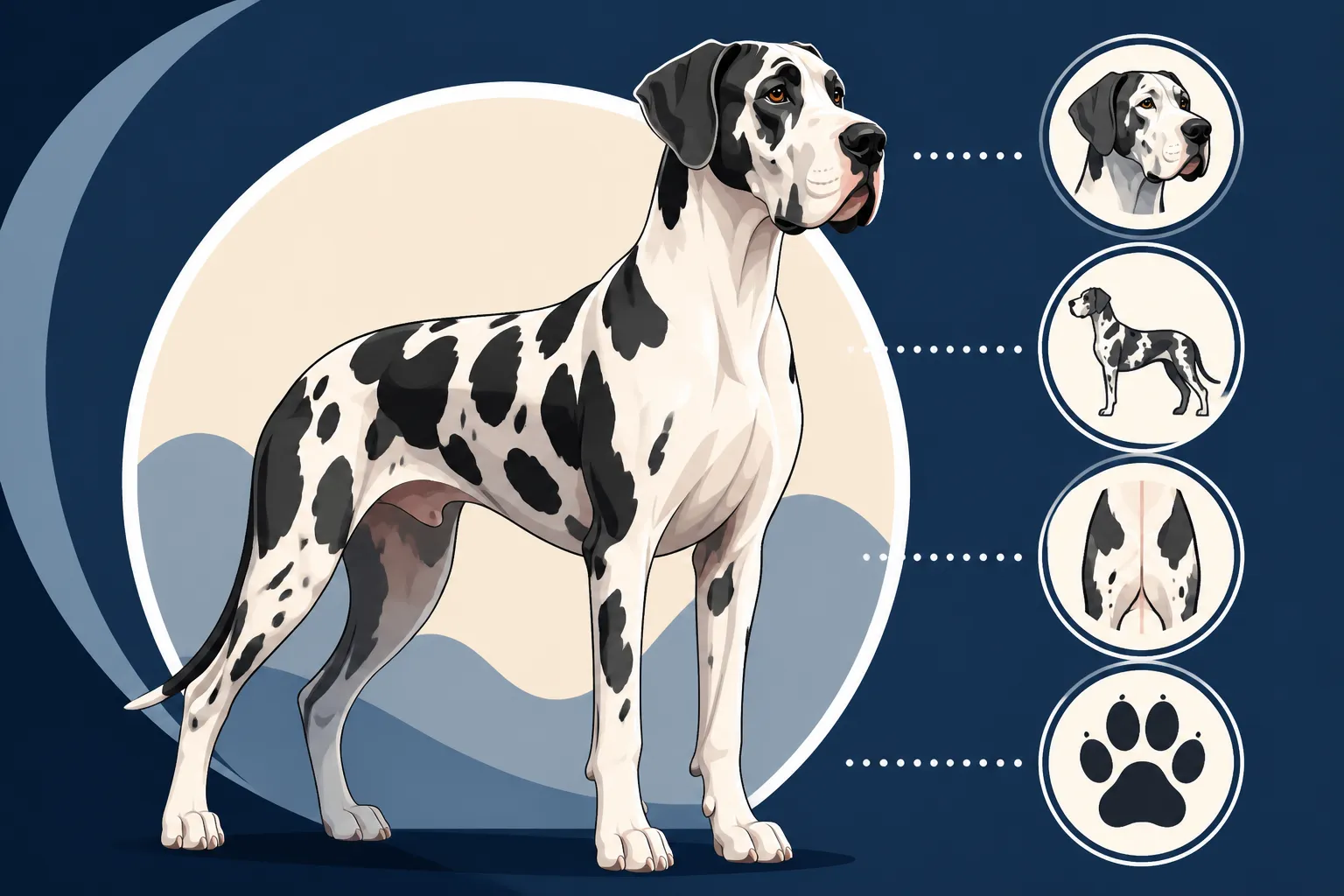
At its core, a Harlequin Great Dane is defined by a pure white base color adorned with irregularly shaped, torn black patches. Imagine a pristine white canvas upon which bold, ripped pieces of black fabric have been artfully scattered. This isn't just random splotching; the patches are ideally meant to appear as if they've been irregularly torn rather than uniformly rounded or geometrically perfect. This "torn" quality is a key descriptor in the breed standard and contributes significantly to the Harlequin's unique charm and distinction from other spotted or patched patterns found in various breeds.
The distribution of these patches is also crucial. A correct Harlequin should have these black patches distributed over its entire body, creating a balanced, albeit irregular, pattern. There shouldn't be large, unpatched areas that detract from the overall harlequin appearance, nor should the dog appear predominantly black with just a few white spots. The goal is a visually appealing spread that showcases both the white background and the contrasting black markings. This meticulous balance ensures that the dog truly embodies the visual ideal of the Harlequin.
Furthermore, the white base color itself should be as pure and clean as possible. While slight variations can occur, the standard ideally calls for a brilliant white canvas that makes the black patches stand out vividly. This purity of the white contributes directly to the overall striking contrast that defines a correct Harlequin. It’s this combination of pure white, distinctly torn black patches, and their balanced distribution that forms the foundation of the iconic Harlequin look.
The Desired Contrast: Sharp and Defined
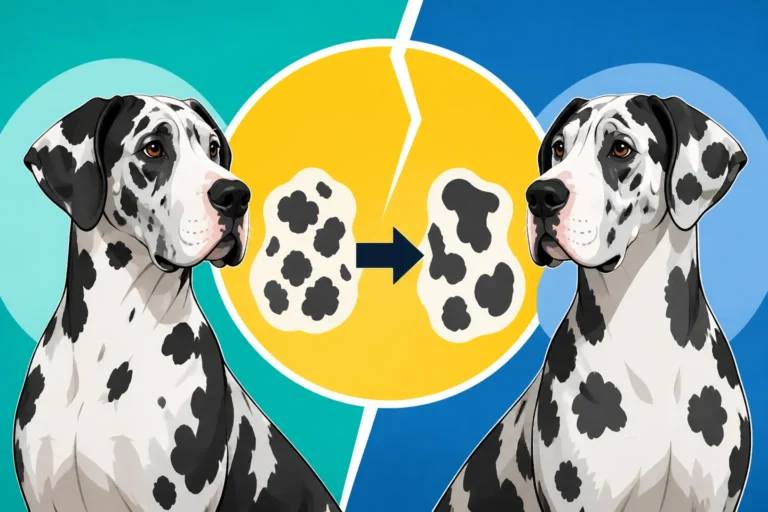
One of the most critical elements in a correct Harlequin Great Dane's coat is the sharpness and definition of the contrast between the white base and the black patches. The edges of the black patches should be crisp and clean, almost as if painted with a clear, steady hand. There should be no blurring, smudging, or feathered edges where the black meets the white. This clear demarcation is paramount, as it highlights the "torn" quality of the patches and prevents the coat from looking muddy or indistinct.
Smudged or diffused edges, where the black appears to bleed into the white, are considered a fault in the breed standard. This lack of definition significantly detracts from the desired clarity and vibrancy of the Harlequin pattern. It can make the patches look less like distinct, torn shapes and more like poorly defined smudges, diminishing the overall elegance and striking appearance that Harlequins are renowned for. A truly correct Harlequin boasts patches that stand out boldly, each one a clear, separate entity against its white backdrop.
While the primary contrast is between pure white and jet black, the breed standard does permit a few small grey patches, often referred to as "ticking" or "ghost merle," scattered within the white areas. However, these should be minimal and not overpower the main black and white pattern. An excessive amount of grey areas would indicate a deviation from the ideal, pushing the coat closer to a merle pattern rather than the distinct Harlequin. The ultimate goal is that sharp, unequivocal contrast that defines the Harlequin as a truly unique and visually correct Great Dane.
The Genetic Puzzle Behind the Harlequin Pattern
Understanding the breathtaking Harlequin pattern isn't just about appreciating its visual appeal; it's about delving into the fascinating and often complex genetics that create it. This color is not a simple dominant or recessive trait but rather the result of an intricate interplay between multiple genes. For breeders, navigating these genetics is crucial, as missteps can lead to not only incorrect coat patterns but also significant health challenges for the puppies.
The Merle Gene and the Harlequin Modifier
The foundation of the Harlequin pattern lies with the merle gene, denoted as M. This gene is responsible for creating a diluted, mottled pattern on a base color, typically appearing as patches of lighter color (often grey or blue) interspersed with the original solid color. In Great Danes, the merle gene (Mm) creates what we call "Merle" Danes, characterized by a grey base with black patches. However, a Harlequin isn't just a merle dog. It requires an additional, separate gene: the Harlequin modifier, denoted as H.
This Harlequin modifier (H) acts specifically on the merle pattern. It doesn't create color on its own, but rather it modifies how the merle gene expresses itself. Essentially, the Harlequin modifier "clears" the dilute grey areas of a merle dog, turning them into pure white, while leaving the dark black patches intact. So, for a dog to be a Harlequin, it must first carry the merle gene (Mm) and then also inherit at least one copy of the Harlequin modifier (Hh or HH). Without the merle gene, the Harlequin modifier has no effect. This delicate genetic dance is what transforms a typical merle pattern into the distinctive white and black of a Harlequin.
The critical interaction means that a dog with the merle gene (Mm) but without the Harlequin modifier (hh) will be a standard merle. A dog that has the Harlequin modifier (Hh or HH) but lacks the merle gene (mm) will simply display its base color (e.g., black, fawn, etc.) without the Harlequin pattern. It's the unique combination of Mm (merle) and Hh (Harlequin modifier) that results in the classic, coveted Harlequin Great Dane. This two-gene system is what makes breeding for the specific Harlequin pattern a much more intricate and challenging endeavor than breeding for solid colors.
Why Breeding Harlequin is a Challenge
Breeding for correct Harlequin markings is one of the most significant challenges in Great Dane breeding, primarily due to the genetic factors involved and the potential for undesirable outcomes. The biggest concern revolves around the merle gene itself. When two dogs carrying the merle gene (Mm) are bred together, there's a 25% chance of producing a "double merle" puppy (MM). These double merle puppies are often predominantly white and, critically, are at a significantly increased risk for severe health issues, including deafness and various ocular defects like microphthalmia (abnormally small eyes) and blindness. For this very reason, responsible breeders strictly avoid breeding two merle Danes together, as outlined in discussions like Why Two Merle Great Danes Should Not Be Bred.
The Harlequin modifier further complicates matters. While it creates the desired Harlequin pattern when combined with a single merle gene (Mm), it does not protect against the negative effects of the double merle (MM) combination. Therefore, even when breeding a Harlequin (which carries the merle gene) to a non-merle parent, breeders must be acutely aware of the potential for merle puppies in the litter, and how those puppies, if also carrying the Harlequin modifier, might appear. The challenge isn't just producing the right color, but producing it ethically and healthily.
Another aspect of the challenge is the sheer unpredictability of patch size, shape, and distribution. Even with a genetically sound pairing, breeders can't guarantee a litter of perfectly marked Harlequins. Some puppies may have too much black ("blanketed"), too little black, patches that are too large and solid ("plate patches"), or an excessive amount of grey ticking instead of pure white. It’s common for a Harlequin litter to produce a mix of Harlequins, Merles, and sometimes solid blacks or even "white" dogs (double merles), making the quest for a truly correct Harlequin an ongoing genetic lottery that requires deep knowledge, careful selection, and a strong commitment to the well-being of every puppy.
Deciphering the Breed Standard: The Hallmarks of Correctness
For any breed, the official standard is the definitive guide to what constitutes a "correct" dog. For the Harlequin Great Dane, this standard is particularly meticulous regarding coat color and markings, as they are such a defining characteristic of this variant. Understanding these specific requirements, as well as recognizing what constitutes a fault or even a disqualification, is essential for anyone interested in the breed, whether as an owner, enthusiast, or aspiring breeder.
The AKC Standard: Specifics for Color and Markings
The American Kennel Club (AKC) breed standard for the Great Dane is quite specific when it comes to the Harlequin pattern. It states that "The base color shall be pure white with irregular torn patches of black distributed uniformly over the entire body." Let's break down each part of that crucial sentence. The "pure white base color" is non-negotiable; there should be no yellowing, cream, or dinginess to the white, as this detracts from the desired sharp contrast. This pristine white acts as the perfect backdrop for the dramatic black markings.
Next, "irregular torn patches of black" is a key phrase. This emphasizes that the black patches should not be perfectly round or oval, but rather have jagged, uneven edges, giving them a "torn" or "ripped" appearance. This irregularity is what distinguishes a true Harlequin from other spotted patterns. The term "torn" is descriptive, conjuring an image of fabric that has been ripped, lending a unique, almost organic feel to the pattern. Furthermore, the patches should be "distributed uniformly over the entire body," meaning they should be spread out rather than concentrated in one area or leaving large blank spaces. This creates a harmonious, balanced appearance across the dog's frame.
While the primary description focuses on black patches on a white background, the AKC standard also allows for a few small grey patches, sometimes called "ticking" or "ghost merle," within the white areas. However, these should be minimal and not so numerous or large as to detract from the overall black and white Harlequin appearance. An excessive amount of grey would push the dog closer to a Merle classification, which, while a recognized color, is distinct from Harlequin. A truly correct Harlequin is a masterpiece of strong black and pure white, with minimal other color interference.
Common Faults and Disqualifications in Harlequins
Given the complexity of Harlequin genetics, it's not uncommon for variations to occur that fall short of the ideal, leading to specific faults or even disqualifications under the breed standard. One of the most frequently seen faults is an excessive amount of grey patches or "ticking" within the white areas, sometimes making the dog appear more like a diluted merle than a true Harlequin. Similarly, fawn or brindle patches, which can occasionally crop up due to underlying genetic factors, are considered serious faults as they deviate entirely from the prescribed black and white. Another common fault includes "plate patches," which are patches that are too large, solid, and uniformly shaped, lacking the desired irregular, "torn" appearance.
Beyond the patches themselves, the distribution and quantity of black and white are also critical. "Blanketing," where the black patches merge to form a solid "blanket" over the back or a large portion of the dog, is a significant fault. This indicates an insufficient amount of the pure white base color, moving away from the distinctive Harlequin look. Conversely, a dog with too few black patches, appearing mostly white with only sparse black markings, would also be faulted for insufficient pattern. The goal is a balanced tapestry, not one dominated by either extreme.
Disqualifications are even more severe and mean the dog cannot be shown or bred under the standard. These include "solid white" dogs, which are often extreme double merles (MM) and may carry severe health defects, or "solid black" dogs that lack any white Harlequin patches. Any other colors appearing as dominant patches (e.g., solid fawn, blue, or brindle patches) would also be disqualifying. Additionally, specific physical traits linked to poor breeding, such as excessive pink on the nose or eye rims, particularly when accompanied by insufficient pigmentation elsewhere, could also be considered disqualifying. Understanding What Comes Out of a Harlequin Great Dane Litter helps appreciate the wide range of outcomes and thus what constitutes a fault.
European vs. American Standards: Subtle Differences
While the general ideal for a Harlequin Great Dane is largely consistent across the globe, there can be subtle differences in interpretation and emphasis between major kennel club standards, specifically the American Kennel Club (AKC) and the Fédération Cynologique Internationale (FCI), which governs many European countries. Both standards agree on the fundamental definition: a pure white base with well-distributed, irregular black patches. However, the exact wording and specific points of emphasis can vary.
For instance, while the AKC standard allows for "a few small grey patches," some European standards might be slightly more stringent on the quantity and size of these permissible grey areas, or they might describe them using different terminology. The interpretation of "uniform distribution" or "torn patches" can also have slight regional nuances. A judge in Germany operating under the Deutsche Doggen Club might prioritize certain aspects of patch placement or crispness slightly differently than a judge in the United States, although the core aesthetic remains the same. This doesn't mean a dog correct under one standard would be incorrect under another, but rather that certain finer points might be highlighted.
These subtle differences can influence breeding programs, with breeders in different regions perhaps focusing on slightly different nuances to align with their national or regional club's interpretation. For a potential owner, it's generally good to be aware that while the Harlequin is universally admired, the precise "perfection" might be discussed with minor variations. Ultimately, both major standards strive for the same magnificent, striking, and healthy Harlequin that is structurally sound and embodies the Great Dane's noble character, as can be read in Why Merle Great Danes Were Once Disqualified before the change in some standards.
Beyond the Coat: Conformation and Temperament in a Correct Harlequin
While the striking Harlequin coat pattern is undoubtedly what first draws many to this specific Great Dane color, it's crucial to remember that a truly "correct" Harlequin is far more than just its beautiful exterior. The underlying structure, overall physical form, and inherent disposition are just as, if not more, important than the coat color itself. A Harlequin, first and foremost, must be a correct Great Dane in every other aspect, conforming to the breed's standards for both physical and behavioral traits.
Temperament: The Gentle Giant Expected
Regardless of coat color, a correct Great Dane—including a Harlequin—must embody the breed's renowned "gentle giant" temperament. This means being friendly, courageous, confident, and never timid or aggressive. A Great Dane's imposing size means its temperament is paramount; a dog of this stature must be well-balanced, approachable, and stable in various situations. A Harlequin with a perfect coat but an unsound temperament is not a correct Great Dane, as personality is as much a part of the breed standard as appearance.
The ideal Harlequin temperament is one of good nature and unwavering loyalty, a dog that is keen to please and eager to be a part of its family's life. They should be watchful but not overly suspicious, and their confidence should manifest as calm assurance rather than boisterousness or fear-aggression. Any indication of shyness, nervousness, or unprovoked aggression would be a serious fault, irrespective of the dog's visual appeal. The sheer size of a Great Dane makes temperament non-negotiable for safety and suitability as a family companion. More on this can be found in The Gentle Great Dane Temperament and Its Limits.
Therefore, when considering a Harlequin, look beyond the captivating coat and observe the dog's behavior. A correct Harlequin should interact calmly and confidently with people and other dogs. Early socialization is crucial for all Great Danes, ensuring they grow into well-adjusted adults. Owners frequently seek out durable, stimulating toys and quality training treats for their growing pups, often finding a wide selection of suitable products on online retailers like Chewy, which helps reinforce positive behavior and aids in overall development. This focus on solid temperament ensures the Harlequin is not just a pretty face, but a true representation of the breed's character.
Conformation: The Foundation Beneath the Coat
A Harlequin Great Dane's stunning coat must adorn a body that is structurally sound and true to the Great Dane breed standard. This means the dog must exhibit the power, elegance, and balance that defines the "Apollo of Dogs." A correct Harlequin isn't just about the patches; it's about the entire package: size, bone structure, head type, movement, and overall symmetry. A dog with an incorrect bite, poor angulation, a weak topline, or any other structural fault, no matter how perfectly marked, would not be considered a correct specimen of the breed.
Key conformational points include the noble and expressive head, which should be long, rectangular, and strongly chiseled, with a distinct stop and well-defined muzzle. The eyes should be deep-set, dark, and intelligent. The neck should be long, muscular, and well-arched, flowing smoothly into a strong, level topline. Overall, the Great Dane should present an impression of finely balanced power, with effortless, ground-covering movement. The breed standard dictates specific height and weight guidelines, with males often reaching The Thirty-Two Inch Male Great Dane or more at the shoulder.
It's easy to get lost in the beauty of the Harlequin pattern, but a truly correct Harlequin will feel substantial and well-built, with proper bone and muscle. Judges and experienced fanciers will always evaluate the dog's structure and movement first, recognizing that a beautiful coat cannot compensate for poor conformation. The coat is merely the icing on the cake; the cake itself must be perfectly baked. Therefore, when assessing a Harlequin, one must look beyond the color and appreciate the underlying physical attributes that make it a genuine Great Dane, as discussed in detail when considering The Great Dane Head the Standard Wants.
The Responsible Breeder and the Harlequin
The journey to producing a truly correct Harlequin Great Dane is fraught with challenges, making the role of a responsible and ethical breeder absolutely critical. Without a deep understanding of genetics, a commitment to health, and unwavering integrity, breeders can inadvertently (or knowingly) perpetuate health problems and produce dogs that do not meet the breed standard, despite their striking appearances. For anyone considering a Harlequin, understanding a breeder's practices is paramount.
Ethical Breeding Practices for Harlequin Danes
Ethical breeding of Harlequin Great Danes demands far more than simply pairing two attractive dogs and hoping for beautiful puppies. It requires a profound knowledge of the breed's genetics, particularly the complex interplay of the merle and Harlequin modifier genes. A responsible breeder will meticulously track pedigrees to understand the genetic background for merle and Harlequin, making informed decisions to avoid producing "double merle" (MM) puppies, which, as mentioned earlier, are prone to severe health issues like deafness and blindness. This means never breeding two merles, or even two Harlequins, together.
Beyond color genetics, responsible breeders adhere to comprehensive health screening protocols for their breeding stock. This includes testing for conditions prevalent in Great Danes, such as Dilated Cardiomyopathy (DCM), hip and elbow dysplasia, and thyroid disease. Dogs used for breeding should have verifiable health clearances, often from organizations like the Orthopedic Foundation for Animals (OFA) or the Canine Health Information Center (CHIC). A breeder who only talks about color and ignores these vital health checks is not acting ethically. More information on this can be found in The Health Testing a Great Dane Breeder Owes You.
Furthermore, an ethical breeder will be transparent with prospective puppy buyers, openly discussing the potential genetic outcomes of a Harlequin litter, the health screenings performed, and the specific care requirements for the breed. They will be keen to educate and ensure that their puppies go to well-informed homes, even requiring potential owners to sign contracts that protect the dog's welfare. This commitment extends beyond the sale, with responsible breeders offering lifetime support and being willing to take back any dog they have bred if circumstances change.
Health Considerations Specific to Harlequin Genetics
While the Harlequin pattern itself is not inherently unhealthy, the genetic pathway to achieve it carries specific health risks that responsible breeders must mitigate. The primary concern is the production of "double merles" (MM genotype), which are often predominantly white and can manifest severe congenital defects. These puppies commonly suffer from varying degrees of hearing loss, ranging from partial to complete deafness, and a range of eye abnormalities, including microphthalmia (small eyes), colobomas, or even complete lack of eye development. While these "white" puppies might sometimes appear visually similar to Harlequins or extreme merles, their genetic makeup predisposes them to these significant burdens. This is also explored in Whether Great Dane Color Affects Health.
Even a visually "correct" Harlequin, carrying the single merle gene (Mm) and the Harlequin modifier (Hh), needs to come from a carefully planned breeding. The goal is to maximize the desired color while minimizing the risk of producing those high-risk double merles within the litter. This requires the breeder to deeply understand the genetic implications of each pairing, knowing that the absence of visible health issues in a parent does not negate the underlying genetic risks for the offspring.
Prospective owners of Harlequin Great Danes should engage in thorough discussions with breeders about the health of the parent dogs and the specific genetic testing undertaken. Inquire about the prevalence of deafness or eye issues in previous litters, and ask for proof of parentage health clearances. While a Harlequin is a stunning dog, ensuring their health and well-being through responsible breeding practices must always take precedence over purely aesthetic considerations, especially considering specific issues like How Common Deafness Is in a White Great Dane can be tied to color genetics.
Disclaimer
This article is for general informational purposes only and does not constitute professional advice. Laws, prices and regulations vary by location and change over time. Consult a qualified professional for guidance on your specific situation.