How Much Space a Great Dane Really Needs
It's a common, completely understandable assumption that a dog as colossal as a Great Dane must surely need a sprawling mansion with acres of land to feel truly content. Many hopeful Dane owners get caught up in this mental image, worrying they could never provide enough space, and sometimes it even deters people from considering this magnificent breed. But let me tell you, as someone who lives and breathes Great Danes, the reality is often quite different from the picture painted in your mind. This guide is here to shed light on what a Great Dane truly needs in terms of living space, separating myth from reality so you can make an informed decision and give your gentle giant the best home possible.
Debunking the "Giant Dog, Giant Yard" Myth
The idea that a big dog automatically needs a massive outdoor expanse is one of the most persistent myths, especially when it comes to Great Danes. While their size is undeniable, their personality and activity levels defy typical expectations, making their spatial needs surprisingly nuanced.
Understanding the Great Dane's Temperament and Energy Levels
Great Danes are often affectionately called "gentle giants," and there's a profound truth to that nickname. They might stand head and shoulders above many other breeds, but their temperament is generally mellow and remarkably calm, particularly indoors. Unlike some high-energy breeds that bounce off the walls if not constantly stimulated, a mature Great Dane is usually quite content to lounge on the sofa, sprawl across a rug, or simply be near their human companions. They are known for being incredibly affectionate and deeply bonded with their families, often preferring to be inside, right in the thick of family life, rather than isolated in a huge backyard. This isn't to say they don't enjoy a good romp, but those bursts of energy are typically short-lived and often happen in conjunction with their people.
This inherent calmness means that while they take up a lot of physical space when they choose to stretch out, their active space requirement isn't as demanding as their size might suggest. They aren't constantly pacing or looking for trouble; they're more likely to be found snoring softly at your feet. Understanding this fundamental aspect of their character is the first step to truly grasping their spatial needs. It’s about fitting into your life, not dominating it with endless demands for wide-open spaces.
The Importance of Mental Stimulation Over Constant Physical Exertion
While Great Danes do need regular exercise to stay healthy and happy, this doesn't necessarily translate into needing a marathon runner's training ground. For a Great Dane, quality of exercise often trumps quantity, and mental stimulation plays a huge role in their overall well-being. A long, leashed walk around the neighborhood, a supervised play session with some sturdy toys, or even a trip to a dog-friendly store can be far more enriching than simply letting them wander aimlessly in a vast yard all day. They thrive on interaction and engagement.
Think about puzzle toys, obedience training sessions, or even just teaching new tricks. These activities engage their intelligent minds and burn energy without putting excessive strain on their joints, which is especially important for a breed prone to orthopedic issues. A Great Dane left alone in a huge yard with nothing to do can become bored, destructive, or even depressed, regardless of the square footage. A smaller space combined with consistent, engaging interaction is infinitely better than a massive, empty one. You can find a huge variety of durable toys and puzzle feeders designed for large breeds on sites like Chewy that can provide excellent mental enrichment indoors.
The Dangers of Too Much Space for a Growing Puppy
Here's a surprising truth: for Great Dane puppies, too much uncontrolled space can actually be detrimental to their health. Great Danes grow at an astonishing rate, sometimes gaining several pounds a week. Their bones, joints, and ligaments are incredibly vulnerable during this rapid growth phase. Unrestricted running, jumping, and sudden stops – the very activities a puppy might engage in if left to their own devices in a huge, unfenced area – can put immense stress on their developing bodies. This can exacerbate or even cause serious orthopedic problems, such as Great Dane Hips, Elbows and Growing Joints and Growth Disorders in a Great Dane Puppy.
It's crucial to manage a Great Dane puppy's exercise carefully. Controlled, leash-led walks, short play sessions on soft surfaces, and plenty of rest are far more beneficial than letting them "self-exercise" to exhaustion in a big yard. Their exercise needs should be carefully monitored to prevent injury. Often, owners will even limit a puppy's access to stairs or slippery floors to protect those delicate growth plates. A smaller, more controlled environment actually allows for better supervision and injury prevention during these critical months.
What a Great Dane Actually Needs Indoors
Forget the sprawling outdoor estates for a moment; let's talk about the inside of your home. This is where your Great Dane will spend the majority of its time, and a few key considerations can make all the difference for their comfort and your sanity.
Room to Stretch and Lounge Comfortably
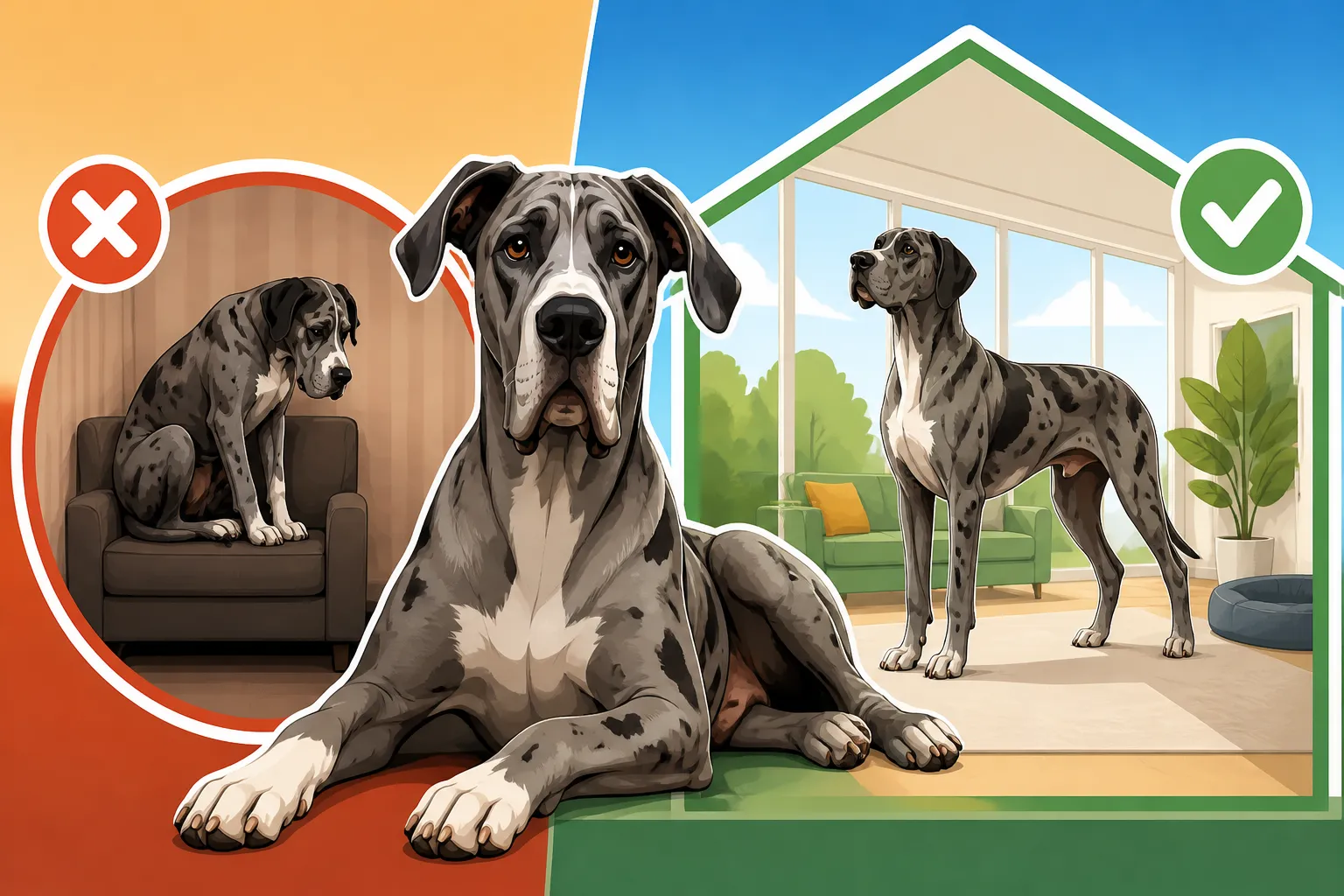
While a Great Dane might not need a stadium-sized living room to run laps, they absolutely need ample floor space to stretch out, roll over, and find comfortable resting spots. Imagine a dog that, when fully extended, can easily take up the length of a small sofa. That's your Great Dane! They love to sprawl, sometimes in the most inconvenient places, like right in the middle of a doorway. You'll want to ensure there are several designated, comfortable spots throughout your home where they can truly relax without being tripped over or feeling cramped.
This means investing in truly oversized dog beds. Forget the standard "large" beds; you'll be looking for "XL" or "Giant" sizes, often with orthopedic foam to support their heavy joints. Placing these strategically in quieter corners or areas where they can be part of the action without being in the direct path of foot traffic is key. A Great Dane trying to curl up on a tiny bed is a sad sight, and it's not good for their body. They need to be able to fully extend their limbs.
Designated "Safe" Spaces
Every dog benefits from having their own "den" or safe space, and Great Danes are no exception. This could be a very large crate, a dedicated dog bed in a quiet room, or even a specific corner of the living room that's entirely theirs. This personal retreat provides a sense of security and a place to decompress, especially important for puppies and young adults learning house rules, or even just for an older Dane needing some peace. Choosing a Crate a Great Dane Can Stand In is a huge consideration, as standard crates often don't cut it for their height and length.
This space should be large enough for them to stand up, turn around, and lie down comfortably. It’s not about confinement, but about providing a sanctuary. During times of stress, like thunderstorms or visitors, knowing they have a calm, secure spot to retreat to can make a huge difference in their well-being. Even if your Great Dane is allowed on the furniture, having their own floor-level haven is essential.
Navigating Stairs and Slippery Floors
One often-overlooked aspect of indoor space for a Great Dane is the type of flooring and the presence of stairs. Due to their immense size and rapid growth, Great Danes can be prone to joint issues, and navigating slippery surfaces or frequent stairs can exacerbate these problems. Puppies, in particular, should have limited access to stairs to protect their developing joints. An adult Great Dane, especially as they age, might struggle with uncarpeted stairs, leading to slips and potential injury. Whether a Great Dane Should Climb Stairs is a question many owners grapple with.
Consider runners or carpets on hard floors, especially in high-traffic areas where your Dane might need to move quickly. Non-slip mats under food and water bowls are also a good idea. For multi-story homes, think about how you'll manage stair access, perhaps with baby gates that are tall enough to contain a Great Dane. Even something as simple as getting up from a prone position on a slick tile floor can be challenging for an older, arthritic Dane, so providing grippy surfaces is a true act of kindness.
Outdoor Space: Quality Over Quantity
The backyard might seem like the be-all and end-all for a large dog, but for a Great Dane, it's really just one piece of the puzzle. The type of outdoor space, and how it's used, is far more important than its sheer size.
A Secure Yard for Potty Breaks and Casual Sniffing
A securely fenced yard is incredibly beneficial for a Great Dane, not necessarily for endless running, but for convenient potty breaks and leisurely sniffing patrols. It provides a safe, accessible area for them to relieve themselves without needing to be leashed up every single time. Great Danes thrive on routine, and a consistent outdoor space for their business helps with house training and overall comfort.
The key word here is "securely fenced." Great Danes are tall and strong, so a standard 4-foot fence might not be sufficient. Many Dane owners opt for 6-foot fences, not because their Danes are escape artists (though some can be), but to provide a clear boundary and peace of mind. While they might not be scaling walls, a tall fence prevents them from easily seeing or interacting with passersby, which can reduce barking or reactivity. The yard doesn't need to be massive, but it does need to be safe and private enough for them to feel comfortable exploring their immediate surroundings.
Supervised Outdoor Play and Walks
While a yard is great for convenience, it rarely meets a Great Dane's full exercise requirements. They benefit immensely from daily, structured walks where they can explore new scents, encounter different sights and sounds, and engage their bodies and minds. These walks are a crucial bonding opportunity and provide the focused physical activity they need. Remember, Great Danes are social creatures, and a walk with their person is far more stimulating than solitary time in a yard.
Supervised play sessions in the yard are also important. This might involve a game of fetch with a sturdy, large ball (check out Chewy for some excellent oversized options!), or a gentle romp with another dog. The emphasis is on supervision to ensure they don't overdo it, especially when young, and to prevent any unwanted digging or mischievous behavior. An hour of varied, interactive activity, whether a walk or play, is often more valuable than several hours of unsupervised yard time.
The Role of Public Spaces and Dog Parks
For a well-socialized Great Dane, public spaces and dog parks can offer invaluable opportunities for exercise, socialization, and mental stimulation, greatly supplementing the space available at home. Dog parks, in particular, can be excellent for allowing them to stretch their legs and interact with other dogs in a controlled, off-leash environment. However, careful consideration is needed. Not all dog parks are created equal, and not all Great Danes are suited for every dog park.
It's vital to ensure your Great Dane has good manners around other dogs and people, as their size alone can be intimidating or accidentally harmful if they're too boisterous. Always supervise closely and be mindful of smaller dogs, as a Great Dane's playful body slam could accidentally injure a tiny canine friend. Many Great Dane owners find success at parks with separate areas for large and small dogs. Public parks, hiking trails, or even dog-friendly patios (when your Dane is well-behaved) allow them to experience the world beyond your home and yard, providing rich sensory input that no amount of private space can replicate.
Adapting Different Living Situations for a Great Dane
The beauty of the Great Dane's temperament is that they can often adapt quite well to various living situations, provided their core needs for companionship, mental stimulation, and appropriate exercise are met. It's truly about how you manage the space, not just the dimensions of your property.
Apartment Living with a Great Dane
Yes, a Great Dane can absolutely thrive in an apartment! This might sound counterintuitive given their size, but as we've discussed, their generally calm indoor demeanor makes them surprisingly good apartment dwellers. The most critical factor here is the owner's commitment to daily, structured outings. This means at least two to three quality walks a day, rain or shine, to allow for potty breaks, exercise, and mental stimulation. These aren't quick dashes around the block; they're opportunities for your Dane to sniff, explore, and stretch their powerful legs.
Apartment living also places a higher emphasis on indoor manners and training. A Great Dane that knows how to settle calmly on their bed, doesn't jump on guests, and isn't prone to destructive chewing will be a much happier apartment resident. Regular training sessions, puzzle toys, and interactive play within the apartment become even more crucial to keep their minds engaged. You'll also want to consider practicalities like elevator access, noise levels, and pet policies regarding large breeds, as some landlords Whether Landlords Refuse Great Danes on Size might have weight or breed restrictions. Ultimately, a devoted owner in a small apartment can provide a better life than a neglectful one in a sprawling estate.
Suburban Homes with Modest Yards
A suburban home with a modest, fenced yard often strikes an ideal balance for many Great Dane owners. The yard provides a convenient, secure space for those frequent potty breaks and a quick sniff-around, offering a bit more freedom than apartment living. However, it's vital to remember that a modest yard is rarely enough on its own for all of their exercise needs. It's a supplement, not a replacement, for walks and other activities.
Owners in these settings can leverage their yard for short, supervised play sessions or training drills, but still need to commit to daily walks in the neighborhood, trips to local parks, or even organized dog activities. The size of the home itself usually offers enough interior space for a Great Dane to comfortably stretch out and move around without constantly bumping into furniture, especially with strategic placement of their extra-large beds (which you can easily find on Chewy). The combination of indoor comfort and convenient outdoor access for quick needs makes this a very workable option for a Great Dane.
Rural Living and Acreage
For those with expansive rural properties, a Great Dane can certainly enjoy the vastness, but it comes with its own set of considerations. While the sheer acreage might seem like a dream, it's important to differentiate between uncontrolled access and purposeful activity. Simply turning a Great Dane loose on many acres might not provide the structured exercise or mental stimulation they truly need. Furthermore, large, unfenced properties can present safety concerns, such as encounters with wildlife, exposure to hazards, or the dog wandering off.
Even with vast land, many rural Great Dane owners still provide a securely fenced area near the home for daily use and supervised play. This ensures safety and convenience. Regular walks, either on-leash around the perimeter or on trails, remain important for focused exercise and bonding. The primary benefit of acreage for a Great Dane might be the sheer quiet and reduced external stressors, but it doesn't eliminate the need for an engaged owner to provide companionship and structured activity. In fact, training becomes even more critical in such environments to ensure recall and safety.
Here's a quick overview of how different living situations can accommodate a Great Dane:
| Living Situation | Key Considerations | Pros for a Great Dane | Cons/Challenges |
|---|---|---|---|
| Apartment | – Daily structured walks (2-3+ times/day) are non-negotiable – Strong emphasis on indoor manners and training – Adequate indoor lounging space with large beds – Check landlord pet policies |
– Close proximity to family (their favorite place to be) – Often results in more dedicated owner interaction and walks – Less risk of uncontrolled over-exercise for puppies |
– Requires significant owner commitment to outdoor activity – Potential for noise complaints if dog is vocal – Limited spontaneous outdoor access |
| Suburban Home | – Fenced yard (at least 6ft recommended) for quick potty breaks and supervised play – Continued need for daily walks and enrichment beyond the yard – Managing stairs and slippery floors inside |
– Convenient outdoor access – More indoor space for sprawling – Easier to manage separate "safe zones" |
– Yard alone is not enough exercise – Potential for boredom if left alone in yard too long – Yard maintenance/fencing costs |
| Rural/Acreage | – Securely fenced area near home still recommended – Vigilant supervision for safety (wildlife, hazards) – Continued need for structured walks/training – Property type (woods, fields) impacts usability for exercise |
– Ample space for exploring with supervision – Reduced urban stressors – Potential for unique forms of exercise (e.g., long walks on trails) |
– Unfenced areas pose safety risks – Temptation for uncontrolled running (bad for puppies) – May require more effort to seek out doggy companionship for your Dane |
It boils down to this: a Great Dane doesn't need a huge amount of unsupervised space, but they absolutely need a huge amount of engaged, thoughtful, and appropriate space, coupled with consistent human interaction. Their happiness isn't measured in square footage, but in the quality of the life you provide within whatever space you call home.
Disclaimer
This article is for general informational purposes only and does not constitute professional advice. Laws, prices and regulations vary by location and change over time. Consult a qualified professional for guidance on your specific situation.