Whether a Great Dane Should Climb Stairs
Living in a home with stairs can present a real challenge when you bring a magnificent Great Dane into your life. Their sheer size and rapid growth, not to mention their eventual senior years, mean that what seems like a simple daily activity for smaller breeds can become a significant health concern for your giant companion. This guide will walk you through the considerations of whether a Great Dane should climb stairs at different life stages, helping you understand the risks and how to best protect their long-term joint health.
The Risks of Stair Climbing for Great Dane Puppies
Oh, those adorable, gangly Great Dane puppies! They grow so incredibly fast, don't they? One minute they're a tiny bundle, the next they're already bigger than many adult dogs. It's precisely this rapid growth that makes stairs such a treacherous obstacle during their puppyhood and adolescence. Their bones, joints, and soft tissues are still developing at an astonishing rate, and putting undue stress on them can have lasting consequences.
Why Puppy Joints are Vulnerable
Think about how quickly a Great Dane puppy goes from weighing just a few pounds to being half its adult weight by six months. This rapid expansion means their bones are still soft, their growth plates are open, and the ligaments and tendons supporting their massive frame haven't fully solidified. It's like building a skyscraper on a foundation that's still curing. Every jarring impact, every slip, every awkward twist on the stairs can potentially cause microscopic damage that accumulates over time, or even lead to more serious injuries.
For Great Dane puppies, especially during their first 12 to 18 months, protecting their joints is paramount. Their bones are growing at different rates, and their coordination often lags behind their size. A misstep on the stairs can result in a painful sprain, a nasty fall, or even worse, contribute to developmental orthopedic diseases. We often talk about Great Dane Hips, Elbows and Growing Joints and how crucial slow, controlled growth is. Excessive stair climbing can exacerbate conditions like hip and elbow dysplasia because it puts repetitive, high-impact stress on immature joints. Imagine a puppy trying to descend stairs: their front legs bear a significant amount of weight, and the impact from each step can be quite jarring on those still-forming elbow and shoulder joints. Going up isn't much better, straining the hips and knees with each powerful push. It’s not just about acute injury; it’s about the cumulative stress that can lead to problems down the road.
Training Alternatives and Preventing Early Damage
So, what’s a concerned Great Dane parent to do if they live in a multi-story home? The best approach is often prevention. For puppies, completely restricting stair access is ideal. This might mean using baby gates at the top and bottom of staircases. Yes, a Great Dane puppy can quickly learn to open many standard gates, so invest in sturdy ones that are tall and secure enough to truly block their path.
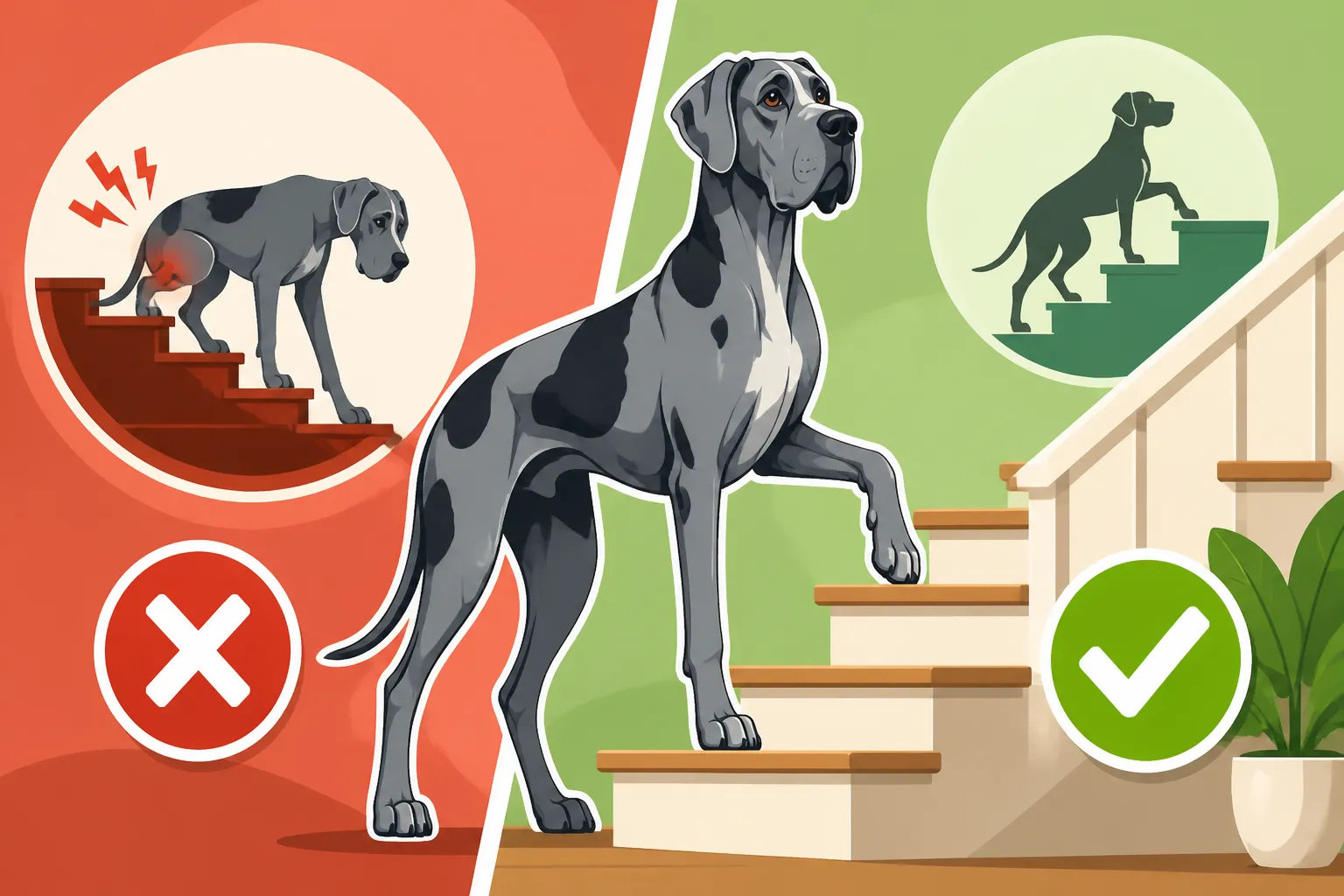
If you absolutely cannot avoid stairs, such as needing to get your puppy to an upstairs bedroom for sleeping, then carrying them is the safest option for as long as physically possible. I know, a 60-pound puppy isn't easy to carry, but it's often worth the effort to protect those delicate joints. If carrying becomes impossible due to their size, then leash training them to go up and down slowly and controlled is the next best thing. This isn't about letting them bound up and down; it's about making each step deliberate. You'll want to teach them to pause, take one step, pause, take another, and so on. This minimizes impact and reduces the risk of slips. Consider adding non-slip runners or carpet to hard stair surfaces to provide better traction. Many owners also find value in understanding Growth Disorders in a Great Dane Puppy to better appreciate why these early precautions are so critical. The goal is to reduce any activity that forces them to absorb sudden impacts or twist their joints unnecessarily during this critical developmental window.
Navigating Stairs Safely as an Adult Great Dane
Once your Great Dane has reached full maturity, typically around 18 months to two years, their growth plates have closed, and their skeletal system is much more robust. At this stage, moderate stair climbing is generally not as risky as it is for puppies, but it's still not entirely without its concerns. After all, a fully grown Great Dane is a lot of dog to be moving up and down stairs!
The Mechanics of Stair Climbing for a Large Dog
An adult Great Dane can weigh anywhere from 100 to 180 pounds or even more, with some males topping out around 200 pounds. That's a significant amount of mass to propel upwards against gravity or control downwards. When an adult Dane climbs stairs, especially if they are enthusiastic about it, there's still a considerable amount of force and impact on their joints. Going up usually engages the powerful muscles of their hindquarters, but it can strain the lower back and hips if done too quickly or carelessly. Descending stairs puts more pressure on their front legs, particularly their elbows and shoulders, as they absorb the impact of each step.
Imagine your Dane bounding down a set of wooden stairs. The thud, the slight slip, the sudden catch – all of these contribute to wear and tear. While their bones are no longer growing, their cartilage and soft tissues can still suffer from repetitive stress. This is particularly relevant for a breed already prone to orthopedic issues like hip and elbow dysplasia, even if they were screened as puppies. Conditions like A Great Dane That Limps Without an Injury can sometimes be traced back to cumulative stress on joints, which stair use can contribute to over many years.
Strategies for Minimizing Risk for Healthy Adults
For a healthy, adult Great Dane, the key is moderation and safety. If stairs are an unavoidable part of your home, here are some strategies:
- Controlled Access: Don't let your Dane race up and down the stairs. Teach them to go slowly and deliberately. Use a leash if necessary, especially if they tend to get overly excited. A command like "slow" or "easy" can be incredibly helpful.
- Non-Slip Surfaces: Hardwood or tiled stairs can be very slippery for a large dog, leading to falls and injuries. Installing carpet runners can significantly improve traction and provide a softer landing surface, cushioning their joints with each step.
- Weight Management: Keeping your Great Dane at a healthy weight is absolutely critical for joint health, regardless of stair climbing. Every extra pound puts additional stress on their joints, amplifying the impact of activities like using stairs. A lean Dane is a healthier Dane, and one less prone to exacerbating joint issues.
- Joint Supplements: Many owners of giant breeds opt for joint supplements containing ingredients like glucosamine, chondroitin, and MSM, even for healthy adults. While these aren't a magic bullet, they can help support cartilage health and lubrication. Discuss this with your vet to ensure you're giving an appropriate dose for your giant breed. Understanding Whether Joint Supplements Reach a Great Dane's Dose is crucial, as smaller dog dosages often aren't sufficient for a Dane.
- Regular Vet Check-ups: Ensure your vet checks your Dane's gait and joint health during annual examinations. Early detection of any discomfort or stiffness can lead to interventions that prevent further damage.
Remember, even though an adult Dane's bones are strong, their sheer size means there's always an inherent risk with activities that involve high impact or potential for slips. You might also want to explore options like Bedding That Prevents Great Dane Hygromas, as pressure on elbows from lying on hard surfaces, coupled with stair use, can contribute to problems.
Special Considerations for Senior Great Danes and Stairs
As our beloved Great Danes enter their golden years, typically starting around age five or six, their bodies begin to show the signs of aging. Joint stiffness, arthritis, and muscle weakness become more prevalent, making stair climbing not just a risk, but often a painful and difficult task. This is when you truly need to reassess their ability to navigate stairs safely.
The Impact of Age on Mobility
Just like humans, senior dogs experience wear and tear on their joints. For a giant breed like the Great Dane, this process can be accelerated due to their immense size and weight. Arthritis is very common in older Great Danes, and Arthritis in a Six-Year-Old Great Dane is something many owners face. Each step up or down a staircase can be agonizingly painful for a dog with arthritic hips, knees, or elbows. Their muscle mass also tends to decline with age, making them weaker and less stable. This means they're not only experiencing pain but are also at a higher risk of losing their footing and falling, which can lead to severe injuries such as fractures or further joint trauma.
Beyond arthritis, senior Great Danes can develop other conditions that impair their mobility. Degenerative myelopathy, a neurological condition that affects the spinal cord, can lead to hind limb weakness and incoordination. Additionally, some Great Danes may develop conditions like The Neck Condition That Trips a Great Dane Up, also known as Wobbler Syndrome, which can affect their balance and coordination, making stairs incredibly dangerous. When a senior Dane stumbles on stairs, the consequences can be much more severe than for a younger, more resilient dog. A fall could mean a permanent loss of mobility or even a difficult decision for their owner.
Mobility Aids and Adapting Your Home
When your senior Great Dane starts to struggle with stairs, it’s time to intervene actively. Ignoring the signs can lead to unnecessary pain and injury.
Here are some ways to help:
- Ramps: If feasible, installing a sturdy ramp for a few steps can be a game-changer. For a full flight of stairs, a ramp is rarely practical indoors, but for outdoor steps or accessing a raised bed, they can be invaluable. Ensure the ramp has a non-slip surface and a gentle incline.
- Assistance Harnesses: A rear-support harness or a full-body lifting harness can provide the extra stability and support your Dane needs to navigate stairs. Brands like GingerLead or Help 'Em Up Harness are designed for large dogs and allow you to gently lift and support their hindquarters (or front and rear) as they ascend or descend. This takes significant pressure off their joints and gives them confidence. However, ensure you use proper lifting techniques to avoid injuring yourself or your dog. These harnesses can also be helpful if your dog ever needs help getting into a car, as seen in topics like Mobility Aids for a Failing Great Dane.
- Medication and Therapy: Work closely with your veterinarian to manage your senior Dane's pain and improve their mobility. This might involve NSAIDs (non-steroidal anti-inflammatory drugs), other pain medications, joint injections, or even physical therapy and hydrotherapy. These treatments can make a significant difference in their quality of life.
- Restricting Access: Ultimately, if the stairs become too painful or dangerous, restricting access to certain areas of the house might be necessary. This could mean reorganizing your living space so that your senior Dane has everything they need on one floor. Moving their bed, food, water, and even setting up a potty area on the main level can reduce or eliminate the need for stair use.
- Pet Insurance: This is where comprehensive pet insurance like Healthy Paws can truly make a difference. The costs associated with treating arthritis, injuries from falls, or other age-related mobility issues can be astronomical. Having a plan in place before these issues arise can alleviate a significant financial burden. While it won't prevent the physical challenge, it will give you peace of mind to pursue the best possible care, which is why Whether Pet Insurance Is Essential for a Great Dane is a vital conversation for all owners.
Consider this table summarizing general guidelines for Great Danes and stairs:
| Great Dane Life Stage | Risks Associated with Stairs | Recommended Action | Notes & Considerations |
|---|---|---|---|
| Puppy (0-18 Months) | High risk of developmental orthopedic diseases (e.g., hip/elbow dysplasia), growth plate injuries, sprains, falls due to poor coordination. | Avoid stairs completely if possible. Carry puppy. Use gates. Teach controlled, slow ascent/descent if unavoidable. | Prioritize slow, even growth. Carpet hard stairs. Focus on Great Dane Hip and Elbow Screening as they mature. |
| Adult (18 Months – 5/6 Years) | Moderate risk of repetitive stress injuries, exacerbated existing conditions, slips/falls. | Moderate, controlled use of stairs is generally okay. Avoid racing up/down. Maintain healthy weight. | Keep nails trimmed for traction. Consider joint supplements. Monitor for A Great Dane That Limps Without an Injury. |
| Senior (5/6+ Years) | High risk of pain from arthritis, muscle weakness, neurological conditions, severe falls, injury. | Severely limit or eliminate stair use. Install ramps, use assistance harnesses, relocate necessities to one floor. | Consult vet for pain management. Consider physical therapy. Pet insurance like Healthy Paws can help with treatment costs. |
It’s clear that stairs, while seemingly innocuous, pose varying degrees of risk to Great Danes throughout their lives. By understanding these risks and taking proactive steps, you can help your gentle giant live a longer, healthier, and more comfortable life.
Disclaimer
The information provided in this article is for general informational purposes only and is not a substitute for professional veterinary advice. Always consult with a qualified veterinarian for any health concerns or before making any decisions related to your Great Dane's care and well-being.