What a Great Dane Collar and Tag Cost
Bringing a magnificent Great Dane into your home is an incredible joy, but let's be real, their sheer size means that even the most basic necessities often come with a larger-than-expected price tag. One of those foundational items, often overlooked in the excitement of puppyhood, is a collar and identification tag that can stand up to a growing giant. It's not just about aesthetics; it's about safety, comfort, and durability when you're dealing with a dog that can easily outweigh an adult human. This guide is here to break down the realistic costs associated with equipping your gentle giant with the proper collar and tag, so you’re not caught off guard by the specialized needs of such a magnificent breed.
The Initial Investment in a Great Dane Collar
It might seem straightforward – a collar is just a collar, right? But with a Great Dane, nothing is ever "just" anything. Their immense strength, rapid growth, and surprisingly delicate neck (despite its impressive girth) mean that a standard-issue collar simply won't cut it. You're not just buying a fashion accessory; you're investing in a critical piece of safety equipment. The frustration often comes when you walk into a typical pet store and realize that most of their stock is designed for medium-sized breeds, leaving you scrambling for options that are both appropriate and available.
Why Size and Durability Matter So Much for a Dane's Collar
Think about the force a full-grown Great Dane can exert. When they decide to lunge after a squirrel, or even just lean into a sniff, that's hundreds of pounds of enthusiastic canine power. A flimsy buckle or thin nylon strap isn't just uncomfortable for them; it's a genuine safety hazard. If a collar breaks during a walk, you're suddenly dealing with a very large, unrestrained dog, which can be terrifying for everyone involved. We're talking about collars that need to be wide enough to distribute pressure effectively across their strong necks, preventing injury, and made of materials that won't chafe or snap under pressure. This isn't a place to skimp, no matter how tempting a cheaper, smaller option might seem. What a Great Dane puppy needs first includes sturdy, appropriately sized gear, and a collar is top of that list.
Beyond immediate safety, durability means longevity. Great Danes grow fast, but even once they hit their adult size, a well-made collar should last for years, saving you money in the long run. We've all seen those sad, frayed collars that barely hold on, and that's not what you want for a dog of this stature. The sheer scale means more material, more robust hardware, and often, specialized manufacturing processes, all of which contribute to the cost.
Different Types of Collars and Their Price Points
When you start looking, you'll find a range of collar types, each with its own pros, cons, and price. For a Great Dane, you're usually looking at sizes ranging from large to extra-large, or even custom options for those truly gigantic boys and girls.
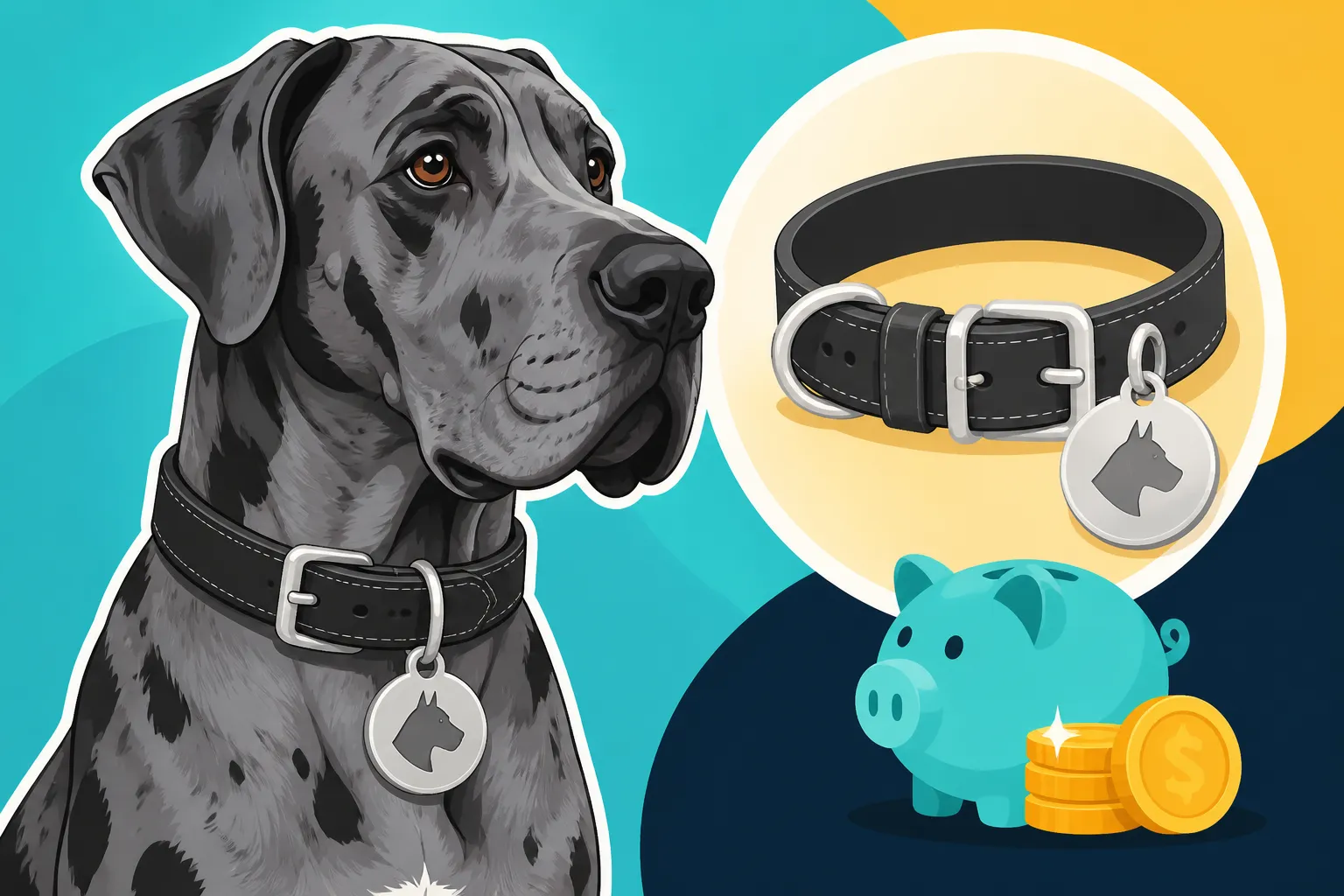
- Standard Buckle Collars (Nylon/Webbing): These are the most common and often the most affordable. For a Great Dane, you’ll need one that’s at least 1-1.5 inches wide, with heavy-duty plastic or metal hardware. These are great for everyday wear and holding ID tags. Prices for a quality, Dane-sized nylon buckle collar can range quite a bit, but expect to pay more than you would for a Golden Retriever's collar.
- Martingale Collars (Limited Slip): Many Great Dane owners swear by martingale collars, especially for leash training. These collars provide gentle, even pressure around the neck when the dog pulls, preventing them from backing out of the collar (a common issue with deep-chested breeds with smaller heads). They tighten only to a certain point, so they don't choke the dog. Because of their dual-loop design and often more robust materials, martingales tend to be a bit pricier than standard buckle collars. If you’re struggling with a dog that pulls, a Harnesses and Collars That Control a Great Dane might be a good read.
- Leather Collars: These offer a classic look and incredible durability if properly cared for. For a Great Dane, you'll want thick, full-grain leather, often with substantial metal buckles and D-rings. While a significant upfront investment, a good leather collar can last for many years and even become softer and more comfortable over time. The craftsmanship and material quality mean these are typically at the higher end of the spectrum.
Material Considerations: From Basic Nylon to Artisan Leather
The material directly influences both the cost and the performance of your Great Dane's collar.
- Nylon/Webbing: This is a practical and widely available option. Good quality nylon is strong, relatively easy to clean, and comes in a vast array of colors and patterns. When choosing nylon for a Great Dane, focus on tightly woven, thick webbing and solid metal hardware. Cheap plastic buckles or thin nylon can quickly fail under a Dane's power. Brands like Chewy often stock a wide selection of durable nylon collars specifically designed for large breeds, which is a great place to start your search.
- Heavy-Duty Canvas/Fabric Blends: Some collars are made from robust canvas or fabric blends, offering a balance between the strength of nylon and sometimes a softer feel. These often feature reinforced stitching and heavy-duty buckles. They can be a good middle-ground option in terms of both price and durability.
- Leather: As mentioned, leather is a premium choice. It's incredibly strong, durable, and develops a beautiful patina over time. However, it requires more maintenance than synthetic materials, needing occasional conditioning to prevent drying and cracking. High-quality leather collars for a Great Dane will have rolled edges or be very wide to prevent rubbing, and feature solid brass or stainless steel hardware. This material choice is a true investment, but one that many owners feel is worthwhile for the comfort and long-lasting nature it provides. A well-fitted, comfortable collar is key for Great Dane Leash Manners at a Hundred and Fifty Pounds.
- Biothane: This material is a coated webbing that offers the look and feel of leather but is waterproof, odor-proof, and very easy to clean. It's a fantastic option for active Great Danes who love to swim or get dirty, combining the strength of synthetic with the aesthetic appeal of leather. Biothane collars typically fall into the mid-to-high price range, a testament to their practicality and longevity.
The Essential Great Dane ID Tag and Its Costs
A collar without an ID tag is like a car without license plates – it’s missing a crucial identifier. For a Great Dane, who might wander off or get spooked, a clear, legible ID tag with up-to-date contact information is non-negotiable. The thought of your massive, beloved companion getting lost is terrifying, and a simple tag dramatically increases the chances of a swift reunion. It’s a tiny item that provides enormous peace of mind.
Engraved Tags vs. Plate Tags vs. Slide-On Tags
Just like collars, ID tags come in various styles, each with its own benefits and cost implications.
- Engraved Hanging Tags: These are the most common. Made from metal (stainless steel, brass, aluminum) or sometimes even hard plastic, they hang from a split ring attached to the collar D-ring. The cost varies based on material, size, and engraving method. Aluminum is usually the cheapest but can wear down quicker, while stainless steel and brass are more durable and thus more expensive. For a Great Dane, you’ll want a larger tag to accommodate more information and to be easily visible. The main drawback is the jingle, and sometimes they can get snagged or become illegible over time if the engraving wears off.
- Riveted or Plate Tags: These are metal plates that are riveted directly onto the collar itself. This eliminates the jingle and the risk of the tag snagging or falling off. They offer a very clean, permanent look. While the tag itself might not be drastically more expensive, the service of having it professionally riveted to a heavy-duty Great Dane collar might add to the overall cost, or you might need to purchase a specific collar designed to accept a plate tag. These are particularly good for active dogs where a dangling tag could be lost.
- Slide-On Tags: These are genius for Great Danes, especially if you dislike the jingle. Slide-on tags are flat pieces of metal or silicone that slip directly onto the collar strap, lying flat against the dog’s neck. They are incredibly secure, silent, and virtually impossible for the dog to lose. They come in various widths to match different collar sizes. Because of their design and often more robust construction, slide-on tags can be a bit pricier than basic hanging tags, but their security and comfort make them a highly recommended choice for a large breed.
Customization and Information on a Great Dane Tag
When it comes to the information on your Great Dane's tag, clarity and conciseness are key. You want enough information to get them home, but not so much that it's unreadable.
Typically, you'll want:
- Your Dog's Name (Optional): Some owners prefer not to put the dog's name, fearing it might encourage theft, but most do.
- Your Phone Number(s): Crucial! Include at least two numbers if possible.
- Your City/State: A general location can be helpful.
- "REWARD" (Optional): This can incentivize someone to help.
Avoid putting sensitive personal information like your full address if you're concerned about privacy. Remember, the goal is a quick and safe return. When ordering online, many retailers, including those found on platforms like Chewy, offer customization services for ID tags at a minimal additional cost, often included in the tag's price. For some tags, you can even engrave multiple lines on both sides, ensuring maximum information density without sacrificing readability.
The Value of a Microchip as a Backup
While this article is focused on collars and tags, it’s absolutely critical to mention that an ID tag is just one layer of protection. Every Great Dane, without exception, should also be microchipped. A microchip is a permanent form of identification, implanted under the skin, that can be scanned by any vet clinic or animal shelter. It cannot fall off, wear out, or be removed easily.
Think of it this way: the collar and tag are the first line of defense, visible to anyone who finds your dog. The microchip is the foolproof backup, there even if the collar comes off. The cost of microchipping is a one-time fee, typically very reasonable, and often includes lifetime registration or a small annual fee to keep your contact details updated. Many responsible breeders will even microchip puppies before they go to their new homes, ensuring they are protected from day one. Reading a Great Dane Puppy's Health Papers often includes microchip information. This dual approach offers the best chance of reunification should your gentle giant ever get lost.
Beyond the Basics: Accessories and Long-Term Considerations
Equipping a Great Dane is a bit like outfitting a small horse. Their size dictates everything, from the strength of their leash to the bed they sleep on. When it comes to collars and tags, there are a few other considerations that pop up over their lifespan, and knowing about them ahead of time can save you stress (and sometimes money!).
Specialty Collars for Training or Health Needs
While most Great Danes thrive with a standard or martingale collar, there are situations where specialty collars become necessary.
- Training Collars (e.g., Head Halters, Pinch Collars): For a Great Dane that's particularly challenging on a leash, some trainers recommend head halters (like a Halti or Gentle Leader) which give you more control by guiding their head, or pinch collars, which provide a sharp but momentary correction when used correctly. Head halters are generally preferred for humane control and can be quite effective for a powerful dog, especially if you're working on Getting a Great Dane to Walk on a Loose Leash. These collars are not for everyday wear and require proper introduction and training to avoid aversion. They will have their own specific price points, often higher than basic collars due to their specialized design.
- GPS Tracking Collars: In today's tech-savvy world, GPS tracking collars are becoming more popular. These collars often combine a durable regular collar with a small, lightweight GPS device that allows you to track your dog's location via a smartphone app. For a Great Dane, whose size means they can cover a lot of ground quickly if lost, a GPS tracker offers unparalleled peace of mind. The cost of these devices can vary significantly, often involving an upfront purchase price for the unit and then a monthly or annual subscription fee for the tracking service. For Great Danes, you'll need a robust unit that can withstand their lifestyle and provide accurate location data. While expensive, it’s an investment in safety that many find invaluable.
When to Replace a Great Dane's Collar and Tag
Collars and tags aren't "buy it once and forget it" items, especially with a Great Dane. Regular inspection is key.
- Growth Spurts: A Great Dane puppy will outgrow several collars in its first year to eighteen months. You might start with a medium puppy collar, quickly move to a large, and then an extra-large. Trying to squeeze a growing Dane into a too-small collar is uncomfortable and unsafe. Be prepared to upgrade collar sizes as they grow. Why a Great Dane Puppy Should Grow Slowly applies to all aspects of their development, including proper equipment.
- Wear and Tear: Even the most durable collars will eventually show signs of wear. Check for fraying nylon, cracked leather, rusted buckles, stretched holes, or worn-down D-rings. If any component looks compromised, it's time for a replacement. A strong dog like a Great Dane puts immense stress on their gear.
- Legibility of Tags: Over time, engraved tags can become scratched or faded, making the information unreadable. Periodically check that your phone number and other details are still clear. If not, it's a small investment to replace a tag compared to the heartache of a lost dog.
- Changes in Information: Moved? New phone number? Got a second contact person? Don't forget to update your dog's ID tag immediately.
Where to Buy Great Dane Sized Gear
Finding gear for a Great Dane can sometimes feel like a treasure hunt. Standard big-box pet stores might have some large options, but specialty retailers or online stores often have a much better selection designed for giant breeds.
Online retailers like Chewy are excellent resources, offering a vast array of extra-large collars, harnesses, and tags from various brands known for durability. You can easily filter by size and read reviews from other large-dog owners. Many Great Dane owners also find success at local independent pet boutiques that cater to a broader range of breeds, or even custom leather makers who can craft a bespoke collar designed for your dog's specific measurements. Don't be afraid to ask for recommendations in Great Dane owner groups online, as fellow Dane parents are usually happy to share their favorite products. For the health aspect, remember that companies like Healthy Paws are available for pet insurance, offering peace of mind for the bigger picture of your dog's well-being. And while Ollie focuses on fresh dog food delivery, demonstrating another significant investment area for Great Danes, their commitment to quality also speaks to the larger commitment owners make to these incredible dogs.
Here's a quick comparison of common collar types and their features:
| Collar Type | Great Dane Suitability | Pros | Cons | Typical Cost Range (Great Dane Size) |
|---|---|---|---|---|
| Nylon Buckle | Excellent for daily wear | Affordable, durable, easy to clean, various colors | Can stretch over time, not escape-proof | $$15 – $40 |
| Martingale | Excellent for training/walking | Prevents slipping out, even pressure | Not for tie-out, can be misused | $$25 – $60 |
| Leather Buckle | Excellent for daily wear | Very durable, classic look, comfortable with age | Higher initial cost, requires maintenance | $$40 – $100+ |
| Biothane | Excellent for active dogs | Waterproof, odor-proof, easy to clean, durable | Can be stiffer initially, limited colors | $$35 – $75 |
| Head Halter | Good for training control | Provides excellent control, reduces pulling | Requires careful introduction, not for all dogs | $$20 – $45 |
Note: Cost ranges are estimates and can vary widely based on brand, materials, and retailer.
In the grand scheme of Great Dane ownership, the cost of a collar and tag might seem like a small detail, but it's a foundational one. It's about ensuring your giant companion is safe, comfortable, and identifiable, a testament to your commitment as a responsible owner. Don't let the initial sticker shock deter you from investing in high-quality, appropriately sized gear. It's a small price to pay for the immense love and companionship your Great Dane brings into your life.
Disclaimer
This article is for general informational purposes only and does not constitute professional advice. Laws, prices and regulations vary by location and change over time. Consult a qualified professional for guidance on your specific situation.