What a Great Dane Microchip and License Run
Bringing a magnificent Great Dane into your home is an incredible joy, but it also comes with a unique set of responsibilities and, let's be honest, costs that can catch new owners by surprise. Beyond the daily mountain of food and the occasional giant vet bill, there are essential foundational expenses for your dog's safety and legal standing. This guide will walk you through what you can expect when it comes to microchipping and licensing your gentle giant, ensuring they're always accounted for.
The Essentials: Why Microchipping Your Great Dane Isn't Just a Good Idea, It's Crucial
When you look at your beautiful Great Dane, you probably imagine a lifetime of companionship, long walks, and lazy naps on the sofa. What you likely don't want to imagine is the terrifying thought of them getting lost. Unfortunately, even the most well-behaved and securely fenced Danes can find their way out, whether it's through an unlatched gate, an unexpected scare, or simply a moment of curiosity leading them astray. This is where microchipping becomes an absolute non-negotiable part of responsible Great Dane ownership.
The Lifeline a Microchip Provides
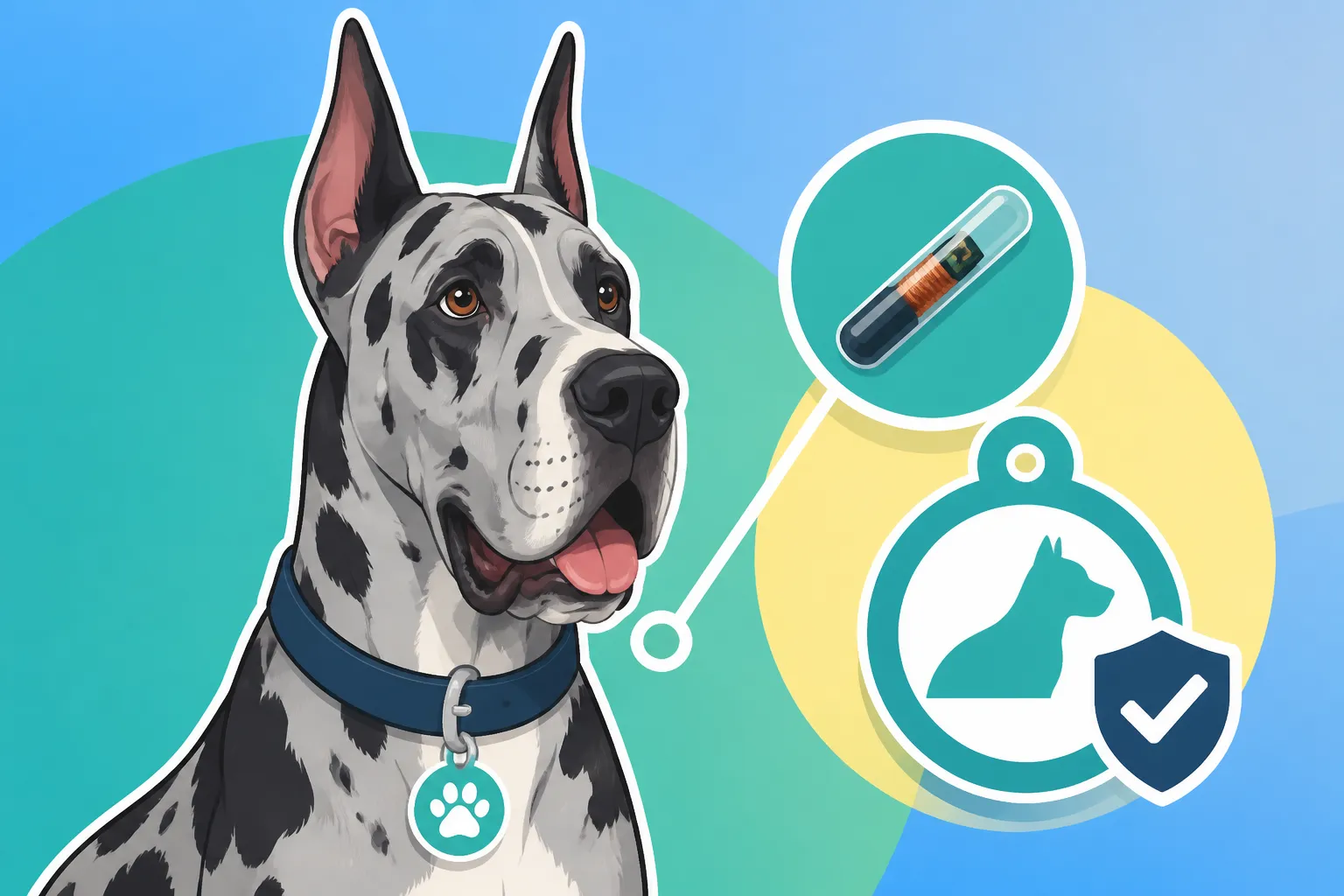
A microchip is essentially a permanent ID for your dog, a tiny transponder about the size of a grain of rice that's implanted harmlessly under their skin, usually between the shoulder blades. It carries a unique identification number that can be read by a scanner, which most veterinary clinics, animal shelters, and animal control facilities possess. When your lost Great Dane is found and scanned, that number leads directly to your contact information stored in a national pet recovery database. Imagine the relief when that call comes in, letting you know your beloved companion has been found safe and sound.
This tiny device offers a level of permanence that collars and tags, while still incredibly important, simply cannot match. Collars can break, tags can fall off, and engravings can wear away. But a microchip remains safely inside your dog, providing a consistent, unalterable link back to you. It's an incredibly powerful tool for reunion, especially for a large, imposing breed like a Great Dane, who might otherwise intimidate strangers or be mistaken for a stray due to their sheer size. It serves as undeniable proof of ownership, which can be invaluable in a dispute.
Understanding Microchip Costs
The cost of microchipping a Great Dane is, thankfully, typically a one-time expense, making it one of the most cost-effective forms of lifetime pet identification. Generally, this cost covers the microchip itself and the veterinary professional's fee for implantation. You might find clinics or local animal shelters offering microchipping at a lower price during special community events or vaccination clinics, which can be a fantastic way to get it done affordably. These initiatives often aim to increase the number of microchipped pets in the community, understanding the public safety benefits.
Beyond the initial implantation, there's usually a registration fee to list your Great Dane's microchip number with a pet recovery service. Some services charge a small, one-time fee for lifetime registration, while others might have an optional annual renewal fee for premium services like lost pet alerts or enhanced support. The most crucial part of this process, and one that often gets overlooked, is diligently keeping your contact information updated in the database. If you move, change phone numbers, or even switch email addresses, you must update your microchip registration. A microchip is only as good as the information it holds, and an out-of-date entry renders it almost useless in a crisis. Think of it as a personal responsibility to maintain this vital link to your Great Dane.
Navigating the Law: Why Licensing Your Great Dane Matters
Just like human residents, our canine companions often have legal obligations within our communities. Dog licensing is a widespread requirement across cities, counties, and sometimes even states, and it's particularly important for a large breed like a Great Dane. While it might seem like just another fee, understanding the purpose behind these laws can help you see it as a necessary part of being a responsible pet owner.
The Legal Mandate and Its Purpose
The primary purpose of dog licensing is public safety and animal welfare. When you license your Great Dane, you're not just getting a tag; you're registering your pet with your local animal control authority. This registration helps local officials identify lost pets and return them to their owners more quickly. It also plays a critical role in controlling rabies, as proof of current rabies vaccination is almost always a prerequisite for obtaining a dog license. This helps protect not only your pet but also the broader community from potential health risks.
The funds collected from licensing fees are typically channeled back into local animal services. This means your licensing fee helps support local animal shelters, fund lost and found initiatives, assist with animal welfare investigations, and even subsidize spay/neuter programs that benefit countless animals. So, while it feels like a small annual charge, it contributes to the overall well-being and safety of pets in your area. For a breed that can seem intimidating to some, like a Great Dane, having them officially licensed and clearly identified with a tag can also help reassure the public that they are a cared-for, legal member of your household.
Deciphering Licensing Fees
The cost of a Great Dane's license can vary quite a bit, primarily depending on your specific location (city versus county regulations can differ wildly) and often, your dog's spay or neuter status. Most jurisdictions offer a significantly reduced licensing fee for spayed or neutered dogs. This is a deliberate incentive to encourage responsible pet ownership and help control pet overpopulation, which in turn reduces the burden on local animal shelters. You might also find special discounts for senior owners or for service animals, so it's always worth checking your local municipality's specific fee schedule.
Licensing is typically an annual requirement, meaning you'll need to renew it each year. This usually coincides with your Great Dane's rabies vaccination schedule, ensuring their protection remains current. While the individual annual fee might seem modest, it's a recurring expense to factor into your budget. Failing to license your Great Dane can lead to fines, especially if your dog is picked up by animal control. In some areas, these fines can be substantial and far outweigh the cost of simply obtaining the license in the first place. Keeping your Great Dane's license current is a simple step to avoid legal hassle and contribute to community animal welfare.
Beyond the Basics: Other Foundational Costs for Your Great Dane's Safety
While microchipping and licensing cover crucial bases for identification and legal compliance, responsible Great Dane ownership extends to other foundational elements that ensure their ongoing safety and well-being. These might seem like minor details compared to bigger vet bills, but they are equally vital.
The Importance of ID Tags and Collars
Even with a microchip, a visible ID tag on a sturdy collar is your Great Dane's first line of defense if they ever get lost. Imagine a neighbor finding your Dane wandering—they can immediately call you without needing to transport your massive dog to a vet or shelter for a microchip scan. The tag should include your dog's name and your primary phone number. Some owners even add their address or a "rewards" message.
Finding collars and tags that are robust enough for a Great Dane is essential. They need a collar that won't snap under the strain of their powerful neck muscles, and a tag that won't bend or break easily. You'll want to invest in high-quality materials, possibly even a specialized tactical or wide leather collar, to ensure durability and comfort for such a large breed. Engraved tags are often more durable than those printed or attached with split rings, which can sometimes come off. Just like with microchips, remember to update your tags if your contact information changes. It's a small detail, but a current, visible ID can make all the difference in a quick reunion. To delve deeper into what suitable gear might entail, you can check out What a Great Dane Collar and Tag Cost.
Considering Pet Insurance for Peace of Mind
Understanding that microchipping and licensing are just the start of responsible Great Dane ownership leads many owners to consider pet insurance. Given that Great Danes are prone to certain breed-specific health issues like bloat and heart conditions, the potential for significant veterinary expenses is higher than with smaller, generally healthier breeds. An emergency situation, even a common one like bloat, can quickly escalate into a bill that reaches into the thousands.
Many Great Dane owners find peace of mind with pet insurance providers like Healthy Paws. While it won't cover your microchip or license fees, it's designed to help with unexpected illnesses, accidents, and sometimes even hereditary conditions. The monthly premiums for a Great Dane can be higher than for other breeds, reflecting their predisposition to expensive health problems and their sheer size, which means higher doses of medication and more complex procedures. However, the financial relief it can offer when a major health crisis strikes can be invaluable. It ensures that you can make medical decisions based on what's best for your beloved Great Dane, rather than being solely driven by cost. If you're weighing your options, you might find more helpful insights in Insuring a Great Dane Against Bloat and Heart Bills.
Daily Care and Preventative Measures
Beyond the one-time or annual costs of identification and legal compliance, remember that the everyday care for a Great Dane also comes with its own set of expenses, which, when managed well, contribute to their overall safety and health. Their enormous size dictates everything from the volume of food they consume to the dosage of preventative medications.
For example, when considering their diet, whether you choose a premium fresh food service like Ollie or prefer to stock up on large bags of kibble from a major retailer like Chewy, you'll quickly realize that feeding a Great Dane means buying in bulk and budgeting a substantial amount monthly for their nutritional needs. You can explore this further in Monthly Food Spending on a Great Dane. Similarly, preventative treatments like heartworm medication or flea and tick control are dosed by weight, meaning a Great Dane falls into the heaviest weight bands, driving up the cost of these essential monthly or quarterly medications. Understanding these costs is part of building a comprehensive budget for your Great Dane's lifetime care. Learn more about these specifics at Heartworm Tablets for the Heaviest Weight Band and Flea Prevention Priced by Great Dane Weight.
Here's a quick comparison of microchips and licenses:
| Feature | Microchip | Dog License |
|---|---|---|
| Purpose | Permanent ID for lost pet reunion | Legal registration; public safety; fund animal services |
| Legality | Not universally mandated, but highly recommended | Often legally required by local jurisdiction |
| Cost Structure | Typically one-time (chip + implantation), plus potential registration/renewal fees | Annual renewal fees, variable by location and spay/neuter status |
| Benefits | Proof of ownership, higher chance of reunion | Compliance with law, support for local animal welfare |
| Maintenance | Keep contact info updated in database | Renew annually, ensure rabies vaccination is current |
The Long-Term Perspective: Budgeting for Your Gentle Giant's Essentials
Caring for a Great Dane is a marathon, not a sprint. The initial excitement of bringing home a puppy often overshadows the long-term financial commitments, but understanding and planning for these costs from the outset can make the journey smoother and far less stressful. Microchipping and licensing, while seemingly small expenses, are cornerstones of this long-term responsibility.
The Value of Early Investment
Investing in a microchip and obtaining your Great Dane's license early on are perhaps two of the smartest financial decisions you can make. The cost of these items pales in comparison to the emotional and potential financial costs of a lost dog. Imagine the despair of your Great Dane going missing, only to find out their microchip registration was out of date, or they didn't have a visible license tag that could have facilitated an immediate return. The peace of mind that comes from knowing you've done everything possible to ensure their safe return is truly priceless.
Beyond preventing the heartache of a lost pet, early investment in these essentials can save you money in the long run. Avoiding steep fines for an unlicensed dog, or the boarding fees at an animal shelter while they try to track you down, can add up. It’s about proactive rather than reactive management of your pet’s well-being and your finances. This mindset aligns with the broader idea of Building a Fund Before a Great Dane Needs It, preparing for what's to come, both expected and unexpected.
Planning for the Unexpected
Even with the best planning, life with a Great Dane will undoubtedly throw some curveballs. Their unique health challenges and shorter lifespans mean that significant veterinary expenses are often a reality for owners. This is where the wisdom of considering comprehensive pet insurance, as discussed earlier, truly comes into play. It acts as a safety net, making sure that if your microchipped, licensed, and adored Great Dane faces a sudden illness or accident, you're not caught unprepared. Many owners find that Whether Pet Insurance Is Essential for a Great Dane is less a question and more a definite "yes" for this breed.
Ultimately, providing these fundamental layers of safety and compliance—microchipping, licensing, and proper ID—is a reflection of responsible Great Dane ownership. It's about recognizing that these majestic dogs require specific care, and part of that care involves ensuring they are always identifiable and legally recognized members of your family. It's an important part of understanding The Short Expensive Life of a Great Dane, ensuring that every year is lived to its fullest with maximum safety and care.
Taking the time to ensure your Great Dane is properly microchipped and licensed is a small effort with immense payoffs. It’s an act of love and responsibility that safeguards your gentle giant, offering the best chance for a happy, safe, and long life together.
Disclaimer
This article is for general informational purposes only and does not constitute professional advice. Laws, prices and regulations vary by location and change over time. Consult a qualified professional for guidance on your specific situation.