Exercise Limits While a Great Dane Is Still Growing
It's incredibly exciting to bring home a Great Dane puppy, full of boundless energy and that gangly, lovable charm. As they grow at an astonishing rate, many new owners feel a natural urge to let them run and play to their heart's content, thinking it will help them grow strong. However, this seemingly harmless desire to keep your giant breed puppy active can actually lead to significant, long-term health problems for their rapidly developing bones and joints. This guide will walk you through the crucial exercise limits necessary to protect your growing Great Dane, ensuring they develop into the healthy, majestic companion they're meant to be.
Understanding the Unique Growth of a Great Dane Puppy
Great Danes are truly a marvel of canine development. They grow from tiny, adorable puppies to massive adults in a fraction of the time it takes smaller breeds. This incredible growth spurt, while impressive, also makes their skeletal system incredibly vulnerable during their first couple of years. It’s not just about getting bigger; it's about the very foundation of their massive body forming at an accelerated pace.
Rapid Growth Phases and Fragile Growth Plates
Imagine a skyscraper being built in fast-motion. That's essentially what's happening inside your Great Dane puppy. They put on weight and height at an astonishing rate, sometimes gaining several pounds a week and growing inches taller in a month. This rapid growth means their bones are lengthening quickly, and the "growth plates" – areas of soft, developing cartilage at the ends of long bones – are open and incredibly fragile for a much longer period than in smaller dogs. These growth plates are the engines of bone growth, and until they fully close (ossify) into solid bone, they are extremely susceptible to injury from excessive impact or strain. A seemingly minor jolt or repetitive stress could cause microscopic damage, or even a full fracture, which can alter the way the bone grows, leading to lifelong lameness, pain, and arthritis. This is a critical period that sets the stage for their entire adult life.
When Great Danes Stop Growing
It's a common misconception that once a Great Dane reaches their adult height, they're done growing. While they typically achieve most of their height by 12-18 months, their skeletal development isn't truly complete until they are closer to 18 to 24 months old, sometimes even a bit later for very large males. They continue to "fill out" and solidify their bone structure. During this entire period, those vulnerable growth plates are still a concern. Pushing them too hard with strenuous activity, especially before 18 months, is like trying to put a fully loaded semi-truck on a freshly poured concrete foundation that hasn't cured yet. It looks solid enough on the surface, but underneath, the structure is still vulnerable. Understanding How Tall a Great Dane Is at a Year and Whether a Great Dane Keeps Filling Out to Two helps manage expectations for their physical maturity.
The Dangers of Over-Exercising a Growing Great Dane
It's natural to want your energetic Great Dane puppy to burn off steam, but unchecked, high-impact, or prolonged exercise can pave the way for a lifetime of orthopedic problems. These aren't just minor aches; they can be debilitating conditions that significantly impact their quality of life and shorten their lifespan.
Orthopedic Conditions Linked to Over-Exertion
The sheer size and rapid growth of a Great Dane make them predisposed to several serious orthopedic conditions if their exercise isn't carefully managed. Conditions like Hypertrophic Osteodystrophy (HOD) and Osteochondritis Dissecans (OCD) are particularly prevalent. HOD is an inflammatory condition of the growth plates, often presenting as painful, swollen joints, especially in the wrists and ankles. It can be excruciating for a puppy and, while often treatable, severe cases can lead to permanent limb deformities. OCD involves abnormal cartilage development and separation from the underlying bone, most commonly in the shoulders, elbows, and knees. It causes pain and lameness and often requires surgery to correct. Both are strongly linked to genetics, nutrition, and excessive, high-impact exercise during growth. You can learn more about these issues in articles like Hypertrophic Osteodystrophy in a Great Dane and Growth Disorders in a Great Dane Puppy.
Long-Term Consequences of Joint Damage
The repercussions of pushing a growing Great Dane too hard aren't always immediate. Sometimes, the damage is insidious, laying the groundwork for problems that manifest years down the line. Microtraumas to soft growth plates, repeated jarring, or forcing immature joints into unnatural movements can lead to conditions such as hip and elbow dysplasia. These are complex genetic conditions, but environmental factors, particularly inappropriate exercise, can significantly exacerbate their severity. The constant wear and tear on immature joint cartilage can also accelerate the onset and progression of debilitating arthritis. Imagine a person who over-exercised their joints intensely in their youth; they often face chronic pain and limited mobility in their later years. For a Great Dane, who already has a shorter lifespan, these issues can mean a significantly reduced quality of life, requiring ongoing pain management, specialized diets, and potentially expensive surgeries. Great Dane Hips, Elbows and Growing Joints details these concerns.
Safe Exercise for Great Dane Puppies: Age-Appropriate Activities
So, if intense exercise is out, what can a growing Great Dane puppy do? The key is "controlled" and "low-impact." We want to encourage healthy movement and mental engagement without putting undue stress on their developing skeleton. Think quality over quantity when it comes to puppy exercise.
Controlled Leash Walks and Gentle Play
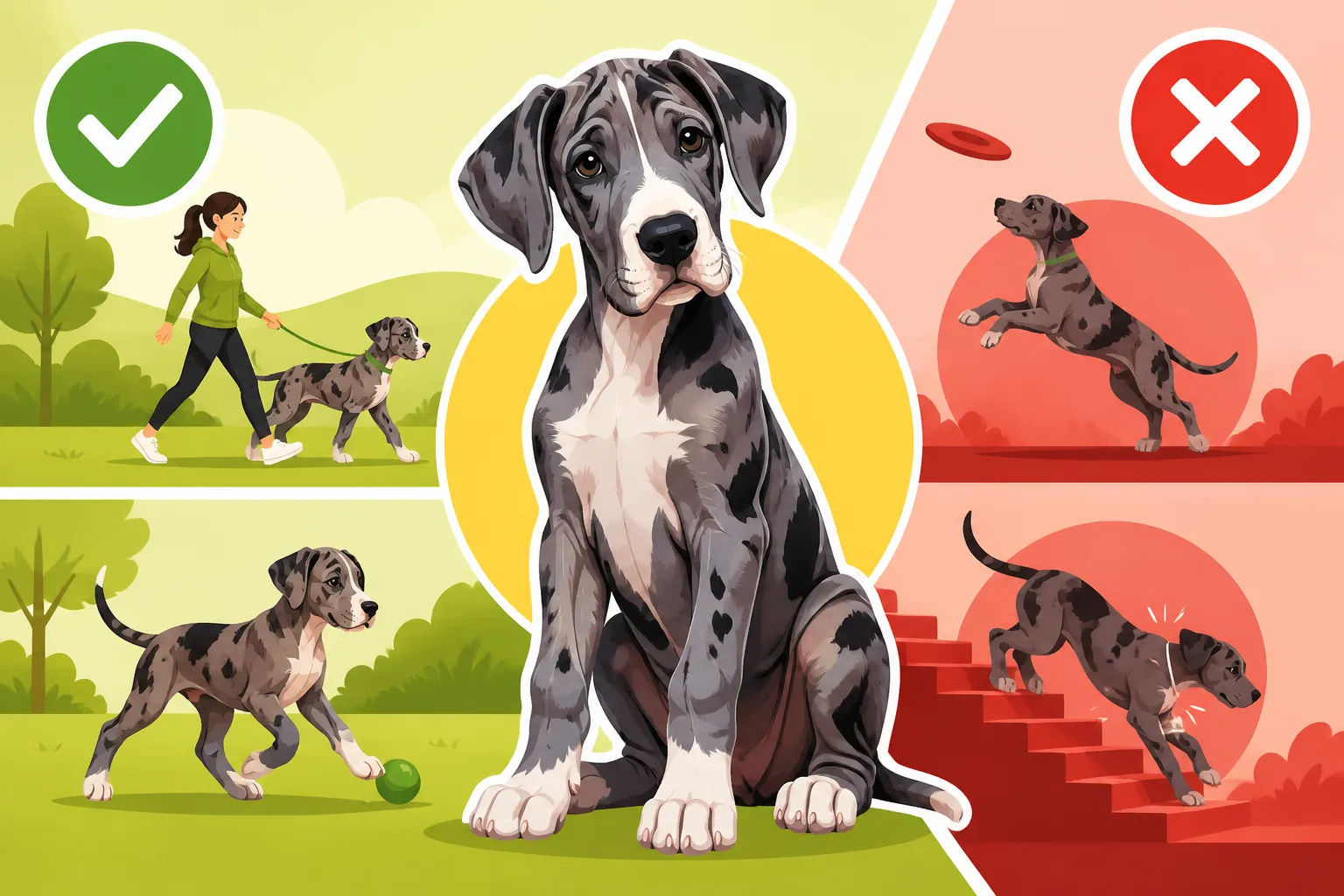
For Great Dane puppies, controlled leash walks are your best friend. These aren't marathon hikes; they are short, frequent strolls on soft surfaces like grass or dirt paths, not hard pavement. The goal is gentle movement, exploration, and socialization, not endurance. A good rule of thumb often cited for puppies of all breeds is "5 minutes per month of age, twice a day." So, a 4-month-old Dane gets two 20-minute walks. This isn't a hard and fast rule, but a useful guideline to prevent overdoing it. Watch your puppy for signs of fatigue – lagging behind, panting excessively, or wanting to lie down.
Gentle play in a fenced yard is also fine, but again, it must be controlled. Avoid rough-housing with older, heavier dogs, intense fetch sessions with sudden stops and starts, or jumping activities. Supervise all play to ensure it doesn't escalate into anything high-impact. Instead, encourage sniffing games, short rounds of tug (but be mindful of neck strain), or hiding treats for them to find. The focus should always be on moderate, steady activity.
The Problem with Unstructured, High-Impact Exercise
This is where many well-meaning owners accidentally cause harm. Unstructured, high-impact exercise refers to activities where the puppy has full control over their speed, turns, and jumps, often leading to sudden bursts of energy and jarring movements. Think of a puppy zooming around a dog park, chasing after balls at top speed, or endlessly wrestling with other large, boisterous dogs. While it looks like fun, these activities put immense strain on immature growth plates and soft tissues.
Picture a Great Dane puppy galloping at full speed, suddenly slamming on the brakes to turn, or leaping high to catch a frisbee. Each of these actions sends shockwaves through their still-forming joints. This is precisely what can lead to the orthopedic issues mentioned earlier. Their enthusiasm often overrides their physical limitations, and they won't self-regulate until they're already hurting. It's our job as responsible owners to be their advocate and set appropriate boundaries for their physical activity, even if it means sometimes saying "no" to a game of full-speed fetch.
Low-Impact Alternatives: Swimming and Mental Stimulation
When it comes to physical activity for a growing Great Dane, swimming can be an excellent low-impact option once they are old enough and comfortable in the water. It provides great cardiovascular exercise and builds muscle without the jarring impact on their joints. Always ensure they have a properly fitted life vest and supervise them closely in safe, shallow water.
Beyond physical exercise, mental stimulation is absolutely vital for a Great Dane puppy, especially when physical activity is limited. They are intelligent dogs, and a tired mind can be just as effective as a tired body for settling them down. Engage them with:
- Puzzle toys: Fill them with kibble or healthy treats to make them "work" for their food. Brands readily available on Amazon offer a wide variety suitable for large, strong chewers.
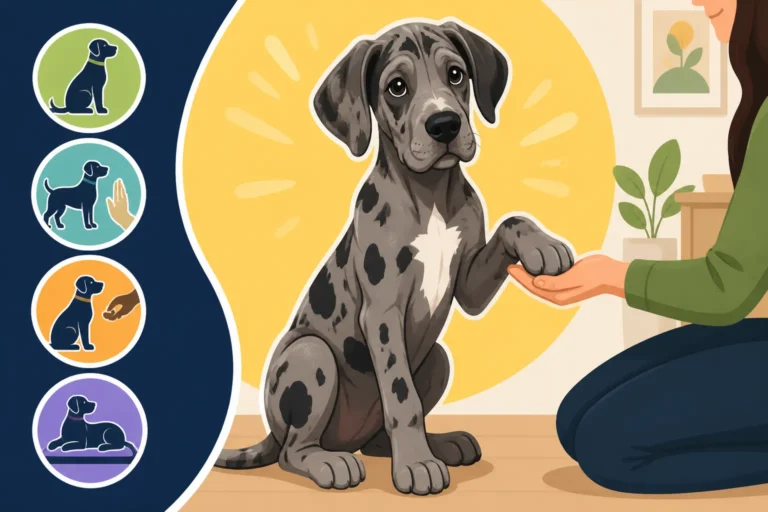
- Training sessions: Short, positive reinforcement-based training sessions (5-10 minutes, several times a day) can be incredibly mentally stimulating. Teach new tricks, practice basic obedience cues, or work on impulse control. Online training programs, like those offered by BAXTER & Bella, can provide a structured curriculum and keep puppies engaged mentally without excessive physical strain.
- Scent work: Hide treats or their favorite toys around the house or yard and encourage them to find them using their nose. This is a wonderfully calming and engaging activity.
- Chew toys: Provide appropriate, durable chew toys to satisfy their natural urge to chew, which can also be a calming activity.
Managing Energy Levels in a Growing Great Dane
It's a common dilemma: you have a giant puppy bursting with energy, but you know you can't let them run wild. How do you channel that zest for life without jeopardizing their developing skeleton? The answer lies in a blend of structured activity, mental engagement, and teaching them how to settle.
Structured Play Versus Free Play
The distinction between structured and free play is crucial for a growing Great Dane. Structured play is supervised, controlled, and typically low-impact. This could be a gentle game of tug (with rules), a slow sniffari walk on a leash in the park, or a short, controlled game of fetch with soft toys on a soft surface, where you ensure they don't jump or make hard stops. The emphasis is on you dictating the pace and intensity to prevent over-exertion or risky movements.
Free play, on the other hand, is when your puppy dictates the intensity – zooming around, wrestling, chasing, and jumping without much oversight. While a small amount of supervised, gentle free play in a safe, soft area is acceptable, prolonged or high-intensity free play, especially with other dogs, should be avoided during their major growth phases. This is particularly true for dog parks or off-leash areas where interaction with unknown dogs can quickly escalate beyond what's safe for your Dane's joints. Consider a private, fenced yard for very short bursts of supervised fun rather than public free-for-alls.
The Importance of Mental Stimulation
As mentioned earlier, mental exercise is just as important, if not more so, than physical exercise for a growing Great Dane. A mentally stimulated puppy is often a calm puppy. Without adequate mental outlets, all that pent-up Great Dane brainpower can manifest as destructive chewing, excessive barking, or general "nuisance" behaviors that test your patience.
Regular, short training sessions are fantastic. Even five minutes, three or four times a day, can make a huge difference. Teach them new cues like "touch," "find it," or "settle." Use puzzle feeders for their meals, which forces them to think and work for their food. Kongs stuffed with wet food and frozen can keep them occupied for a good chunk of time. Snuffle mats are also excellent for engaging their powerful sense of smell. These activities provide a productive outlet for their energy without putting any strain on their joints. The skills learned through programs like BAXTER & Bella, which focus on positive reinforcement and engagement, are invaluable during this critical developmental period.
Teaching the "Off" Switch and Quiet Time
One of the most valuable lessons you can teach a Great Dane puppy is how to settle down and relax. This "off" switch is not something all puppies naturally possess, especially those with high drive. Incorporate dedicated quiet times throughout the day. This might mean crating them with a high-value chew, having them lie on their orthopedic bed (look for large, supportive options on Amazon) next to you while you work or read, or simply practicing "place" command.
Make relaxation a rewarding activity. Gently praise them when they lie down calmly. Avoid over-stimulating them right before bedtime. A consistent routine that includes structured play, mental games, and plenty of enforced rest periods will help your Great Dane puppy understand when it's time to be active and when it's time to chill out. This skill is not only good for their joints but also makes them a much more enjoyable companion in the long run.
The Role of Nutrition in Joint Health
Exercise and nutrition go hand-in-hand when it comes to the healthy development of a growing Great Dane. What you feed your puppy can significantly impact how their bones and joints mature, either supporting healthy growth or contributing to orthopedic problems. It's not just about quantity, but the precise balance of nutrients.
Specialized Large Breed Puppy Food
This is perhaps one of the most critical aspects often overlooked. Great Dane puppies must be fed a high-quality, large-breed specific puppy food. These diets are specifically formulated with a controlled calcium and phosphorus balance, and often slightly lower protein and fat levels, designed to promote slow and steady growth. Regular puppy food, which is often higher in calories and calcium, can actually encourage too rapid growth in a giant breed puppy. This faster growth puts immense stress on their developing skeletal system, increasing the risk of conditions like HOD, OCD, and hip/elbow dysplasia.
Think of it like building a house. You want strong materials, but you don't want the concrete to cure too quickly, leading to cracks. Large breed puppy food helps ensure their bones grow dense and strong at an appropriate pace. Why Regular Puppy Food Hurts a Great Dane delves deeper into this topic. Always consult your veterinarian for specific dietary recommendations tailored to your Great Dane puppy's needs.
Avoiding Supplements, Especially Calcium
In an effort to "help" their giant breed puppy grow big and strong, some owners are tempted to add supplements, particularly calcium. This is a significant mistake and can be incredibly detrimental. Most high-quality large-breed puppy foods already contain the appropriate and balanced levels of calcium and phosphorus. Adding extra calcium can disrupt this delicate balance, leading to skeletal abnormalities and contributing to bone and joint issues. It's a classic case of "too much of a good thing" becoming harmful.
Similarly, be wary of other unproven supplements unless specifically recommended and dosed by your veterinarian. Focus on providing a complete and balanced diet from a reputable brand designed for giant breed puppies. If you're concerned about your puppy's growth or joint health, always discuss it with your vet before introducing any supplements. For a broader understanding of diet, consider Whether Extra Calcium Damages a Great Dane.
Keeping a Great Dane Lean for Its Joints
Maintaining a lean body condition throughout your Great Dane's growth is paramount for joint health. Every extra pound puts additional stress on their developing joints. A lean puppy, with easily palpable but not visible ribs, a tucked waist, and a visible but not prominent hip bone, is a healthy puppy.
It can be tempting to feed a Great Dane puppy more to make them "bigger," but bigger does not equate to healthier or stronger in this breed. In fact, it's often the opposite. Overweight puppies are at a significantly higher risk for developing and exacerbating orthopedic problems. Monitor their weight and body condition regularly. Adjust their food intake as needed based on their activity level and growth, always aiming for that lean physique. Your veterinarian can help you assess your puppy's body condition score and guide you on appropriate feeding amounts. Keeping them lean is a simple yet profoundly effective way to protect their joints for a healthier future. Whether a Great Dane Puppy Should Be Kept Lean offers more insights.
Recognizing Signs of Over-Exertion or Injury
Even with the best intentions and careful management, accidents happen, or a puppy might overdo it without you realizing it. It's crucial for Great Dane owners to be vigilant and know the signs that their growing dog might be experiencing pain, discomfort, or injury related to their exercise levels. Early detection can prevent more severe, long-term damage.
Lameness, Stiffness, and Reluctance to Move
These are often the most obvious indicators that something is amiss. If your Great Dane puppy is limping, even subtly, after a period of activity, pay close attention. Lameness can manifest as a slight head bob while walking, favoring one leg, or outright refusing to put weight on a paw. Stiffness, particularly after resting or waking up, can also be a red flag. Does your puppy seem hesitant to jump on the sofa (if allowed), climb stairs, or even just get up from a lying position? Are they moving more slowly than usual, or showing less enthusiasm for play they normally adore? Any sudden or persistent change in their gait or mobility warrants investigation. It's often difficult to pinpoint the exact location of pain, so a general reluctance to move comfortably is a significant warning sign. Shifting Lameness in a Growing Great Dane can provide additional context.
Swelling, Heat, and Pain on Touch
While some orthopedic conditions are "silent" initially, many present with more noticeable physical symptoms. Gently feel your puppy's legs and joints regularly, especially after exercise. Are any joints (wrists, elbows, knees, ankles) warm to the touch? Do you notice any swelling or puffiness that wasn't there before? Watch your puppy's reaction as you palpate their limbs. Do they pull away, whimper, or show any signs of discomfort or pain when you touch a specific area? Even a subtle flinch can indicate an issue. Compare corresponding joints (e.g., left elbow vs. right elbow) to identify any asymmetry. These can be direct signs of inflammation, injury to soft tissues, or conditions like HOD or OCD flaring up.
Behavioral Changes and Fatigue
Beyond the physical signs, behavioral shifts can also signal a problem. A puppy that is usually bouncy and playful but suddenly becomes lethargic, withdrawn, or unusually quiet could be experiencing pain or extreme fatigue from over-exertion. They might hide more, be less interested in food or toys, or seek comfort more often than usual. Some puppies might even become a little nippy or growly if you touch a sore spot, simply because they are in pain and trying to protect themselves.
Excessive panting, struggling to keep up on a walk they usually manage, or needing unusually long recovery times after activity are also signs of pushing their physical limits. If you notice any of these symptoms, it's essential to stop all strenuous activity immediately and contact your veterinarian. Don't wait, hoping it will "go away." With growing giant breeds, time is of the essence to address potential orthopedic issues before they become more severe or cause irreversible damage.
Long-Term Impact of Proper Exercise Management
Investing the time and effort into carefully managing your Great Dane puppy's exercise during their crucial growth period pays off in spades. It's not just about avoiding immediate injury; it's about setting the stage for a lifetime of better health, mobility, and companionship.
Healthier Joints and Reduced Arthritis Risk
By protecting those fragile growth plates and immature joints from excessive impact and strain, you dramatically reduce your Great Dane's risk of developing or exacerbating severe orthopedic conditions like hip and elbow dysplasia, HOD, and OCD. Imagine the wear and tear on a developing car engine compared to one that's carefully broken in. Properly managed exercise allows the bones, cartilage, ligaments, and tendons to mature and strengthen at their intended pace. This leads to much healthier, more robust joints in adulthood.
Furthermore, by preventing early-onset joint damage, you also significantly reduce the likelihood of premature and debilitating arthritis in their later years. Arthritis is a progressive condition, and any damage sustained in youth only accelerates its onset and severity. A Great Dane with sound joints can enjoy a more active, pain-free life, able to comfortably participate in walks, gentle play, and daily activities well into their senior years. This foresight is a gift you give your dog.
A Longer, More Active Life
A Great Dane's lifespan is already shorter than many smaller breeds, typically Why a Great Dane Only Lives Seven to Ten Years. Every effort to preserve their health can contribute to extending that precious time and, more importantly, improving the quality of those years. Great Danes are prone to various health issues, and healthy joints mean they can remain active and engaged for longer. An adult Dane whose joints are sound is more likely to enjoy long walks, play gently in the yard, and move comfortably without chronic pain limiting their world. This contributes to their overall mental well-being too, as physical comfort allows them to fully enjoy their interactions with their family and surroundings.
A dog constantly battling joint pain is a dog whose life is often confined and whose joy can be dampened. By prioritizing appropriate exercise from puppyhood, you're not just preventing problems; you're actively promoting a life full of movement, exploration, and happy moments for your beloved Great Dane, well into their senior years. Caring for a Great Dane Past Six highlights the importance of maintaining mobility as they age.
Financial and Emotional Savings
Let's be realistic: Great Danes are expensive dogs to own, and vet bills can be substantial. Treating severe orthopedic conditions can involve multiple specialist visits, diagnostic imaging (X-rays, MRI), ongoing medications, physical therapy, and potentially costly surgeries. These treatments can run into the thousands, even tens of thousands, of dollars. By diligently managing your puppy's exercise, you are proactively mitigating the risk of these expensive interventions.
Beyond the financial aspect, there's the emotional toll. Watching your beloved Great Dane suffer from chronic pain or struggle with mobility issues is heartbreaking. The stress, worry, and sadness associated with managing a dog with severe orthopedic problems can be immense. By making smart choices during their puppyhood, you're not just saving money; you're saving yourself and your dog a great deal of heartache and ensuring a more joyful, less stressful journey together. It's a testament to responsible ownership and deep love for your gentle giant.
When Can Your Great Dane Be a True Adventure Buddy?
The waiting can feel long when you have an energetic Great Dane puppy, dreaming of all the adventures you'll share. But patience is truly a virtue with this breed. Knowing when it's finally safe to ramp up their activity is crucial for a lifetime of shared fun.
Gradual Increase After 18-24 Months
Generally, it's recommended to hold off on strenuous, high-impact activities like long-distance running, intense agility, or demanding hiking until your Great Dane is at least 18 months old, with many experts recommending closer to 24 months. This allows ample time for those crucial growth plates to fully close and for their bones and joints to completely mature and solidify.
Even then, the increase in activity should be gradual. Don't suddenly transition from short walks to a 5-mile run. Start with slightly longer walks, introduce gentle inclines, and gradually extend the duration and intensity of your activities over several weeks or even months. Think of it like a human athlete slowly building up their training regimen. Listen intently to your dog's body language. Are they showing any signs of fatigue, stiffness, or discomfort? If so, dial it back. The goal is to build endurance and muscle safely, not to push them to their limits.
Listening to Their Body and Individual Differences
Every Great Dane is an individual, and while general guidelines are helpful, your dog's specific development might differ. Some Danes may mature slightly faster, others slower. What's most important is paying close attention to your dog's cues.
| Age Range | Recommended Activity | Activities to Avoid (High Risk) |
|---|---|---|
| 8-16 Weeks | Very short, frequent, controlled leash walks (5 mins per month of age, 2x daily), gentle play on soft surfaces (grass), socialization (positive experiences), mental games, crate training, short training sessions. Focus on exploration & positive experiences. | Any forced exercise (jogging, long walks), jumping (on/off furniture, out of cars), extensive stair climbing, rough play with other dogs (especially larger ones), long sessions of fetch with hard stops/turns, dog parks, agility equipment, long car rides without breaks. |
| 4-8 Months | Continue controlled leash walks (gradually increasing duration within "5 minutes per month" rule), supervised gentle play, continued mental stimulation (puzzle toys, training), introduction to very gentle swimming with life vest (optional, supervised). Focus on foundation building & body awareness. | Prolonged running, intense dog park play, forced jogging with owner, high-impact jumping, hard turns, extensive off-leash running (unless in a very controlled, safe, soft area for short bursts), competitive sports, long hikes, repetitive stair use. |
| 8-18 Months | Controlled leash walks (can slowly increase duration but maintain moderate pace), moderate duration structured play, continued mental exercise, short periods of controlled off-leash running in safe, soft areas if they're not self-destructing, very gentle introduction to some low-impact activities. | Marathon walks/runs, aggressive dog park play, forced repetitive exercise, jumping from heights, rough housing with large dogs without supervision, competitive agility (unless only very basic, low-impact groundwork), long-distance biking alongside owner, prolonged running on hard surfaces. |
| 18-24+ Months | Can gradually introduce more varied activities: longer walks, gentle hiking, slow jogging for short distances, more sustained controlled off-leash running in open spaces. Continue with mental stimulation and balanced nutrition. Always warm up and cool down. | Avoid extreme sports or high-impact activities if any signs of joint discomfort appear. Still exercise caution with repetitive high-impact activities. Consult vet before starting intense training for competitive sports. Listen to your dog for signs of fatigue or pain. |
Before embarking on more rigorous activities, consider a veterinary check-up, especially focusing on orthopedic health. This might include X-rays to assess joint development, particularly if there have been any concerns. Some owners choose to have their Great Danes screened for hip and elbow dysplasia before increasing activity levels, though formal screening often doesn't happen until 24 months.
Ultimately, your Great Dane will dictate what they are comfortable with. Some may enjoy a more active lifestyle, while others are content with steady, moderate exercise. The key is never to push them beyond their comfort zone, especially when they are young. By respecting their developmental timeline and making smart choices about exercise, you're ensuring that your Great Dane can truly be your adventure buddy for as many happy, healthy years as possible. The Age a Great Dane Can Start Running provides further detail on this transition.
Disclaimer
This article is for general informational purposes only and does not constitute professional advice. Laws, prices and regulations vary by location and change over time. Consult a qualified professional for guidance on your specific situation.