Leashes Rated for a Great Dane
Walking a Great Dane can feel like trying to control a small horse on a string if you don't have the right equipment. The sheer power and enthusiasm of a fully grown Dane can make a simple walk feel like an Olympic event, leading to frustrations, pulled muscles, and even safety concerns for both you and your beloved companion. This guide is dedicated to helping you navigate the world of leashes, ensuring you pick one that can withstand the strength of your gentle giant while keeping everyone safe and comfortable.
Understanding the Unique Demands of a Great Dane Leash
When it comes to leashes, a Great Dane isn't just "another dog." Their incredible size, weight, and surprising bursts of speed place demands on equipment that smaller breeds simply don't. Choosing a leash isn't just about aesthetics; it's a critical safety decision that impacts every walk you take together. You need a leash that can stand up to the challenge, providing both control and comfort.
The Sheer Power and Size
Let's be real, a Great Dane can easily weigh more than many adult humans, often tipping the scales at 120-170 pounds, or even more for some males. When that kind of mass decides to lunge after a squirrel, or even just lean into the leash with excitement to greet a friendly stranger, the force generated is immense. Many standard leashes, designed for smaller or even medium-sized dogs, simply aren't built to handle this sustained or sudden pressure. They can fray, snap, or the hardware can bend and fail under stress, leading to a terrifying moment where your gentle giant is suddenly off-leash in an uncontrolled environment.
Imagine for a moment being unexpectedly yanked forward by an unseen force. That's what a sudden pull from a Great Dane can feel like if you're not prepared, or if your leash isn't up to the task. It's not just about the leash breaking; it's about whether you can maintain your footing and control when your dog decides to investigate something with all their might. The right leash acts as an extension of your control, a reliable link that allows you to safely guide your Dane rather than being dragged by them.
The Importance of Early Training and Leash Manners
While the right leash is indispensable, it’s vital to remember that no piece of equipment can fully compensate for a lack of training. A leash is a tool to facilitate good manners, not a magic fix for pulling. Starting early, when your Great Dane puppy is still small enough to manage easily, is absolutely crucial. Teaching cues like "heel," "leave it," and a polite loose-leash walk sets the foundation for a lifetime of enjoyable outings. Without these basics, even the most heavy-duty leash can feel inadequate and make walks stressful for both of you.
Think about it: if your Great Dane learns to pull with all their might from a young age, they'll become incredibly efficient at it as they grow. Investing time in training programs, even online ones like those offered by BAXTER & Bella, which focus on positive reinforcement and clear communication, will make a world of difference. When your dog understands Getting a Great Dane to Walk on a Loose Leash, the leash becomes a subtle communication tool rather than a battle rope. A strong, reliable leash then serves to reinforce those good habits, providing a consistent physical connection that supports your verbal cues.
Safety for Both Dog and Handler
Ultimately, the primary function of a leash is safety. For your Great Dane, a secure leash prevents them from running into traffic, encountering aggressive dogs, or wandering into dangerous situations. It keeps them connected to you, their safe guardian, especially in unfamiliar or stimulating environments. Without a robust leash, the risk of injury to your dog from an uncontrolled dash is significantly higher.
For the handler, safety means preventing falls, rope burns, and the immense stress of losing control of such a large animal. Imagine your Great Dane, excited by a passing cat, suddenly bolting and wrenching the leash from your hand, leaving you sprawled on the pavement. This isn't an uncommon scenario with inadequate equipment. A well-chosen leash provides a secure grip, reliable hardware, and the confidence that it won't fail when you need it most. It allows you to walk with your Dane, rather than feeling like you're wrestling them, making the experience pleasant and worry-free.
Types of Leashes and Their Suitability for Great Danes
The market is flooded with various leash types, each with its own materials, lengths, and intended uses. For a Great Dane, you need to be particularly discerning, prioritizing strength, durability, and control above all else. Not all leashes are created equal, and what works for a Chihuahua definitely won't cut it for a Dane.
Standard Flat Nylon or Leather Leashes
These are the most common leashes you'll encounter, and for good reason: when made correctly, they are reliable and versatile.
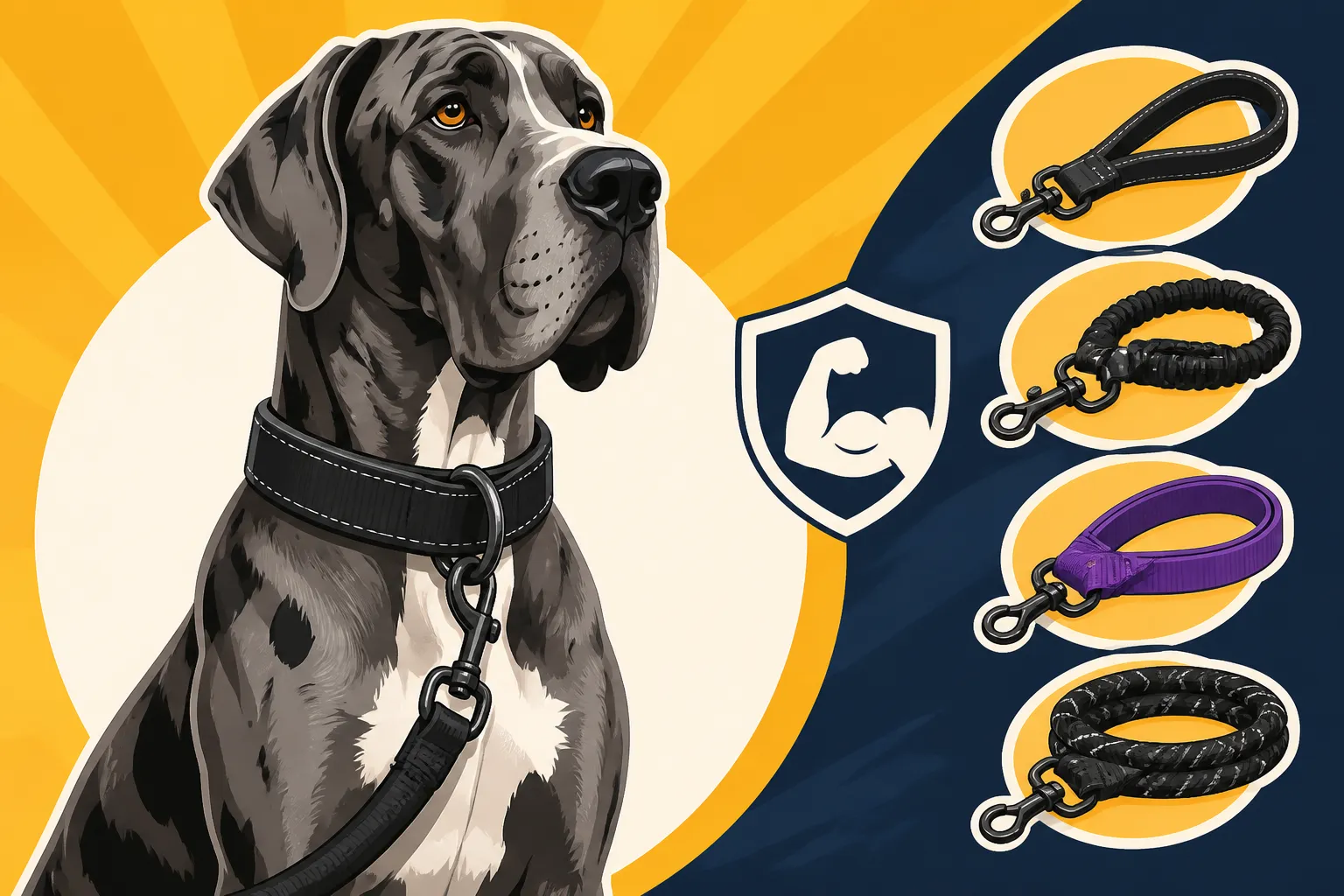
- Nylon Leashes: Nylon is a popular choice due to its strength, relatively low cost, and ease of cleaning. When selecting a nylon leash for a Great Dane, look for heavy-duty webbing that is at least one inch wide, if not wider. Thinner nylon can dig into your hands if your dog pulls and is more prone to fraying or snapping under extreme stress. The stitching should be robust and reinforced, preferably box-stitched at all stress points where the handle loop and hardware are attached. You can find many durable options on Amazon, but always read reviews to ensure they're rated for large, strong breeds.
- Leather Leashes: Often considered the gold standard by many experienced dog owners, a good quality leather leash is incredibly strong, durable, and becomes more supple and comfortable with age and use. High-quality bridle leather or similar grades can withstand immense pressure without stretching or breaking. The downside is that leather requires more care to prevent drying and cracking, and it can be expensive initially. However, a well-maintained leather leash can last for decades, becoming a cherished piece of equipment. The smooth feel of aged leather in your hand also offers a secure, comfortable grip, which is a huge bonus when you have a strong puller.
Both nylon and leather leashes offer direct feedback and control, which is essential for training and managing a powerful dog. They are generally available in standard lengths like 4-foot or 6-foot, which are ideal for most walking scenarios.
Chain Leashes
Chain leashes might look imposing and unbreakable, and they certainly have their niche, but they are generally not recommended for everyday use with a Great Dane.
- Pros: They are chew-proof, which can be a benefit for dogs who tend to mouth or chew their leash. They also give a strong visual impression of control.
- Cons: Chain leashes are inherently heavy and can be uncomfortable for the handler, especially if the dog pulls. The metal links can chafe or even pinch your hands. They also provide no shock absorption, making any sudden jerk feel even harsher on both you and your dog's neck. Moreover, if your Great Dane decides to do an impressive "Great Dane spin" on leash, the chain can easily get tangled and potentially injure their legs or your own. They’re also noisy and can be intimidating to other dogs or people who aren't used to seeing them. For safety and comfort, a chain leash is typically best avoided in favor of more practical and comfortable materials that allow for better communication and less jarring impact.
Rope Leashes
Rope leashes, often made from braided nylon or cotton rope, can be quite sturdy and offer a comfortable grip.
- Pros: Many rope leashes, especially those made from climbing-grade rope, are incredibly strong and designed to withstand significant force. The thick, rounded material can be comfortable to hold and less likely to cause rope burn than thin flat webbing, provided it's a quality material. They often have a satisfying heft and feel durable in your hand.
- Cons: Depending on the material, rope leashes can be bulky and sometimes difficult to coil neatly. Cheaper rope leashes may fray over time, and some materials can absorb water, becoming heavy and taking longer to dry. Ensure that any metal components, like the snap hook, are appropriately sized and secured with strong splices or wraps, not just crimped metal sleeves that could fail. Look for marine-grade or climbing-grade rope for the best strength and durability.
Retractable Leashes – A Word of Caution
I cannot stress this enough: retractable leashes are an absolute no-go for Great Danes. Period. While they might seem appealing for giving your dog more freedom, they are incredibly dangerous for a giant breed.
- Lack of Control: With a retractable leash, you have virtually no meaningful control over a lunging Great Dane. The mechanism prevents immediate, firm correction or guidance. By the time your dog has reached the end of the extended line and the mechanism locks, they've already built up significant momentum, potentially yanking you off your feet or causing serious injury to their neck. A Great Dane That Pulls You Off Your Feet on a retractable leash can be a recipe for disaster.
- Safety Hazards: The thin cord of a retractable leash can cause severe rope burns if it wraps around a limb – yours, your dog's, or another person's. If the handle is dropped, the leash can recoil rapidly, hitting your dog or sending the heavy plastic handle flying. The locking mechanism can fail, or the thin cord can snap, leaving your massive dog suddenly loose and potentially running into traffic or confronting another dog. These leashes have led to countless injuries and even fatalities for dogs and humans alike. Do yourself and your Dane a favor and avoid them entirely.
Hands-Free Leashes
Hands-free leashes, designed to clip around your waist or shoulder, can be great for specific activities like jogging or hiking, provided your Great Dane has impeccable leash manners.
- Pros: They allow you to maintain an active lifestyle with your dog while keeping your hands free for other tasks, like holding trekking poles or carrying water. This can also be beneficial if you have any physical limitations that make holding a traditional leash difficult.
- Cons: The critical caveat here is that your dog must be a reliable loose-leash walker. If your Great Dane is prone to lunging or pulling, a hands-free leash will turn you into a human anchor, potentially throwing you off balance or causing back injuries. Imagine your 150-pound dog suddenly jerking your entire torso forward; it's a recipe for a bad fall. Look for models with a strong, wide waist belt and a bungee section in the leash to absorb some shock, but only consider this option after your Dane has mastered Teaching a Great Dane to Heel Beside You on a traditional leash.
Key Features to Look For in a Great Dane Leash
Choosing the right leash for your Great Dane goes beyond just picking a type. Several crucial features contribute to the leash's overall effectiveness, comfort, and safety. Paying attention to these details can make a significant difference in your daily walks.
Material Strength and Durability
The material of the leash is paramount when dealing with a dog of a Great Dane's stature. You need something that can withstand immense pressure, resist abrasion, and hold up to the elements.
- Nylon: As mentioned, heavy-duty, tightly woven nylon is essential. Look for "climbing grade" or "webbing" descriptions, as these indicate a higher tensile strength. Ensure the edges are smooth and won't fray easily.
- Leather: Opt for full-grain leather, which is the strongest and most durable part of the hide. Avoid bonded or "genuine" leather, which are weaker composite materials. A thick, rolled leather, or a flat strap that's at least 3/4 to 1 inch wide, will offer the best strength and comfort.
- Biothane: This is a fantastic modern alternative. Biothane is a polyester webbing with a PVC or TPU coating, making it incredibly durable, waterproof, odor-proof, and easy to clean. It feels much like leather but without the maintenance, and it's practically indestructible. Many professional trainers and owners of large breeds swear by Biothane for its robust nature and ease of care. It’s also often vibrant in color, making your dog more visible. You'll find many Biothane leashes available on sites like Amazon.
- Stitching and Construction: No matter the material, scrutinize the stitching. It should be thick, even, and reinforced at all stress points, especially where the handle loop and the snap hook are attached. Double or triple stitching, or a box-X stitch pattern, indicates superior craftsmanship. For leather, solid rivets can also add to the strength and longevity.
Length Considerations for a Giant Breed
The length of your leash plays a huge role in the type of control and freedom your Great Dane experiences, as well as your ability to manage them in various situations.
- 4-Foot Leash: This length offers the most immediate control. It's excellent for crowded areas, street walking, or when you need to keep your Dane close for training purposes. It prevents them from straying too far, making it easier to navigate tight spots or keep them beside you when passing other dogs or people. However, it offers less sniffing freedom.
- 6-Foot Leash: This is arguably the most versatile and popular length for most dogs, including Great Danes. It provides a good balance between control and allowing your dog a bit of room to explore. It's ideal for casual walks in parks, neighborhood strolls, and general training. It gives your dog enough slack to walk comfortably beside you without constantly being reined in, while still keeping them close enough for safety and guidance.
- Longer Leashes (8-10 feet or more): While not for everyday street walking, longer leashes can be incredibly valuable for specific training, such as recall practice in a safe, open area, or for giving your Great Dane more freedom to sniff and explore on a hike. They allow your dog to range a bit further while still technically being on-leash. However, they demand excellent handling skills to prevent tangles and ensure your dog doesn't build up too much speed before hitting the end of the line. Remember, How Much a Growing Great Dane Should Walk will influence how you use these lengths, as puppies need more restricted movement.
Handle Comfort and Grip
When you're walking a strong Great Dane, the handle of your leash becomes an extension of your hand. A comfortable, secure grip is not a luxury; it's a necessity to prevent discomfort and maintain control.
- Padded Handles: Many quality leashes now come with neoprene or fleece-lined handles. This padding dramatically improves comfort, especially if your Great Dane tends to pull, preventing blisters and abrasions on your palm. It makes holding onto the leash for extended periods much more pleasant.
- Material Feel: Even without specific padding, the material itself contributes to grip. Supple leather molds to your hand. Braided rope offers a natural, tactile grip. Biothane is smooth but has a slight tackiness that provides excellent purchase, even when wet. Avoid handles made of thin, sharp-edged webbing that can cut into your hand under tension.
- Loop Size: Ensure the handle loop is large enough for your hand to comfortably fit through, even if you’re wearing gloves in colder weather. However, it shouldn't be so large that it flops around, making it hard to grasp quickly. A well-designed loop allows you to maintain a secure grip, reducing the chance of the leash being yanked from your hand.
Hardware Quality and Security
The snap hook that connects the leash to your Great Dane's collar or harness is a critical point of failure if it's not up to snuff. This is where many owners underestimate the force a Great Dane can exert.
- Material: Look for hardware made from solid brass, stainless steel, or heavy-duty nickel-plated steel. Avoid cheap, flimsy pot-metal clips that can bend, deform, or break under pressure. These materials resist rust and corrosion, which is important for longevity, especially if you live in a humid climate or frequently walk in wet conditions.
- Type of Snap: A "trigger snap" or a "bolt snap" are common and generally reliable. For a Great Dane, choose a large, robust size. The spring mechanism should feel strong and snap shut securely. Some owners prefer a "climbing carabiner" style clip for ultimate security, though these can be bulkier.
- Swivel Mechanism: The snap should have a smooth, free-moving swivel mechanism. This prevents the leash from twisting and tangling, which can be a real nuisance with a large, active dog. A good swivel ensures the leash hangs naturally and doesn't bind up, reducing wear and tear on the leash itself and making for a more comfortable walk.
- Reinforcement: The attachment point where the snap meets the leash material should be heavily reinforced with strong stitching, rivets, or both. This is often the first place a cheaper leash will fail when subjected to repeated stress from a pulling Great Dane.
Integrating Leash Choice with Training and Other Gear
A leash is just one component of a successful walking and training strategy for your Great Dane. Its effectiveness is greatly enhanced when paired with appropriate training methods and complementary gear. Thinking about your leash as part of a larger system will set you up for success.
Pairing the Leash with the Right Collar or Harness
The leash works in tandem with whatever your Great Dane wears on their neck or chest. Choosing the right collar or harness is just as important as the leash itself, and the combination should provide both safety and effective communication.
- Flat Buckle Collars: For a well-trained Great Dane who walks politely on a Great Dane Leash Manners at a Hundred and Fifty Pounds, a wide, durable flat buckle collar can be perfectly adequate. Ensure it's wide enough (1.5-2 inches) to distribute pressure across their strong neck, rather than a thin collar that could cause discomfort if they pull unexpectedly.
- Martingale Collars: These are often recommended for sighthounds and other breeds with narrower heads, but they can also be very effective for Great Danes, especially those who might slip out of a flat collar. A martingale tightens gently when pulled, preventing escape without choking the dog. Again, look for a wide, well-constructed martingale.
- Front-Clip Harnesses: For Great Danes who are still learning Harnesses and Collars That Control a Great Dane and tend to pull significantly, a front-clip harness can be a game-changer. By attaching the leash to a ring on the dog's chest, it redirects their forward momentum, turning them to the side when they pull, which naturally discourages the behavior. It’s a comfortable, humane option that many owners find incredibly effective while they work on loose-leash training.
- Head Halters: For some particularly strong or persistent pullers, a head halter (like a Gentle Leader) can provide excellent control. It works by guiding the dog's head, and where the head goes, the body follows. A Whether a Head Halter Fits a Great Dane's Muzzle is a common concern, so ensure proper fitting is a priority. These are training aids and should be introduced gradually and positively.
Training Tools vs. Everyday Leashes
It’s important to distinguish between leashes intended for daily walks and those primarily used as training tools. While some overlap exists, their specific functions often differ.
- Slip Leads: These are leashes that combine a collar and leash into one piece, often used by trainers for quick corrections or by vets and rescues for easy handling. While strong, they are not designed for continuous pulling and should generally not be used as an everyday leash for a Great Dane, as the constant pressure can be uncomfortable or even damaging if not used correctly as part of a training regimen. They can be useful for brief moments when you need quick, firm control, but prolonged use for walking is often best avoided.
- Long Lines: As discussed, long lines (15-30 feet or more) are fantastic for teaching recall in safe, enclosed areas, allowing your Great Dane to practice coming back to you over a greater distance while still being securely attached. They are not for walking in public or congested areas due to the tripping hazard and lack of immediate control.
- Short Tabs/Traffic Leashes: These are very short leashes (6-12 inches) designed to keep your dog right by your side in very crowded or high-traffic situations. They offer maximum control for brief periods but aren't suitable for general walking.
Understanding the purpose of each type helps you build a toolkit of leashes that serve different training and safety needs. Reputable online training resources, such as those offered by BAXTER & Bella, will guide you through how to properly use different types of gear as part of a comprehensive training plan.
Practical Tips for Leash Longevity and Safety
Even the best leash will eventually wear out, and good habits can extend its life and your safety. Treat your Great Dane's leash as a critical piece of safety equipment, because that's exactly what it is.
- Regular Inspection: Make it a habit to inspect your leash before every walk. Check the material for fraying, cuts, tears, or excessive wear. Pay close attention to the stitching at the handle and snap attachment points. Check the snap hook for any signs of bending, corrosion, or a weak spring. If you see any red flags, replace it immediately. It's not worth the risk.
- Cleaning and Maintenance: Keep your leash clean. Nylon and Biothane can be washed with soap and water. Leather needs occasional conditioning to prevent drying and cracking. Removing dirt and grime extends the life of the materials and hardware.
- Proper Storage: Don't leave your leash lying where your Great Dane can chew on it (especially if it's leather or nylon). Store it neatly coiled to prevent kinks and tangles. Keeping it out of direct sunlight when not in use can also prolong the life of materials like nylon and Biothane.
- Have a Spare: It’s a good idea to have a backup leash, especially if you rely on a single one. Leashes can get lost, chewed, or unexpectedly break. Having a spare, perhaps a solid heavy-duty nylon leash you can easily grab from an online retailer like Amazon, ensures you're never caught without a safe way to walk your dog. This is one of those small investments that brings immense peace of mind.
By prioritizing strength, durability, and comfort, and by integrating your leash choice with consistent training, you can ensure that walks with your magnificent Great Dane are a joy, not a struggle.
| Leash Material | Key Benefits | Considerations | Ideal Use for Great Danes |
|---|---|---|---|
| Nylon | Strong, affordable, easy to clean, many colors | Can fray, thin nylon can cut hands, less comfortable than leather | Everyday walking, training (look for heavy-duty) |
| Leather | Extremely durable, comfortable grip, classic look | Higher cost, requires maintenance, can be damaged by chewing/water | Everyday walking, advanced training |
| Biothane | Waterproof, odor-proof, very durable, easy to clean | Can be stiffer initially, slightly higher cost than nylon | All-weather walking, active dogs, low-maintenance owners |
| Rope | Strong (climbing grade), good grip, unique aesthetic | Can be bulky, some materials absorb water, may fray over time | Everyday walking (ensure strong hardware/construction) |
| Chain | Chew-proof, very strong | Heavy, uncomfortable, no shock absorption, can be noisy/intimidating | Not recommended for everyday use |
| Retractable | Apparent freedom for dog | Extremely dangerous for Great Danes – AVOID | None |
| Hands-Free | Allows freedom for handler | Requires impeccable leash manners from the dog for safety | Running, hiking (for well-trained Danes only) |
Disclaimer
This article is for general informational purposes only and does not constitute professional advice. Laws, prices and regulations vary by location and change over time. Consult a qualified professional for guidance on your specific situation.