Ramp Training a Great Dane for the Car
Trying to lift a full-grown Great Dane into your car, especially as they get older or if they’re still a gangly puppy, isn't just a back-breaking task; it's a real safety hazard for both you and your beloved giant. Ignoring the strain on their growing joints, or the risk of injury when a senior Dane struggles, can lead to serious health problems down the road. This comprehensive guide will walk you through the essential process of ramp training your Great Dane, ensuring safe and easy car access throughout their life.
Why Ramp Training is Essential for Your Great Dane
Owning a Great Dane means living with a magnificent, loving giant, but it also means being constantly aware of their unique physical needs. Their sheer size, while impressive, places incredible demands on their bodies, especially their joints. This is why ramp training isn't just a convenience; it's a fundamental part of responsible Great Dane ownership, protecting them from unnecessary strain and ensuring a higher quality of life.
Protecting Fragile Joints from Puppyhood to Senior Years
From the moment you bring home a Great Dane puppy, you're tasked with safeguarding their rapid growth. Their bones and joints are developing at an astonishing rate, making them particularly vulnerable to injury from impact and stress. Jumping in and out of a car, even a seemingly small leap from a low sedan, can create micro-traumas over time that contribute to conditions like hip and elbow dysplasia later on. Think about how much force goes through those joints every single time they land. It's significant.
As they mature, the sheer weight of a fully grown Great Dane—easily over 100 pounds, often much more—becomes a constant factor. Every jump puts immense pressure on their hips, elbows, and spine. This is why early protection is key. Just as you wouldn't encourage a Great Dane Puppy Should Not Jog, you shouldn't let them repeatedly jump in and out of vehicles. Ramp training from a young age establishes a habit that mitigates this stress, acting as a preventative measure against long-term orthopedic issues. It's an investment in their future comfort and mobility, helping to prolong their active years and reduce the likelihood of costly vet visits for joint pain.
When your Great Dane reaches their senior years, their joints naturally start to show wear and tear, even with the best care. Arthritis, stiffness, and reduced muscle mass can make jumping excruciatingly painful, if not impossible. A ramp allows them to maintain their independence, continuing to join you on adventures without discomfort or risk of exacerbating existing conditions. For an older dog, the dignity of walking into the car themselves, rather than being awkwardly hoisted, can also make a big difference to their overall well-being. It’s about more than just convenience; it’s about respect for their changing bodies and ensuring they remain a happy, integrated member of the family as they age. Consider how much easier it will be for them to travel if they don't have to navigate a painful leap. This is especially vital when discussing things like Mobility Aids for a Failing Great Dane.
Preventing Injuries for Both Dog and Owner
Beyond protecting your Great Dane's joints, ramp training is a critical safety measure for you, the owner. Lifting a large, potentially squirming or uncooperative dog can easily lead to strains, pulled muscles, or even back injuries. Imagine trying to lift a 150-pound dog who suddenly decides to shift their weight—it's a recipe for disaster. The risk escalates if you're trying to do this multiple times a day or when you're in an awkward position, like in a busy parking lot.
Furthermore, an unsteady Great Dane attempting to jump out of a car can accidentally scratch, trip, or even knock over their human companion. Their enthusiasm, combined with their mass, means that even an accidental bump can have significant consequences. By teaching them to use a ramp, you eliminate the need for risky lifting altogether. This ensures a smoother, safer experience for everyone involved, making car trips less stressful and more enjoyable. It builds confidence in your dog, knowing they have a clear, safe path, and reduces anxiety for you, knowing you won't throw out your back.
Think about emergency situations too. If your Great Dane is injured, sick, or just not feeling well, lifting them manually becomes incredibly difficult, if not impossible, without causing further pain or injury. Having them trained to use a ramp means you can still transport them safely to the vet, even if they're weak or hesitant. It's a proactive step that prepares you for unforeseen circumstances, offering peace of mind that you can always get your giant companion where they need to go, regardless of their physical state or your own. This practical skill extends beyond routine travel; it's a vital component of emergency preparedness for any Great Dane owner.
Maintaining Independence and Quality of Life
Great Danes thrive on being part of the family, and that often means joining you on car rides—to the park, the vet, on vacation, or just for errands. If getting into the car becomes a difficult or painful ordeal, it can severely limit their opportunities for outings and enrichment. A dog who can no longer comfortably get into the car might spend more time at home, leading to boredom, loneliness, and a decline in their overall quality of life.
Ramp training empowers your Great Dane to maintain their independence. They learn a skill that allows them to access their favorite places without relying on strenuous assistance. This freedom to travel is invaluable for their mental and physical well-being. It ensures they continue to receive adequate Wearing Out a Great Dane Without Wrecking Its Joints and mental stimulation, which is crucial for a breed that thrives on companionship and routine. Imagine the joy of seeing your Dane confidently trot up the ramp, knowing they’re ready for the next adventure.
Moreover, the training process itself can be a fantastic bonding experience. It builds trust and communication between you and your dog, reinforcing positive behaviors through consistent, gentle guidance. A well-trained Great Dane is a happy Great Dane, and one that feels confident navigating the world alongside you. By investing time in ramp training, you're not just teaching a practical skill; you're fostering a relationship built on mutual respect and making sure your Great Dane can truly live their best, fullest life, filled with car rides to all their favorite destinations.
Selecting the Perfect Ramp for Your Giant Companion
Once you've committed to ramp training, the next crucial step is choosing the right ramp. This isn't a one-size-fits-all situation, especially when dealing with the unique needs and immense size of a Great Dane. A flimsy, too-short, or unstable ramp can be more dangerous than no ramp at all, potentially scaring your dog or leading to injury. Investing in a high-quality, appropriate ramp is paramount for successful and safe training. Many options can be found on sites like Amazon, but knowing what to look for is key.
Understanding Different Ramp Types and Materials
Car ramps for dogs typically come in a few main styles: telescoping, folding, and fixed. Each has its pros and cons, especially for a Great Dane.
- Telescoping ramps extend and retract, offering a variable length that can be adjusted to different vehicle heights. They often have a compact storage size when fully retracted. For a Great Dane, the benefit of adjustable length is significant, as it allows for a gentler incline into taller SUVs or trucks. However, they can sometimes be heavier due to the overlapping sections, and you need to ensure the locking mechanism is robust enough to handle the weight without slipping or collapsing.
- Folding ramps typically fold in half or in three sections, making them easy to store flat. They're often lighter than telescoping models and can be very stable if designed well. The main consideration for a Great Dane is ensuring the width is sufficient and that the folding mechanism doesn't create pinching hazards or unstable joints. A ramp that folds quickly is great for busy moments, but ensure it's sturdy when unfolded.
- Fixed ramps are less common for portable car use, usually reserved for permanent installations in homes. They offer maximum stability but are impractical for transport. For car use, you'll almost certainly be looking at telescoping or folding options.
Materials also vary, most commonly aluminum or high-grade plastic. Aluminum ramps tend to be lighter yet incredibly strong, often preferred for larger breeds like Great Danes. They resist rust and hold up well to outdoor conditions. Plastic ramps can also be sturdy if made from durable, reinforced polymers, but cheaper plastic options might flex or crack under a Great Dane's weight, which is definitely something you want to avoid. Always check the weight rating, which should ideally be well over your dog's maximum weight, just to be safe.
Key Features to Consider for Great Dane Safety and Comfort
When selecting a ramp for your Great Dane, several specific features are non-negotiable for their safety and comfort.
First and foremost is traction. A slick ramp is terrifying and dangerous for a dog, especially one as large as a Great Dane. Look for surfaces with a high-traction material, such as sandpaper-like grip, rubberized treads, or a carpet-like texture. This prevents slips and falls, building your dog's confidence. Grooves or raised patterns can also help, but a truly non-slip surface is critical. Don’t just look at it; feel it. Imagine if your own feet were pads, not shoes.
Width is another major factor. A Great Dane needs ample space to walk comfortably and confidently. A ramp that is too narrow will make them feel unstable, increase the risk of them stepping off the side, and potentially make them refuse to use it. Aim for a ramp that is at least 16-20 inches wide, if not more, to accommodate their broad stance. Their long legs also mean they'll need a good stride length.
Length and incline are intrinsically linked. A longer ramp provides a shallower, less intimidating incline. For a vehicle like an SUV or truck, you'll want a ramp that's on the longer side (6-7 feet or more) to ensure the slope isn't too steep. A steep incline is harder on their joints and can be frightening. Consider the lowest and highest points your dog will need to access and choose a ramp that can comfortably span that distance with a gentle slope. This is particularly important for protecting their Great Dane Hips, Elbows and Growing Joints.
Finally, stability and weight capacity are paramount. The ramp must feel absolutely solid under your dog's weight. Check reviews and manufacturer specifications for weight limits, ensuring it can handle your Great Dane with plenty of leeway. Look for features like rubber feet at the bottom and a secure lip or attachment mechanism at the top that anchors firmly to your vehicle’s bumper or cargo area. Any wobbling or shifting will immediately deter your dog and can be dangerous.
Measuring for the Right Fit for Your Vehicle
Choosing the right ramp also means making sure it fits your specific vehicle. This isn't just about whether it will physically reach; it's about optimizing the angle and ensuring safe attachment.
Start by measuring the height from the ground to the entry point of your car (e.g., the cargo area of an SUV or the back seat of a sedan). This measurement will tell you how long the ramp needs to be to achieve a comfortable incline. A general rule of thumb is that for every foot of rise, you want at least two feet of ramp length to get a gentle slope. So, if your cargo area is 3 feet high, you'd ideally want a 6-foot ramp. If your vehicle is higher, you'll need an even longer ramp. This can be tricky when considering Getting a Great Dane Into a Hatchback, where the entry point might be lower but the space more confined.
Next, measure the width of your vehicle's entry point. Ensure the ramp's width will comfortably fit without blocking too much of the opening or being so narrow it feels precarious. Also, consider the storage dimensions of the ramp when folded or retracted. Will it fit in your trunk, cargo area, or back seat without taking up all the available space? This is especially important if you plan to travel with other gear or people.
Finally, think about how the ramp will attach to your vehicle. Most ramps have a rubber-coated lip or a set of grippy feet that rest on the bumper. Some might have safety straps or hooks. Ensure whatever system your chosen ramp uses will securely engage with your specific car model, preventing any slipping or dislodging while your Great Dane is using it. A test fit before your dog's first training session is always a good idea. This meticulous approach ensures that the ramp is not only safe for your Great Dane but also practical and convenient for you to use regularly.
A Step-by-Step Guide to Successful Ramp Training
Ramp training a Great Dane requires patience, positive reinforcement, and a methodical approach. You can't just unroll the ramp and expect them to magically understand. Remember, their trust in you is paramount, and introducing something new, especially something that changes the way they interact with their beloved car rides, needs to be handled with care. If you've ever used a structured training program, like those offered by BAXTER & Bella, you'll recognize the importance of breaking things down into small, achievable steps.
Laying the Groundwork: Desensitization and Positive Association
Before your Great Dane even sees the ramp near the car, you need to make the ramp itself a non-threatening, even exciting, object. Start by placing the ramp flat on the ground in a familiar, low-distraction area of your home or yard. Let your dog sniff it, investigate it, and simply be around it without any pressure. You want them to realize it's just another piece of furniture, not a monster.
Use high-value treats and praise every time they show even a casual interest in the ramp. Toss treats onto the ramp, over it, and around it. You're creating a positive association: "Ramp equals yummy treats and good things!" Don't ask them to walk on it yet; the goal is merely to make them comfortable in its presence. This desensitization phase can take a few days, or even a week, depending on your dog's personality. Some Danes are bolder than others.
Once they're comfortable with the ramp lying flat, start gently guiding them over it while it's still on the ground. Hold a treat in front of their nose and lure them across. Give enthusiastic praise and a jackpot of treats as soon as all four paws are on the other side. Repeat this many times, making it a fun game. Don't force them; if they hesitate, go back to just tossing treats onto the ramp. The key here is to build their confidence and make walking on the flat ramp a completely positive and routine experience. Remember, consistency in these early stages sets the foundation for all future success.
Introducing the Ramp in a Controlled Environment
With your Great Dane confidently walking over the flat ramp, it's time to introduce a slight incline. Find a low step, a curb, or even the lowest setting on your car bumper if it's adjustable. Elevate one end of the ramp slightly, ensuring it's completely stable and doesn't wobble. The incline should be so gentle that it barely feels like an incline.
Just like before, use high-value treats and enthusiastic praise. Lure your Great Dane up and down the ramp, celebrating their successes. Keep sessions short, positive, and end on a good note. If they show any signs of fear or hesitation, reduce the incline or go back to the flat ramp for a few more repetitions. The goal is to gradually increase their comfort level with the idea of walking upwards and downwards on this new surface. This is a critical step because some dogs might struggle with the sensation of an incline, even a slight one, especially if they are already prone to A Great Dane That Stumbles on Its Back Legs.
As they get more comfortable, gradually increase the incline, step by step. You might use two steps, then three, slowly building up the height. Always prioritize stability and confidence over speed. If they seem hesitant at any point, pause, reassure them, and perhaps even physically walk over the ramp yourself (if possible and safe) to show them it's nothing to fear. Many dogs learn by observation, and seeing you confidently navigate it can make a huge difference.
Progressing to the Car: Patience and Consistency
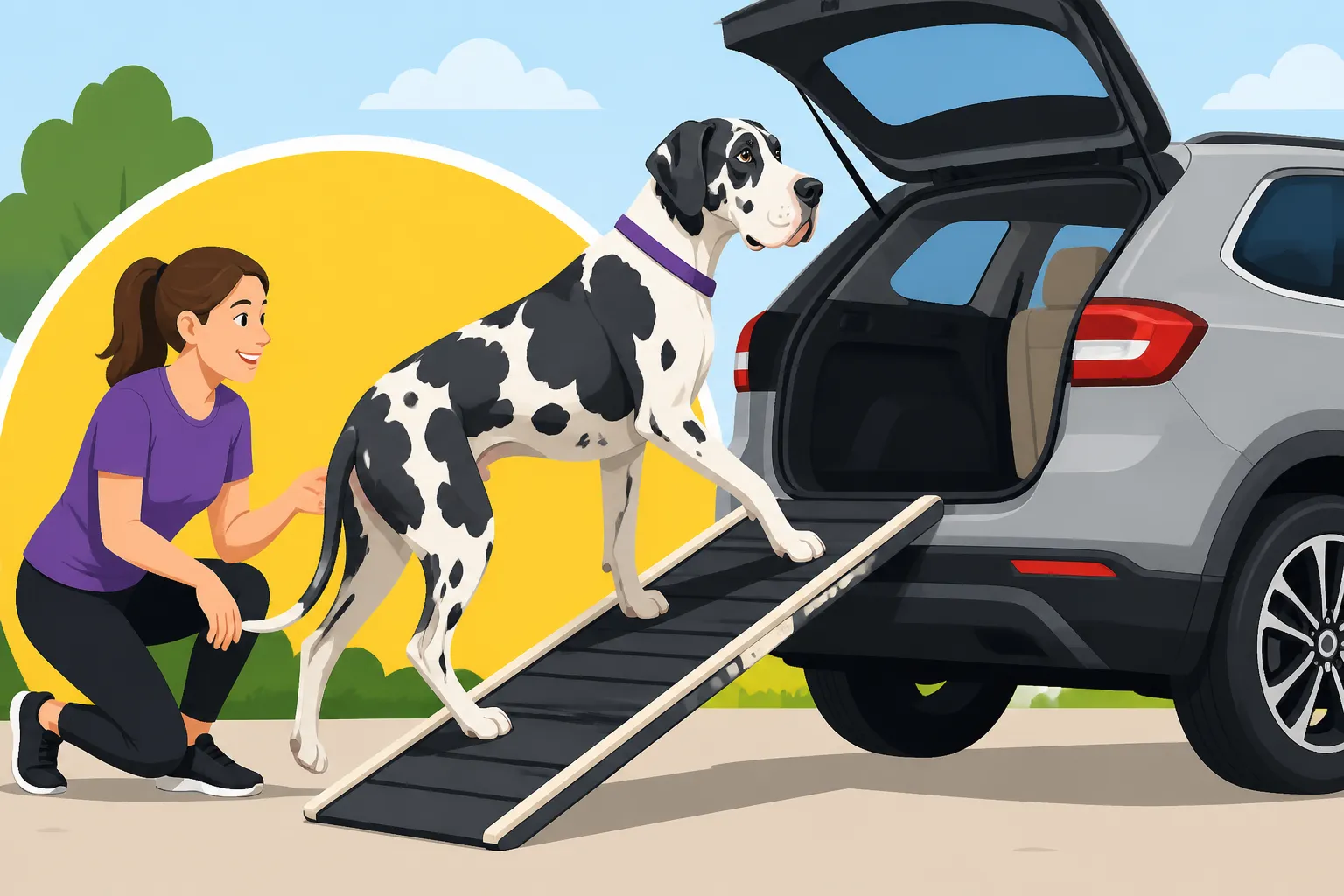
Now comes the moment of truth: introducing the ramp to the car. Park your vehicle in a quiet, familiar location. Set up the ramp, ensuring it's securely attached and stable. Start with the lowest possible entry point, perhaps the back seat if it's lower than the cargo area, or a small SUV if you have access to different vehicles.
Lure your Great Dane with treats, just as you did with the gradual incline. Walk them up and down a few times. Don't immediately expect them to get all the way into the car and settle. The initial goal is simply to get them to confidently walk up and down the ramp while it's attached to the vehicle. If your dog already loves car rides, this might be a natural motivator. If they are hesitant about the car in general, you might need to combine this with Teaching a Great Dane to Get Into a Car training.
Once they are consistently using the ramp to go up and down from the car, you can gradually encourage them to fully enter the vehicle. Have treats ready inside the car, praise them lavishly, and make it a pleasant experience. Don't rush or force them. If they get into the car via the ramp, don't immediately drive off; let them get comfortable, then practice getting out using the ramp. Repeat this process regularly, building up their confidence and making ramp usage a natural part of car travel. Remember, consistency is the bedrock of successful training, and positive reinforcement will make your Great Dane eager to participate.
Overcoming Common Hurdles in Ramp Training
Even with the best intentions and the most patient approach, you might encounter some bumps in the road during ramp training. Great Danes, for all their gentle nature, can be stubborn, anxious, or simply awkward when faced with something new and physically challenging. Don't get discouraged; these hurdles are common, and with understanding and persistence, you can help your giant companion master the ramp.
Addressing Fear and Hesitation
One of the most common reasons a Great Dane might refuse the ramp is fear. This fear could stem from the ramp's unfamiliar texture, its perceived instability, the height difference, or even a past negative experience. If your dog is pulling away, freezing, or showing signs of anxiety (ears back, tail tucked, yawning, lip-licking), pushing them will only worsen the situation.
The key here is to slow down and go back to basics. Revisit the desensitization steps. Place the ramp flat on the ground and simply reward them for being near it. Use extremely high-value treats—think chicken, cheese, or hot dogs—and lavish praise. Create a "treat path" leading onto and across the ramp. Don't ask for a full walk; just reward them for a single paw on the ramp, then two, and so on. Gradually, very gradually, increase the incline again, making sure each step is comfortable before moving to the next.
Consider why they might be fearful. Is the ramp wobbling? Is it too slick? Adjust your setup if needed. You might also try using a different, quieter location for training if the current spot has too many distractions. Sometimes, having another confident dog demonstrate the ramp can help, though don't rely on this. The best approach is patient, gentle reassurance from you. Make it a game, not a chore. If you find yourself consistently stuck, a certified professional dog trainer familiar with large breeds can offer personalized guidance. Organizations like BAXTER & Bella also offer extensive online resources that can help pinpoint and address specific behavioral issues.
Dealing with Awkwardness and Refusal
Sometimes, it's not fear, but pure awkwardness. Great Danes are large, sometimes clumsy, and navigating a narrow, inclined surface can simply feel unnatural to them, especially if their spatial awareness isn't fully developed yet. They might try to jump over sections, walk off the side, or simply plant their feet and refuse to move.
If your Dane is awkward, check the ramp's width and traction first. Is it truly wide enough for their gait? Is the surface genuinely non-slip? If the ramp itself is contributing to their clumsiness, it might be worth exploring other options. Once you're sure the ramp is appropriate, focus on breaking the movement down even further. Instead of asking for a full walk up, ask for one step, reward, then the next step, reward. You can even use your body to gently guide them, walking beside them on the ramp (if safe) or on the ground alongside it, to give them confidence and physical direction.
If they refuse to get on entirely, go back to luring with treats. Try placing their front paws on the ramp, rewarding heavily, then letting them step off. Build up to all four paws. Never push, pull, or drag your Great Dane onto the ramp; this will only make them associate it with unpleasant experiences. If they continually refuse even with high-value treats and patient coaxing, take a break. End the session on a positive note, even if it's just for looking at the ramp, and try again later or the next day. Sometimes, a fresh start is all they need. Remember that consistency across days and weeks, rather than trying to force it all at once, is what truly yields results. This kind of persistence is crucial for success with any training, including A Great Dane That Refuses to Get in the Car.
Maintaining Training and Reinforcing Good Habits
Successfully ramp training your Great Dane isn't a one-and-done event. Like any learned behavior, it needs regular maintenance and reinforcement to remain a strong, reliable habit. If you only use the ramp occasionally, your dog might forget or regress.
Integrate ramp usage into your routine. Even if you're just going for a short ride to the mailbox, make them use the ramp. The more frequently they practice, the more ingrained the behavior becomes. Continue to use praise and occasional high-value treats, even after they've mastered it. This keeps the experience positive and rewarding, ensuring they view the ramp as a good thing. Think of it as keeping their good manners polished; you don't just teach "sit" once and then never reward it again. This applies to complex behaviors like using the ramp, too.
Also, be prepared for situations where the ramp might be slightly different. If you get a new car, or use a friend's vehicle, the ramp's angle or stability might feel different. Reintroduce the ramp patiently in these new contexts, starting with a few refresher walks up and down before a full car ride. This helps generalize the behavior so they understand "ramp means safe car entry" regardless of the specific vehicle. By consistently reinforcing ramp use, you ensure your Great Dane remains a confident, happy traveler, always ready for the next adventure without putting their precious joints or your back at risk. This ongoing reinforcement is key to making this skill last their Why a Great Dane Only Lives Seven to Ten Years.
| Ramp Type | Pros | Cons | Ideal For |
|---|---|---|---|
| Telescoping | Adjustable length, compact storage | Can be heavier, check locking mechanism stability | Varied vehicle heights, saving space when not in use |
| Folding | Lighter, easy flat storage | Fixed length, check hinge stability under weight | Consistent vehicle height, quick deployment |
| Fixed | Maximum stability, no moving parts | Not portable, specialized use (e.g., home entrance) | Permanent installations, very stable but irrelevant for car use typically |
| Material | Aluminum (lightweight, strong, rust-proof) | Plastic (can be lighter, but check durability/weight capacity) | Aluminum generally preferred for Great Danes due to weight and durability |
| Traction | Rubberized, sandpaper, carpet-like grip | Smooth surfaces are dangerous | Essential for preventing slips, building confidence |
| Width | At least 16-20 inches+ | Too narrow causes instability, refusal | Accommodating Great Dane's broad stance and long stride |
| Length/Angle | Longer ramp = shallower incline (6-7ft+) | Shorter ramp = steeper incline, harder on joints, scary | SUVs/trucks to ensure a gentle, comfortable slope |
Disclaimer
This article is for general informational purposes only and does not constitute professional advice. Laws, prices and regulations vary by location and change over time. Consult a qualified professional for guidance on your specific situation.