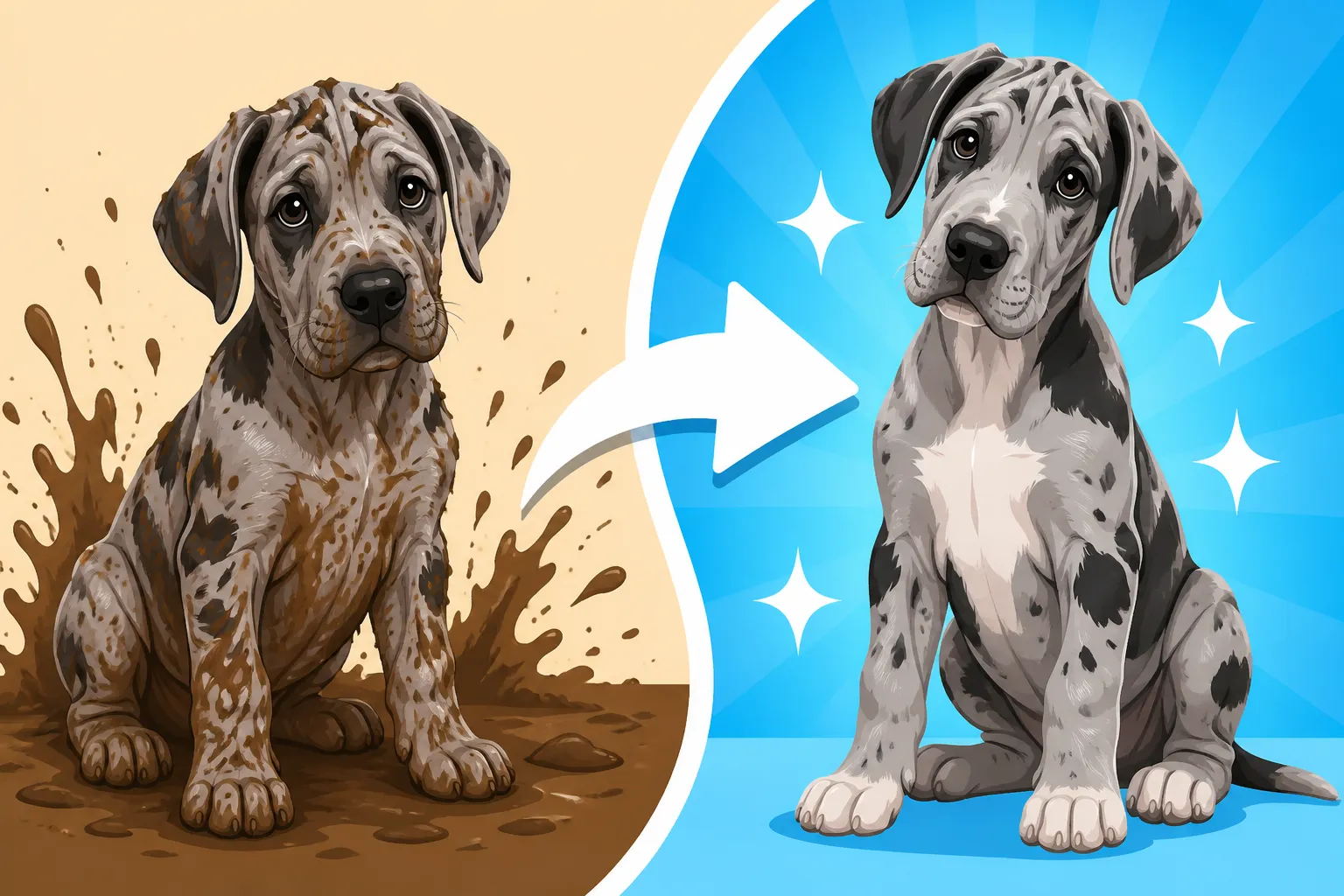
How Quickly a Great Dane Puppy Gets Clean
Bringing home a Great Dane puppy is an absolute joy, but let's be real: those first few weeks (or months!) can also be a challenging dance of excitement and frustration, especially when it comes to potty training. Nobody wants to constantly mop up giant puppy puddles or discover unwelcome surprises, and the sheer volume of output from a big breed puppy can make you feel like you're fighting a losing battle. This guide is here to walk you through what to realistically expect when house-training your Great Dane puppy and offer actionable strategies to help your gentle giant get "clean" as quickly and smoothly as possible.
Understanding the Great Dane Puppy Potty Training Timeline
When you bring home a Great Dane puppy, one of the first things on your mind is often, "How quickly can I get this little (or not so little!) guy house-trained?" The truth is, while some puppies seem to pick it up in a flash, for Great Danes, it’s often a marathon, not a sprint. Their large size, rapid growth, and still-developing bladder control mean that "quickly" can be a relative term.
Realistic Expectations for Your Giant Breed Puppy
Many people mistakenly assume that a larger dog will have better bladder control sooner, simply because they're bigger. In reality, a Great Dane puppy's bladder capacity and its ability to "hold it" are proportional to its age, not just its size. A 12-week-old Great Dane puppy, despite weighing significantly more than a chihuahua of the same age, has the same developmental stage of bladder control. This means frequent potty breaks are non-negotiable. Don't compare your Dane's progress to that tiny terrier next door. Your puppy is doing its best as its body develops.
It's generally said that a puppy can hold its bladder for approximately one hour for every month of age, plus one. So, a 3-month-old puppy might theoretically hold it for 4 hours. However, this is a maximum, not a target. For a Great Dane puppy, you should be taking them out far more frequently, especially in the first few months. Expect to go out every 20-30 minutes when they are awake and active, immediately after waking up, playing, or eating. This proactive approach is crucial in teaching them where to go.
Factors Influencing Potty Training Speed
Several elements can significantly impact how quickly your Great Dane puppy grasps the concept of appropriate elimination. Understanding these can help you tailor your approach and manage your expectations.
Firstly, consistency is king. If every member of your household isn't on the same page with the potty schedule, commands, and reward system, your puppy will get confused. Imagine if sometimes "outside" means the backyard, and other times it means a walk around the block, and sometimes they get a treat for peeing, and sometimes they don't. That's a lot of mixed signals for a young brain. Establish a clear routine and stick to it rigidly.
Secondly, the environment plays a huge role. If your puppy has free rein of the house, they're more likely to have accidents simply because you won't always be there to notice their "gotta go" signals. This is where tools like crates and gates come in handy. Crate Training a Great Dane That Fills the Room is an excellent resource for understanding how to use a crate effectively. A confined space encourages them not to soil their sleeping area, which is a natural instinct.
Thirdly, your puppy's individual personality and past experiences can matter. Some puppies are naturally more inclined to be clean, while others might take a bit longer. If you've adopted a rescue Great Dane puppy, their previous environment might not have included consistent house training, meaning you might have a bit more groundwork to do. Patience and empathy are key here, not frustration.
Laying the Foundation for Fast House Training
To help your Great Dane puppy get "clean" as quickly as possible, you need to establish a rock-solid foundation from day one. This involves more than just opening the door; it’s about clear communication, consistent routines, and positive reinforcement.
The Power of a Consistent Potty Schedule
A predictable schedule is the single most important tool in potty training any puppy, especially a Great Dane. Because they grow so rapidly and consume a large amount of food and water, their output will be substantial. You need to be proactive, not reactive.
Start by mapping out a day: when does your puppy wake up, eat, play, and nap? Immediately after waking up from a nap, take them outside. Within 5-10 minutes of eating or drinking, take them outside. After a play session, you guessed it—outside. Just before bed and first thing in the morning are also crucial. Make a habit of taking them to the exact same spot in the yard each time, if possible. This helps them associate that specific area with going to the bathroom. You can even create a little chart to track successes and accidents, which can be surprisingly motivating and help you spot patterns. This proactive approach will dramatically reduce the chances of an indoor accident and reinforce the desired behavior. Remember, a strict schedule for bathroom breaks is also important for Exercise Limits While a Great Dane Is Still Growing.
Positive Reinforcement and Rewards
When your Great Dane puppy does eliminate outside, it's time for a celebration! Immediately and enthusiastically praise them with a happy voice ("Good potty! Good dog!") and offer a high-value treat. The timing here is critical – the reward must happen within a few seconds of them finishing their business so they directly link the act of peeing/pooping outside with the positive outcome.
Avoid scolding or punishing your puppy for accidents indoors. This can be incredibly counterproductive, as it teaches them to fear eliminating in front of you, which might lead them to hide their accidents or even eat their waste to conceal it. If you catch your puppy in the act indoors, calmly interrupt them with a sharp clap or "Ah-ah!" and immediately scoop them up (if small enough) or lead them outside to their designated potty spot. If they finish outside, praise and reward. If not, don't worry, just clean up the mess without fuss. It's about teaching them what to do, not punishing them for what they shouldn't do. Consistency in praise and treats will build a strong positive association over time.
Supervision: Your Eyes and Ears
Supervision is the unsung hero of fast potty training. When your Great Dane puppy is inside the house, they should always be under your watchful eye. This means no letting them wander off into another room unsupervised. If you can't actively watch them, they should be in their crate, a puppy-proofed pen, or tethered to you on a short leash.
Being observant allows you to catch those subtle "I need to go" signals before an accident happens. These might include sniffing the ground, circling, pacing, whining, or even heading towards a door. The moment you see these signs, it's time to calmly and quickly take them outside. If they do have an accident, a quick clean-up with an enzymatic cleaner (more on that later!) is essential to remove all scent traces. Think of yourself as a detective, always looking for clues, and always ready to spring into action. This high level of supervision is paramount to guiding them to success.
Speeding Up the Process: Tools and Techniques
While consistency and positive reinforcement are fundamental, certain tools and techniques can significantly accelerate your Great Dane puppy's potty training journey, making the process smoother for both of you.
Crates and Designated Potty Zones
A properly sized crate is an invaluable tool for potty training a Great Dane. Dogs are naturally clean animals and instinctually avoid soiling their sleeping area. When your puppy is in their crate, they're less likely to have an accident, especially if they've just had a potty break. The crate should be just large enough for them to stand up, turn around, and lie down comfortably. If it's too big, they might use one end as a bathroom.
Use the crate for short periods when you can't actively supervise, like when you're cooking dinner or need a shower. Never use it as punishment. When you let them out of the crate, the very first thing you do is take them straight outside to their designated potty spot. This reinforces the idea that the crate is for resting, and the outside is for business. For more on this, check out Choosing a Crate a Great Dane Can Stand In.
Additionally, having a specific "potty zone" in your yard can be incredibly helpful. This could be a patch of grass away from their play area. Taking them to this same spot every time helps them form a strong association. Some owners even install a designated "potty" bell on the door that their Great Dane can learn to nudge or ring to signal they need to go out.
Effective Cleaning for Indoor Accidents
Despite your best efforts, accidents will happen. It's part of puppyhood, especially with a breed that produces a lot of liquid! The key is how you clean them up. Regular household cleaners might remove the visible stain, but they often leave behind microscopic odor molecules that only your dog can detect. These lingering scents can act as an invitation, telling your puppy, "Hey, this is a good spot to go again!"
This is why enzymatic cleaners are an absolute must-have. These specialized cleaners contain enzymes that break down the uric acid crystals found in urine, completely neutralizing the odor. You can find these readily on platforms like Amazon. Simply blot up as much of the urine as possible with paper towels, then saturate the area with the enzymatic cleaner, letting it sit for the recommended time (which can be surprisingly long, sometimes 10-15 minutes or more) before blotting dry. This thorough cleaning removes the attractant and prevents repeat offenses in the same spot.
Structured Play and Mental Stimulation
While it might not seem directly related to potty training, providing adequate structured play and mental stimulation can actually contribute to faster house training. A bored puppy is often a mischievous puppy, and sometimes accidents can happen out of frustration or a lack of supervision during undirected play.
Engage your Great Dane puppy in short, focused training sessions throughout the day. Teaching them basic cues like "sit," "stay," and "come" not only builds a stronger bond but also provides mental exercise. The Cues a Great Dane Needs Before Six Months can give you some great ideas. After a burst of play or a training session, your puppy will often need to relieve themselves, so incorporate a potty break into the cool-down routine. This combination of physical activity, mental engagement, and consistent potty breaks creates a well-rounded approach that supports overall good behavior, including clean house habits. Think about toys and chew items from Amazon that can keep them occupied in their crate or pen during short periods when you can't be hands-on.
When "Quickly" Isn't Happening: Troubleshooting and Patience
Sometimes, despite all your efforts, your Great Dane puppy might not be getting "clean" as quickly as you hoped. This can be frustrating, but it's important to approach these setbacks with patience and a problem-solving mindset rather than getting discouraged.
Addressing Potty Training Regression
It's not uncommon for a puppy, even one who seemed perfectly house-trained, to suddenly start having accidents indoors again. This is known as regression, and it can happen for a few reasons.
One common cause is a change in routine or environment. Have you recently moved, changed your work schedule, or introduced a new pet or person into the home? Any significant shift can cause stress and lead to a temporary breakdown in learned behaviors. Simply reinstating the strict schedule and high-frequency potty breaks you used in the beginning often resolves this.
Another possibility is that the initial "training" wasn't as solid as you thought. Perhaps your puppy was just lucky or you were overly vigilant. When regression occurs, go back to basics: strict schedule, constant supervision, immediate rewards for outdoor success, and diligent enzymatic cleaning for any indoor mishaps. Don't add new rules or punishments; just reinforce the original learning. Sometimes, it's also a sign that your puppy needs a bit more room in their crate if they've grown significantly, or that they're experiencing adolescent behavior, which can come with a temporary lapse in listening skills. The Age a Great Dane Stops Listening highlights that adolescence can be a trying time for training in general.
When Medical Issues Might Be at Play
If your Great Dane puppy suddenly starts having frequent accidents, especially if they seem to be unable to hold it or are showing other symptoms like straining, increased thirst, or lethargy, it's time for a vet visit. Potty training problems can sometimes be a symptom of an underlying medical issue, such as a urinary tract infection (UTI), bladder stones, or even a congenital issue.
Great Danes, like all large breeds, can have their own set of unique health considerations. Your veterinarian can perform a thorough examination, including urinalysis, to rule out any medical causes. It's always best to get a clean bill of health before assuming the issue is purely behavioral. Addressing any physical discomfort will not only help with potty training but also improve your puppy's overall well-being.
Managing Your Expectations and Staying Patient
Remember, raising a Great Dane puppy is a journey filled with incredible moments and a few messy ones. "Quickly" might mean a few weeks for one puppy and a few months for another. The important thing is consistency, patience, and a positive attitude. Your Great Dane wants to please you, and they will get it eventually.
Don't let frustration get the better of you. If you're feeling overwhelmed, take a deep breath. Consider reaching out to a certified professional dog trainer for personalized guidance. Online resources like those offered by BAXTER & Bella can provide structured courses and support for tackling various puppy challenges, including potty training. Sometimes a fresh perspective or new technique can make all the difference. Keep reinforcing the good behaviors, minimize opportunities for accidents, and celebrate every single success, no matter how small. Before you know it, your magnificent Great Dane will be a house-trained champion, making all those early struggles a distant memory. The bond you build through this consistent, loving guidance will be priceless.
Disclaimer
This article is for general informational purposes only and does not constitute professional advice. Laws, prices and regulations vary by location and change over time. Consult a qualified professional for guidance on your specific situation.