Elbow Calluses on a Great Dane
Great Dane elbow calluses develop from chronic pressure and friction, causing thick skin patches and potential fluid hygromas.
The daily stuff, done right.
Feeding amounts by life stage, coat and skin routines, dental and nail care, exercise needs, and what changes as they age.
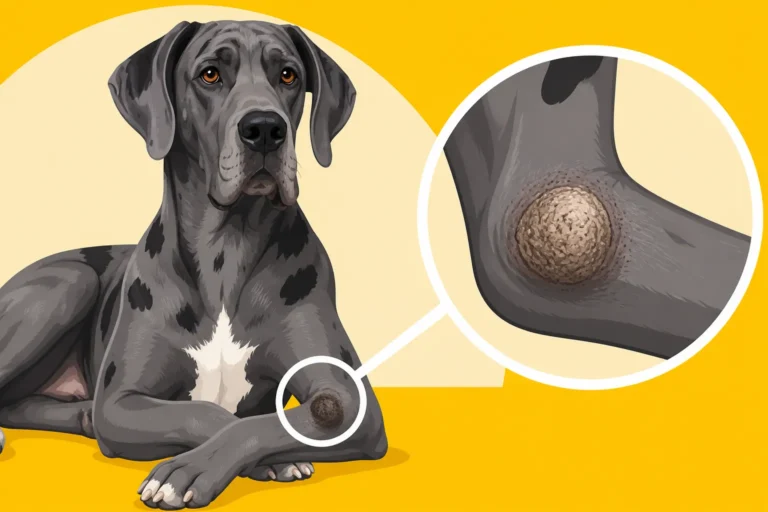
Great Dane elbow calluses develop from chronic pressure and friction, causing thick skin patches and potential fluid hygromas.
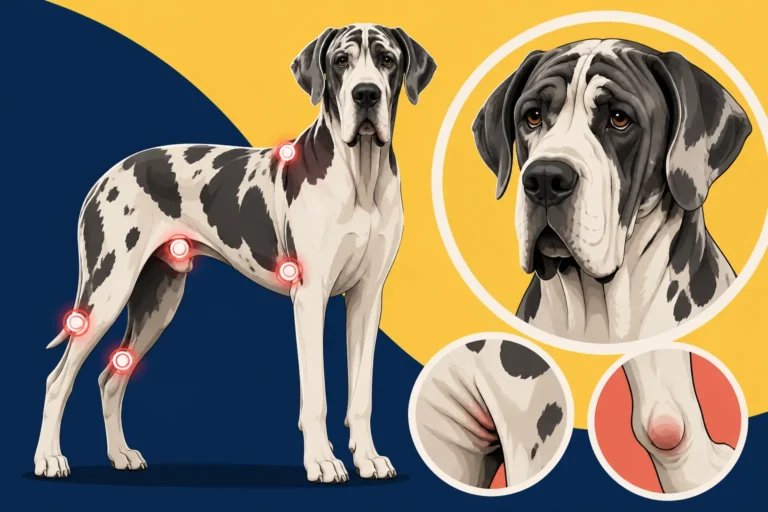
Great Dane skin folds and pressure points on elbows and hocks need special care to prevent painful calluses and dermatitis.
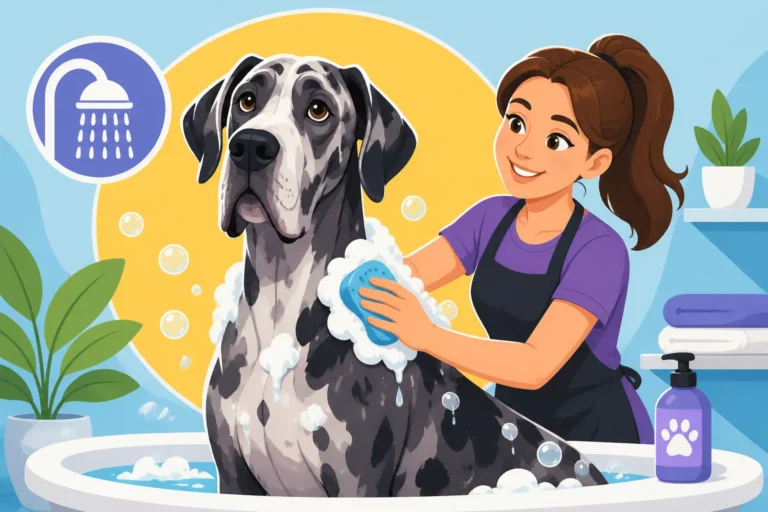
Bathing a Great Dane at home requires gathering supplies, brushing loose fur, protecting ears, and preparing four to five large towels.
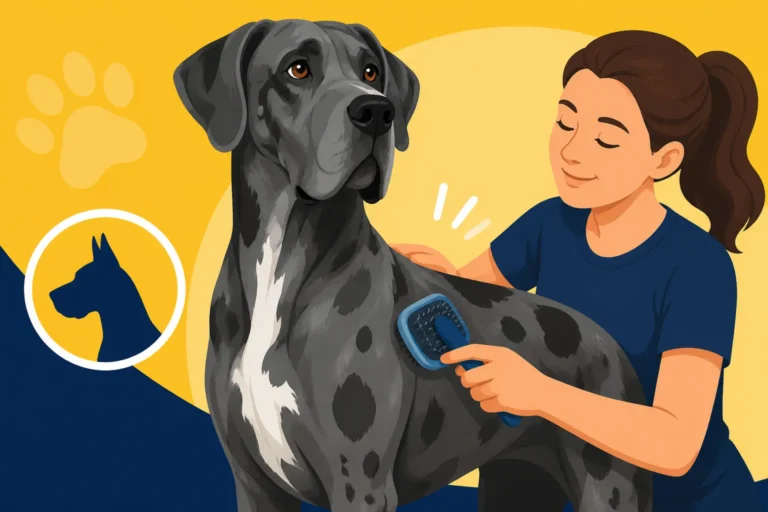
Brushing a short-coated Great Dane manages dense shedding and removes tiny needle-like hairs from furniture and clothes.
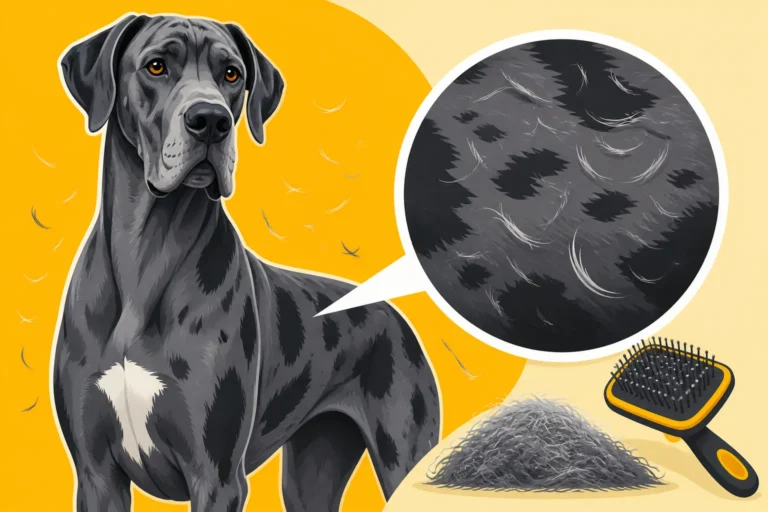
Great Dane hair growth cycles and single coat structures explain why short stiff hairs constantly fall out onto indoor surfaces.
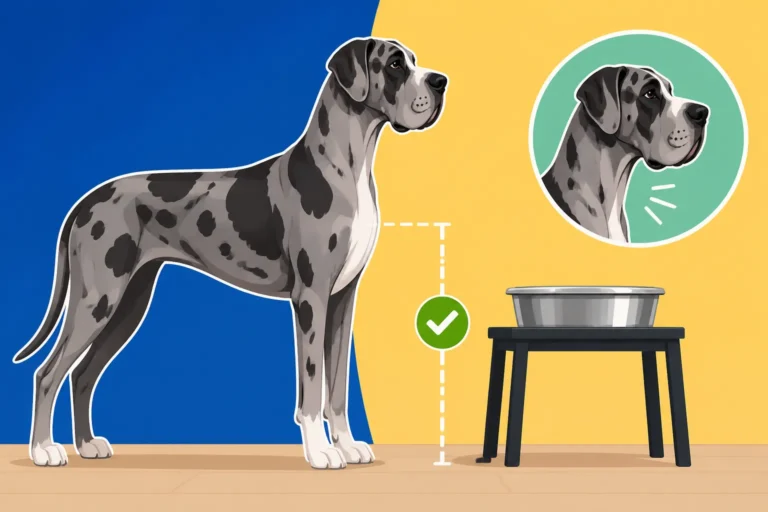
Great Dane feeding bowl height affects digestion and bloat risk, explaining why elevated food stands can cause harm.
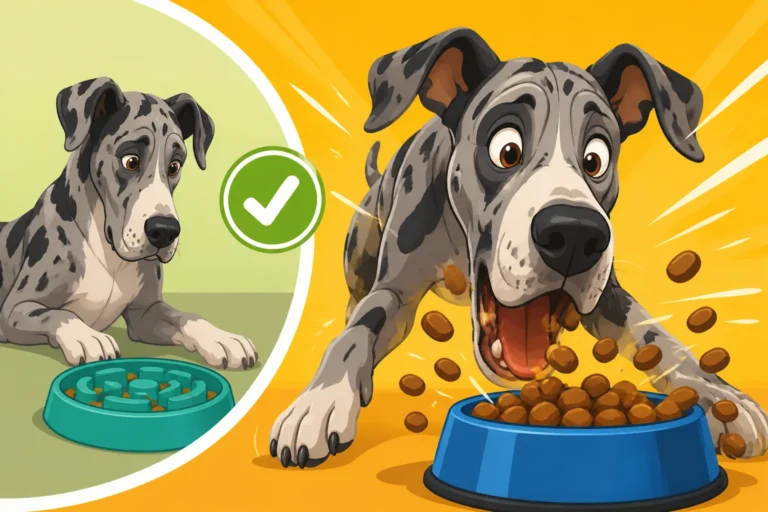
Great Dane rapid food consumption causes health risks like bloat, but practical strategies can help slow down mealtimes.
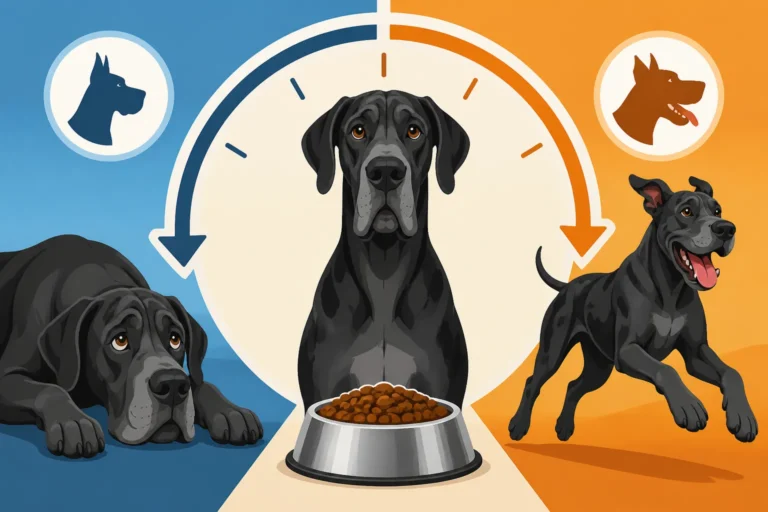
Managing the critical hour surrounding mealtime prevents gastric dilatation-volvulus and keeps Great Danes safe from bloat.
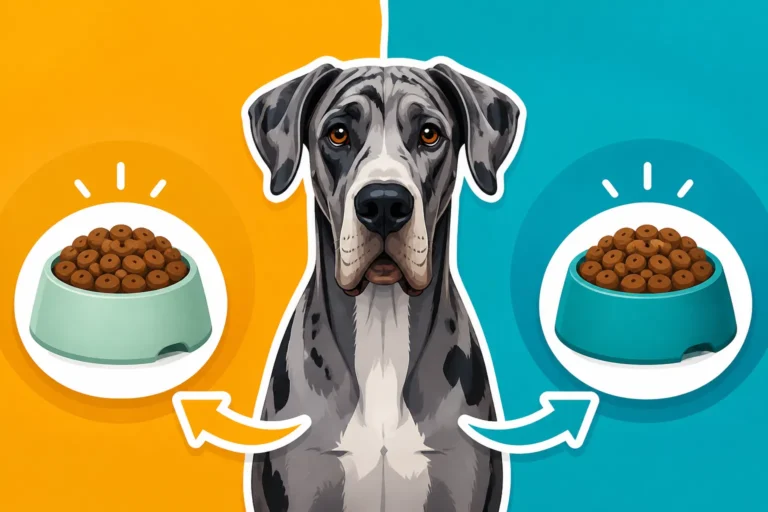
Splitting daily meals into smaller servings reduces bloat risk, improves digestion, and supports steady growth for Great Danes.
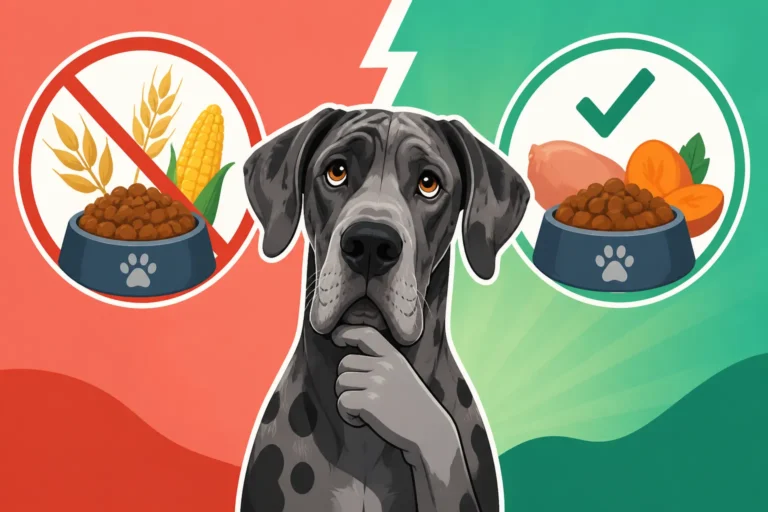
Grain-free kibble for Great Danes and its connection to dilated cardiomyopathy heart disease are explained using veterinary science.