Elbow Calluses on a Great Dane
One of the most disheartening things to notice on your beloved Great Dane is those unsightly, rough patches that often develop on their elbows. You see your gentle giant lying comfortably, or so you think, only to find their once smooth skin has turned coarse and calloused, sometimes even cracked or bare. This guide is here to walk you through exactly what causes these common Great Dane elbow calluses, how to prevent them from worsening, and what steps you can take to keep your big dog's skin healthy and comfortable.
Understanding Great Dane Elbow Calluses: More Than Just 'Rough Skin'
When you first spot those rough, graying patches on your Great Dane's elbows, it's easy to dismiss them as just "old dog skin" or a natural part of being such a big, heavy breed. But these aren't just cosmetic issues; they're a direct result of physics and pressure, and understanding them is the first step toward better care for your beloved companion. It’s frustrating to see these develop, especially when you feel like you’re doing everything right for your dog, but rest assured, this is a very common challenge many Great Dane owners face.
What Exactly Are Elbow Calluses?
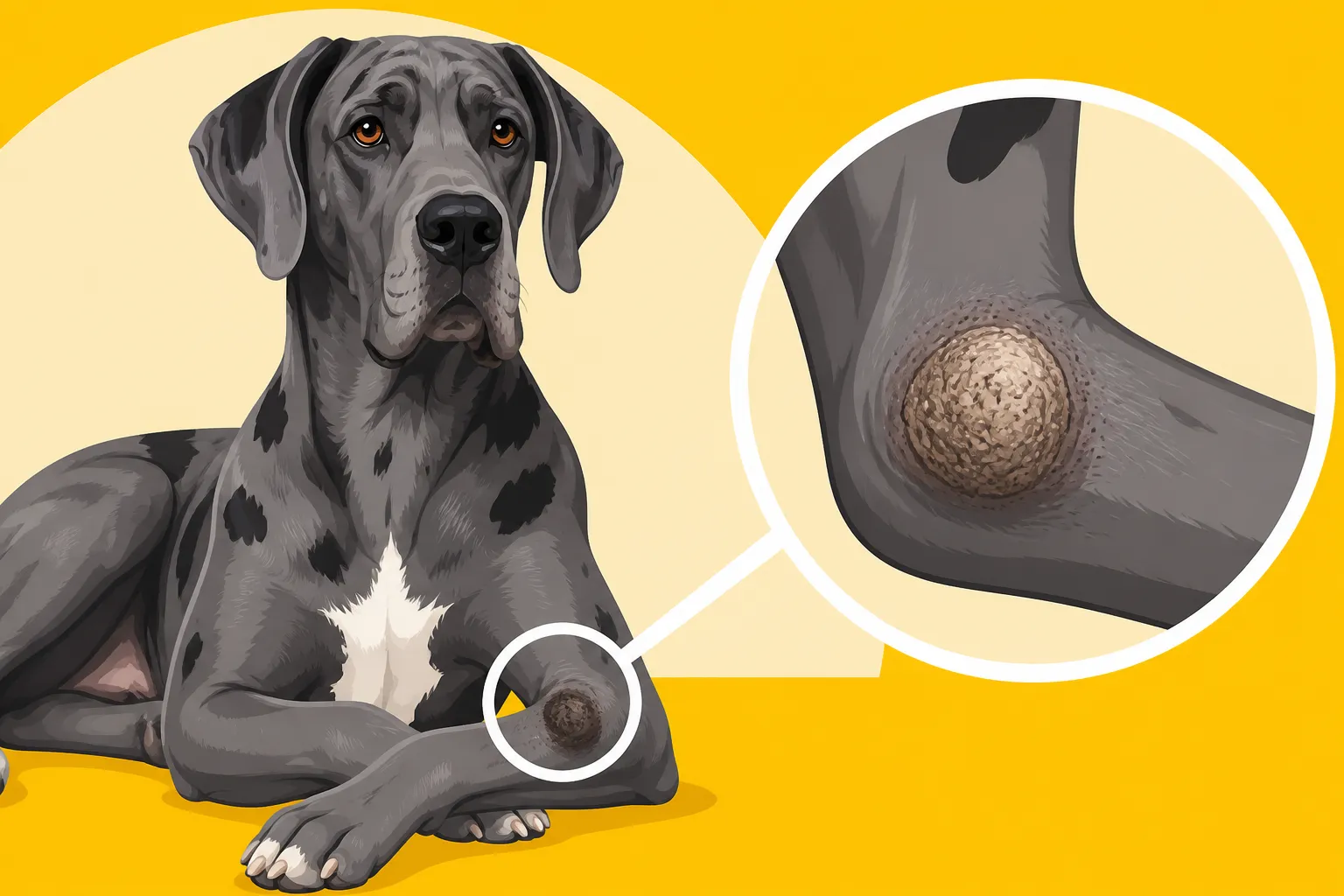
An elbow callus, often referred to as a pressure sore or pressure ulcer in more severe cases, is essentially a localized thickening of the skin. Think of it like a permanent, toughened scab that forms repeatedly in response to chronic friction and pressure. Every time your Great Dane lies down, especially on a hard surface, the bony prominence of their elbow bears a significant amount of their immense weight. This constant pressure, coupled with the friction created as they shift and settle, triggers the skin to protect itself by building up layers of dead skin cells and keratin.
Initially, you might just notice the hair thinning or disappearing over the elbow joint. Over time, the skin beneath becomes thicker, harder, and often darker or grayer. It can feel like sandpaper, tough and unyielding to the touch. The reason Great Danes are particularly susceptible is simply their size and weight. A small terrier might weigh 15 pounds and exert minimal pressure, but a 150-pound Great Dane is putting immense stress on those small areas, day in and day out. Their large bone structure, combined with relatively little padding over the elbow, makes them prime candidates for these formations. It’s a common frustration for owners, who often feel guilty that they haven’t provided enough comfort, but sometimes it can feel inevitable with a dog of this size.
The Difference Between a Callus and a Hygroma
While often lumped together in casual conversation, it’s crucial to understand that an elbow callus and an elbow hygroma are distinct conditions, though they are certainly related and can even occur simultaneously. Knowing the difference will help you respond appropriately to what you find on your Great Dane's elbow.
An elbow callus, as we just discussed, is a dry, thickened, and often hairless patch of skin. It’s essentially a protective response by the body to repeated trauma and pressure. It feels hard and rough, and while it might crack and bleed if it gets too dry or is injured, it typically doesn't contain fluid. It's the body's way of trying to build a tougher shield over a vulnerable spot.
On the other hand, a hygroma is a fluid-filled sac that develops under the skin, often in the exact same spot where calluses form – over the point of the elbow. Instead of the skin thickening, the constant trauma causes inflammation and the accumulation of serous fluid, which is clear or slightly yellowish. A hygroma will feel soft and squishy, like a water balloon, to the touch. It can range in size from a small grape to a large orange, sometimes even bigger. While a callus is purely a skin issue, a hygroma is a subcutaneous fluid collection. It’s important to note that a callus can develop first, and then the continued trauma can lead to the formation of a hygroma. Or, a hygroma can develop, and the overlying skin can become calloused. For more detailed information, you can read our article on Elbow Hygromas on a Great Dane.
The distinction matters because their management differs. A callus primarily needs softening, moisturizing, and pressure relief. A hygroma, especially a large or infected one, might require veterinary intervention, drainage, or even surgery. If you feel a soft, fluctuating swelling rather than just a hard patch, it's definitely time for a vet visit. The goal with both is always to provide adequate cushioning and protection, but the treatment path once they develop can diverge significantly.
Why Great Danes Are Prone to Elbow Calluses
It’s not just bad luck that your Great Dane might develop elbow calluses. Their sheer size and specific physiology, combined with certain common living arrangements, create a perfect storm for these skin issues to emerge. Owners often feel a sense of exasperation, wondering why their dog, despite all their love, develops these tough spots. It’s rarely about neglect and almost always about the unique challenges of housing such a majestic, heavy animal.
The Physics of a Giant Breed
Imagine trying to support over a hundred pounds of weight on two relatively small points, repeatedly, throughout the day. That’s essentially what your Great Dane's elbows are doing. When a Great Dane lies down, particularly when they "flop" or drop heavily onto the floor, their body weight isn't distributed evenly. A significant portion of that force concentrates on the bony prominences of their elbows and hocks, which have very little natural muscle or fat padding to absorb the impact. This isn't like a small dog that can curl up and distribute its weight; a Great Dane stretches out, often splaying their legs, putting direct pressure on those joints.
Hard surfaces exacerbate this issue dramatically. A plush carpet might offer some give, but concrete, tile, hardwood, or even thin rugs over hard floors offer almost no cushioning. The repeated impact and friction on these unforgiving surfaces cause microscopic damage to the skin and underlying tissues. The body, in its attempt to protect these vulnerable spots, thickens the skin, leading to callus formation. It’s a natural defense mechanism, but it can quickly become problematic. You might notice your Dane loves the cool tile in summer, but that cool relief comes at a cost to their elbows, making them more susceptible to problems like Skin Problems Where a Great Dane Lies Down. Many owners try to provide comfort, but getting a giant breed to always choose a soft bed over a cool floor can be a constant battle.
Lifestyle Factors and Environment
Beyond the inherent physics of their size, a Great Dane's daily environment and routines play a massive role in whether or not they develop elbow calluses. Often, owners aren't even aware of how seemingly innocuous habits or conditions are contributing to the problem.
One of the most significant lifestyle factors is simply the lack of consistent, appropriate soft bedding. It’s not enough to have a dog bed; it needs to be the right dog bed, and it needs to be readily available and desirable for your Great Dane. Many standard dog beds, even those marketed for large breeds, can be too thin or flatten too quickly under a Dane's weight, offering minimal protection. Imagine a 150-pound person trying to sleep on a thin camping mat every night – it wouldn’t be comfortable, and pressure points would develop. For more information, consider reading Bedding That Prevents Great Dane Hygromas.
Furthermore, rough or abrasive surfaces in crates or outdoor kennels can rapidly worsen the issue. If your Great Dane spends time in a crate, ensure it has thick, comfortable bedding that doesn't bunch up or expose the hard crate floor. Outdoor runs with concrete or gravel, even for short periods, are notorious for causing calluses and can lead to more severe conditions. Even the texture of some carpets can be abrasive.
Age and activity levels also play a part. Younger, more active Great Danes might zoom around and then flop down with more force, creating immediate impact. Older Great Danes, on the other hand, tend to spend more time lying down, and their skin might be less resilient, making them more prone to prolonged pressure. It becomes a cumulative effect over their lifetime, reinforcing the need for proactive measures from puppyhood right through their senior years. The goal is to make soft surfaces the most appealing and comfortable option available to them, wherever they choose to rest.
Recognizing and Preventing Elbow Calluses
Catching elbow calluses early and implementing preventative measures are key to keeping your Great Dane comfortable and avoiding more serious skin issues. It's about being observant and making some strategic choices for their environment. It might feel like a never-ending battle to keep up with your giant breed's unique needs, but these steps can make a real difference.
Signs to Watch For
Regularly checking your Great Dane's elbows should become as routine as checking their teeth or looking for ticks. These calluses often start subtly and progress over time, so early detection gives you a better chance to intervene effectively.
In the early stages, you might simply notice a patch of thinning hair, or even complete hair loss, directly over the point of the elbow. The skin might feel slightly rougher or thicker than the surrounding skin, but not yet hard and crusty. It might also appear a bit darker, perhaps a dull gray or black, especially on lighter-colored Danes. At this point, the skin is usually still pliable and not broken. This is your cue to act! Don't wait until it becomes a full-blown problem. A good time to check is during your regular grooming sessions, which for a Great Dane, might involve quite a bit of hands-on attention anyway. Consider integrating this check into your routine mentioned in Great Dane Grooming on a Very Large Short Coat.
As calluses advance, they become much more pronounced. The skin will be significantly thickened, very hard, and often completely devoid of hair. It can develop a tough, leathery texture, sometimes with deep creases. In severe cases, the skin can become extremely dry, crack open, and even bleed. This creates an open wound, making it vulnerable to bacterial infections, which can then lead to pain, swelling, and pus. If you see scabbing, oozing, or any signs of redness and inflammation, it’s no longer just a cosmetic issue – it’s a medical concern that needs prompt veterinary attention. Catching it before it gets to this stage is always preferable.
Proactive Prevention Strategies
When it comes to elbow calluses, prevention truly is worth a pound of cure, especially with a Great Dane. The core principle is simple: eliminate or drastically reduce the consistent pressure and friction on those vulnerable elbow joints. This might sound obvious, but implementing it consistently for a large, heavy dog requires deliberate effort.
The absolute must-have in any Great Dane home is appropriate, high-quality orthopedic bedding. This isn't an optional luxury; it's an essential piece of health equipment. You need a bed that offers dense, supportive foam that will not flatten out under your Great Dane’s weight. Look for beds specifically designed for large breeds or those marketed as orthopedic, with at least 4-6 inches of high-density foam. Memory foam can be an excellent choice because it conforms to their body, distributing weight more evenly. Brands like Chewy and Amazon offer a wide array of options, and it's worth investing in the best you can afford. Remember, a cheap, flimsy bed will be useless within weeks, so prioritize quality and density. For comprehensive advice on selecting the right bed, check out Beds That Cushion a Great Dane's Joints.
Beyond dedicated beds, consider softening other popular resting spots. If your Great Dane loves to sprawl on the living room floor, place large, washable rugs or thick mats in those areas. Even a folded comforter or a stack of blankets can offer temporary relief. While you can't realistically cover every square inch of your home in soft surfaces, strategically placing comfortable options where your Dane frequently settles makes a huge difference.
It’s also important to acknowledge that Great Danes often seek out cool, hard floors, especially in warmer climates or during hot months. While this natural cooling behavior is understandable, try to provide equally appealing cool, soft alternatives. Some cooling mats can be combined with orthopedic beds to offer both comfort and temperature regulation. The goal isn't necessarily to stop them from ever lying on a hard floor, but to ensure they have ample, comfortable, and preferable soft options available at all times. Consistency in offering these choices is paramount.
Managing Existing Elbow Calluses
If your Great Dane has already developed elbow calluses, don't despair! While they may never completely disappear, you can significantly improve their condition, prevent them from worsening, and ensure your dog's comfort. This involves a combination of topical treatments and knowing when to call in the professionals. The key is consistency and patience, which can be hard when you want instant relief for your big friend.
Topical Treatments and Moisturizers
For dry, thickened, and even cracked elbow calluses, regular topical treatment can work wonders. The goal is to soften the hardened skin, make it more pliable, and prevent further cracking, which can lead to infection.
Look for balms, creams, or oils specifically formulated for canine calluses. Many products contain ingredients like shea butter, coconut oil, beeswax, lanolin, or vitamin E – all known for their moisturizing and skin-healing properties. Some even include mild exfoliants like urea to help gently slough off excess dead skin, but always consult with your vet before using anything with stronger active ingredients. Apply these products generously to the callused areas at least once or twice a day. A good routine is to apply it before bed, when your Great Dane is less likely to immediately lick it off. Gently massage the product into the callus for a few minutes; this not only helps with absorption but also stimulates blood flow to the area. Remember, whatever you apply will likely end up in your dog's mouth at some point, so ensure it's non-toxic and safe for ingestion. You can find a range of suitable balms and creams from pet supply retailers like Chewy or Amazon.
Consistency is absolutely crucial here. Just like moisturizing your own dry skin, you won't see results overnight. It takes weeks, sometimes months, of diligent application to soften those tough patches. Don't get discouraged if the progress seems slow. Keeping the calluses soft and moisturized will make them more comfortable for your Great Dane and drastically reduce the risk of them cracking, bleeding, or becoming infected, which is when they really start to cause problems.
When to Consult Your Vet
While many mild calluses can be managed at home, there are definite times when a trip to the veterinarian is non-negotiable. Ignoring these signs can lead to much more serious health issues for your Great Dane. You're their advocate, and sometimes that means knowing when a problem is beyond home remedies.
You should immediately consult your vet if you notice any signs of infection. This includes:
- Redness or inflammation: The skin around the callus becomes unusually red or warm to the touch.
- Swelling: The callus itself or the surrounding area becomes puffy or enlarged.
- Pain: Your Great Dane flinches, cries out, or tries to pull away when you touch the callus. They might also limp or avoid putting pressure on that leg.
- Discharge: Any pus, blood, or foul-smelling fluid oozing from the callus.
- Open wounds: If the callus has cracked open and is bleeding or shows raw tissue.
These are all indicators that bacteria have likely entered the compromised skin, and an infection is brewing. A veterinarian will be able to properly diagnose the issue, which might include taking a sample for culture. They may prescribe oral antibiotics to clear the infection, medicated topical creams, or even anti-inflammatory medications to reduce swelling and pain. Sometimes, a vet might recommend further investigations, especially if the callus seems unusually stubborn or problematic, as part of your Great Dane’s The Yearly Checkup a Great Dane Needs.
Furthermore, if you suspect that the lump on your Great Dane's elbow is actually a hygroma (a soft, fluid-filled sac) rather than just a dry callus, veterinary attention is essential. Hygromas can become infected or very large, requiring drainage or surgical intervention. You can learn more about this by reading A Soft Swelling on a Great Dane's Elbow. Early veterinary assessment helps determine the best course of action and prevents a simple callus from escalating into a complex, painful, and expensive problem.
Long-Term Care and Living with Calluses
Managing elbow calluses in a Great Dane isn’t a one-time fix; it’s an ongoing commitment that involves careful attention to their diet, their environment, and regular maintenance. Think of it as part of the overall care package for a giant breed. It requires dedication, but seeing your Dane comfortable makes it all worthwhile.
Diet and Hydration's Role in Skin Health
While direct pressure is the primary cause of elbow calluses, a Great Dane’s overall health, significantly influenced by their diet and hydration, plays a supporting role in the resilience and integrity of their skin. Healthy skin is better equipped to handle minor stressors and recover more effectively.
Ensure your Great Dane is on a high-quality, balanced diet appropriate for a giant breed. A diet rich in essential fatty acids, particularly Omega-3 and Omega-6, can contribute significantly to skin and coat health. These fatty acids help maintain the skin's natural barrier, keeping it supple and less prone to dryness and cracking. You might find some excellent options through brands that focus on fresh food delivery or premium kibble, such as Ollie, which emphasizes high-quality ingredients, though always consult with your vet about specific dietary needs or supplements. Many commercial foods are now fortified with these beneficial oils, but if your Dane's skin seems particularly dry or dull, your vet might recommend additional fish oil or flaxseed oil supplements. Look for joint-specific foods, too, as they often contain ingredients beneficial for overall health, which indirectly supports the skin. Our article Joint Support Built Into Great Dane Food offers more context on beneficial food ingredients.
Equally important is consistent access to fresh, clean water. Proper hydration helps maintain skin elasticity and overall bodily functions. A well-hydrated dog will naturally have healthier skin than one that is chronically even slightly dehydrated. Ensure there are multiple water bowls available throughout your home, especially if your Great Dane spends time in different rooms. For a dog that drools as much as a Great Dane, keeping those water bowls topped up and clean is a daily task!
Adapting Your Home Environment
The physical environment of your home is perhaps the single most critical factor in both preventing and managing Great Dane elbow calluses. It's about making thoughtful adjustments that cater to your dog's size and habits. This isn't just about throwing down one bed; it's about creating a landscape of comfort.
First, strategically place those high-quality orthopedic beds in all of your Great Dane's favorite lounging spots. Do they love to lie by the sunny window? Put a bed there. Do they always settle under your desk? Place a cushion. Observe where your Dane chooses to rest most often and ensure those areas are well-cushioned. It might mean having multiple beds or large, thick mats throughout the house.
Consider the type of flooring you have. While you can't rip up all your tile or hardwood, you can mitigate its impact. Runners, area rugs, and carpet tiles can be placed in high-traffic areas or popular nap zones. Choose rugs with a non-slip backing to prevent accidents and ensure they're durable enough to withstand a Great Dane's weight and claws. Look for materials that are easy to clean, as accidents and drool are inevitable. You can find many durable, washable options on Amazon or through specific pet-friendly home furnishing stores. Understanding the right types of surfaces can also help avoid other joint issues, which is covered in Floors That Hold Up Under a Great Dane.
Finally, regularly inspect your Dane's bedding for wear and tear. Over time, even the best orthopedic beds can lose their loft and support. If you notice a bed flattening out or developing depressions where your Dane typically lies, it’s time to fluff it, rotate it, or replace it. For Great Danes who may develop issues like Elbow Hygromas on a Great Dane, maintaining impeccable bedding is even more critical. Consistent monitoring of both your dog’s elbows and their sleeping surfaces is a continuous, loving effort that makes a world of difference in their long-term health and comfort.
| Feature | Elbow Callus | Elbow Hygroma |
|---|---|---|
| Appearance | Dry, thickened, hairless, often dark/gray | Soft, fluctuating swelling, often overlying a callus |
| Texture | Hard, leathery, rough | Squishy, fluid-filled, like a water balloon |
| Cause | Chronic pressure and friction on bony points | Persistent trauma leading to fluid accumulation |
| Symptoms | Hair loss, toughened skin, cracking (if severe) | Swelling, warmth, pain (if infected), lameness |
| Treatment | Moisturizing, protective bedding | Veterinary drainage, surgery, protective bedding |
| Risk of Infection | Low (unless cracked open) | Moderate to high (if large or left untreated) |
| Severity | Mostly cosmetic, can become painful if cracked | Can be serious, may require medical intervention |
Disclaimer
This article is for general informational purposes only and does not constitute professional advice. Laws, prices and regulations vary by location and change over time. Consult a qualified professional for guidance on your specific situation.