Slowing Down a Great Dane That Bolts Food
Oh, the joy of watching your majestic Great Dane, that noble "Apollo of Dogs," devour their dinner in what feels like mere seconds! It's a scene many of us know all too well – a frantic, vacuum-like gobble that leaves the bowl sparkling clean before you've even turned around. While it might seem endearing or even just "how Danes eat," this rapid ingestion of food is far more than just a quirky habit; it’s a significant concern that carries serious health implications, particularly for our deep-chested giants. This comprehensive guide is here to help you understand why your Great Dane might be eating so fast and, more importantly, equip you with practical, empathetic strategies to slow them down, ensuring happier, healthier, and safer mealtimes.
Understanding Why Your Great Dane Becomes a Food Hoover
It can feel a bit baffling, can't it? You spend good money on quality food, and your gentle giant acts like they haven't eaten in a week, even if they just had breakfast! But there are some very real, and often deeply ingrained, reasons why Great Danes, and many other dogs, develop this habit of bolting their food. It’s not about being rude; it’s often about instinct and learned behavior.
Instinctual Eating Habits
Think about dogs in their natural state, or even just in a multi-dog household. Food isn't always guaranteed, and competition can be fierce. This scarcity mindset, born from generations of survival, can manifest as a need to eat quickly before someone else gets it.
Even if your Dane is an only dog and has never experienced food insecurity, that primal instinct can still whisper in their ear, telling them to get it while the getting is good. In a pack, the fastest eaters often got the most, or at least enough. Our domesticated Danes carry echoes of this evolutionary past. It's not a flaw in their character; it's a testament to their deep connection with their ancestral roots. They aren't trying to be rude; they're just responding to a very ancient wiring that tells them food is a valuable, finite resource, and they should consume it quickly.
Learned Behaviors and Associations
Beyond instinct, many Great Danes develop fast-eating habits through what they learn from their environment and us, their devoted owners. Puppyhood, in particular, is a critical time for these behaviors to develop.
Consider a litter of Great Dane puppies. There's a limited resource (milk from mom, or later, a shared food bowl), and perhaps six to ten eager mouths vying for it. The puppies quickly learn that to get their share, they have to eat fast, pushing and shoving to secure their spot. This competitive eating, while normal in a litter, can easily translate into an adult habit. Even once they're in a solo home, that ingrained "eat or be eaten" mentality (even if it's just in their head!) can stick.
Then there's the excitement factor. For many dogs, mealtime is the highlight of the day! The sound of the food bag crinkling, the clatter of the bowl – it all signals an impending feast, leading to a burst of adrenaline and an urge to dive in. If we're unknowingly encouraging this frantic energy by getting them overly hyped up before meals, it can reinforce the bolting behavior. Some rescue Danes, especially those who may have genuinely experienced hunger or had to fight for food in a previous life, will often display extreme food guarding and bolting. For these dogs, their past experiences are a powerful teacher, and undoing those learned survival mechanisms requires extra patience and understanding.
The Alarming Risks of Rapid Eating for Great Danes
When your Great Dane eats their meal in under a minute, it’s not just about a messy floor or a quick gulp. For giant breeds like ours, rapid food consumption comes with a host of health risks, some of them life-threatening. This isn't just about mild indigestion; we're talking about serious, urgent issues that every Great Dane owner needs to be aware of.
The Threat of Gastric Dilatation-Volvulus (Bloat)
This is the big one, the concern that keeps Great Dane owners up at night. Gastric Dilatation-Volvulus, or GDV, commonly known as bloat, is a terrifying condition where the stomach fills with gas, food, or fluid (dilatation) and then twists upon itself (volvulus). While the exact cause isn't fully understood, several factors increase risk, and eating too fast is high on that list.
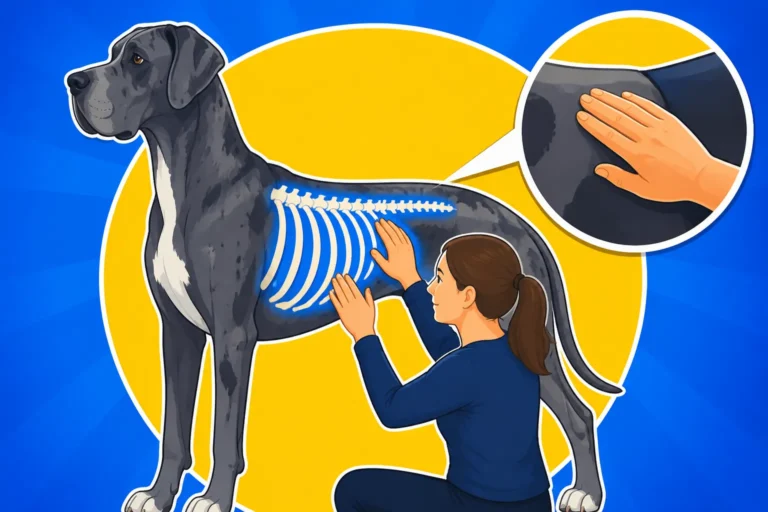
When a dog inhales its food, they often swallow a lot of air along with it. This swallowed air contributes to the stomach distending rapidly with gas. If that gas-filled stomach then twists, it cuts off blood supply to the stomach and often the spleen, and obstructs the exit and entry points, trapping everything inside. For a Great Dane, with their deep, narrow chest conformation, the risk is significantly elevated. You might notice your Dane pacing, trying to vomit unsuccessfully, or their belly looking distended and hard. These are all critical The Signs of a Great Dane Stomach Twisting, and every second counts.
Bloat is an acute emergency. Without immediate veterinary intervention, usually emergency surgery, it is almost always fatal. It's a cruel twist of fate that our beloved giants, with their otherwise gentle nature, are so prone to this devastating condition. The statistics are chilling; Great Danes have a lifetime risk of developing bloat that is among the highest of all breeds. The Lifetime Bloat Risk in a Great Dane is a constant shadow, and doing everything we can to mitigate it, including slowing down mealtime, is a non-negotiable part of responsible Dane ownership.
Choking, Indigestion, and Nutrient Absorption
Beyond the immediate, life-threatening danger of bloat, bolting food can also lead to other, less dramatic but still concerning, health issues. Swallowing large pieces of food without proper chewing can lead to choking. Imagine your massive Dane choking – it's a terrifying scenario that can happen much faster than you think. They might cough, gag, or show distress, and given their size, trying to dislodge something manually can be incredibly difficult and dangerous.
Even if they don't choke, rapid eating often means food isn't properly chewed or mixed with saliva, which is the first step in digestion. When large, undigested chunks of food hit the stomach, it can overwhelm the digestive system, leading to indigestion, gas, and even vomiting. You might notice your Dane burping excessively, having an upset stomach, or throwing up soon after eating. This isn't just uncomfortable for them; it means their body isn't efficiently breaking down the food.
Furthermore, poor digestion directly impacts nutrient absorption. If food passes too quickly or isn't properly processed, your Great Dane isn't getting all the essential vitamins, minerals, and proteins their massive body needs to thrive. Over time, this could lead to nutritional deficiencies, even if you're feeding a high-quality diet. It's a bit like pouring water into a leaky bucket – no matter how much you pour in, you're not getting the full benefit if it's all rushing out or not being held effectively.
Practical Tools to Slow Down Your Great Dane's Mealtime
Thankfully, we live in an age where there are many ingenious tools designed specifically to combat rapid eating. These aren't just gadgets; they're essential aids in the battle against bloat and indigestion for our beloved Great Danes. From simple designs to more complex puzzles, there’s a solution out there for almost every eager eater.
The Magic of Slow Feeder Bowls and Inserts
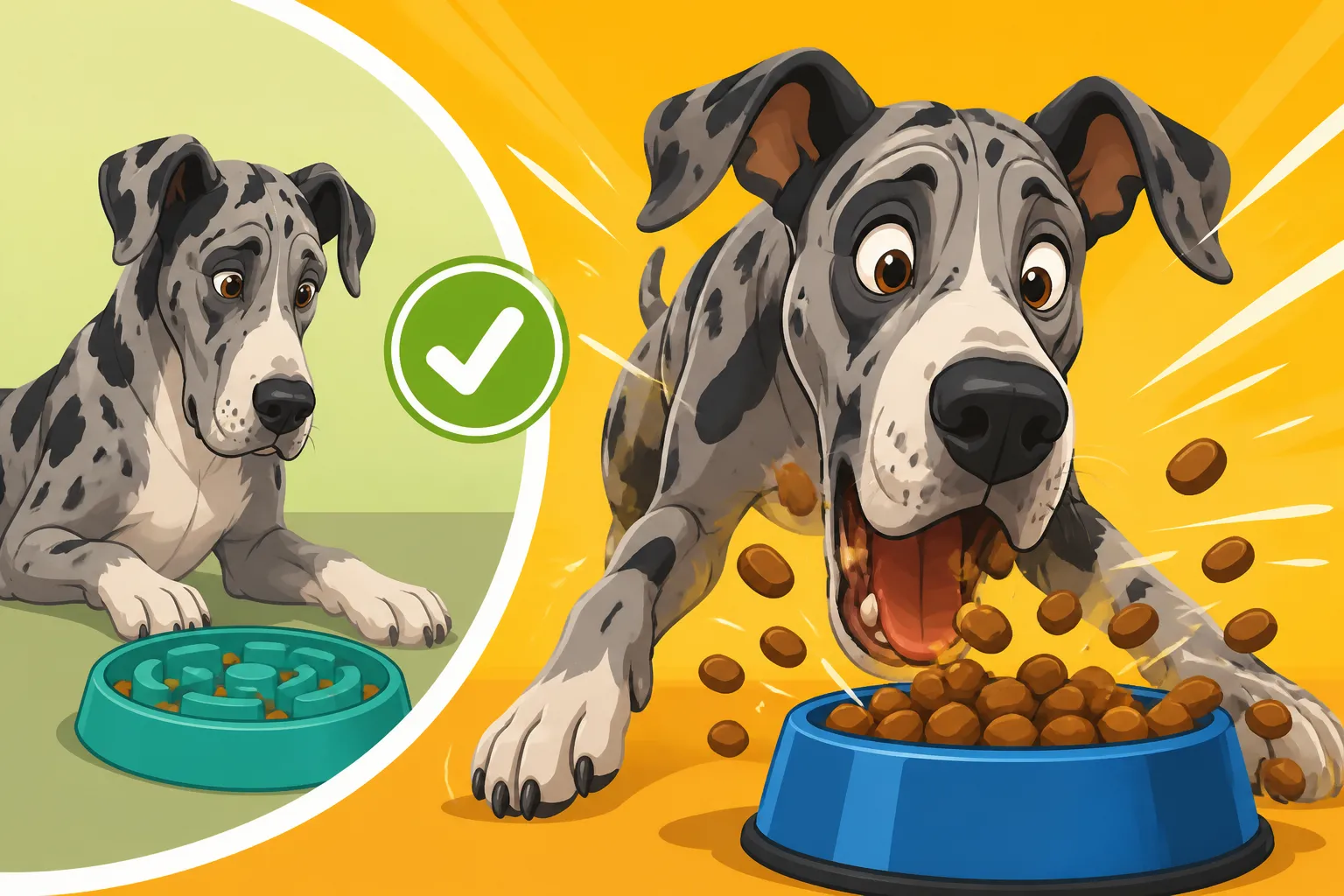
If your Great Dane is a food tornado, a slow feeder bowl is often the first and most effective line of defense. These bowls are specifically designed with obstacles – think ridges, mazes, or pillars – that force your dog to navigate around them to get to their food. Instead of a wide-open trough where they can scoop up huge mouthfuls, they have to work for each bite, significantly extending mealtime.
The science behind them is pretty straightforward: by breaking up the surface area of the food and making it harder to access, the dog has to slow down. They can't just dive in headfirst and gulp. They have to use their tongue and nose to push food around, picking up smaller portions. You'll find a vast array of these on sites like Chewy and Amazon, from heavy ceramic options that won't slide across the kitchen floor to durable plastic ones with varying maze complexities. Look for ones that are large enough to comfortably hold your Dane’s entire meal without overflowing, and ensure the obstacles are sturdy enough to withstand their enthusiasm. Some designs are even weighted or have non-slip bases to prevent tipping, which can be a real issue with a determined Great Dane!
If you already have a favorite bowl but your Dane still eats too fast, you might consider a slow feeder insert. These are often silicone or plastic devices that stick to the bottom of your existing bowl, transforming it into a slow feeder. They're a great, cost-effective way to try out the concept without buying a whole new bowl. Just make sure whatever insert you choose is durable and won't be easily chewed or swallowed by your powerful Dane.
Puzzle Feeders and Interactive Toys
For the Great Dane who needs an extra challenge, or if you want to combine mealtime with mental enrichment, puzzle feeders and interactive toys are fantastic. These devices require your dog to manipulate them in some way – pushing, nudging, rolling, or lifting – to release small portions of food. This not only slows down eating dramatically but also engages their brain, turning mealtime into a fun activity rather than just a quick fueling stop.
Think of a Kong Wobbler, for example. You fill it with kibble, and your Dane has to nose it around, causing it to wobble and dispense food slowly. There are also treat-dispensing balls that release kibble as they're rolled, or more intricate sliding puzzle toys where your dog has to move panels to uncover food compartments. These can be particularly beneficial for intelligent breeds like Great Danes, providing much-needed mental stimulation that can help wear them out just as much as physical exercise. You can find a wide variety of these on Amazon or specialty pet stores, catering to different levels of difficulty.
When introducing a puzzle feeder, start with an easier one and gradually increase the challenge. You want them to be successful and enjoy the process, not get frustrated and give up. It's also wise to supervise them, especially initially, to ensure they're using it correctly and not trying to chew through it to get to the food faster. These tools aren't just about slowing down; they’re about making mealtime a more enriching experience overall, which can contribute to a calmer, more satisfied dog.
DIY Solutions and Everyday Items
Sometimes, the simplest solutions are the most effective, and you don't always need to buy a fancy gadget. There are several effective DIY methods to slow down a bolting Great Dane using items you might already have around the house. These options are often free or very low-cost and can be surprisingly efficient.
One classic trick is to place a large, heavy object in your Great Dane's regular bowl. A clean, smooth rock (ensure it's too big to be swallowed!), a large, heavy ceramic ramekin turned upside down, or even a tennis ball (though some Danes might try to eat it, so supervise carefully!) can work. The idea is that your dog has to eat around the object, preventing them from taking huge gulps and forcing them to nibble at the food. Just make sure whatever you use is safe, clean, and too large for your dog to accidentally ingest. If you have any doubt, skip this method and opt for something safer.
Another excellent DIY strategy involves spreading your Great Dane's meal over a wider surface. Instead of putting all their food in one deep bowl, try sprinkling their kibble across a large, clean baking sheet. The wider distribution means they have to walk around, nose, and pick up individual pieces, rather than just slurping it all up. You could also use a large muffin tin, putting a small amount of kibble in each cup. This creates multiple mini-bowls, making them work for each portion. These methods turn mealtime into a scavenger hunt, engaging their natural foraging instincts and making them slow down considerably. They also have the added benefit of being easy to clean and requiring no special purchases.
| Method | Description | Pros | Cons |
|---|---|---|---|
| Slow Feeder Bowl | Bowl with internal ridges, mazes, or obstacles. | Specifically designed for purpose, widely available (e.g., Chewy, Amazon). | Can be tricky to clean, some very determined Danes still eat fast. |
| Puzzle Feeder | Interactive toy requiring manipulation to dispense food. | Provides mental enrichment, significant slowing of eating. | Can be frustrating for some dogs, may be expensive. |
| Placing Object in Bowl | Using a large, safe, non-swallowable item in a regular bowl. | Cost-effective, immediate solution, uses existing bowls. | Requires careful selection of object, potential choking risk if wrong size. |
| Scattering Food | Spreading kibble widely on a clean, flat surface. | Engages foraging instinct, very cheap, natural way to slow down. | Can be messy, not suitable for all food types or environments. |
| Muffin Tin/Baking Sheet | Using multiple compartments or a wide, flat surface. | Cheap, easy to clean, makes dog work for each portion. | May not be ideal for very large meals, might be prone to tipping. |
Behavioral Strategies for More Measured Meals
While tools are incredibly helpful, slowing down a Great Dane that bolts food isn't just about the equipment. It's also about establishing routines, creating a calm environment, and even integrating a little training. These behavioral strategies work hand-in-hand with physical aids to cultivate a more relaxed and healthier eating pace.
Dividing Meals and Consistent Scheduling
One of the simplest yet most effective behavioral changes you can make is to rethink how and when your Great Dane eats. Instead of one or two large meals a day, consider breaking their daily ration into three or even four smaller meals. Splitting a Great Dane's Meals in Two can drastically reduce the intensity of their hunger at each feeding, making them less likely to feel the need to gorge. If their stomach isn't quite as empty, the urgency to inhale food diminishes, leading to a more moderate pace. This also allows their digestive system to process smaller amounts of food more efficiently, reducing the risk of a dangerously distended stomach.
Consistency in scheduling is paramount. Dogs thrive on routine, and Great Danes are no exception. Feeding your Dane at roughly the same times each day creates predictability. When they know when their next meal is coming, their anxiety around food can decrease. Imagine knowing your next paycheck is always coming on the 15th versus having no idea when money will arrive; the latter creates stress. Similarly, a predictable feeding schedule tells your Dane, "Food is always coming; you don't need to panic and eat it all at once." This consistent routine can profoundly impact their overall stress levels around mealtime, making them calmer and more receptive to eating slowly.
Creating a Calm Eating Environment
The environment in which your Great Dane eats plays a huge role in their mealtime behavior. A chaotic, noisy, or stressful setting can heighten their arousal and reinforce the "eat fast!" instinct. Therefore, cultivating a calm, quiet, and predictable eating space is crucial for promoting slower, more relaxed meals.
First, identify a dedicated feeding spot for your Great Dane. This should ideally be a quiet corner of the house, away from high-traffic areas, loud noises, or distractions like children playing or other pets. If you have multiple pets, feed them in separate rooms or at a distance where they cannot see or hear each other eating. The mere presence of another animal, even if they're not actively trying to steal food, can trigger competitive eating behavior. Even if they get along perfectly, a subtle sense of competition can arise when food is involved.
Before you even put the bowl down, try to bring your Dane's energy levels down. Avoid hyping them up with excited talk or a big fuss when preparing their meal. Instead, aim for a calm, almost Zen-like approach. Some owners find that having their Dane lie down quietly for a minute or two before the bowl is placed helps them shift into a more relaxed mindset. Remember, Whether Stress at Mealtime Matters for a Great Dane is a real consideration, and reducing any pre-meal jitters can make a significant difference in how they approach their food. A peaceful environment signals that there's no threat, no competition, and therefore, no need to rush.
Incorporating Training and Manners
Basic obedience and manners can extend beautifully into mealtime, helping to teach your Great Dane self-control and patience. This isn't just about showing off tricks; it's about building a foundation of communication and respect that carries over into all aspects of their lives, including eating.
One of the most effective commands to teach for mealtime is "wait." Before you place the bowl down, ask your Dane to sit and then "wait." Hold the bowl for a few seconds, gradually increasing the time, and only release them to eat with an "okay" cue when they are calm. If they lunge or try to eat before the "okay," pick the bowl back up and try again. It takes patience and consistency, but they will quickly learn that calm behavior gets them what they want, while frantic behavior delays it. This teaches them that food isn't going anywhere and they don't need to rush.
Another strategy, especially useful for puppies or very excitable eaters, is hand-feeding. Offering kibble piece by piece, or in small handfuls, forces them to slow down and interact with you. This also builds a positive association with your hands around their food, which can be helpful for preventing resource guarding down the line. For adult Danes, scattering their kibble across a wide, clean floor (like a kitchen tile or patio) can turn mealtime into a foraging game. This makes them use their nose and take individual bites, naturally slowing their consumption and engaging their mind. It might seem like a lot of extra effort, but instilling these manners can significantly reduce the risks associated with fast eating, and you'll appreciate the calmer meal experiences.
Considering Diet and Food Type
Beyond bowls and behavior, the actual food your Great Dane eats can also play a role in how quickly they consume it. Sometimes, a small adjustment to the texture, size, or moisture content of their diet can make a noticeable difference in their eating pace.
The Role of Kibble Size and Texture
For Great Danes who are fed traditional dry kibble, the size and shape of the individual pieces can influence how fast they're able to gulp it down. Smaller, uniform kibble pieces are often easier for a large dog to swallow whole, almost without chewing. If your Dane is on a small-sized kibble, consider switching to a larger kibble specifically designed for large or giant breeds.
Larger kibble pieces require more effort to pick up and may even necessitate a few chews before swallowing. This natural impedance can act as a built-in slow-feeder. You might notice your Dane actually taking a moment to crunch through the larger pieces, which is exactly what we want to see. Additionally, some kibble brands offer uniquely shaped pieces that are harder to scoop up quickly, adding another layer of challenge. Always transition to a new food slowly over several days to avoid upsetting your Dane's stomach.
Another simple trick is to add a little warm water to your Dane's kibble, turning it into a gruel-like consistency. This forces them to lap up the food rather than gulping dry pieces. Soaking the kibble can also make it softer and easier to digest, which can be beneficial regardless of eating speed. Just ensure that if you soak kibble, you feed it immediately and discard any uneaten portion to prevent bacterial growth, especially in warmer climates.
Exploring Wet, Fresh, or Raw Food Options
If dry kibble isn't working to slow your Great Dane down, or if you're exploring different dietary approaches, wet, fresh, or raw food options can also influence eating speed. These types of foods often have different textures and moisture levels that inherently make them more challenging to inhale.
Wet dog food, typically found in cans or pouches, has a higher moisture content and a softer, often chunkier, texture. It's much harder for a dog to "gulp" a mouthful of wet food compared to dry kibble. They often have to lick and chew more, which naturally slows down their consumption. For some Danes, the richer aroma and taste of wet food can also lead to a more satisfied, less frantic eating experience. However, feeding a giant breed like a Great Dane solely on wet food can become quite expensive and create a lot of waste due to the sheer volume they need. You can find quality wet food options at Chewy.
Fresh dog food, often delivered frozen or refrigerated (like what Ollie provides), combines the benefits of high moisture with often less processed ingredients. These foods can be served in a pate-like consistency or with small, chewable pieces, both of which encourage slower eating. The texture itself demands more licking and gentle chewing. However, the cost and storage requirements for feeding a Great Dane a fresh food diet are substantial. Similarly, raw food diets, which consist of raw meat, bones, and organs, also present a unique texture that generally forces slower eating. The bones, in particular, require significant chewing and gnawing, extending mealtime considerably. However, raw feeding requires careful planning to ensure nutritional balance and adherence to safe handling practices. For many Great Dane owners, the sheer Cooking for a Great Dane and the Volume Problem of these alternative diets can be a logistical and financial challenge, making them less feasible as primary meal options.
Long-Term Habits and Ongoing Management
Slowing down a Great Dane's eating isn't a one-and-done fix; it's an ongoing commitment to fostering healthy habits. Consistency, patience, and adaptability are crucial for long-term success, ensuring your gentle giant enjoys their meals safely for years to come.
Monitoring and Adjusting as Needed
Just like us, our Great Danes can change their habits over time, and what works perfectly today might need a tweak tomorrow. It’s important to continually monitor your Dane’s eating speed and behavior. Pay attention to how quickly they're finishing their meals, if they're showing any signs of stress around food, or if old habits start to creep back in. Are they still managing to gulp down their food despite the slow feeder? Is a specific type of food making them more frantic? These observations are your cues to adjust your strategy.
For instance, as your Great Dane ages, their dietary needs might change, or they might develop joint issues that make bending down to a floor-level bowl uncomfortable. Feeding and Grooming an Old Great Dane often involves considerations for reduced mobility or dental issues. An older Dane might benefit from a raised feeder, which, while debated for bloat risk in younger dogs, might be necessary for comfort. The key is to be flexible and willing to experiment. What slows them down as a rambunctious two-year-old might not be effective or appropriate for a six-year-old. Our Danes are always evolving, and our care for them needs to evolve too.
Consistency is Key
I can't stress this enough: consistency is the bedrock of any successful behavioral change with a Great Dane. If one person in the household uses a slow feeder and another just dumps food into a regular bowl, or if the feeding schedule is erratic, your Dane will be confused, and the desired behavior won't stick. Every family member who feeds the dog needs to be on the same page, using the same tools and following the same routine.
Patience is also incredibly important. You might not see dramatic changes overnight, especially if your Dane has been a fast eater for years. There will be days when they regress, or when a new slow feeder seems to be defeated by their sheer determination. Don't get discouraged! Celebrate the small victories – a meal that takes an extra minute, a calmer approach to the bowl, less gas afterward.
Remember that you are building a new habit, which takes time and repetition. Your Great Dane isn't trying to be difficult; they're simply learning a new way of interacting with a very high-value resource. With consistent effort, a calm demeanor from you, and the right tools and strategies, you can significantly reduce the risks associated with bolting food and ensure your Great Dane enjoys their mealtimes in a way that truly benefits their health and longevity. It's one of the most proactive steps you can take to protect them from the dreaded bloat and support their overall well-being throughout their life.
Disclaimer
This article is for general informational purposes only and does not constitute professional advice. Laws, prices and regulations vary by location and change over time. Consult a qualified professional for guidance on your specific situation.