Great Dane Against the Rottweiler as a Family Dog
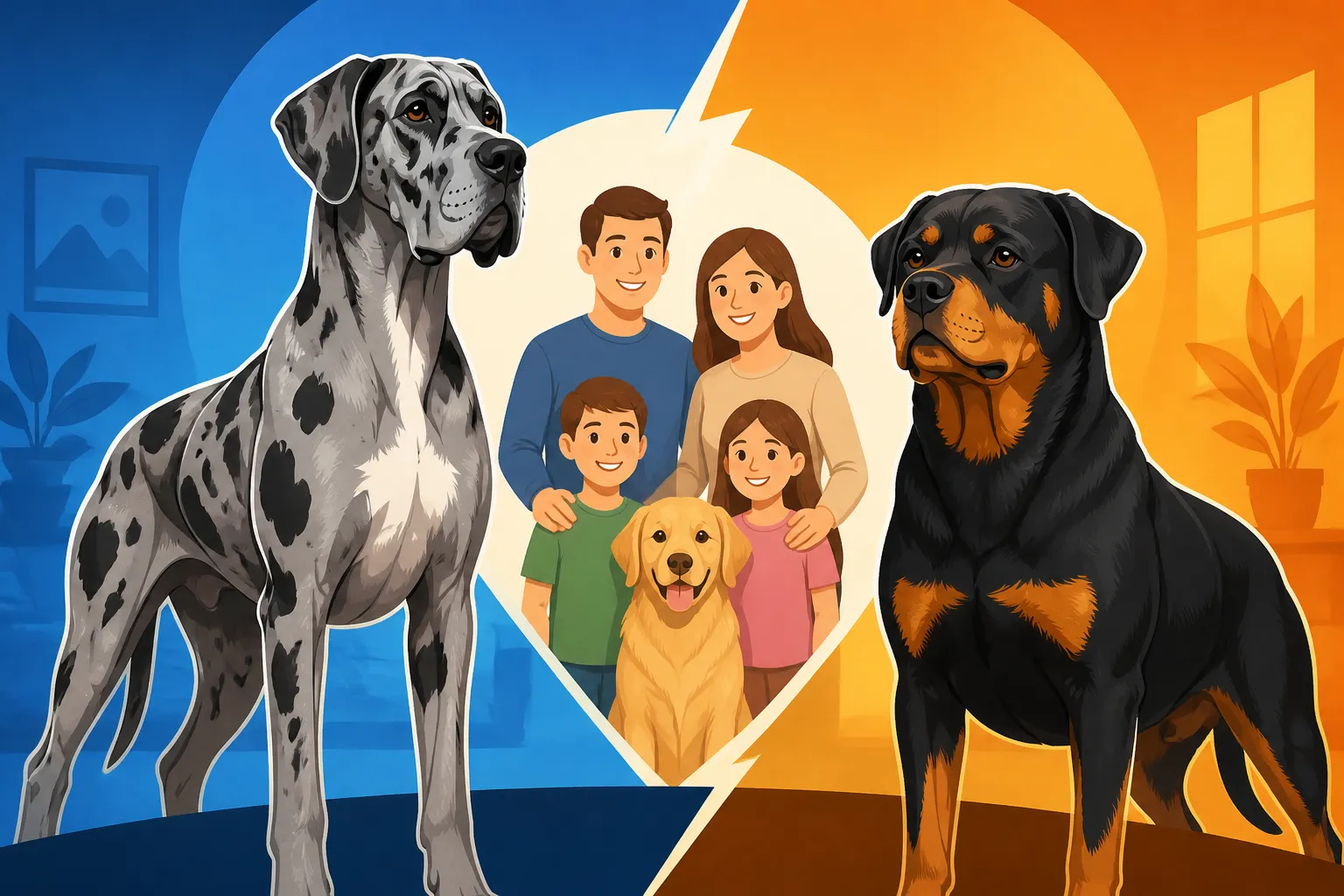
Choosing a family dog is one of the biggest decisions you'll make, and when you're looking at large breeds, the stakes feel even higher. Many families find themselves torn between the majestic Great Dane and the powerful Rottweiler, both incredible dogs in their own right, but with distinct temperaments, needs, and challenges. This guide is here to help you navigate those differences, understand the nuances of each breed, and ultimately decide which gentle giant (or powerful protector) is the right fit for your unique family dynamic and lifestyle.
Understanding the Core Temperament: Gentle Giant vs. Devoted Guardian
When you're comparing a Great Dane and a Rottweiler for a family home, you're looking at two very different temperaments, even though both are loyal and loving to their own people. It's not about one being "better" than the other, but about which personality meshes best with your household and experience level. Their inherent dispositions significantly influence how they interact with children, strangers, and other pets, and understanding these traits is paramount before bringing either magnificent breed into your life.
The Great Dane: The "Apollo of Dogs"
The Great Dane truly earned its nickname, the "gentle giant." These dogs are renowned for their sweet, affectionate nature, often believing they are lap dogs despite their enormous size. They thrive on companionship and want nothing more than to be a part of their human family's everyday activities. Their desire to be close to their people means they often lean against you, seeking comfort and connection. While their size can be intimidating, their demeanor is usually calm and patient, making them surprisingly good with well-behaved children who understand how to interact respectfully with a large dog. You can learn more about The Gentle Great Dane Temperament and Its Limits to understand their boundaries.
However, their sheer size means that even an accidental bump can be significant. A wagging tail at full force can clear a coffee table, and a playful jump can easily knock over a small child or an unsuspecting adult. This isn't out of malice, but simply due to their immense physicality. They are generally not aggressive, but their protective instincts can kick in if they perceive a threat to their family. They tend to be more reserved with strangers than, say, a golden retriever, often taking a moment to assess new people before offering a friendly sniff or a lean.
The Rottweiler: Confident and Protective
Rottweilers, on the other hand, carry a more serious and confident air. Bred for herding and guarding, they possess a natural protective instinct that is deeply ingrained. To their family, they are incredibly devoted, affectionate, and can be surprisingly silly and playful, especially with children they've been raised with. They form strong bonds and crave leadership and consistency from their owners. A Rottweiler loves to be involved in family life but typically expresses affection through calm proximity rather than the constant "velcro" nature of a Great Dane.
Their confidence, however, can translate into wariness or even suspicion of strangers. This isn't aggression, but a deep-seated desire to protect their home and people. Early and extensive socialization is absolutely critical for a Rottweiler to learn appropriate responses to new people, places, and situations. Without it, their natural guarding tendencies can become problematic. For families, this means being diligent about introductions and ensuring that children are taught to respect the dog's space and boundaries, as a Rottweiler's sheer power demands a discerning approach. They are very much a "my family" kind of dog, and while they can be accepting of others, their loyalty is fiercely directed inward.
Training and Socialization Needs: Laying the Foundation for a Well-Adjusted Dog
Both Great Danes and Rottweilers are powerful breeds that must receive consistent, early, and ongoing training and socialization. This isn't just about good manners; it's about safety for them, your family, and the public. Imagine trying to control a fully grown, unmannered Great Dane or Rottweiler when they decide to pull on the leash or jump on a visitor. It's not just difficult; it's practically impossible and potentially dangerous.
The Imperative of Early Training for Great Danes
For Great Danes, training needs to start the minute they come home. Those cute, clumsy puppy behaviors, like jumping up or playfully mouthing, quickly become monumental problems when the puppy weighs 150 pounds. Teaching a Great Dane to understand basic commands like "sit," "stay," "leave it," and a solid recall is non-negotiable. Furthermore, teaching them not to jump up on people is essential for the safety of guests, especially children or the elderly. You can find excellent resources on Stopping a Great Dane Jumping Up on People.
Their sensitive nature means they respond best to positive reinforcement methods. Harsh corrections can easily make a Great Dane shut down or become fearful. Instead, focus on rewarding desired behaviors with treats, praise, and toys. Socialization is equally important; exposing your Great Dane puppy to a wide variety of sights, sounds, people, and other calm, vaccinated dogs will help them grow into a confident, well-adjusted adult. Without proper socialization, some Great Danes can become anxious or timid, which, combined with their size, can lead to undesirable reactions. Even selecting large breed-appropriate toys from a place like Chewy can be part of their early positive experiences.
Rottweiler Training: Leadership and Consistency
Rottweilers are highly intelligent and eager to please their chosen leader, but they also possess a strong will. This means their training must be firm, consistent, and confident, without being harsh or physically punitive. They need an owner who can establish clear boundaries and expectations from day one, acting as a benevolent leader rather than a dictator. Basic obedience is fundamental, but a Rottweiler benefits immensely from advanced obedience, canine good citizen classes, or even dog sports like Schutzhund or agility. The Manners a Great Dane Needs Before It Grows principles apply broadly to any large breed, including Rottweilers – early and consistent guidance is key.
Socialization for a Rottweiler is perhaps even more critical than for a Great Dane due to their guarding instincts. They need to learn that new people and situations aren't threats unless proven otherwise. Puppy classes, supervised exposure to various environments, and positive interactions with a diverse group of people are vital. A well-socialized Rottweiler is a confident, calm, and accepting companion, while a poorly socialized one can be fearful, reactive, or overly protective. This is a breed that truly reflects the effort and dedication put into their upbringing, making training a lifelong commitment.
| Feature | Great Dane (Gentle Giant) | Rottweiler (Devoted Guardian) |
|---|---|---|
| Temperament | Affectionate, calm, patient, sensitive, prone to leaning, often sees itself as a lap dog. | Confident, protective, devoted, intelligent, can be serious, playful with family. |
| Family Role | Integral family member, loves to be with people. | Loyal protector, deep bond with family, needs clear leadership. |
| Strangers | Reserved, assesses new people, usually accepts. | Wary, discerning, strong guarding instinct, needs careful introductions. |
| Children | Generally good with respectful children, but size can lead to accidental bumps. | Excellent with children raised with, needs supervision with new kids due to power. |
| Training Needs | Essential from day one, positive reinforcement, focus on manners due to size. | Critical, consistent, firm, confident leadership, highly intelligent, thrives on mental stimulation. |
| Socialization | Very important to build confidence and positive interactions. | Absolutely essential and extensive to manage natural guarding instincts. |
| Energy Level | Moderate, bursts of play, needs daily walks but not extreme exercise. | Moderate to high, needs daily exercise and mental challenges. |
| Lifespan | Shorter (7-10 years average). | Moderate (8-10 years average). |
| Common Health | Bloat, DCM, Wobbler's, bone cancer. | Hip/elbow dysplasia, certain cancers, heart issues (SAS). |
Physicality and Lifestyle Demands: Space, Exercise, and Environment
The sheer physical presence of both a Great Dane and a Rottweiler dictates specific lifestyle requirements. These aren't breeds that can be casually added to just any home. Their size, energy levels, and grooming needs, while different, both demand thoughtful consideration regarding your living situation and daily routine.
Living with a Great Dane: More Space Than You Think
Despite their enormous stature, Great Danes are often described as being "lazy" or "couch potatoes" indoors. They are perfectly content to lounge on the sofa with their humans, as long as they get their daily dose of moderate exercise. This typically means a couple of good walks a day and some supervised playtime. However, their size means they need space to move around without knocking things over or tripping people. A studio apartment might be a tight squeeze, not because of their energy, but simply their volume. You'll need extra-large everything: dog beds, crates, bowls, and even finding toys tough enough not to be destroyed immediately. We often joke that a trip to Chewy is an entire budget line item!
Regarding exercise, it's crucial to understand their delicate growth period. Over-exercising a Great Dane puppy can lead to serious orthopedic problems later in life. Forced, strenuous exercise like long runs or intense agility should be avoided until they are fully grown, which can be up to 18-24 months. Their huge frames need time to develop properly. This topic is covered in depth in Exercise Limits While a Great Dane Is Still Growing. While adult Danes enjoy a good hike, they aren't generally built for endurance sports. Their short coats mean they can get cold in winter and are prone to sunburn, especially lighter colored Danes, so weather considerations are important.
The Active Lifestyle of a Rottweiler
Rottweilers are robust, muscular dogs that, while they enjoy lounging with their family, generally have a higher drive and need for both physical and mental stimulation than a Great Dane. They need regular, vigorous exercise to keep them healthy and happy. Daily long walks, runs, hikes, or engaging in dog sports are excellent ways to meet their needs. A bored Rottweiler, especially a young one, can quickly become destructive or develop behavioral issues. Their powerful jaws and intelligence mean they need durable chew toys and puzzle feeders to keep their minds occupied.
Beyond physical exercise, Rottweilers thrive on having a "job" to do. This could be anything from advanced obedience training, scent work, or even just carrying a backpack on walks. Their short, dense coats are relatively low-maintenance, requiring only weekly brushing, but they do shed. Like Great Danes, they are susceptible to heatstroke in extreme temperatures, so exercise needs to be managed accordingly. They adapt well to various living situations as long as their exercise and mental stimulation needs are met, but a secure yard for safe play is always a bonus.
Health and Lifespan Considerations: The Realities of Giant Breeds
One of the most significant differences, and perhaps the most heartbreaking, between a Great Dane and a Rottweiler, particularly for prospective owners, lies in their breed-specific health concerns and lifespan. Both breeds are prone to serious health issues, but the type and prevalence vary, profoundly impacting the emotional and financial commitment required.
The Shorter Lifespan of a Great Dane
It's a tough truth that Great Danes, like many giant breeds, have a notoriously short lifespan, often averaging only seven to ten years. This is a crucial factor for any family to consider. Common and often devastating health issues include:
- Bloat (Gastric Dilatation-Volvulus – GDV): This is perhaps the most feared condition for Great Dane owners. Their deep chests make them highly susceptible to their stomach twisting, which is a life-threatening emergency. Knowing Bloat in a Great Dane and the One in Three Odds is vital. Many owners opt for preventive stomach tacking surgery (gastropexy) to reduce the risk of torsion.
- Dilated Cardiomyopathy (DCM): This heart muscle disease causes the heart to enlarge and weaken, often leading to heart failure. Regular cardiac screening is essential.
- Wobbler's Syndrome (Cervical Spondylomyelopathy): A neurological condition affecting the neck and spine, causing an unsteady gait and incoordination. Early signs can be subtle, such as The First Wobbler Signs in a Great Dane.
- Bone Cancer (Osteosarcoma): Great Danes have a higher incidence of this aggressive cancer. Understanding Bone Cancer in a Great Dane is unfortunately a part of responsible ownership.
The potential for these severe health issues means that vet bills can be substantial, often requiring specialized care. Investing in pet insurance specifically designed for large breeds like Great Danes is highly recommended. For instance, finding a comprehensive plan through a provider you might explore on Chewy can alleviate some financial burden. It is critical to consider Insuring a Great Dane Against Bloat and Heart Bills from the earliest possible age.
Rottweiler Health and Longevity
Rottweilers generally have a slightly longer average lifespan than Great Danes, typically ranging from eight to ten years, though some can live longer. They are also prone to a different set of significant health concerns:
- Hip and Elbow Dysplasia: Like many large breeds, Rottweilers are predisposed to these genetic joint conditions, which can lead to arthritis and pain. Responsible breeders will screen their breeding stock.
- Certain Cancers: Rottweilers have a higher incidence of osteosarcoma (like Great Danes), lymphoma, and hemangiosarcoma.
- Subaortic Stenosis (SAS): A congenital heart condition where there's a narrowing below the aortic valve, making the heart work harder. Screening for this is important.
- Eye Problems: Conditions like progressive retinal atrophy can also occur.
While their lifespan might be a little longer, the potential for expensive health issues remains very real. Again, careful selection of a reputable breeder who performs extensive health clearances on their breeding dogs is paramount for both breeds. Consistent veterinary care, a high-quality diet, and maintaining a healthy weight are vital to maximizing their health and longevity. Both breeds will require significant investment in time, care, and finances, and understanding these realities upfront is crucial for any family.
Conclusion: Which Giant is Right for Your Family?
Deciding between a Great Dane and a Rottweiler as a family dog truly comes down to understanding what each breed brings to the table and how that aligns with your family's experience, lifestyle, and willingness to commit. Both are profoundly loyal and loving dogs, but their needs and temperaments diverge in important ways.
If your family is looking for an affectionate, often goofy, "velcro" dog who thrives on constant companionship and is generally patient and tolerant, a Great Dane might be your perfect match. You'll need to be prepared for their immense size, the accidental bumps, the copious drool (sometimes), and the heartbreaking reality of their shorter lifespan and propensity for serious health conditions. Your home will need to accommodate their sheer physical presence, and your commitment to early, gentle training is paramount.
On the other hand, if you're an experienced dog owner, prepared to provide strong, consistent leadership and committed to extensive training and socialization, a Rottweiler could be an incredible addition. They offer unparalleled devotion and protective instincts, thrive on having a job to do, and can be wonderfully playful and affectionate with their inner circle. You'll need to manage their powerful guarding instincts responsibly and ensure they receive ample mental and physical stimulation to prevent boredom and destructive behaviors. While their lifespan is slightly longer, they come with their own set of significant health concerns.
Ultimately, neither breed is an "easy" dog, and both require significant investment of time, money, and love. Meet adult dogs of both breeds if you can, talk to owners, and be brutally honest about your lifestyle, experience, and what you can genuinely offer. Whichever you choose, bringing a giant breed into your home is a commitment to a magnificent companion who will fill your life with love, laughter, and an undeniable presence.
Disclaimer
This article is for general informational purposes only and does not constitute professional advice. Laws, prices and regulations vary by location and change over time. Consult a qualified professional for guidance on your specific situation.