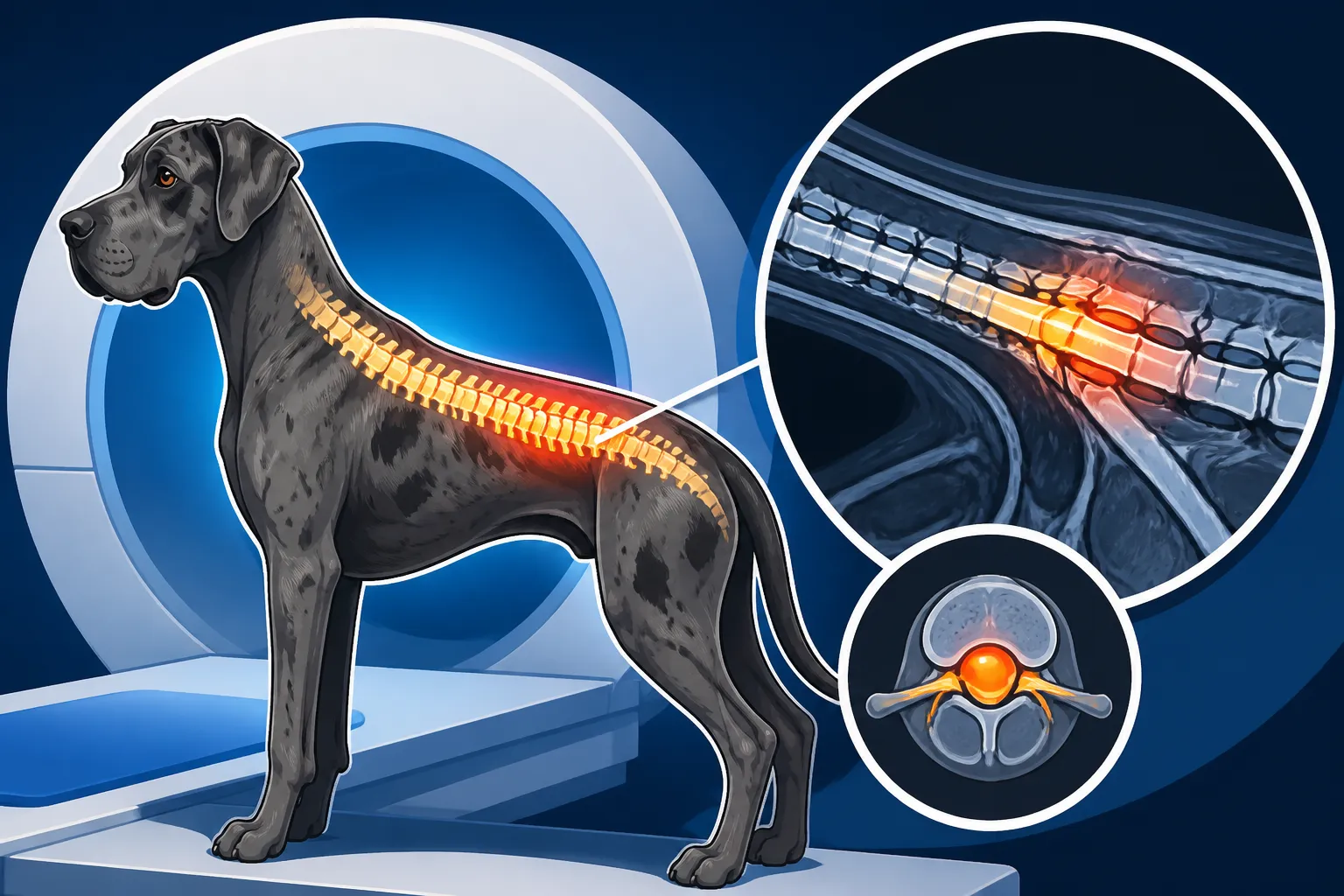
What Shows Up on a Great Dane Spinal Scan
When your majestic Great Dane starts showing unusual signs – maybe a subtle stumble, a reluctance to move, or a general awkwardness in their gait – a wave of anxiety can crash over you. These gentle giants are prone to certain spinal conditions, and figuring out what’s truly going on beneath that beautiful coat can feel like an impossible puzzle. This guide will meticulously break down what veterinarians look for and what shows up on a Great Dane spinal scan, helping you understand the complex world of canine spinal diagnostics.
Understanding Why a Spinal Scan is Needed for Your Great Dane
It’s never easy seeing your big, boisterous Great Dane suddenly hesitant or in pain. Their sheer size and weight can amplify even minor issues, turning what might be a nuisance in a smaller dog into a significant mobility challenge for them. When a Great Dane begins to show neurological signs or persistent pain that can't be explained by a simple sprain, your veterinarian will often suggest a spinal scan to peer inside and understand the root cause. This isn't a quick or cheap process, but it's crucial for accurate diagnosis and effective treatment.
Initial Signs That Spark Concern
Observing the earliest signs of a spinal issue in a Great Dane can be tricky because their stoic nature often means they hide discomfort until it's quite advanced. However, there are some tell-tale symptoms that should always prompt an immediate veterinary visit. You might notice a change in their usual enthusiastic greeting, perhaps they seem wobbly or unwilling to jump up on furniture they used to scale with ease.
One of the most common early indicators is a change in their gait, especially in their back legs. You might see a subtle dragging of their paws, or even notice that they are scuffing their back nails on walks. This can progress to a more obvious uncoordinated movement, often described as an ataxia, where they look like they’re walking drunk. Sometimes, owners report their dog seems to be A Great Dane That Stumbles on Its Back Legs or has difficulty placing their feet correctly. They might struggle to get up from a lying position, or even seem reluctant to turn their head, yelp when picked up, or show signs of intense neck pain, which can be one of The First Wobbler Signs in a Great Dane. These subtle shifts, though easy to dismiss as just an "off day," are often the first whispers of a larger problem brewing in their spine.
When Your Vet Recommends Advanced Imaging
After a thorough physical examination, which usually includes checking their reflexes, assessing their range of motion, and palpating their spine for pain, your regular vet might suspect a serious spinal or neurological problem. At this point, they'll likely recommend advanced imaging to get a definitive diagnosis. It’s important to understand that while your family vet is wonderful, spinal issues in Great Danes often require the expertise of a veterinary neurologist, who specializes in the nervous system.
Your vet will explain why an ordinary X-ray might not be enough and why a more sophisticated scan is necessary. This recommendation often comes with a conversation about the costs involved, as these procedures can be quite expensive. This is where having pet insurance like Healthy Paws can truly make a difference, helping to cover the significant expenses associated with advanced diagnostics and specialist care. Without proper imaging, treating a spinal issue is largely guesswork, and with a breed as large and sensitive as a Great Dane, precision is absolutely key to their comfort and recovery.
The Different Types of Spinal Scans and What They Reveal
When your Great Dane is showing signs of spinal trouble, your vet has several diagnostic tools at their disposal, each offering a different level of detail and insight into what might be going on. It's not a one-size-fits-all situation; the choice of scan often depends on the specific symptoms, the suspected condition, and what the initial physical exam suggests. Understanding the differences between these imaging techniques can help you comprehend why your vet recommends one over another.
X-rays and Their Limitations for Spinal Issues
X-rays, also known as radiographs, are usually the first step in investigating lameness or pain. They’re readily available in most veterinary clinics and can quickly provide images of your Great Dane's bones. For spinal issues, X-rays are excellent for revealing obvious bone abnormalities, such as fractures, severe arthritis, or some congenital malformations of the vertebrae. They can also show changes in the spaces between the vertebrae, which might hint at disc issues or instability.
However, the major limitation of X-rays when it comes to spinal problems is their inability to visualize soft tissues clearly. The spinal cord itself, intervertebral discs, ligaments, and nerves are not visible on a standard X-ray. This means while an X-ray might show that the bones are generally okay, it can't tell you if a bulging disc is pressing on the spinal cord, or if there's inflammation or a tumor within the soft tissues. For a breed like a Great Dane, where conditions like Why Great Dane Neck Vertebrae Pinch the Cord are common, relying solely on X-rays can lead to missed diagnoses, necessitating further, more detailed imaging if the initial findings don't match the clinical signs.
Myelography: Enhancing X-ray Detail
When X-rays aren't enough, but a full MRI isn't immediately accessible or feasible, a myelogram might be recommended. This procedure involves injecting a special contrast dye into the space around the spinal cord (the subarachnoid space). The dye then outlines the spinal cord on an X-ray, allowing the veterinarian to see any compressions or narrowing of the spinal canal that might be caused by disc herniations, tumors, or other lesions.
A myelogram provides significantly more information about soft tissue impingement than a plain X-ray. It can help pinpoint the exact location of a spinal cord compression, which is vital for surgical planning. However, it's not without its drawbacks. It's an invasive procedure that requires general anesthesia and carries a small risk of complications, such as seizures or allergic reactions to the contrast dye. While it offers a clearer picture than standard X-rays, it still doesn't provide the same level of detailed soft tissue visualization as an MRI, especially for subtle inflammatory changes or intrinsic spinal cord lesions.
CT Scans: Detailed Bone and Soft Tissue Views
Computed Tomography, or CT scans, offer a more advanced view than traditional X-rays. A CT scanner takes multiple X-ray images from different angles and then uses a computer to create cross-sectional "slices" of the body. This allows for a much more detailed examination of bone structures, and it can also visualize soft tissues with greater clarity than a plain X-ray. For spinal issues in Great Danes, CT scans are excellent for identifying bone tumors, fractures, spinal deformities, and calcified disc herniations.
CT scans are quicker than MRIs, which can be an advantage when anesthesia time is a concern. They provide excellent bony detail and can be very useful for assessing spinal stability and planning complex orthopedic surgeries. However, like X-rays, they are not as proficient as MRIs at detecting subtle soft tissue abnormalities, such as non-calcified disc herniations, spinal cord swelling, or certain types of tumors that might not have a strong bony component. For Imaging a Great Dane Neck for Wobblers, a CT scan can be very helpful for visualizing the bony canal and any compressions, but it might still miss some of the more nuanced soft tissue changes associated with the condition.
MRI Scans: The Gold Standard for Soft Tissue
Magnetic Resonance Imaging, or MRI, is widely considered the gold standard for diagnosing spinal cord and nerve root diseases in dogs. Unlike X-rays or CT scans, MRI uses a powerful magnetic field and radio waves to create highly detailed images of both bony structures and, crucially, soft tissues. This means an MRI can clearly show the spinal cord itself, nerve roots, intervertebral discs, ligaments, and surrounding muscles.
For a Great Dane, an MRI can detect subtle disc herniations, spinal cord compression, inflammation within the spinal cord, tumors (even small ones), cysts, and other intrinsic lesions that would be invisible on other scans. It's particularly invaluable for diagnosing conditions like Wobbler Syndrome, where soft tissue compression can play a significant role. The downside is that MRI is expensive, requires specialized equipment, and necessitates a longer period of general anesthesia. However, for a definitive diagnosis of complex neurological problems, especially those involving the delicate structures of the spinal cord, the MRI provides unparalleled detail, giving you and your vet the most complete picture possible. When faced with the cost of these essential diagnostics, comprehensive pet insurance plans, such as those offered by Healthy Paws, can greatly alleviate the financial burden, ensuring your Great Dane gets the best possible care without undue stress on your wallet.
Here's a quick comparison of the different spinal scan types:
| Scan Type | Primary Use | What It Reveals Best | Limitations | Anesthesia Required? | Cost (Relative) |
|---|---|---|---|---|---|
| X-ray | Initial bone assessment | Fractures, severe arthritis, gross bone deformities | Poor soft tissue detail (spinal cord, discs, nerves) | Usually not | Low |
| Myelography | Spinal cord compression | Location of spinal cord impingement by contrast dye | Invasive, potential side effects, moderate soft tissue detail | Yes | Medium |
| CT Scan | Detailed bone, calcified discs | Bone tumors, fractures, bony deformities, calcified discs | Less detailed for soft tissue (spinal cord, non-calcified discs) | Yes | Medium to High |
| MRI Scan | Soft tissue, spinal cord issues | Spinal cord compression, non-calcified discs, tumors, inflammation, nerve roots | High cost, longer anesthesia time, less ideal for extreme bony detail | Yes | High |
Common Spinal Conditions Seen on Great Dane Scans
Great Danes, with their impressive size and rapid growth, are unfortunately predisposed to several specific spinal conditions. These conditions often manifest with neurological symptoms and can significantly impact their quality of life. Understanding what these conditions look like on a spinal scan is key to a proper diagnosis and management plan.
Wobbler Syndrome Cervical Spondylomyelopathy
Wobbler Syndrome, or Cervical Spondylomyelopathy (CSM), is a condition particularly prevalent in giant breeds like Great Danes. It's essentially a compression of the spinal cord and/or nerve roots in the neck (cervical spine). This compression can be caused by various factors, often a combination, and these different causes will appear distinctly on a spinal scan.
On a CT scan, veterinarians might see bony abnormalities such as malformed vertebrae, narrowing of the spinal canal, or bone spurs (osteophytes) protruding into the space where the spinal cord resides. Sometimes, the vertebrae themselves might be unstable, leading to a dynamic compression that only occurs when the neck is in certain positions, which can be trickier to capture but is often indicated by changes in the facet joints or subtle misalignments. An MRI, however, provides the most comprehensive view. It will not only show these bony changes but, crucially, will reveal the actual spinal cord compression and any associated damage or inflammation within the spinal cord itself. You might see a flattened or thinned spinal cord at the site of compression, or areas of increased signal intensity within the cord, indicating fluid accumulation (edema) or even long-term damage (myelomalacia). Diagnosing Wobblers accurately means understanding What Shows Up on a Great Dane Spinal Scan with enough detail to differentiate between the various forms of the condition, as this dictates Whether Wobbler Surgery Suits a Great Dane or if medical management with Steroids and Crate Rest for a Wobbler Dane is more appropriate.
Intervertebral Disc Disease IVDD
While more common in chondrodystrophic (long-backed, short-legged) breeds like Dachshunds, Great Danes can also suffer from Intervertebral Disc Disease (IVDD). This condition involves the degeneration and herniation of the shock-absorbing discs between the vertebrae. In Great Danes, it's often a Type II (protrusion) disc disease, where the outer fibrous layer of the disc gradually bulges, rather than ruptures suddenly (Type I).
On a CT scan, a calcified or severely bulging disc might be visible, impinging on the spinal canal. However, it's the MRI that truly shines for IVDD diagnosis. An MRI can clearly show the disc material bulging into the spinal canal, pressing on the spinal cord. It can differentiate between a soft, non-calcified disc extrusion and a more chronic, fibrotic protrusion. The scan will show the extent of the compression and, just as with Wobbler Syndrome, any changes or damage to the spinal cord itself, such as swelling or inflammation. Knowing the exact location and nature of the disc lesion is critical for surgical intervention, especially if the dog is experiencing severe pain or neurological deficits that might benefit from decompression surgery.
Other Less Common Spinal Findings
Beyond Wobbler Syndrome and IVDD, other conditions can also appear on a Great Dane spinal scan, though they are generally less common. These include spinal tumors, either originating from the bone (e.g., osteosarcoma, which is a concern for giant breeds) or from the nervous tissue itself. A scan would reveal abnormal masses, either enhancing with contrast if a tumor is present, or showing irregular bone destruction in the case of a bony tumor.
Infections, such as discospondylitis (an infection of the intervertebral disc and adjacent vertebrae), can also be seen. Scans would show irregular bone destruction, inflammation, and possibly abscess formation. Traumatic injuries, like vertebral fractures or luxations (dislocations), would be clearly visible on CT scans, providing crucial details for stabilization and repair. Vascular issues, such as fibrocartilaginous emboli (FCEs), though often diagnosed based on acute clinical signs, may show subtle changes within the spinal cord on an MRI due to a lack of blood supply. Each of these conditions presents unique challenges, and the detailed imaging from a spinal scan is indispensable for distinguishing them and guiding the most appropriate course of action for your Great Dane.
Interpreting the Results and Next Steps
Getting the results of a Great Dane spinal scan can be a nerve-wracking experience. You’ve put your trust, and a significant amount of money (which is where a good pet insurance plan like Healthy Paws becomes invaluable for covering such specialized diagnostics), into finding answers. The images, often complex and full of medical jargon, can be intimidating. This is why having a specialist to walk you through everything is so important.
Working with Your Veterinary Neurologist
After the scan is complete, a board-certified veterinary neurologist or radiologist will meticulously review the images. They are trained to identify even the most subtle abnormalities that might be missed by a general practitioner. They will then sit down with you to explain the findings in detail, using the images to illustrate what they’ve discovered. This discussion will cover the diagnosis, the severity of the condition, and what it means for your Great Dane’s prognosis.
They’ll explain if the findings are consistent with, for example, a severe case of Wobbler Syndrome, or perhaps a disc extrusion causing significant spinal cord compression. They’ll also discuss whether these findings fully explain your dog's clinical signs, or if further investigation might be warranted. This is your opportunity to ask every question you have, no matter how small. Understanding their expert interpretation is crucial, as it lays the groundwork for all subsequent decisions regarding your Great Dane’s care. Remember, Paying for a Great Dane Wobbler Workup can be substantial, so ensure you leverage your insurance and ask for clear explanations of every charge.
Treatment Options Based on Scan Findings
The treatment plan will directly stem from what the spinal scan reveals. If the scan shows a severe spinal cord compression, especially with significant neurological deficits, surgery might be recommended to decompress the spinal cord. This could involve procedures like ventral slot decompression or a dorsal laminectomy for disc issues, or various stabilization techniques for Wobbler Syndrome. Surgical options for specific conditions, such as Decompressing a Great Dane Neck for Wobblers, are complex and require careful consideration of risks and benefits.
Alternatively, if the compression is mild, or if surgery isn't an option due to other health concerns or owner preference, medical management may be pursued. This often includes anti-inflammatory medications, pain relief, and strict rest. Physical rehabilitation, including hydrotherapy and therapeutic exercises, can also play a vital role in recovery and long-term management, helping to strengthen supporting muscles and improve mobility. No matter the path, aftercare, including potential Rehabilitation Costs After Great Dane Surgery, is an important consideration. Your veterinary neurologist will work with you to create a tailored treatment plan, taking into account the scan results, your Great Dane's overall health, and your family's circumstances, always striving for the best possible outcome for your beloved companion.
Disclaimer
Please remember that this article is intended for informational purposes only and should not be taken as professional veterinary advice. Always consult with a qualified veterinarian or veterinary specialist for any health concerns or before making any decisions regarding your Great Dane's health and treatment.