Whether Wobbler Surgery Suits a Great Dane
It’s utterly heartbreaking to watch your once-graceful Great Dane begin to stumble, drag their feet, or struggle with their balance. When your veterinarian brings up the term "Wobbler Syndrome" and then introduces the complex decision of surgery, it’s completely natural to feel overwhelmed, confused, and deeply worried about making the best choice for your beloved giant. This guide aims to thoroughly explore whether Wobbler surgery is a suitable path for a Great Dane, examining the intricacies of the condition, surgical options, recovery, and what life looks like afterward, helping you navigate this challenging time.
Understanding Wobbler Syndrome in Great Danes
Wobbler Syndrome, officially known as cervical spondylomyelopathy (CSM), is a neurological condition that disproportionately affects large and giant breed dogs, with Great Danes being particularly susceptible. It's not just a minor ache or stiffness; it's a serious compression of the spinal cord and/or nerve roots in the neck, leading to significant coordination problems and pain. The frustration of seeing your dog lose their confident stride is immense, especially in a breed known for its majestic presence.
What Causes Wobbler Syndrome in Great Danes
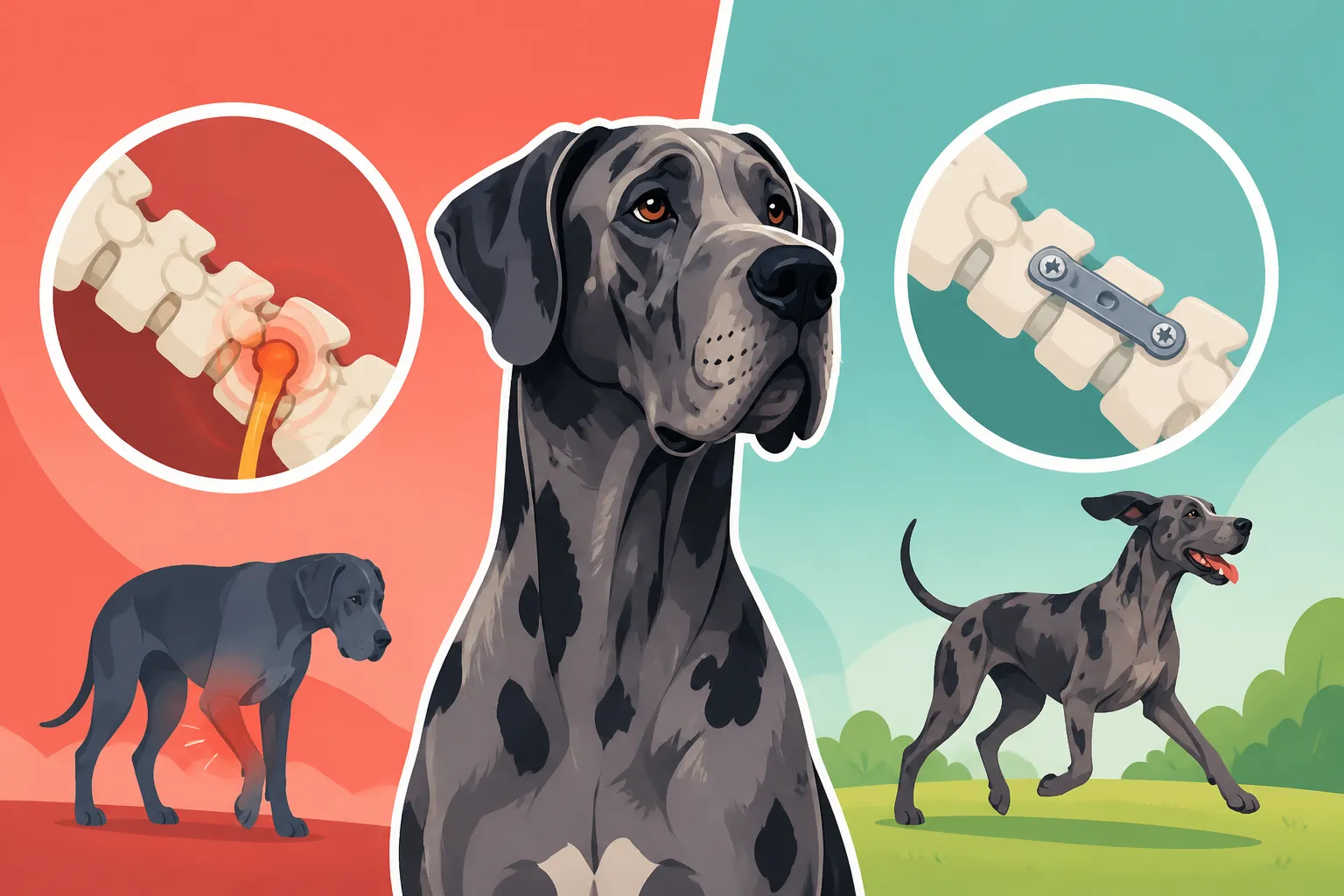
The root cause of Wobbler Syndrome in Great Danes is often a combination of genetic predisposition and rapid growth, leading to structural abnormalities in the cervical (neck) vertebrae. Imagine the intricate series of bones and discs that protect the spinal cord, allowing for smooth, flexible movement. In a Great Dane with Wobblers, these structures can develop abnormally, narrowing the spinal canal and putting pressure on the delicate spinal cord. This can manifest as disc herniations, bony changes on the vertebrae themselves, or a thickening of the ligaments that support the spine. Specifically, you might hear vets talk about dynamic compression, which means the compression gets worse with certain neck movements, or static compression, which is constant. This unique vulnerability is why you hear so much about the condition in our breed; it's a problem tied directly to Why Great Dane Neck Vertebrae Pinch the Cord and their massive frame.
Recognizing the Signs of Wobbler Syndrome
The signs of Wobbler Syndrome can be subtle at first, gradually worsening over time, which can be incredibly frustrating for owners trying to pinpoint what’s wrong. You might notice your Great Dane starting to drag their back paws, leading to Scuffed Back Nails on a Great Dane. They might appear uncoordinated, almost as if they're walking on a boat, hence the term "wobbler." Beyond the hind limbs, the front limbs can also be affected, leading to a short, stiff gait. Other common indicators include a reluctance to move their head or neck, a lowered head carriage, difficulty getting up from a lying position, and general weakness. Some dogs experience significant neck pain, yelping when touched or when trying to look up or down. If you're noticing any of these changes, even mild ones, it's crucial to consult your vet. Early detection can sometimes lead to better outcomes, whether through surgical or conservative management. For a more detailed breakdown of what to watch for, check out The First Wobbler Signs in a Great Dane.
Diagnosing Wobbler Syndrome
The path to a definitive Wobbler Syndrome diagnosis can be a lengthy and often costly journey, adding to the stress you're already feeling. It requires more than just a physical exam; it demands advanced imaging to truly see what’s happening within the neck.
The Diagnostic Process
When you first bring your Great Dane in with suspected Wobbler signs, your vet will perform a thorough physical and neurological exam. This involves checking reflexes, gait, proprioception (awareness of limb position), and palpating the neck for pain or stiffness. If Wobbler Syndrome is suspected, the next step almost always involves specialized imaging. Plain X-rays can give some clues, but they often aren't enough to definitively diagnose spinal cord compression. The gold standard typically involves an MRI (Magnetic Resonance Imaging) or CT (Computed Tomography) scan, often combined with a myelogram, where a dye is injected into the spinal canal to highlight areas of compression. These tests are vital for confirming the diagnosis, localizing the exact site(s) of compression, and determining the severity. This process can be quite involved, often requiring general anesthesia, and it's a significant financial undertaking. The financial strain of these initial diagnostics is one area where having a robust pet insurance plan, such as those offered by Healthy Paws, can be incredibly beneficial, helping to cover the substantial costs involved in getting to the bottom of your dog's symptoms. When it comes to understanding the specifics of these tests, you might find more information in resources like Imaging a Great Dane Neck for Wobblers.
Interpreting Diagnostic Results
Once the imaging is complete, your vet, often in consultation with a veterinary neurologist, will interpret the results. They'll be looking for several key indicators of Wobbler Syndrome, such as disc protrusions, vertebral canal stenosis (narrowing of the spinal canal), malformations of the vertebrae, or thickening of the ligamentum flavum. The scans will clearly show What Shows Up on a Great Dane Spinal Scan, pinpointing the precise location and extent of the spinal cord compression. This information is critical because it dictates the treatment options available. For instance, a single, focal area of compression might be more amenable to certain surgical techniques than multiple sites of compression spread across several vertebrae. The severity of the compression, as seen on the imaging, will also correlate with the neurological signs your Great Dane is exhibiting. Understanding these results is paramount to deciding on the best course of action, whether it's surgery or a more conservative approach.
Surgical Options for Wobbler Syndrome
When conservative management isn't enough, or if the neurological deficits are severe and rapidly progressing, surgery often becomes the primary consideration. It’s a huge decision, fraught with anxiety, as it involves a major operation on your dog’s spine.
Types of Surgical Procedures
There isn't a single "Wobbler surgery"; rather, there are several techniques, each with its own benefits and risks, chosen based on the specific type and location of compression.
- Ventral Slot Decompression: This is a common procedure where the surgeon approaches the spine from the underside of the neck. A small window, or "slot," is drilled into the affected vertebral bodies to remove disc material or bone spurs that are compressing the spinal cord. It's often used for disc-associated Wobbler Syndrome.
- Dorsal Laminectomy: This technique involves removing part of the vertebral arch from the top (dorsal side) of the spine to decompress the spinal cord. It's typically reserved for cases where the compression is dorsal or lateral.
- Distraction-Stabilization Procedures: These surgeries aim not only to decompress but also to stabilize the cervical spine. This might involve fusing vertebrae together using bone grafts, screws, or plates, or inserting implants to distract (separate) the vertebrae, thereby widening the spinal canal. Examples include various types of "fusion" surgeries or the use of PEEK (Polyetheretherketone) cages. This approach is often favored for dynamic compression or when there's significant instability.
- Fenestration: In some cases of less severe disc herniation, a small window might be created in the disc to relieve pressure, although this is less common for severe Wobbler Syndrome in Great Danes.
The choice of procedure will depend entirely on your Great Dane's specific diagnosis, the surgeon's expertise, and the available facilities. Your veterinary neurologist or orthopedic surgeon will discuss the most appropriate option based on the detailed diagnostic imaging.
The Goals of Surgery
The primary goal of Wobbler surgery is to relieve the pressure on the spinal cord and/or nerve roots, thereby improving neurological function and reducing pain. By decompressing the spinal cord, the hope is to halt the progression of neurological deficits, and in many cases, improve the dog's coordination, gait, and overall quality of life.
It’s important to understand that surgery is not a magical fix that will restore your Great Dane to their youthful vigor instantly. While many dogs show significant improvement, complete recovery to a normal gait isn't always achieved. The extent of recovery depends on factors such as the duration and severity of the spinal cord compression prior to surgery, the degree of permanent nerve damage, and the success of the rehabilitation post-op. However, for many Great Danes, surgery offers the best chance at a pain-free life and improved mobility, preventing further deterioration.
Is Surgery the Right Choice for Your Great Dane?
Deciding whether to pursue Wobbler surgery for your Great Dane is one of the most agonizing choices an owner can face. It's a complex blend of medical considerations, financial realities, and emotional weight.
Factors Influencing the Decision
There are several critical factors to weigh when considering surgery:
- Severity of Neurological Signs: If your Great Dane's symptoms are severe, rapidly worsening, or causing significant pain, surgery often becomes a more pressing and viable option. Mild or slowly progressing cases might initially be managed with conservative treatments, which can include Steroids and Crate Rest for a Wobbler Dane, but surgery may be considered if they fail.
- Age and Overall Health: A younger, otherwise healthy Great Dane generally tolerates major surgery and anesthesia better than an older dog with other health issues. Remember, Why Anesthesia Costs More for a Great Dane due to their size and potential predispositions to conditions like DCM. A comprehensive pre-surgical workup is essential.
- Type of Compression: As discussed, the specific type and location of spinal cord compression (static vs. dynamic, disc vs. bone) will influence which surgical technique is most appropriate and, therefore, the potential success rate.
- Prognosis: Your veterinary surgeon will give you an honest assessment of the likely outcome. While many Great Danes improve with surgery, some cases are too advanced for full recovery, or carry a higher risk of complications.
- Financial Commitment: Wobbler surgery is expensive, encompassing not just the procedure itself but also extensive diagnostic imaging, post-operative medications, and potentially weeks or months of rehabilitation. Costs can easily run into the tens of thousands. This is another critical area where pet insurance like Healthy Paws can literally be a lifesaver. Planning for such emergencies with comprehensive coverage means you can focus on your dog's health rather than agonizing over the bill.
- Commitment to Post-Operative Care: The recovery period is lengthy and demanding, requiring strict rest, medication, and often intensive physical therapy. You need to be prepared for the time and effort involved in nursing your Great Dane back to health.
Potential Risks and Complications
No surgery is without risk, and spinal surgery on a giant breed dog carries its own set of potential complications:
- Anesthesia Risk: Great Danes, like other giant breeds, can have increased risks associated with general anesthesia due to their size and potential underlying health issues.
- Infection: Any surgical site is susceptible to infection, which can be particularly serious near the spine.
- Hemorrhage: Bleeding during or after surgery is a possibility.
- Further Neurological Deterioration: In some unfortunate cases, the surgery itself can cause further damage to the spinal cord, leading to worse neurological signs, or even paralysis. This is rare but a terrifying possibility.
- Implant Failure: If implants are used for stabilization, they can loosen or break, requiring further surgery.
- Lack of Improvement or Worsening: Despite a successful surgery, some dogs may not show significant improvement, or their condition might even worsen if the damage was too extensive or if new areas of compression develop.
- Recurrence: While the treated area might be decompressed, other areas of the spine can develop Wobbler Syndrome later, meaning the problem isn't always a one-time fix.
These risks underscore the importance of choosing a highly experienced veterinary surgeon and facility for such a complex procedure.
Non-Surgical Management Alternatives
For Great Danes with milder symptoms, or for those where surgery is not an option due to age, health, or financial constraints, conservative management is typically pursued. This involves a multi-pronged approach focused on reducing inflammation, managing pain, and supporting the dog’s mobility. Common strategies include:
- Medication: Non-steroidal anti-inflammatory drugs (NSAIDs) or corticosteroids are often prescribed to reduce inflammation and pain. Muscle relaxants might also be used.
- Activity Restriction: Strict rest, often involving crate rest or limited activity for several weeks, is crucial to prevent further injury and allow healing.
- Physical Rehabilitation: This can include hydrotherapy, therapeutic exercises, laser therapy, and acupuncture to strengthen muscles, improve balance, and maintain mobility.
- Supportive Devices: Harnesses or slings can help with mobility, especially for dogs struggling with their hindquarters. You might consider options like Supporting a Great Dane's Back End With a Sling to provide aid during walks or to assist them in getting up.
- Weight Management: Keeping a Great Dane at a healthy weight reduces stress on the spine and joints.
While conservative management can significantly improve comfort and quality of life for many dogs, it generally doesn't correct the underlying structural problems causing the compression. This means that Whether Great Dane Wobblers Get Worse over time is a real concern, and it may not prevent the progression of neurological deficits in the long run.
Life After Wobbler Surgery
Deciding on surgery is only half the battle; the recovery and ongoing care are just as critical, demanding immense dedication from you and your family.
Post-Operative Care and Recovery
The immediate post-operative period for Wobbler surgery is intensive. Your Great Dane will likely spend several days in the veterinary hospital for monitoring, pain management, and initial rehabilitation. Once home, the recovery truly begins:
- Strict Rest: This is paramount. For several weeks, your Great Dane will need strict activity restriction, often involving confined rest in a crate or small, easily managed space. Leash walks for potty breaks only are usually the rule. No jumping, running, or stair climbing. This period of quiet healing is essential for preventing complications and allowing the surgical site to stabilize.
- Medication: Pain relief, anti-inflammatory drugs, and sometimes muscle relaxants will be prescribed. Administering these on schedule is crucial for your dog's comfort and recovery.
- Wound Care: You'll need to monitor the surgical incision for any signs of infection or swelling.
- Physical Rehabilitation: This is not optional; it’s a cornerstone of successful recovery. It typically begins shortly after surgery and continues for weeks or months. A certified canine rehabilitation therapist will guide you through exercises, hydrotherapy, massage, and other modalities designed to rebuild strength, improve balance, and restore neurological function. This can be costly, and understanding the potential for Rehabilitation Costs After Great Dane Surgery is important when planning.
- Patience and Observation: Recovery is a marathon, not a sprint. You'll need to be incredibly patient, celebrating small victories and diligently following veterinary advice. Keep a close eye on your Great Dane for any signs of discomfort, worsening symptoms, or complications.
Long-Term Prognosis and Quality of Life
The long-term prognosis for Great Danes undergoing Wobbler surgery varies widely depending on numerous factors, including the severity of the condition before surgery, the specific surgical technique used, and the commitment to post-operative care. Many Great Danes experience significant improvement in their quality of life, with reduced pain and improved mobility. They may regain much of their coordination, although some degree of residual neurological deficit, such as a slightly abnormal gait, can persist.
It's important to have realistic expectations. While surgery can dramatically improve a Great Dane's condition and prevent further deterioration, it may not result in a "perfect" dog with no lingering effects. The goal is to provide a comfortable, pain-free life where they can enjoy their daily activities without constant struggle. Regular follow-up appointments with your vet and ongoing management, which might include continued physical therapy or joint supplements, are often necessary to maintain their health. For some, even years after surgery, the investment of time, money, and emotional energy pays off in the form of a happier, more mobile companion.
Comparing Wobbler Syndrome Management Options
To help visualize the distinct paths of managing Wobbler Syndrome, here's a comparison:
| Feature | Surgical Management | Conservative Management |
|---|---|---|
| Primary Goal | Decompress spinal cord; stabilize vertebrae | Manage pain & inflammation; slow progression; improve comfort |
| Intervention | Invasive surgery (ventral slot, fusion, etc.) | Medication (NSAIDs, steroids), strict rest, physical therapy |
| Initial Cost | Very High (diagnostics, surgery, hospitalization) | Moderate (diagnostics, initial meds, vet visits) |
| Ongoing Cost | Moderate (rehab, medications, follow-ups) | Moderate to High (continuous meds, therapies, vet visits) |
| Recovery Period | Long (weeks to months), intensive post-op care, strict restriction | Ongoing management, less intensive initial recovery, but continuous oversight |
| Potential Risks | Anesthesia, infection, nerve damage, implant failure, worsening | Progressive neurological deficits, pain management challenges, muscle atrophy |
| Prognosis | Potentially good for improvement & stabilization; varies greatly based on pre-op condition | Variable; often palliative; may not halt progression of underlying issue |
| Ideal Candidate | Severe or rapidly worsening symptoms, younger/healthier dogs, static or specific dynamic compression | Mild or slowly progressing symptoms, older dogs, those with other health concerns making surgery risky |
Disclaimer
The information provided in this article is intended for general informational purposes only and does not constitute veterinary medical advice. Always consult with a qualified veterinarian or veterinary specialist for diagnosis and treatment of any medical condition or before making any decisions related to your pet's health.