Whether a Great Dane Should Be Fed Standing
It's a topic that has caused countless passionate discussions in Great Dane owner groups and veterinary waiting rooms alike: should your majestic Dane be fed from a bowl on the floor, or is an elevated feeder the way to go? Many of us have been told conflicting advice for years, leaving us wondering if we're doing the right thing for our beloved giants. This comprehensive guide will delve into the science, the myths, and the practical considerations behind feeding your Great Dane standing up or down, helping you make the most informed choice for their health and comfort.
The Long-Standing Debate: Raised Bowls vs. Floor Feeding for Great Danes
For a long time, the idea that feeding a Great Dane from a raised bowl could prevent bloat (Gastric Dilatation-Volvulus or GDV) was widely accepted. It seemed logical, didn't it? If they weren't bending down, they wouldn't gulp as much air, and that air was thought to be a primary cause of bloat. This theory spread like wildfire through the Great Dane community, becoming almost conventional wisdom.
Understanding the "Bloat Risk" Argument for Raised Bowls
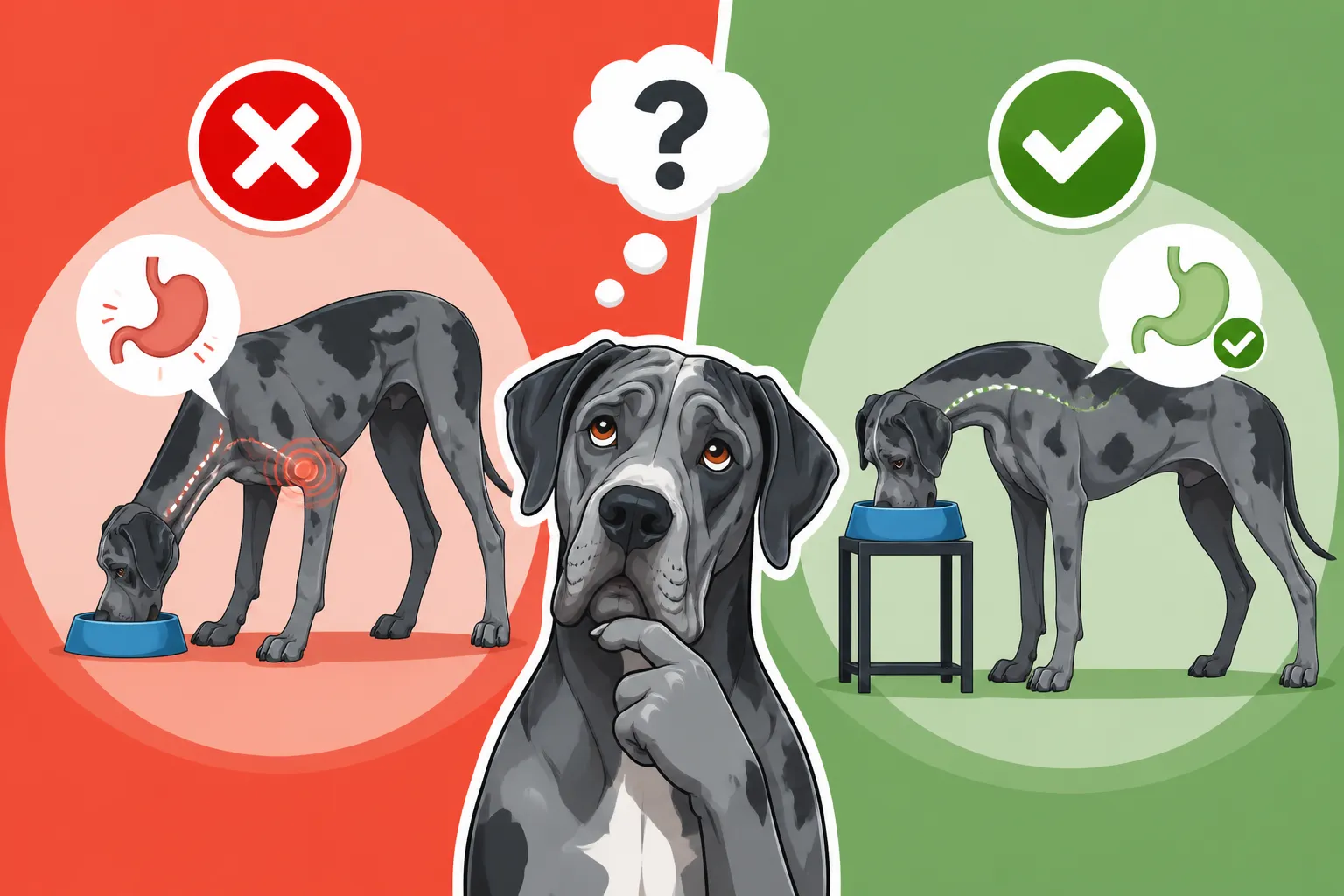
The reasoning was simple: when a large, deep-chested dog like a Great Dane eats from a bowl on the floor, they have to lower their head and neck significantly. This posture was believed to cause them to swallow more air while eating and drinking, especially if they ate quickly. The swallowed air, in turn, was theorized to contribute to the gas buildup that precedes a stomach twist. Breeders, veterinarians, and owners alike recommended elevated feeders as a prophylactic measure, hoping to reduce the terrifying one-in-three odds of their Dane experiencing bloat. Many of us, myself included, immediately went out to buy the tallest feeder we could find, believing we were protecting our dogs from one of the most deadly conditions they face. It was a well-intentioned effort to safeguard our gentle giants, but as with many things in pet care, initial assumptions don't always hold up to scientific scrutiny.
The Scientific Perspective: What Research Says About Elevated Feeders
Here's where the plot thickens and the widely held belief starts to unravel. In the late 1990s and early 2000s, studies began to emerge that challenged the conventional wisdom about raised bowls and bloat. One of the most significant was a large-scale study conducted by Purdue University, published in the Journal of the American Veterinary Medical Association. This research, which looked at hundreds of large and giant breed dogs, including many Great Danes, found something startling: feeding from a raised bowl actually appeared to increase the risk of bloat, not decrease it.
Specifically, the study suggested that dogs fed from elevated bowls had a higher likelihood of developing GDV compared to those fed from ground-level bowls. While the exact mechanisms aren't fully understood, some theories suggest that the elevated position might allow for faster eating, which in turn could lead to more air ingestion, or perhaps the altered posture somehow affects stomach motility or stability. It's a complex issue, and it highlighted that our initial, logical assumptions don't always align with empirical data. Many veterinarians, including those specializing in internal medicine, now advise against elevated bowls for bloat prevention based on these findings, recommending floor feeding unless there's a specific medical reason otherwise. The takeaway is that while the intention was good, the science indicates that raised feeders may not offer the protection we hoped for, and might even pose an increased risk. This is why it's so important to stay updated on veterinary research and discuss any changes with your own vet.
The Mechanics of Eating: How Bowl Height Affects a Great Dane's Digestion
Beyond the specific risk of bloat, it’s worth considering how the mechanics of eating from different bowl heights might impact a Great Dane’s overall digestion and comfort. It’s not just about what goes in, but how easily it goes down and processes.
Natural Feeding Posture and Esophageal Function
Think about how dogs eat in the wild or even just naturally on the ground. Their heads are down, their necks are extended slightly forward, and gravity assists the food and water as it moves down the esophagus into the stomach. This natural posture has been honed over millennia. When a dog eats from an elevated feeder, their head and neck are held in a more horizontal or even slightly upward position. For most healthy dogs, this probably isn’t a major issue; their esophagus is a muscular tube designed to move food regardless of gravity. However, for a giant breed like a Great Dane, with their considerable height and deep chest, maintaining a strained neck position over a prolonged period could, theoretically, be less ergonomic for some.
While food doesn't simply fall down the esophagus—peristalsis, the muscular contractions, do the heavy lifting—the angle of the neck and head can still play a role in comfort and ease of swallowing. If a dog has any underlying neck issues, like those associated with The Neck Condition That Trips a Great Dane Up, or just general stiffness, continually bending down might be uncomfortable. Conversely, an unnaturally high head position might also be less comfortable for very tall Danes or those with specific back problems. Observing your individual dog and how they appear when eating from different heights is crucial.
Air Ingestion and Eating Speed
One of the original theories behind the bloat concern with floor feeding was that dogs gulped more air when their heads were down. However, as we discussed, research hasn't supported this. Regardless of the bloat connection, the speed at which a dog eats is a significant factor in air ingestion. A Great Dane that practically inhales its food, whether from a raised or floor bowl, is going to swallow more air than a slow eater. This can lead to post-meal burping, gas, and general discomfort, even if it doesn't escalate to bloat.
If your Dane is a speed eater, regardless of the bowl's height, focusing on slowing them down is far more important than the height of the bowl itself. This is where specialized feeding equipment really shines. Slow feeder bowls, designed with ridges or obstacles, force your dog to eat around them, making them take smaller bites and therefore ingest less air. You can find a wide variety of these bowls on sites like Chewy or Amazon, ranging from plastic inserts to ceramic designs. Even spreading food out on a large, flat baking sheet can achieve a similar effect, turning mealtime into a scavenger hunt rather than a race. Consider combining meals with puzzle toys or snuffle mats to make eating a more engaging and slower process, which can greatly reduce air gulping.
Beyond Bloat: Other Considerations for Great Dane Feeding Position
While the bloat debate often dominates discussions about Great Dane feeding positions, there are other, equally important factors to consider that directly impact your dog's daily comfort and your household’s practicality.
Orthopedic Concerns and Comfort for Older or Ailing Danes
This is arguably the strongest argument in favor of elevated feeders for a subset of Great Danes. As these magnificent dogs age, or if they suffer from certain health conditions, bending down to the floor can become genuinely painful or difficult. Imagine trying to bend your neck and front legs to eat when you have severe arthritis in your elbows, hips, or neck. For an old Great Dane or one struggling with conditions like hip dysplasia, elbow dysplasia, or even Arthritis in a Six-Year-Old Great Dane, an elevated feeder can provide immense relief.
In these cases, an elevated bowl allows them to maintain a more upright, natural posture while eating and drinking, reducing strain on their joints and spine. It’s not about preventing bloat here; it’s about improving their quality of life. Owners of senior Great Danes often notice a significant improvement in their dog's comfort and willingness to eat when the bowls are raised. If your Dane is starting to slow down, hesitates when bending, or visibly struggles, a raised feeder might be a kind and practical solution. It’s always best to consult with your veterinarian to determine if an elevated feeder is appropriate for your dog's specific orthopedic needs. They can assess your dog's mobility and help you decide on the ideal height for their comfort. Sometimes, this can be part of a broader strategy involving Mobility Aids for a Failing Great Dane to make their golden years more comfortable.
Managing Mess and Accessibility for Owners
Let's be real: Great Danes are not known for their tidy eating habits. They are often enthusiastic eaters and drinkers, and their sheer size means there's a lot of surface area for water to drip and food to scatter. This is where the practical benefits of elevated feeders for owners come into play.
When bowls are on the floor, water can quickly create puddles and food bits can be flung further afield, especially if your Dane is prone to splashing after a drink. With an elevated feeder, especially one with a tray or lip around the bowls, the mess tends to be more contained. The water drips closer to the stand, rather than spreading across your kitchen floor. This can save you a lot of bending, wiping, and general cleanup time. For those with multiple dogs or a very busy household, reducing daily cleanup can be a significant advantage. Furthermore, for owners who might have their own mobility challenges, constantly bending down to fill or clean floor bowls can be a strain. Raised feeders make the bowls more accessible and less of a physical chore. If you're tired of cleaning up slobber from Managing Great Dane Slobber Indoors, an elevated stand might at least keep the splash zone slightly more localized.
Making an Informed Decision: What's Right for Your Great Dane?
Deciding on the best feeding setup for your Great Dane ultimately comes down to a personalized approach, weighing the various factors we've discussed. There's no one-size-fits-all answer, and what works for one Dane might not be ideal for another.
Assessing Your Dog's Individual Needs
The first step is always to observe your own dog. Are they a fast eater who gulps down their food and water in seconds? Do they show any signs of discomfort when bending to eat from the floor, such as stiffness, hesitation, or groaning? Are they a senior dog or do they have any diagnosed orthopedic conditions? These individual characteristics are paramount.
Consider their current health status. If your Great Dane is young, healthy, and eats at a reasonable pace without any signs of discomfort, then feeding from a floor-level bowl is generally the recommendation, aligning with the current scientific understanding regarding bloat risk. However, if your Dane is older, has arthritis, or a diagnosed spinal condition, an elevated feeder might be a compassionate choice to improve their comfort. It’s a quality of life issue, and in such cases, the comfort benefits often outweigh the theoretical bloat risk from elevation (which, remember, is still a risk regardless of bowl height). Always have an open conversation with your veterinarian about these choices, especially if your dog has existing health concerns. They can provide tailored advice based on your Great Dane's specific medical history.
Practical Solutions for Different Scenarios
Once you've assessed your Dane's needs and consulted with your vet, you can explore the various practical solutions available.
For fast eaters, regardless of bowl height, the priority should be to slow down their ingestion. Slow feeder bowls are excellent for this. Many brands offer various designs with internal obstacles that force your dog to work for their kibble, reducing the amount of air they swallow. You can easily find these on sites like Amazon or Chewy. Another option is a feeding mat, where you spread the kibble across a large, flat surface, or even a puzzle feeder.
If an elevated feeder is deemed beneficial for comfort due to age or orthopedic issues, look for sturdy, adjustable height feeders. These allow you to customize the height precisely to your dog's ergonomic needs, ensuring their neck is not strained too high or too low. Some stands come with stainless steel bowls, which are easy to clean and sanitize. Ensure the feeder is heavy and stable enough that your Great Dane can't easily knock it over, especially during an enthusiastic meal. For very large or boisterous Danes, a wall-mounted feeder might even be an option for ultimate stability.
Ultimately, the best feeding position is one that promotes your Great Dane's health, comfort, and well-being, while also being practical for your daily routine.
| Feature | Floor-Level Bowl | Elevated Feeder | Slow Feeder Bowl (Floor or Elevated) |
|---|---|---|---|
| Bloat Risk | Current research suggests potentially lower risk | Current research suggests potentially higher risk | No direct impact on bloat risk from mechanism, but reduces air gulping |
| Orthopedic Comfort | Requires bending, can be strenuous for older/ailing dogs | Reduces strain for dogs with joint/neck issues | Depends on whether it's floor or elevated |
| Air Ingestion | Can be high if dog eats fast | Can be high if dog eats fast | Significantly reduces air ingestion |
| Mess Management | Prone to spills and splashes over a wider area | Can help contain mess, especially with a tray | Mess depends on dog and design, but focus is on pace |
| Cost | Generally very low | Moderate to high, especially for sturdy, adjustable ones | Low to moderate, depending on design and material |
| Ease of Cleaning | Easy to pick up, but more floor cleaning involved | Bowls are accessible, stand may need wiping | Can be more complex due to internal ridges |
Disclaimer
This article is for general informational purposes only and does not constitute professional advice. Laws, prices and regulations vary by location and change over time. Consult a qualified professional for guidance on your specific situation.