Whether Great Dane Whiskers Are Trimmed for the Ring
Navigating the world of Great Dane care can sometimes feel like trying to solve a giant, lovable puzzle. One question that often surfaces, especially for those new to the breed or considering the show ring, is about their whiskers. Should they be trimmed? Does it matter? This guide is here to shed light on Great Dane whiskers – their purpose, their place (or lack thereof) in show grooming, and what's truly best for your magnificent companion.
The Purpose of Whiskers on a Great Dane
It’s easy to look at those long, stiff hairs poking out from your Great Dane’s muzzle, chin, and above their eyes and simply see them as just another part of their facial fur. But trust me, they are so much more than that! These aren't just decorative; they are vital sensory tools, playing a much bigger role in your dog's daily life than many realize.
More Than Just Facial Hair: Sensory Organs
Scientifically, what we call whiskers are known as vibrissae, and they are incredibly sophisticated sensory organs. Think of them as tiny antennae, each one deeply rooted in a follicle rich with blood vessels and nerves. This direct connection to the nervous system means that even the slightest touch or air movement registered by a whisker sends a rapid signal to your dog’s brain. It's an entire communication network dedicated to helping your Great Dane understand the world around them.
For a dog as large as a Great Dane, these vibrissae are indispensable. They help your big buddy navigate tight spaces, even if they sometimes forget just how big they are! Imagine your Dane padding around the house at night when the lights are low. Their whiskers act like a built-in radar system, detecting nearby objects before their eyes or nose might fully register them. This helps them avoid bumping into furniture, walls, or even you, especially if you're quietly moving through a dim room. They're also crucial for close-up work, like when they're sniffing out a dropped treat under the sofa – the whiskers can feel the contours of the floor and the object itself, guiding their muzzle with precision.
How Whiskers Aid in Communication and Environment Awareness
Beyond just avoiding obstacles, whiskers are paramount in a Great Dane's overall awareness and communication. They are sensitive to subtle changes in air currents, which can signal the presence of another animal, a person, or even an approaching obstacle that hasn't yet entered their field of vision. This is particularly useful in an outdoor setting, allowing them to detect movements in tall grass or brush.
In social interactions, whiskers can also play a subtle role. While not as overt as a tail wag or an ear twitch, the positioning of a dog's whiskers can convey mood or intention. A dog with forward-pointing whiskers might be showing curiosity or alertness, while flattened whiskers could indicate fear or submission. It’s part of their nuanced body language that we humans often miss. Furthermore, when your Great Dane is investigating a new toy or sniffing a strange scent on the ground, their whiskers are working overtime, providing detailed tactile information about textures, shapes, and distances. It’s their way of "feeling" the world and processing information in a way that their other senses might not capture as precisely.
Show Ring Standards and Whisker Trimming Practices
When you enter the fascinating, sometimes bewildering, world of dog shows, it quickly becomes clear that there are very specific expectations for presentation. For Great Dane owners, this often leads to questions about grooming details, including what to do (or not do) with those prominent whiskers. The rules and traditions can vary, but understanding the general approach is key.
The AKC and Great Dane Breed Standard on Grooming
The American Kennel Club (AKC) sets the breed standards for purebred dogs in the United States, including our beloved Great Danes. These standards describe the ideal physical characteristics, temperament, and movement of the breed, guiding breeders and judges alike. When it comes to grooming, the Great Dane standard, like many others, focuses primarily on the dog’s overall appearance, coat condition, and conformation.
It's interesting to note that the Great Dane breed standard does not explicitly require whisker trimming. Nor does it forbid it. This silence in the standard means that whisker trimming is largely left to the discretion of the handler or owner. Historically, some breeds, particularly those with elaborate facial furnishings or those from certain European traditions, have had whiskers trimmed for a "cleaner" look. However, for a short-coated breed like the Great Dane, whose standard emphasizes a powerful, elegant, and natural appearance, the trimming of whiskers is not a fundamental part of the breed's presentation according to the written standard. Judges are primarily looking at the dog's structure, gait, and overall type as described in The Great Dane the Show Ring Is Looking For, not minor grooming choices like whisker length.
Why Some Exhibitors Choose to Trim (or Not Trim)
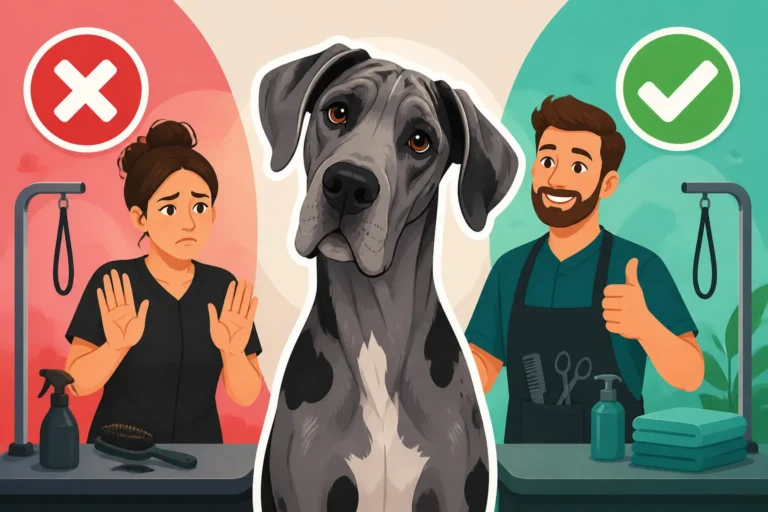
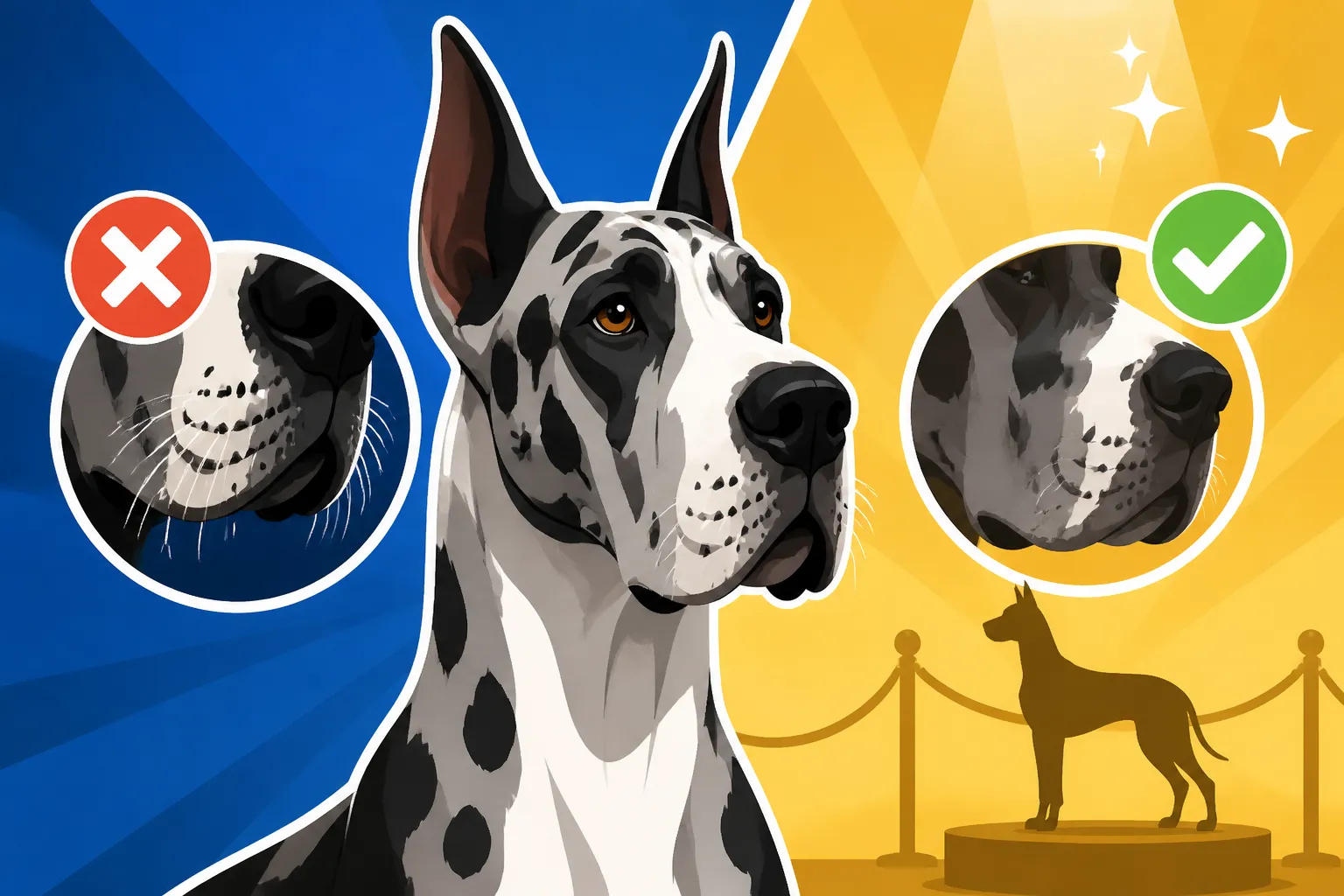
Given that the standard doesn't mandate it, why do some exhibitors choose to trim their Great Dane's whiskers? Often, it boils down to an aesthetic preference for a highly polished, streamlined appearance. Some believe that removing whiskers emphasizes the clean lines of the muzzle and jaw, making the face appear more chiseled and refined in the ring. It's a small detail, but in a competition where every nuance is scrutinized, some handlers feel it gives their dog a slight edge in terms of overall "neatness." It's part of presenting a dog that looks impeccably groomed from nose to tail, even if it's not strictly required.
Conversely, many other experienced exhibitors choose not to trim whiskers. Their reasoning is often rooted in preserving the dog's natural presentation and respecting the functional aspect of the whiskers. They argue that natural whiskers are part of the dog's inherent beauty and that removing them is unnecessary and can be a disservice to the dog's sensory abilities. These handlers might believe that a judge should appreciate the dog's natural state, emphasizing structure and movement above all else. Ultimately, it’s a personal choice, often influenced by the handler's mentor, regional traditions, or their own philosophy on canine aesthetics versus natural form.
The Impact on Judging
When it comes to judging, the good news is that whisker trimming is generally not a make-or-break factor for a Great Dane in the show ring. Judges are trained to assess the dog against the breed standard, and the standard doesn't penalize for trimmed or untrimmed whiskers. A dog's overall conformation, its magnificent The Great Dane Head the Standard Wants, its confident movement, and its calm temperament are far, far more critical elements that determine its success.
While an untrimmed Great Dane with a full set of whiskers presents a more natural appearance, and some judges might personally prefer that, it's highly unlikely to be the reason a dog wins or loses. What a judge is truly evaluating is how well the dog embodies the essence of the breed, its structural soundness, and its ability to move with grace and power. If a dog is otherwise exceptional in these key areas, the presence or absence of whiskers will likely be a non-issue. The decision to trim is usually a small, cosmetic detail, not a fundamental component of winning. It's like asking if a tiny imperfection on a perfectly tailored suit would disqualify the wearer from a beauty contest – unlikely if the suit fits flawlessly and the wearer carries themselves with poise.
Practical Considerations Beyond the Show Ring
While the show ring has its own unique set of traditions and aesthetic choices, for most Great Dane owners, their dog is a cherished companion first and foremost. This means prioritizing their well-being, comfort, and natural abilities above all else. When you think about whiskers from this perspective, the decision becomes much clearer.
Potential Drawbacks of Trimming Whiskers for a Pet Great Dane
For a pet Great Dane, trimming whiskers is generally not recommended, and for very good reasons. As we discussed, these vibrissae are critical sensory tools. Imagine suddenly losing your sense of touch or depth perception; that's somewhat akin to what a dog experiences when their whiskers are removed. The immediate impact can be a noticeable disorientation, especially in low-light conditions or unfamiliar surroundings. Your otherwise graceful Great Dane might start bumping into doorframes, misjudging steps, or having trouble navigating around furniture. This isn't just an inconvenience; it can lead to anxiety or even minor injuries.
Beyond navigation, the loss of whiskers means a reduced ability to interact with their immediate environment. They won't be able to "feel" the air currents as precisely or assess the proximity of objects with the same accuracy. This can affect their confidence and their ability to explore safely. While whiskers do grow back, the dog still experiences a temporary period of sensory deprivation, which isn't ideal for their comfort or confidence. It's a bit like driving a car without side mirrors – you can still drive, but you're missing crucial information about your surroundings, making the experience more stressful and potentially hazardous.
Maintaining Whiskers and Facial Hair Naturally
For the vast majority of Great Danes, the best approach for their whiskers and facial hair is to simply let them be! They are self-cleaning and self-regulating, doing their job perfectly well without human intervention. The focus should instead be on general facial cleanliness, which is always important for a giant breed. Great Danes, particularly those with looser flews, can sometimes accumulate food particles or drool around their mouths.
Regular, gentle wiping of the muzzle area with a soft, damp cloth can help keep the area clean and prevent irritation or odors. This is part of routine Great Dane Grooming on a Very Large Short Coat. If your Great Dane is a particularly enthusiastic eater or drinker, consider using a snood or deep, narrow bowls to minimize the amount of food and water that gets on their face. Some owners find that The Raised Bowl Argument for Great Danes for mealtime also helps keep their faces a little tidier, though the primary benefit there is often debated in relation to bloat risk, not facial cleanliness. You can find many suitable bowls and cleaning supplies on platforms like Chewy or Amazon that are specifically designed for large breeds, helping to manage daily mess without resorting to trimming essential sensory hairs.
Making an Informed Decision for Your Great Dane
Ultimately, the decision regarding your Great Dane's whiskers should always prioritize their health, comfort, and natural abilities. For a companion dog, there is absolutely no benefit to trimming whiskers, and in fact, it can cause them temporary disorientation and discomfort. Their whiskers are an integral part of how they perceive and interact with the world, and removing them can diminish their quality of life.
If you are involved in the show world and feel compelled to trim for aesthetic reasons, it's wise to consult with experienced handlers or breeders who have a deep understanding of the breed standard and current judging preferences. They can offer insights into whether it's truly a common or accepted practice in your specific show circuit and help you weigh the negligible aesthetic gains against the potential sensory impact on your dog. Always remember that a happy, confident, naturally able Great Dane is the most beautiful Great Dane, whether they're lounging on the sofa or striding around the ring. Thinking about all aspects of your Great Dane's health, from their joints to their coat, is part of being a responsible owner. Topics like Foot and Pad Care for a Great Dane and even dental health Whether a Great Dane's Teeth Need Annual Sedation are often far more impactful to their daily comfort than the length of their whiskers.
General Grooming for the Show Ring vs. Everyday Care
Grooming a Great Dane, whether for the demanding spotlight of the show ring or the loving everyday life at home, involves different priorities and levels of intensity. While both aim for a healthy, well-maintained dog, the specifics can diverge quite a bit.
The "Polished" Look for Competition
For a Great Dane destined for the show ring, grooming goes beyond basic hygiene; it's about achieving a flawless, polished presentation that highlights the dog's best features. This typically involves a meticulous routine leading up to a show. The coat needs to be immaculately clean, shiny, and free of any loose hair. This often means thorough bathing with high-quality shampoos and conditioners, followed by careful drying to ensure a smooth, sleek finish. You might see exhibitors using specific products to enhance shine or condition the coat. Many owners rely on readily available products from Chewy to keep their Dane's coat in top condition.
Nail care is paramount; nails must be kept short, neat, and well-grounded so as not to interfere with the dog's natural movement and gait. This is a big job for such a large dog, and mastering Trimming Nails on a Great Dane That Outweighs You is essential. Ears, whether natural or cropped, require careful attention to ensure they are clean and healthy, following guidelines like those for Ear Cleaning on a Cropped or Natural Great Dane. Even details like clean teeth and fresh breath can contribute to a judge's overall impression. While it's a lot of work, the goal is to present a Great Dane that exudes health, confidence, and embodies the breed standard.
Prioritizing Health and Comfort in Daily Grooming
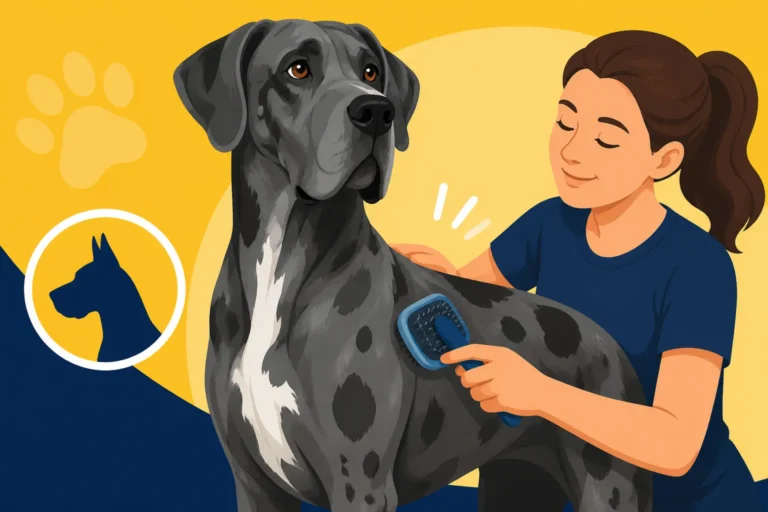
For the typical Great Dane companion, daily grooming is much more about health, comfort, and bonding than competitive presentation. The good news is that Great Danes are relatively low-maintenance in terms of coat care due to their short fur, but their size means even basic tasks can be a workout! Regular brushing, perhaps with a soft rubber curry brush or a shedding blade, helps to remove loose hair and stimulate the skin, contributing to a healthy, shiny coat. This also helps manage the surprising amount of hair a short-coated Dane can shed. Bathing a Great Dane at Home is also a manageable task, typically only needed every few weeks or when they get particularly dirty.
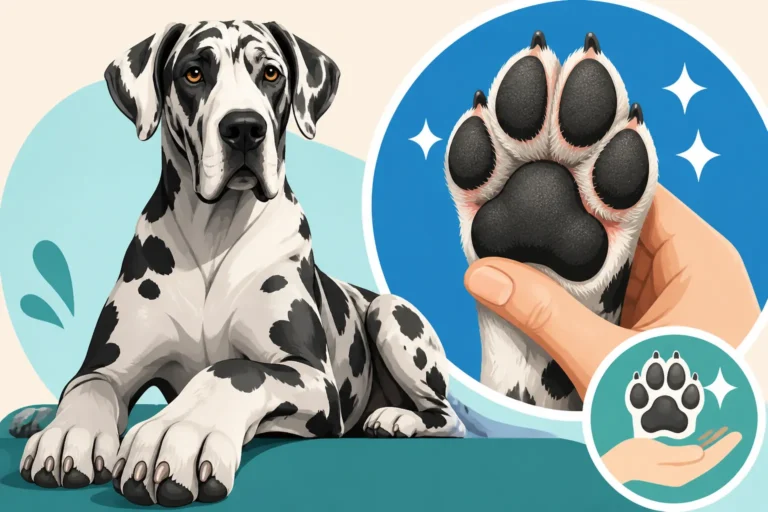
Crucially, regular nail trims are non-negotiable for a pet Great Dane. Overly long nails can cause discomfort, affect their gait, and even lead to painful foot issues. Weekly or bi-weekly checks and trims are ideal. Foot and Pad Care for a Great Dane also extends to checking their paw pads for cracks or foreign objects, especially after walks. For their diet, ensuring they are on a high-quality, balanced food, perhaps from a brand like Ollie for fresh options or a premium kibble brand found on Amazon, contributes significantly to coat health, energy levels, and overall well-being. These routine care practices, while seemingly simple, are the foundation of a long, healthy, and happy life for your Great Dane, ensuring they remain the gentle, magnificent giants we adore.
Here's a quick comparison of grooming aspects:
| Aspect | Pet Owner Approach | Show Exhibitor Approach |
|---|---|---|
| Whiskers | Generally left natural; essential sensory aids. | May be trimmed for a 'cleaner' aesthetic, but not required by standard. |
| Nails | Kept short to prevent discomfort and improve gait. | Immaculately short and neat, often ground smooth for optimal movement. |
| Coat | Regular brushing to reduce shedding and maintain health. | Meticulous bathing, conditioning, and polishing for shine and sleekness. |
| Ears | Regular cleaning to prevent infection, whether natural or cropped. | Kept pristine, folded, or posted as per standard/style, with careful cleaning. |
| Overall Goal | Comfort, health, and a happy dog. | Conformation, presentation, and adherence to breed standard. |
Disclaimer
This article is for general informational purposes only and does not constitute professional advice. Laws, prices and regulations vary by location and change over time. Consult a qualified professional for guidance on your specific situation.