Whether an AKC-Registered Great Dane Costs More
Bringing a majestic Great Dane into your life is a dream for many, but the initial sticker shock of puppy prices can be quite daunting. Many prospective owners immediately wonder if an AKC-registered Great Dane automatically comes with a significantly higher price tag, and more importantly, what that additional cost truly signifies for their future family member and the peace of mind it offers. It’s a valid concern, as the financial commitment to a giant breed extends far beyond the initial purchase.
Understanding AKC Registration and Its Purpose
When you start looking for a Great Dane puppy, you'll inevitably encounter breeders who mention "AKC registered" or "AKC registrable." It's easy to assume this automatically means a higher quality dog, but it's essential to unpack what AKC registration truly entails and how it impacts the price of a puppy.
What AKC Registration Actually Means
The American Kennel Club (AKC) is a registry of purebred dog pedigrees in the United States. Its primary purpose is to maintain a database of purebred dogs and their lineage, providing a record of a dog's parents, grandparents, and so on. When a Great Dane is "AKC registered," it means its parents were also AKC registered, and the breeder has submitted the necessary paperwork to officially record the puppy within the AKC system. This allows the dog to participate in AKC-sanctioned events like conformation shows, obedience trials, agility competitions, and more. It’s essentially a birth certificate for purebred dogs, documenting their ancestry.
However, it's crucial to understand that AKC registration itself is not a guarantee of health, temperament, or quality. It merely confirms that the dog is considered a purebred Great Dane according to the breed standard and that its parentage is documented. A backyard breeder could register their dogs, just as a highly reputable one could. The value often comes from what a responsible breeder does with that registration, not just the fact of its existence. This is a common point of confusion for new Great Dane owners, who might assume "registered" automatically means "perfect."
The Benefits and Misconceptions of AKC Papers
For many, the biggest perceived benefit of AKC papers is the assurance of purebred status. If you have aspirations of showing your Great Dane in conformation, competing in performance events, or even responsibly breeding in the future, then AKC registration is a non-negotiable requirement. It opens the door to a world of dog sports and activities that many owners find incredibly rewarding. For these specific goals, the extra cost associated with a well-bred, AKC-registered puppy is absolutely justified.
However, a significant misconception is that AKC papers automatically equate to a healthy dog or superior temperament. While responsible breeders who register their dogs with the AKC tend to perform extensive health testing and focus on good temperaments, the AKC itself doesn't mandate health clearances. A poorly bred, sickly puppy can still be AKC registered if its parents were. This is why looking beyond just the "AKC registered" label is so important. A good breeder will also provide detailed health testing results for both parents, covering common Great Dane issues like dilated cardiomyopathy (DCM), hip and elbow dysplasia, and thyroid problems. Understanding The Health Testing a Great Dane Breeder Owes You is paramount, regardless of registration status. The initial cost for these puppies usually reflects the breeder's investment in these health screenings, proper care, and ethical breeding practices, rather than simply the AKC paperwork itself.
Factors Influencing Great Dane Puppy Prices
The cost of a Great Dane puppy can vary wildly, from a few hundred dollars to several thousand. While AKC registration can play a role, it's often intertwined with other, more significant factors that truly determine the price. It's rarely just the papers that add to the cost.
The Breeder's Reputation and Practices
This is, arguably, the single most impactful factor on a Great Dane puppy's price. A reputable breeder invests significant time, money, and effort into their breeding program. This includes:
- Extensive Health Testing: As mentioned earlier, responsible breeders screen for genetic conditions prevalent in Great Danes. This includes costly cardiac evaluations by a board-certified veterinary cardiologist (echo, Holter monitor), OFA certifications for hips and elbows, thyroid panels, and sometimes even eye exams. These tests are not cheap, and their cost is reflected in the puppy's price. Skipping these tests is often how backyard breeders offer "bargain" Great Danes, but this can lead to devastating and expensive health problems down the line, such as Bloat in a Great Dane and the One in Three Odds or The Heart Muscle Disease Great Danes Are Prone To.
- Quality of Care for Parents and Puppies: Good breeders provide top-notch nutrition, veterinary care, and a stimulating environment for their breeding dogs and puppies. They often keep their puppies until 8-10 weeks of age, ensuring they are well-socialized, have received initial vaccinations, and have been dewormed multiple times. They also spend time house-training and crate-training the puppies, laying a foundation for their new homes.
- Support and Guarantees: Reputable breeders typically offer health guarantees, lifetime support, and will take a dog back at any point in its life if the owner can no longer care for it. This commitment often means they've carefully screened potential homes to ensure their puppies go to loving, prepared families. The peace of mind this level of support offers is invaluable.
In contrast, a backyard breeder or a puppy mill might offer puppies at a much lower price, often stating they are "AKC registrable" without providing any health clearances or ongoing support. This is a classic example of What a Bargain Great Dane Really Costs Later. The initial savings are almost always dwarfed by future vet bills, behavioral issues, and heartache.
Pedigree, Health Testing, and Show Potential
The lineage of a Great Dane puppy can significantly influence its price. If the parents are champions in conformation, obedience, or other performance events, or if they come from a long line of titled dogs with documented health clearances, the puppies will naturally command a higher price. This "show potential" or "breeding potential" directly relates to the perceived quality and adherence to the breed standard. Breeders spend years building these lines, traveling for stud services, and investing in showing their dogs, all of which add to the puppy's value.
For those simply seeking a beloved family companion, a puppy from champion lines might seem like an unnecessary expense. However, even for a pet, a strong pedigree often indicates a breeder who is dedicated to preserving the best traits of the breed, including health and temperament. The cost of The Health Testing a Great Dane Breeder Owes You for a healthy line is often folded into the price, ensuring you're getting a puppy whose parents have been screened for hereditary conditions.
Color, Markings, and Market Demand
While all Great Danes are beautiful, certain colors and patterns can sometimes influence price, though this is less about inherent quality and more about market demand and breeding difficulty. For example, Harlequin Great Danes, with their striking white base and torn black patches, are often highly sought after and can be pricier due to the complex genetics involved in breeding for correct markings. Harlequin and Merle Great Dane Genetics are fascinating but also tricky, leading to smaller litters of "correctly" marked Harlequins. Merle Great Danes, while now recognized by the AKC, were historically disqualified and can sometimes still come with different pricing dynamics depending on the breeder and specific lines.
Other standard colors like Fawn, Brindle, Blue, Black, and Mantle generally have more consistent pricing, assuming all other factors (health testing, pedigree, breeder reputation) are equal. While certain colors might be momentarily popular, a responsible breeder will always prioritize health and temperament over simply producing a "trendy" color. It’s important to remember that while a rare or striking color might catch your eye, it doesn't automatically mean a healthier or better-tempered dog. Focusing on the breeder's practices and the health of the parent dogs should always come before a specific aesthetic preference.
The Financial Reality Beyond the Initial Purchase
It's a common saying among Great Dane owners: the purchase price of the puppy is often the cheapest part of owning one. This isn't an exaggeration. The sheer size of these magnificent dogs means that everything, from food to vet care, comes with a giant-sized price tag.
Ongoing Costs for a Great Dane, Registered or Not
Whether your Great Dane is AKC-registered or not, the day-to-day and unexpected costs are significant.
- Food: Great Danes eat a lot – truly a lot! Expect to feed an adult Great Dane six to ten cups of high-quality food per day. This means your monthly grocery bill for kibble alone will be substantially higher than for a smaller dog. Brands like Chewy often offer bulk discounts, which can help mitigate the cost of Feeding a Great Dane That Eats Ten Cups a Day, but it's still a major expense. Some owners opt for fresh food diets from companies like Ollie, which can be an excellent nutritional choice, but the sheer volume required for a Great Dane means these options come at a premium price point compared to even high-quality kibble.
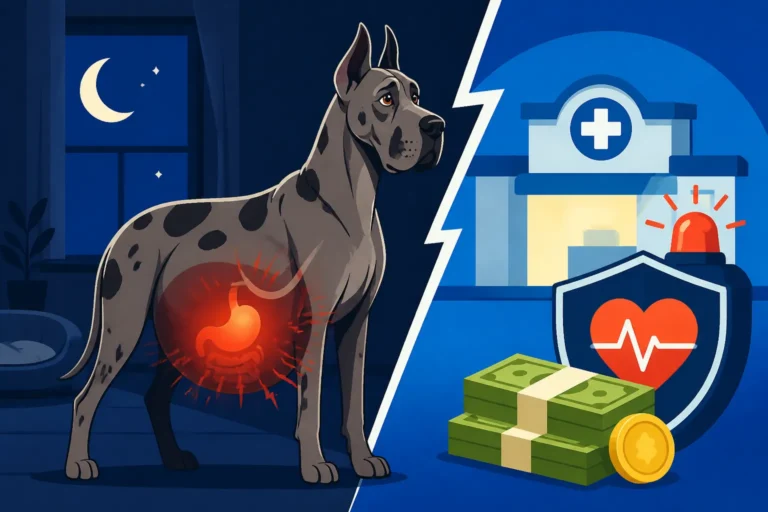
- Veterinary Care: Routine vet visits, vaccinations, and parasite prevention are scaled by weight, so a Great Dane's doses will always be at the top end of the price spectrum. More importantly, Great Danes are prone to several serious health conditions, including bloat (gastric dilatation-volvulus), dilated cardiomyopathy (DCM), and various orthopedic issues. An emergency bloat surgery can easily run into thousands of dollars, making the initial cost of a puppy seem negligible in comparison. The Night a Great Dane Bloats and What It Costs can be financially crippling without preparation.
- Supplies: Everything needs to be giant-sized: extra-large crates, heavy-duty leashes and harnesses, beds big enough to comfortably support their joints, and toys that can withstand their powerful jaws. These items are often more expensive than their smaller counterparts.
- Training: Given their size, early and consistent training is not optional. A Great Dane that pulls on the leash or jumps on guests can be a serious safety hazard. While training is an investment, it’s far cheaper than dealing with behavioral issues caused by a lack of guidance.
Protecting Your Investment with Pet Insurance
Given the propensity for serious health issues in Great Danes, many owners find pet insurance to be an absolute necessity. It's a way to budget for potential emergencies and ensure you can provide the best possible care without being hit with a crippling bill. Companies like Healthy Paws offer various plans that can cover accidents, illnesses, and even some hereditary conditions if enrolled early enough.
When considering Insuring a Great Dane Against Bloat and Heart Bills, it's important to research what each policy covers, especially concerning breed-specific conditions. Some plans might have waiting periods for orthopedic issues or certain illnesses, so enrolling a puppy as soon as you bring them home is often recommended. While insurance adds a monthly premium to your budget, it can be a lifesaver when an unexpected emergency arises. The difference between an AKC-registered or non-registered dog rarely impacts insurance premiums; it's the breed itself and its known health risks that typically drive those costs.
Food and Supplies: The Giant-Sized Bill
Let's talk more about the actual daily expenses, especially food. A Great Dane puppy requires specific nutrition to grow properly and slowly, avoiding rapid growth that can lead to orthopedic problems. Why Great Dane Puppy Food Is Different is a critical article for any new owner to understand. They need a large breed puppy food with controlled calcium and phosphorus levels, not just any puppy chow. These specialized foods can be more expensive. As they mature, their adult food consumption continues to be prodigious.
Many owners find themselves regularly placing large orders from online retailers like Chewy, taking advantage of auto-ship programs to keep up with demand and sometimes get a slight discount. For those exploring fresh or raw diets, companies like Ollie can provide high-quality, pre-portioned meals. However, filling a Great Dane's bowl with fresh food often means substantial weekly or monthly costs that far exceed even premium kibble. This is a choice based on personal philosophy and budget, but it's important to be realistic about the volume and expense involved.
Making an Informed Decision: Is AKC Worth the Extra Cost?
Ultimately, deciding whether an AKC-registered Great Dane is "worth" the extra cost depends entirely on your goals, values, and priorities as a dog owner.
When AKC Registration Truly Matters
If you are passionate about the sport of dogs – whether that means competing in conformation to strive for a championship title, participating in obedience, rally, agility, or even tracking events – then AKC registration is non-negotiable. It provides the official recognition necessary for entry into these events. Similarly, if your long-term goal is to responsibly contribute to the breed by breeding Great Danes, then an AKC-registered dog with a documented pedigree and verifiable health clearances from a reputable breeder is essential. In these scenarios, the "extra cost" for AKC papers is really the cost of entry into a specific world of dog ownership.
Furthermore, for many, choosing a puppy from a breeder who bothers with AKC registration is often an indicator of their commitment to ethical practices. While not a guarantee, it suggests a breeder who values documentation, lineage, and often, adheres to a higher standard of care and selective breeding. These breeders are typically more transparent about health testing, offer comprehensive contracts, and provide invaluable lifetime support, making the overall experience more secure and rewarding. This commitment aligns with the goal of minimizing the risk of expensive health issues later on, even for a companion animal.
| Factor | Lower-Cost Puppy (Potentially non-AKC or from less reputable breeder) | Higher-Cost Puppy (AKC-registered from reputable breeder) |
|---|---|---|
| Initial Purchase Price | Usually lower (e.g., $500 – $1500) | Significantly higher (e.g., $2000 – $4000+) |
| Health Testing of Parents | Often none or minimal; buyer beware | Extensive, breed-specific (heart, hips, elbows, thyroid) |
| Pedigree & Lineage | Often unknown or undocumented | Documented multi-generational; potentially champion lines |
| Temperament Screening | Varies widely; often not prioritized | Careful selection for stable, typical Great Dane temperament |
| Breeder Support | Limited or non-existent after sale | Lifetime support, health guarantee, take-back clause |
| Risk of Future Health Issues | Higher likelihood of genetic conditions | Lower risk due to screening (though never zero) |
| Eligibility for AKC Events | No | Yes (conformation, obedience, agility, etc.) |
| Peace of Mind | Lower, higher potential for unexpected costs | Higher, more confidence in health and temperament |
| Ongoing Costs | Same or higher (due to potential health problems) | Substantial, but potentially fewer major emergency costs |
Considering Alternatives: Rescues and Non-Registered Danes
For those whose primary goal is a loving companion and who are not concerned with showing or breeding, the "AKC registered" label might be less important than the overall health and temperament of the individual dog. In these cases, you might consider alternatives that could be more budget-friendly initially, such as adopting from a Great Dane rescue organization. These organizations often have wonderful adult Danes looking for homes, and while their AKC status might be unknown or irrelevant, they typically come spayed/neutered, up-to-date on vaccinations, and with a history of care from their foster families. Adopting an adult Great Dane can be a fantastic way to welcome a giant into your home, and the adoption fees are usually much lower than a puppy purchase.
You might also find Great Danes from smaller, private breeders who don't prioritize AKC registration but still perform some level of health testing and care for their dogs. These puppies might be priced somewhere in the middle. The key is to always ask questions, demand to see health clearances, meet the parents, and assess the living conditions of the puppies, regardless of whether AKC papers are involved. A good breeder, whether they register with the AKC or not, will always prioritize the health and well-being of their dogs over profit.
Ultimately, whether an AKC-registered Great Dane costs more isn't just about the piece of paper itself; it's about what that registration often represents: a commitment to breed standards, health testing, and responsible breeding practices that typically come with a higher initial investment but can save you significant heartache and financial strain down the road.
Disclaimer
This article is for general informational purposes only and does not constitute professional advice. Laws, prices and regulations vary by location and change over time. Consult a qualified professional for guidance on your specific situation.