Daycares With Space for a Great Dane
Finding a dog daycare that can truly accommodate a magnificent Great Dane can feel like searching for a needle in a haystack – or perhaps, a full-grown Great Dane in a teacup. Many facilities simply aren't equipped for their immense size, unique play style, and specific needs, leaving you feeling frustrated and worried. This guide will walk you through exactly what to look for, the right questions to ask, and how to prepare your gentle giant for a positive and safe daycare experience.
Understanding the Unique Daycare Needs of a Great Dane
It's easy to assume all dogs are more or less the same when it comes to daycare, but with a Great Dane, that assumption can lead to problems. Their sheer size dictates almost everything about their experience, from the space they need to the way they interact with other dogs and staff. Ignoring these fundamental differences isn't fair to your Dane or the other dogs.
Physical Space and Safety Concerns
Great Danes aren't just big; they have an impressive reach and a powerful, galloping gait. They need an incredible amount of room to move freely without bumping into walls, furniture, or, most importantly, other dogs. Imagine a large group of small dogs in a tight space – now imagine adding a few Danes to that mix. The potential for accidental collisions, especially with smaller or less agile dogs, becomes very real. A cramped environment means more stress and a higher risk of injury, both for your Dane and for the smaller companions around them.
The sheer force of a Great Dane at play is another critical factor. While they might be known as gentle giants, a playful Dane can unintentionally bowl over even a medium-sized dog with a happy tail wag or a sudden burst of zoomies. Daycare facilities must have staff who understand this dynamic and are constantly supervising to prevent mishaps. It's not about your Dane being aggressive; it's about physics. Their weight and momentum require trained eyes and proactive management to ensure everyone's safety.
Consider the interplay of indoor versus outdoor spaces. Many daycares offer both, which is wonderful, but look closely at the size and surfacing. Hard, slippery floors indoors can be tough on a Great Dane's joints, especially during energetic play. Outdoors, surfaces like gravel or rough concrete can be abrasive on their pads and elbows. Proper traction and cushioning are vital for these large breeds. Furthermore, Great Danes can overheat easily, so well-ventilated indoor spaces and shaded outdoor areas are essential.
Finally, think about how the staff manages activity levels throughout the day. A Great Dane puppy or an older Dane needs breaks and quiet time more than most breeds. Continuous, high-intensity play can be detrimental to developing joints in young Danes, and exhausting for seniors. Ask how they ensure dogs get adequate rest, preventing over-exertion or anxiety from constant stimulation. It’s a fine balance between providing enough activity and respecting their physical limits. Exercise Limits While a Great Dane Is Still Growing offers more insights into this critical balance.
Temperament and Social Dynamics in a Group Setting
The "gentle giant" stereotype for Great Danes is largely true, but it's not a universal constant. While many are incredibly sweet and tolerant, individual personalities vary widely. Some Danes can be naturally timid or shy, easily overwhelmed by boisterous groups, while others are incredibly gregarious and might not realize their own size during play. A good daycare understands these nuances and doesn't just lump all big dogs together.
Careful group placement is paramount. A Great Dane enthusiastically greeting a tiny Chihuahua, even with the best intentions, can be disastrous. Daycares should have clear protocols for separating dogs by size, energy level, and play style. It's not about discrimination; it's about safety and ensuring every dog feels comfortable and secure. Your Dane might do best with other large, calm dogs, or perhaps with a very small, confident dog they know well, but general mixing requires constant, vigilant supervision. Great Danes With Children and Small Dogs explores similar considerations regarding size differences.
Staff understanding of Great Dane body language and play style is absolutely crucial. What might appear as aggressive posturing in another breed could be completely normal, albeit clumsy, Dane play. A Dane's head might appear to be "mouthing" another dog's neck during play, which could be misconstrued if staff aren't familiar with the breed's typical interactions. Trained staff can differentiate between appropriate play and escalating tension, intervening before a situation becomes problematic.
Before committing to a daycare, inquire about their temperament assessment process. A reputable facility will require a thorough evaluation of your Great Dane's personality and social skills. This assessment isn't just a formality; it's their way of determining if your Dane will be a good fit for their environment and which play groups would be most suitable. It protects your dog and all the other dogs in their care.
Key Features to Look For in a Great Dane Friendly Daycare
When you're entrusting your beloved Great Dane to a daycare, you want peace of mind that they'll be safe, happy, and well-cared for. This means looking beyond the superficial and really digging into the details of a facility's operations and setup.
Ample Indoor and Outdoor Play Areas
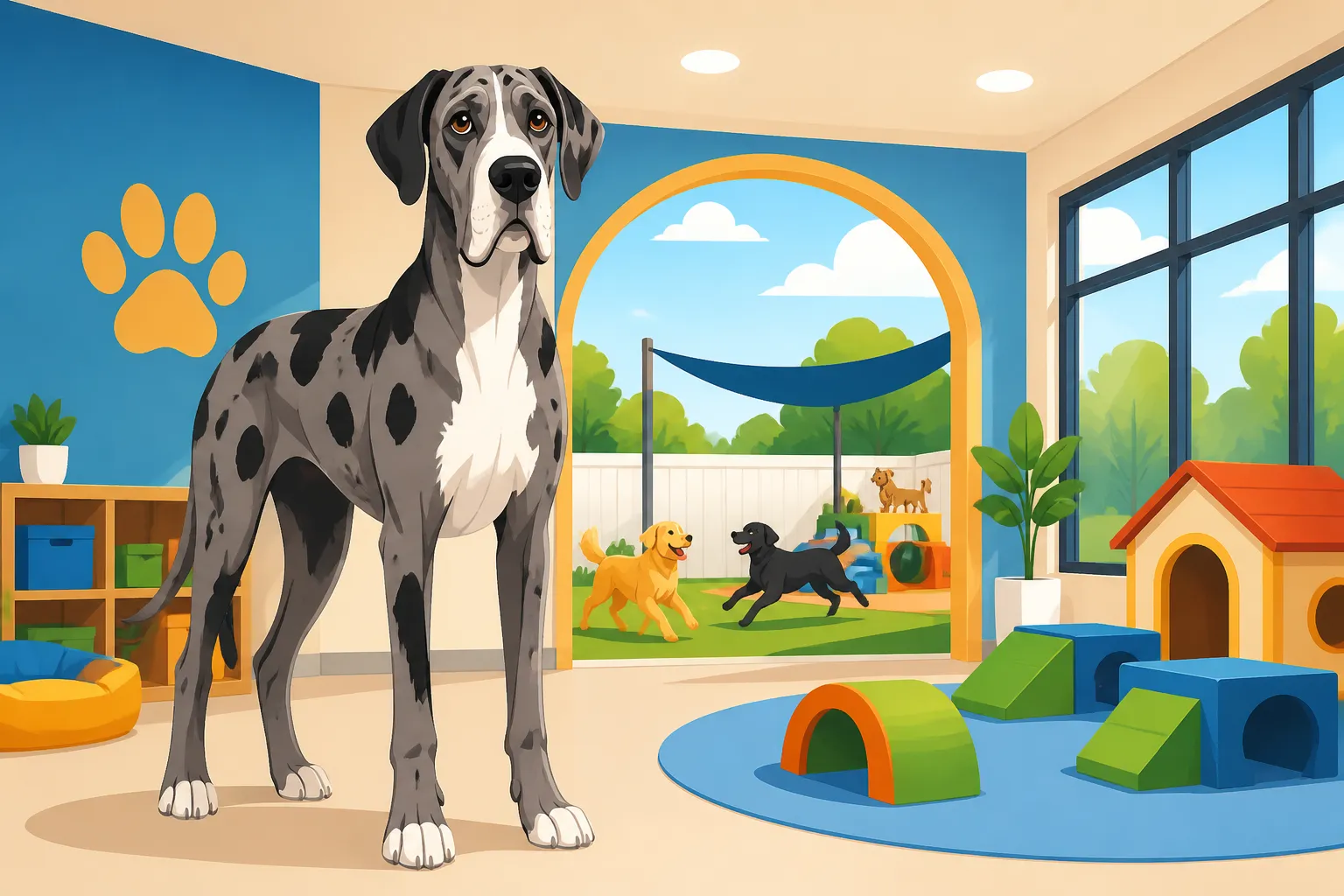
When we talk about "ample" space for a Great Dane, we're not just talking about square footage. We mean high ceilings that prevent accidental head bumps during a stretch, wide corridors that allow two Danes to pass comfortably, and open play zones where they can truly stretch their long legs. Imagine a Great Dane attempting a full-speed run – they need a lot of runway to get up to speed and slow down safely. Any facility that feels cramped for you will certainly feel restrictive for your giant dog.
Secure outdoor spaces are absolutely non-negotiable. Look for high, sturdy fences that even a determined Dane can't easily jump or push through. Double-gated entries are a massive plus, creating a secure vestibule area that prevents escapes. The surface of the outdoor play area matters too; natural grass is often preferred as it's softer on joints and provides better traction, but some facilities use specialized turf designed for dogs. Avoid concrete or asphalt as primary play surfaces, especially during warm weather, as it can be hard on their paws and lead to discomfort. Fence Height a Great Dane Can Step Over is a good read on how surprisingly athletic these large dogs can be.
The best daycares implement separate play zones based on size, age, or temperament. This is a vital safety feature for Great Danes. Instead of forcing a tiny terrier to navigate the potential chaos of a giant breed playgroup, dedicated areas allow dogs of similar size and play styles to interact safely. This means your Dane might play with other large breeds, or with a specific group of calm, older dogs, ensuring everyone's comfort and minimizing risk.
Finally, proper ventilation and temperature control indoors are paramount. Great Danes, with their often darker coats and large body mass, can overheat quickly, even in mild temperatures. Ensure the indoor play areas are air-conditioned in summer and adequately heated in winter, with good air circulation to keep things fresh and healthy. Stagnant, hot air is not only uncomfortable but can be a health risk.
Staff Experience and Supervision Protocols
You wouldn't trust your child with just anyone, and the same goes for your Great Dane. The staff at a daycare are its heart, and their experience with giant breeds is a huge indicator of quality. Don't be shy about asking about their specific experience: "How many Great Danes have you regularly cared for?" "What unique challenges do you find with Danes?" A confident, knowledgeable answer will give you peace of mind.
The staff-to-dog ratio is another critical metric. With giant breeds, a lower ratio (fewer dogs per staff member) is always better. More staff means more eyes on the play areas, better supervision, and quicker intervention if a situation starts to escalate. For Great Danes, whose interactions can be powerful, having ample, attentive staff is key to preventing accidents and ensuring positive interactions.
Ask about their protocols for handling conflict or over-stimulation. Do they use positive reinforcement techniques? How do they "time out" a dog that's getting too rowdy without resorting to harsh methods? You want a daycare that prioritizes calm, positive interactions and knows how to gently redirect a Dane that's getting too excited. A good facility will have a clear, consistent approach to managing dog behavior.
Beyond play, staff need to be prepared for potential emergencies specific to Great Danes. Knowing the signs of The Signs of a Great Dane Stomach Twisting or what to do immediately if a dog shows signs of bloat (a life-threatening condition for Danes) is non-negotiable. It's also important to know if they have protocols for physically moving or lifting a downed Great Dane, which can be a significant challenge due to their size.
Health, Hygiene, and Feeding Considerations
A clean environment is a healthy environment, especially for a dog daycare. Inquire about their vaccination policies; a reputable daycare will require up-to-date vaccinations for all dogs, including distemper, parvovirus, adenovirus, parainfluenza, and kennel cough. Beyond that, ask about their daily cleaning schedule, the disinfectants they use, and how often play equipment and bedding are sanitized. Great Danes, like all dogs, can pick up bugs, and diligent hygiene helps keep everyone safe.
Feeding protocols are particularly important for Great Danes. Many Danes thrive on specific diets, often eating multiple smaller meals a day to help mitigate The Lifetime Bloat Risk in a Great Dane. Ask how they manage individual feeding – do they have separate, quiet areas? Can they accommodate specialized foods, like fresh-delivered meals from a company such as Ollie, or food from Chewy? Make sure they understand and respect your feeding instructions precisely. You want to avoid any situation where your Dane is rushed or stressed during mealtime, as this can increase bloat risk.
Access to fresh, clean water is non-negotiable. Great Danes drink a lot of water, and having multiple large, clean water bowls readily available throughout all play areas is essential. Ask how often they change and clean the water bowls. Dehydration can quickly lead to health issues, especially during active play.
Finally, don't overlook the importance of naps and quiet time. Even the most energetic Great Dane needs to decompress. Ask if the daycare provides designated quiet areas or crate time for dogs that need a break from the action. This is especially important for puppies still growing or senior Danes who tire more easily. A well-rested dog is a happier, healthier dog, less prone to stress-related issues.
Navigating the Selection Process and Preparing Your Dane
Choosing the right daycare for your Great Dane is a big decision, and it requires careful investigation and preparation. It's not a process to be rushed; rather, it's an investment in your dog's well-being.
The Interview and Tour: What to Ask and Observe
Before you even think about bringing your Great Dane for a visit, schedule a tour of the facility for yourself. This allows you to observe the environment objectively, ask questions without distraction, and get a feel for the place. Look, listen, and smell. Does it seem clean? Are the dogs there happy and engaged? Does the staff seem attentive and calm? A strong odor of urine or chaos in the play area are immediate red flags.
When you're on your tour, arm yourself with specific questions tailored to your giant breed:
- "How do you manage a Great Dane playing with a very small dog, or one that is prone to accidental collisions?"
- "What's your plan for a Great Dane that tries to counter-surf or put their paws on staff members?"
- "How often are dogs rotated between play and rest areas?"
- "Can you describe your emergency protocols, especially for a large dog?"
- "What is your policy regarding food aggression or resource guarding, particularly given their size advantage?"
Observe the dogs already in attendance. Do they seem well-matched in their playgroups? Are they calm and comfortable, or do they appear stressed or overwhelmed? Watch the staff interaction – are they engaged with the dogs, or just passively supervising? A good daycare will have staff actively moving, redirecting play, and offering praise and comfort.
Most reputable daycares will require a trial day for your Great Dane. This is a crucial step. It allows the staff to assess your dog's temperament in their environment and see how they integrate with the existing playgroups. It also gives your Dane a chance to experience the daycare without the pressure of a full commitment. Be prepared to discuss feedback honestly, whether positive or negative.
Here’s a quick comparison of daycare features:
| Feature | Ideal for Great Danes | Less Ideal for Great Danes |
|---|---|---|
| Play Space | Very large, high-ceilinged indoor & expansive outdoor areas | Small, cramped indoor rooms; limited outdoor access |
| Flooring | Non-slip, cushioned surfaces (rubber matting, turf, grass) | Slippery tiles, bare concrete without cushioning |
| Staff Experience | Specific, documented experience with giant breeds | General dog experience only; no specific large dog protocols |
| Staff-to-Dog Ratio | Low (e.g., 1 staff per 8-10 dogs) | High (e.g., 1 staff per 15+ dogs), especially with mixed sizes |
| Playgroup Management | Strict separation by size/temperament; constant active supervision | Mixed groups without supervision; passive oversight |
| Feeding | Individual feeding areas; accommodates special diets | Group feeding; one-size-fits-all meal schedule |
| Rest Areas | Designated quiet zones or comfy crates for breaks | Dogs expected to be "on" all day; no dedicated rest space |
| Emergency Prep | Clear plan for bloat, injury; ability to handle large dogs | Vague emergency plan; unable to move large, injured dog |
Pre-Daycare Training and Socialization
Daycare is not a substitute for training; it's an extension of your Dane's social development. Before your Great Dane attends daycare, they should have a solid foundation of basic manners. Commands like "sit," "stay," "come," and "leave it" are not only helpful for managing them at home but are absolutely essential for their safety and the safety of others in a group setting. Imagine a Dane trying to snatch a toy or food – "leave it" can prevent a serious incident. The Manners a Great Dane Needs Before It Grows is a fantastic resource for starting this foundation early.
Early, positive socialization is also crucial. A Great Dane puppy should be exposed to a variety of sights, sounds, people, and friendly dogs in a controlled, positive manner. This builds confidence and helps them adapt to new environments without fear or aggression. Daycare will be much less stressful for a Dane who is already comfortable with new experiences. Socializing a Great Dane Puppy Early will guide you through this important developmental phase.
Ensure your Great Dane is comfortable being handled by strangers. Daycare staff will need to attach leashes, check for injuries, or administer medication. Regular positive experiences with vet visits, grooming, and friendly visitors at home can help your Dane become more accepting of hands-on care from people they don't know intimately.
Finally, consider desensitizing your Dane to noise and activity. Daycares can be bustling, noisy places. If your Dane is particularly sensitive to sounds or sudden movements, gradual exposure to similar environments can help them adjust. Start with short visits to dog-friendly parks or stores to build their tolerance for a busy atmosphere.
Financial Considerations and Backup Plans
Let's be realistic: owning a Great Dane is inherently more expensive than owning a smaller dog, and daycare is no exception. Expect to pay a premium for a giant breed. Some daycares charge based on weight or simply have a higher rate for dogs over a certain size due to the increased space, food, and supervision they require. Don't be surprised if the cost is significantly higher than what you might pay for a smaller dog. Why Every Great Dane Bill Is Bigger can give you a broader perspective on the financial realities of this breed.
Pet insurance is not just a good idea for Great Danes; it's almost a necessity. Companies like Healthy Paws offer coverage that could be invaluable if an unforeseen accident or illness occurs at daycare. Before enrolling your Dane, review your pet insurance policy carefully. Does it cover injuries sustained in daycare? What are the deductibles and reimbursement rates? Understanding your coverage can prevent significant financial stress should your Dane need emergency vet care.
Always have a backup plan. What if your chosen daycare closes unexpectedly, or your Great Dane simply doesn't thrive in that environment? It's wise to research alternative options, such as professional dog walkers who specialize in giant breeds, or in-home pet sitters who can provide one-on-one care. Having these options in your back pocket can alleviate stress if your primary daycare arrangement falls through.
Finally, prepare the necessary supplies. A sturdy, well-fitting leash and collar are essential for transport. If your Dane has specific dietary needs, ensure you pack their food from a brand like Ollie or Chewy with clear instructions. Bring a favorite, durable toy (like those found on Chewy) if the daycare allows it, and clearly label everything. Being organized helps the daycare staff provide the best care for your Great Dane.
Disclaimer
This article is for general informational purposes only and does not constitute professional advice. Laws, prices and regulations vary by location and change over time. Consult a qualified professional for guidance on your specific situation.